In March 1931, police forced open the door of a decrepit mansion on New York’s Fifth Avenue after neighbors complained about the smell. Inside, they found the body of Ella Wendel, dead three days in a chair, and a house that defied belief. Newspapers from 1880 were piled floor to ceiling. Filth coated the furniture.
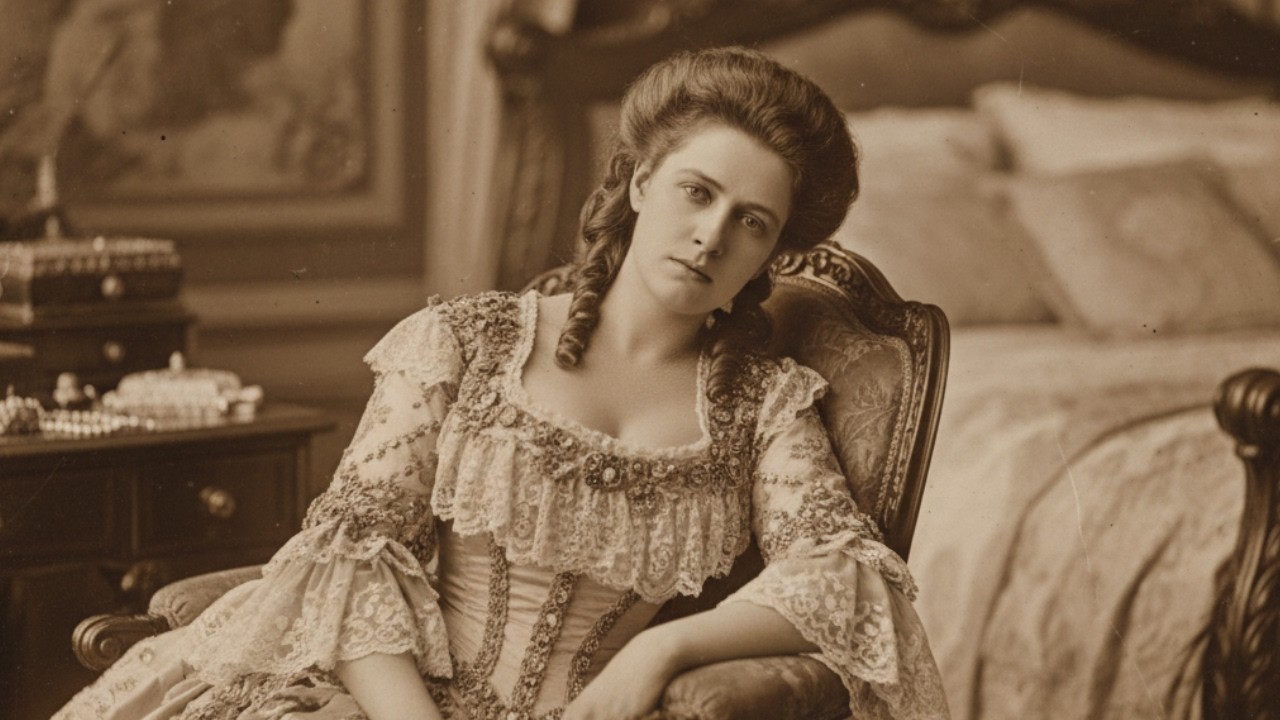
And hidden inside cracker boxes, sewn into the linings of rotting coats, and stuffed into mattresses lay more than two million dollars in cash and securities. Ella had been one of the richest women in America, and she had died alone in squalor. The revelation of how the Wendel sisters came to live and die that way shocked the city. The fortune began with an immigrant from Germany named John Gottlieb Wendel, who arrived in New York in 1838 with a mason’s tools.
While others struggled in tenements, Wendel studied the city like a battlefield. He saw that Manhattan was finite land with endless ambition. His strategy was simple: buy dirt, hold it, and never sell. In 1850 he mortgaged everything for a muddy corner lot worth $800.
He did nothing with the land, and people mocked him. Within ten years it was worth $10,000. Within twenty, $50,000. The city grew north, consuming farmland and forests, and Wendel bought every parcel he could, always in cash, always from desperate sellers.
He kept two sets of books, one for tax collectors and one locked in a safe only he could open. By 1870 he owned over three hundred properties across Manhattan. By his death, he had built a real estate empire valued in the millions. Wealth did not soften Wendel.
It filled him with fear. He trusted no one, not brokers, not lawyers, and not even his own employees. He lived in a modest townhouse, wore the same suit for years, and ate simple food. He had six daughters and one son, the heir to the empire.
The boy died of tuberculosis at sixteen, and something in the father never healed. With no male heir, John Wendel turned his daughters into guards. The daughters—Rebecca, Josephine, Ella, Georgiana, Mary, and another Georgiana—grew up in a granite fortress on Fifth Avenue with bars on the windows and locks on every door. There were no visitors, no friends, no suitors.
They attended church always together, always silent. Education came from private tutors chosen to keep out any idea that might inspire independence. Marriage was never explicitly forbidden, but it was made impossible. Suitors were turned away, their motives questioned and assassinated.
The sisters became experts at making themselves invisible. When John Wendel died in 1894, the daughters inherited an estate valued at about twenty-three million dollars. They did not celebrate, sell, or change anything. Rebecca, the oldest, answered the lawyer’s questions of what to do next by saying they would continue as their father would have wished.
They became their father. They reviewed leases personally, collected rents, and kept the same two sets of books. But where his control came from ambition, theirs came from fear. They stopped trusting banks and withdrew large sums of cash to hide at home.
They stopped trusting staff and fired long-time servants. They stopped trusting the postal service. By 1896 the mansion had become a fortress. They hoarded newspapers until the piles grew to the ceilings.
They stopped maintaining the house, letting roofs leak and plumbing fail rather than admit repairmen. They saved everything: broken furniture, empty jars, scraps of fabric. And they hid money everywhere, in mattresses, in coat linings, in cracker boxes. By 1910 the sisters owned over six hundred properties generating more than a million dollars a year in rental income, and they lived without heat, running water, or electric lights.
Mary, the youngest, was the only one who tried to escape. In 1889 she met Thomas Fanning, a shipping clerk who sent a letter requesting permission to call on her. Her father intercepted it, summoned her to his study, and asked whether the man would still want her if the family had nothing. Mary could not answer.
She never saw Thomas Fanning again. Years later, she asked for permission to travel; the sisters refused, afraid any division would expose the family. Mary stopped imagining alternatives and died of pneumonia in 1912 at forty-four. On her deathbed, delirious, she called out a name: Thomas.
The sisters died one by one. Rebecca died in 1912. Josephine died of pneumonia in 1916. Georgiana died during the influenza pandemic of 1918.
By 1920 only Ella and Georgiana remained. Both were nearly eighty. The mansion had become a mausoleum, the upper floors abandoned to rot and rats. They slept in chairs on the ground floor because they could no longer climb stairs.
They hid cash in so many places they forgot where. By 1924 the estate was worth ninety-five million dollars. When Georgiana died in her sleep in March 1924, Ella did not call for help for three days. She finally walked out into the sunlight to tell a neighbor.
After the funeral, she returned to the mansion, locked the door, and never left again. She spent seven years completely alone, speaking to the ghosts of her sisters and her father, hiding more money, and letting the house collapse around her. When police discovered her body in 1931, they found more than two million dollars in cash and securities. The estate owned over six hundred properties valued at nearly one hundred million dollars.
Within days, claims began to pour in. Over two thousand people came forward claiming to be relatives. The most infamous was Morris Wendel, actually a failed actor who fabricated an entire identity and was sent to prison for fraud. A small number of genuine distant relatives finally divided the fortune after legal fees consumed over twenty million dollars.
The properties were sold and demolished. The mansion itself was torn down and replaced with an office tower. By 1940 the Wendel fortune had been completely dispersed. The sisters had spent their lives guarding a fortune they never used, protecting a legacy they never shared.
The money destroyed the family that built it. The Wendel sisters inherited the wealth, but also their father’s paranoia, his distrust of the world, his conviction that everyone was an enemy. They built walls around themselves, and the walls became a prison. The prison became a tomb.
The empire is gone, the mansion is gone, and the sisters are forgotten. All that remains is the story.