In the winter of 1877, a survey crew entered a hollow in the mountains of northern Alabama and counted forty-one families living in a place that, according to every official map printed after that year, did not exist. They recorded names, sketched cabins, noted a meeting house at the center of the settlement, and remarked on the odor that hung over the entire valley. One of them described it in his field notes as the smell of melted fat, with something worse beneath it. Eight months later, the hollow was gone.
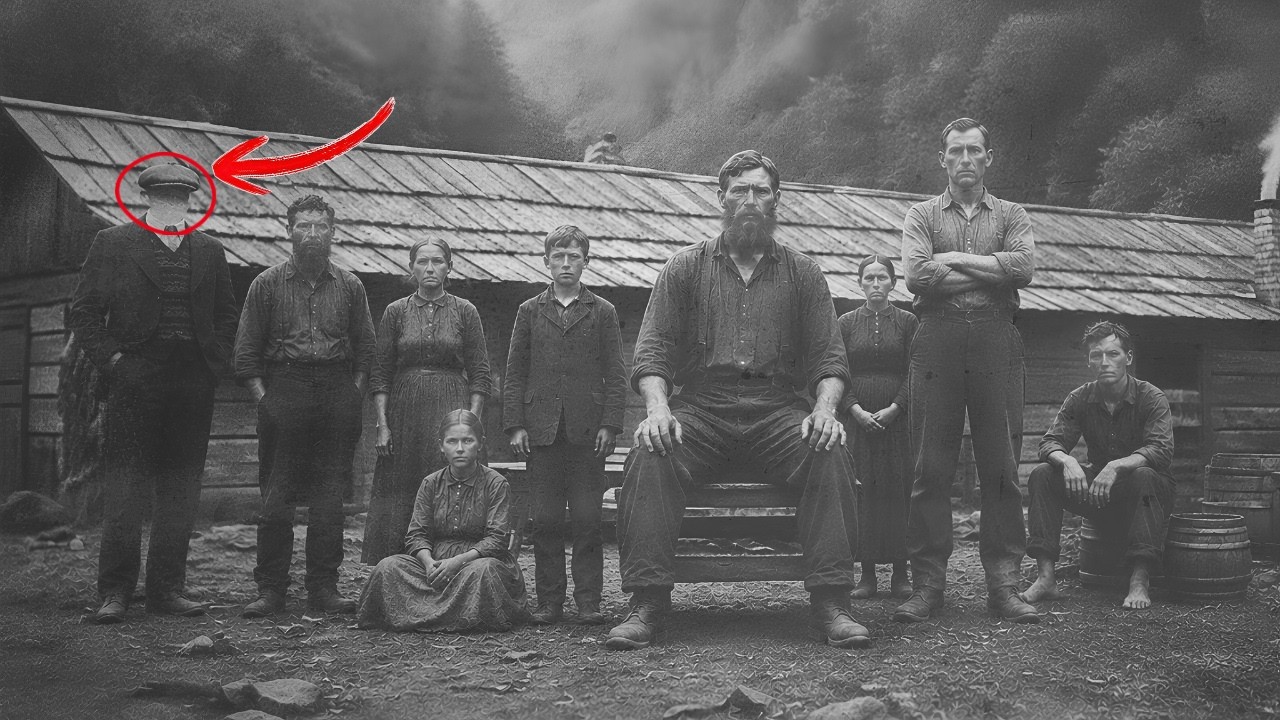
Not abandoned. Erased. The cabins had burned to their stone foundations, the people had scattered or died, and a single page had been cut from the county clerk’s register, the very page that would have told us who these people were and how many of them there had been. The family that lived in that hollow was called Talabe.
For a brief and genuinely terrifying period, their name was the most feared in the southern mountains. Letters survive from that era in which people from three neighboring counties refused to write the name in full. They abbreviated it. They left blanks.
Yet you have almost certainly never heard of them. A clan violent enough to drive hardened men off their farms in the middle of the night does not usually vanish from the historical record without a trace. This absence was not an accident of time. Someone deliberately made it so.
To understand the Talabe family, you must first understand the place they occupied. Talow Hollow lay in the rolling hills of the north Alabama highlands, near the last reach of the Appalachians. The country rises into steep ridges cut by streams that stay cold even in July, with narrow hollows so dark that sunlight touches the valley floor for only a few hours a day. Talow Hollow was one of these, a cleft in the mountains roughly two miles long, with a single rough track leading in and a single rough track leading out, both easily watched and easily closed.
A single family stationed at the entrance could decide who entered and who left. For nearly thirty years, one family did exactly that. The Talabes arrived sometime in the 1840s. The exact year cannot be confirmed, and this becomes a recurring pattern.
The man who led them was called Absalom Talabe, and nearly everything known about him comes filtered through the fear of people who spoke of him only in the past tense. He was described as massive, built like a tree trunk, with hands capable of crushing a walnut and a voice you felt in your chest before you understood the words. Where he came from is another blank. Some accounts say Tennessee, others the Carolinas.
A long letter from a traveling Baptist preacher who passed through in the 1850s claims Absalom told him, in full seriousness, that his people came from a country that no longer existed on any map, and that they had come south after the world burned. The preacher wrote that he assumed the man was drunk, mad, or telling a mountain fairy tale. He wrote it down anyway. Whatever their origins, the Talabes had a trade, and it gave them their name.
They rendered fat. They took animal tallow and cooked it down into candles, soap, oils, and wax, the things a frontier community needed and could not easily make for itself. It sounds modest, a family of soap makers in a mountain valley. But their tallow was famous.
Merchants traveled from far away to buy it, describing it as unusually pure, extremely white, and far too abundant for a family that, by every account, kept only a modest number of livestock. That last detail worried people even then. A family with a few dozen pigs and some cattle should not have produced the quantities of tallow the Talabes sold. The arithmetic did not work, and in the mountains, when the arithmetic does not work, people do not file complaints.
They simply stop asking questions. What can be confirmed about the family’s early years is this. Absalom had many children, especially sons, and those sons married into the scattered families living inside and around the hollow. Within a generation, the Talabe name and blood had spread through the entire valley.
If you lived in Talow Hollow, you were either a Talabe, married to one, or working for them. There was no fourth category, no neutral ground. They controlled the road, and at that gate they collected what the family called the tithe. It started small, a share of the crop, a cut of the still, but it grew the way such things always grow when no one dares refuse.
By the 1870s, the tithe no longer meant taxes. It meant ownership. The people of the hollow did not own their land, their crops, or, in a sense that must be examined, their own bodies. They were the family’s raw material.
The method worked through time and debt. Any family fell behind, as farm families always do. A bad crop, a sick animal, a hard winter. The Talabes absorbed the debt, pretending generosity, which was exactly the trap.
Once you owed the family, you owed them forever, because the family kept the records and did the arithmetic, and there were no other records anywhere within two days’ walk. Within a few seasons a family that entered the hollow free worked land they no longer owned and surrendered shares they were not allowed to question, understanding in the silent way such things are understood that the debt would only be settled one way. If the family decided to leave, there were always watchers on the road. Nothing entered or left Talow Hollow without the family knowing within the hour.
The residents knew they were watched, and being watched every hour of every day without being able to identify the watcher changes people over time. It makes them silent. It makes them cautious. It makes them, over the years, the kind who stand in their front yard and tell a stranger with a notebook that they have always lived here and always will, in a voice that sounds less like an answer than something memorized by heart.
One story survives in oral history about a man named Corbin who decided he had enough. In the late 1860s he announced publicly that he was taking his wife and children out of the hollow. He thought acting openly, like an honest man with nothing to hide, would protect him. He loaded the wagon.
He said his goodbyes. On the morning he meant to leave, his wife woke to find his bed empty, the wagon still loaded in the yard, and a Talabe son sitting on the porch fence whittling a piece of pine, who told her gently that Corbin had changed his mind and gone to help with the work and would return when it was done. He never returned. His wife stayed.
His children grew up in the valley under the tithe, and every family absorbed the lesson. You did not leave the hollow. The hollow decided when you left, how you left, and whether you left at all. The outside world, on the rare occasions it touched any of this, found reasons to look away.
Merchants told themselves it was backward mountain shyness. Preachers who caught fragments of strange sermons told themselves it was frontier ignorance dressed in scripture. The county, when complaints reached that far, convinced itself that anything happening in Talow Hollow was the business of the people of Talow Hollow, who were, after all, very far away, down a single rough road watched day and night by a particular family. To go further requires speaking of the meeting house and what the family did there, because it is the heart of the entire story and the part most heavily erased.
In the center of the hollow, where the two arms of the creek met, stood a long low building the family called the meeting house. From the outside it looked like a primitive frontier church, which is what neighbors were told it was. Absalom Talabe preached there. On Sundays the residents gathered inside, and travelers who passed on those days reported hearing singing, which reassured them.
Singing meant church. Church meant civilization. Nothing worth investigating here. But the Talabe doctrine was not any Christianity the traveling preachers knew.
Absalom taught that the world had ended before and would end again, and that between endings, a certain kind of people were destined to survive by converting the weak into the strong. He taught that fat was the memory of the body, that when you cooked something down to its tallow you preserved its essence, and that a family that understood this could carry the essence of the entire world through the coming fire, just as the ark carried the seeds. He used the word ark. He used the word reset, according to one account, decades before that word meant anything to anyone.
If it had stopped at strange sermons, the Talabes would have been just another isolated mountain sect, and there were plenty of those, most of them harming only themselves. But beneath the meeting house, carved into the mountain rock, there was a pit. And around that pit, the family kept their rendering vats. The vats in the open air, where they cooked hog fat, were expected, and their smell was accounted for.
The vats beneath the meeting house were kept hidden, kept hot, and worked all night on days when no pig had been slaughtered. The people of the hollow knew those vats existed. They knew what the family meant when they said someone had gone to the vats, or been given over to the rendering, or, in the cold dry phrase that appears in more than one transmitted account, added to the tallow. One detail in the sermons stands out because it does not sound like something a frontier huckster would invent.
Absalom did not preach fire and brimstone the way revival preachers did. He preached patience. He taught that fire was not punishment but process, that the world was cooked slowly the way a body was cooked, deliberately, and that the only sin was to be soft when the heat came. To be the part that evaporated instead of the part that remained.
He told his people that most of humanity was tallow waiting to be rendered, and that the family’s burden and blessing was to be the vessel into which the essence was poured and carried into the future. The vessel does not weep for the fat it holds. The vessel is grateful to be the thing that survives the furnace. You can hear, in the few lines of that doctrine that escaped the valley, how a person raised inside it from birth could see disappearances not as murders at all but as a kind of sacred offering.
People promoted from the pot to the vessel. The weak carried at last into the strong. That vision is more frightening than the vats themselves, because it explains the silence. It explains why the subject families did not rise up, did not run to the county, did not do the usual things terrified people do.
They had learned from the cradle that what happened beneath the meeting house was not the worst thing that could befall a person but close to the best, and that resisting it meant you were weak, and being weak brought on you the very thing you feared. A prison made of fear can be broken. A prison made of belief stays locked from the inside. The disappearances, once you begin counting them, turn a folk horror into a documented pattern.
There was Corbin. There was a traveling peddler named Selby who made a regular circuit that always included Talow Hollow until the spring of 1871, after which the storekeeper who kept the records noted that Selby’s route had been given to another man because Selby had not come back from the hills and no one had seen his wagon. There was an entire subject family, name lost, that simply ceased to exist one autumn. Their cabin stood empty, swept clean, which the Talabes explained by saying the family had decided to leave, which everyone in the hollow understood to mean the opposite of leaving, and no one dared ask aloud.
The pattern was always the same. A person became a problem, or a stranger saw too much, or simply fell too far behind on the tithe. There was a threat, spoken or understood. Then there was an absence, justified in the calm simple language the family used for such things.
To be precise, here is what the evidence supports. People disappeared in and around Talow Hollow at a rate that alarmed even a harsh frontier region accustomed to disappearances. Debtors who could not pay the tithe, strangers who entered and asked too many questions, members of the hollow’s subject families themselves who defied the Talabes or tried to leave. There is a consistent pattern in the accounts of independent sources who did not know one another, about Talabe threats to render people, and about named individuals vanishing after those threats were made.
That much is documented in letters, in a single court complaint filed and then mysteriously withdrawn, and in the oral history that survived among the descendants of families who managed to get out. Where the evidence stops is at the door of the meeting house. No outside investigator ever entered that pit and lived to file a report. What can be shown is a shape in the records.
A gap the size and darkness of the thing everyone feared. And the fact that enormous effort was later expended to keep that gap empty. Consider the tallow again. That unnaturally pure, unnaturally abundant tallow the merchants prized and the family’s modest livestock could not possibly have produced.
Consider the smell the survey crew recorded in 1877. Melted fat, and something worse beneath it. Consider that the family’s entire theology rested on the idea that you honored a person by cooking them down to their essence and carrying them forward with you. By the mid-1870s the Talabes ran the hollow with absolute authority and near-total secrecy.
Absalom was old by then, but he had raised his sons in his image, and the eldest, a man the records call Elias Talabe, was said to be worse than his father, colder. Absalom at least preached. Elias, people said, had stopped bothering to justify himself. He simply took what he wanted, and his wants grew wider over the years.
Then the railroad came looking for a route through the mountains, and the outside world, which had spent thirty years politely ignoring Talow Hollow, sent men with instruments and ledgers to walk every ridgetop and record everything they saw. In the winter of 1877 a survey crew ended up at the mouth of a valley about to become the most erased place in the state. The crew working for a railroad company planning a possible route through the north Alabama highlands numbered five men. A chief surveyor, two chainmen, a driver responsible for the mules and camp, and a young clerk whose job was to write everything down.
We owe nearly everything we know to that clerk. His field notes are the single most important surviving document in the entire affair, and they survived because he carried them out of the valley on his body. The crew arrived in the last week of January. They expected an empty hollow, perhaps a farm or two.
Instead they found a standing settlement of forty-one families, an entire community hidden in the folds of the mountains that appeared on none of the maps the railroad had obtained. A place that size does not stay secret by accident. It stays secret because it is kept secret, and the crew realized this within the first hour. Elias himself came to the gate of the road, perfectly polite, and invited the crew to camp in the valley and survey freely, provided they understood that some buildings were private, some questions unwelcome, and that as guests of the family they would, of course, pay the customary tithe when they left.
The chief surveyor, a company man and not a fool, agreed to everything and told his crew privately to work quickly and say little. Over the next days the crew did their work. They ran their chains. They took their measurements.
The young clerk, going door to door to record the households as the survey required, wrote down the names of forty-one families. He recorded how many people lived in each. He recorded the ages of the children. Without entirely realizing it, he was building the only complete census of Talow Hollow ever made, and that document, that list of the living, is what someone later took enormous trouble to destroy.
Elias Talabe shadowed the crew in a way the clerk found almost unbearable. He was never hostile. He was never far. Wherever the survey work took them, Elias would appear, leaning on a fence or standing at the edge of a field, watching with a patience the clerk described as the patience of a man watching meat dry.
He asked friendly questions about the railroad, and the likely route, and how many men the company would send and when. The chief surveyor grew more evasive with each answer, because it slowly became clear that Elias was not curious about the railroad. He was taking inventory. He was calculating how much the outside world already knew about the valley, and how much of that knowledge now stood in his valley in the form of five tired men holding notebooks.
The clerk wrote that the nights were the worst. The crew slept in a clearing near the gate of the trail, and after dark the valley did not settle the way farming settlements settle. There was movement. Some nights there was a faint sound of work coming from the meeting house, a sound the clerk first took for a mill, then realized had no water behind it.
A sound of fire and circular labor in a building supposedly a church, on a night when no service was being held. And there was the smell, always that smell, denser after dark, flowing from the center of the settlement and pooling in the low ground where the crew slept. It kept the young clerk awake, breathing in rendered fat and what was worse beneath it, doing arithmetic the family’s modest herds could not answer. The clerk’s notes from those days grew steadily stranger.
He recorded that the residents avoided his eyes, that the children did not play, that when he asked a woman how long her family had lived in the valley she began to answer, then glanced at a Talabe standing across the yard and said instead that she had always lived there and always would, in a voice he described as a voice reciting a memorized script. He recorded the smell growing stronger the closer he worked toward the center of the settlement and the meeting house. And he recorded the moment that changed the entire expedition, which came when one of the chainmen stumbled upon a drain near the meeting house at the watercourse. Every rendering operation has to deal with waste.
When you render fat, it overflows and becomes a liquid that must go somewhere. The chainman found where the meeting house drained its waste, a channel cut into the rock carrying liquids away from the building down toward a pit at the foot of the hill. He followed it out of curiosity, and at that pit he found the residue of years of fat rendering. According to the clerk’s notes, he found in that residue things that could not have come from a pig.
The clerk did not describe them in detail. I think he could not. What he wrote was that the chainman returned to camp pale and shaking, and would not say aloud what he had seen, only that they had to leave that night and never record the location for the company. The chief surveyor, to his credit, believed him.
They packed in the dark, and they made one mistake. The young clerk, driven by a sense of duty he could not fully explain, insisted on completing the census pages before they left, because, he said, if they were the only ones who would ever know this place existed, someone had to carry the names out. The rest of the crew threw equipment into bags in the dark, hands trembling, one already sick from what he had seen at the pit, while this young clerk, the least important man on the team, sat with his papers and pen and finished the count. Forty-one families.
Every name. Every child’s age. He later said it was the only logical thing to do, but you can hear in his tone that he knew even then he was trading precious time for a list that might cost him his life. He did it anyway.
He understood already that a place can be burned and a people scattered and a valley erased from every map ever printed, but nothing erases a settlement as completely as losing the names. Burn the cabins and there are still forty-one families. Lose the names and there is no one at all. He did not want to leave it as though there had never been anyone.
He wrote later that his hand was so cold he could barely hold the pen, and that he pressed every letter into the paper with force, as if no blade could erase their trace. That decision nearly killed them all. It did kill some of them. The Talabes, who watched the road the way other families watch the weather, knew the crew was fleeing before they reached the gate.
What happened on the road out of Talow Hollow that January night in 1877 is the most violent episode in the entire story, and the part the Talabes came closest to erasing completely, for lack of survivors to tell it. The crew ran for the northern trail, the harder of the two exits, betting the family would expect them to take the easier road. They were right about that, and it bought them some time, but not enough. The Talabes did not chase them as an angry mob.
That was not how the family worked. They worked the way they always had, patiently, through ambush, turning a fast confused retreat into a slow certain one. The driver died first at a sharp bend where a cut tree had been dragged across the road in the dark. The clerk’s later account, his most detailed telling after it was all over, describes the screaming of the mules and a shape coming out of the trees, then the driver simply gone.
No fight. No words. The Talabes did not fight the way other men fight. They removed you the way you remove a part of a machine, then moved to the next part.
The two chainmen died on the ridge. One of them was the man who had followed the drain to the pit, and the clerk was convinced then and for the rest of his life that Elias killed that man personally and deliberately because he was the one who had seen the truth. There is something almost surgical in the way the accounts describe these deaths. The family was not angry.
Anger is hot and fast and makes mistakes. The family was cold and patient, and they had done this many times before, and it showed. In the pitch dark, the mob would have made noise and mistakes, giving the crew a chance to escape in a direction the pursuers had not covered. The Talabes made no noise.
They knew the ground the way you know the inside of your own house. Every bend, every fallen tree, every place where the trail narrowed to single file between rock and drop-off. They did not need to outrun the crew in a footrace. They only needed to know the crew’s destination better than the crew did, then get there first, waiting in the places where the terrain forced men to pass.
The whole valley was a machine designed for exactly this purpose, and the family had spent thirty years learning how to operate it. The crew was not being chased. The crew was being processed. The clerk’s account of that night has a quality old true-crime writers called slaughterhouse calm.
He does not describe screaming and chaos, not mainly. He describes terrifying order. He describes realizing, somewhere on the hills after losing two of his companions, that the family was not trying to punish them or frighten them or send a message. The family was simply reducing the crew, man by man, the way you reduce anything in a pot, cooking away the haste and panic until only the slow inevitable end remained.
He said it was like living inside a process whose outcome had already been decided and was only carrying out its steps, and that this, more than death itself, broke something in him that never healed. The chief surveyor and the young clerk survived, and they survived for a reason that tells you something important about the whole affair. They survived because they split up, and because the surveyor, realizing the family wanted the census papers more than anything else, took the empty map case and ran loudly and visibly down the hill to draw the pursuers after him, while the clerk went silently and slowly along the creek bed with the actual notes in his coat. The surveyor was sacrificing himself and knew it.
The clerk later wrote that the last thing the older man said to him was to get the names out, that the names were the only thing that could not be replaced. The surveyor’s body was never officially found. The clerk came out of the mountains after three days, frozen and half-starved, carrying inside his coat the only complete record of forty-one families that would cease to exist within a year. He reached a town, found a sheriff, and told his story.
And here, at the exact moment when the outside world finally knew what had been in Talow Hollow, the second and stranger half of this story begins. Because the outside world knew, and then the outside world decided you should not know. The clerk’s report provoked exactly the reaction you would expect. A posse was raised.
Word climbed the chain of command to the county, and from the county to men whose names the clerk never learned and whose authority he could not identify. A force went up into the mountains in the early spring of 1877 to deal with the Talabes. They did deal with them. The valley burned.
Everyone agrees on that. The question that has never been answered, the question this entire story exists to ask, is what happened to the record of those events afterward. The story of a violent frontier clan exterminated by a posse is a story that gets told. It gets told in newspapers, in court records, in family Bibles and county histories, for a hundred years afterward.
It becomes local legend. It becomes a historical marker. The Talabes received none of that. They received silence.
And silence that perfect requires money and effort and coordination to produce. Someone paid for it. Here is what can be reconstructed from the clerk’s later testimony and from the handful of documents that survived the purge because they were kept in the wrong places. In the early spring, a large armed force moved up the valley trail.
For the first time in thirty years, the Talabes faced an enemy they could not eliminate easily from ambush, because this enemy came in daylight, in numbers, with the specific intent of ending the family for good. There was fighting. The meeting house burned. The cabins burned.
Elias Talabe was killed, though accounts of how vary so widely that none can be trusted. Old Absalom, if he was still alive by then, disappears from the record entirely at this point. Then the surviving Talabes and their subject families, those who had lived under the tithe for a full generation, were taken out of the valley. Not arrested.
Taken, and scattered. Here the story stops being an ordinary episode of frontier violence and begins to take the character of something arranged. The people of Talow Hollow never appeared before the justice system. There were no trials.
For a clan accused of what the Talabes were accused of, you would expect trials, hangings, entire scenes of frontier justice, all meticulously documented, because that is the type of event communities enshrine in memory. Instead, the residents of the hollow simply faded across the country under new names, especially the children. There are threads connecting some of the valley’s children to the orphan trains operating in that era, the great movement of relocating children from one life to another. Papers reissued, origins rewritten.
A child who left Talow Hollow in 1877 with a Talabe could be, by 1880, a child with a different name in a distant state, with no recorded past at all. Now the records. The county clerk’s ledger for the relevant period still exists. If you request it, you can see what I saw, a missing page.
Not damaged, not faded, but cut out cleanly with a sharp blade, along the binding, by a hand that knew exactly which page it wanted, in a book where every surrounding page is intact and legible. You cannot cut a specific page out of a bound ledger by accident. This was a decision made by someone with access to the official county record who was confident no one would hold them accountable for altering it. By the page numbering on either side of the gap, the missing page sits exactly where the records for the hollow’s district should have been.
Then the census. The federal census is a blunt instrument and missed remote communities all the time. If Talow Hollow had simply failed to appear, that would prove nothing. But the district did not merely fail to appear.
The 1880 census for that county actively recorded the relevant stretch of mountains as uninhabited, as wilderness, as empty. Three years after a government survey crew had actually walked into it and counted forty-one families living there. The census did not overlook the district. The census contradicted an earlier official record of the district, in the direction of erasure, at the exact moment someone wanted the place never to have existed.
Then the railroad files themselves. The only reason the district was ever documented at all was that a railroad survey had found it. The company paid for that survey. The company owned those field records.
Yet when you search the surviving company papers, there is no trace of Talow Hollow. Someone with access to the internal files of a private company removed the district from them as well. That is not the influence of a local sheriff. That is the influence of something larger, something capable of reaching into county records, federal census results, and the field notes of a private railroad company in the same season and erasing the place from all of them.
Then, finally, the people. They did not scatter messily the way burned communities usually scatter, leaving a trail of names appearing in neighboring counties, distant marriage records, pension applications for decades after. The people of Talow Hollow scattered with total order. They entered the country under new names, children were redirected through a pre-existing system for entirely rewriting a child’s origin, and they left behind none of the long messy paper trail that genuinely scattered communities always leave.
As if a cloth had been passed over everything at once. Names, maps, records, and people together. One motion. One intention.
One hand. Why would anyone take that much trouble? An isolated mountain clan, however brutal, is a local matter. You burn them, hang their leaders, put up a plaque, and the region tells the story for a century as a grim warning to children.
Erasing them takes more effort than remembering them. So the erasure itself is the evidence. The effort tells you the stakes. You do not expend all that energy to hide something merely embarrassing.
You do it because the thing, if its knowledge spread, threatened something larger than a single valley. And here we must speak of what the Talabes truly believed, and why those who cleansed their traces may have been far more frightened of them than of the killings themselves. Absalom Talabe preached that the world had ended before and would end again, and that his family’s task was to extract the essence of the old world and carry it through the fire into the new one. Strip away the horror for a moment and look at the structure of this belief.
A previous world. A catastrophe that ended it. A remnant that survived by preserving something essential through the fire, and carrying it into the world we live in now. That structure is the same one that appears again and again in the fragments that survived from the old world.
A hint of an earlier civilization, a reset, a great fire or flood, and a coordinated deliberate effort in the nineteenth century to cover it all and present a shallow orderly modern history with no room in it for what came before. I am not telling you that the Talabes were the guardians of the secret of the old world. I do not know that, and I will not pretend to know it. What I am telling you is that a family of violent mountain dwellers hidden in the folds of the Alabama highlands preached a coherent doctrine of previous worlds, resets, and remnants in the 1850s and 1860s, decades before those terms entered the public consciousness, and that when the outside world finally reached them, the response was not the machinery of justice.
It was the machinery of extraordinary erasure. The same machinery, torn ledger pages and redrawn maps and reissued papers, that appears wherever the old world began leaking through the cracks of the official narrative. Consider the timing. The Talabes were erased in 1877 and 1878.
That is not a random date in this story. The decades surrounding that date are the window in which the cracks appear deepest. The window in which many of the records we see today were written, rewritten, standardized, and closed. The window of the great redrawing, when the maps we still use were fixed, the census mechanisms of every county were built, the archives were centralized, and troubling old documents found their way out of the new central files.
Now imagine a family in that window preaching aloud in a mountain hollow that the past was deeper than that, that the world had ended and been rebuilt, that neat modern history was a lie told over the ashes of something older and stranger, claiming, whether madly or from memory, that their people had come south after that old world burned. You do not have to believe a single word of Talabe doctrine to see why a doctrine like that, in that decade, in the mouths of people who could not be dismissed as harmless eccentrics because they were also murderers, would be treated not as heresy but as a leak. Not as a crime punished in an open court where the doctrine is read into the record, but as contamination to be cleaned up quietly and completely. Maps erased.
Census corrected. Records cut. Children redirected. The tallow itself moved to a place no one knows.
One practical question remains unanswered. If the men who cleansed Talow Hollow were simply honest lawmen dealing with a brutal clan, they are heroes, and heroes are commemorated. The men who wiped out outlaws on the frontier had their names carved into newspapers, their stories written into books, their portraits hung in courthouses. Where are the heroes of Talow Hollow?
Who led the assault that burned the meeting house? Who gave the order? A deed that dramatic, that righteous, that made to become legend, and not one man has stepped forward to claim credit for it in a century and a half, in a country that has never once in its history failed to glorify the men who destroyed its monsters. The absence of the hero is as suspicious as the absence of the names, because you only refuse credit for something if claiming it would force you to explain what you were really doing there, and who you were really serving.
Perhaps the Talabes were nothing more than a degraded frontier clan who happened to wrap their crimes in apocalyptic language, and the erasure was just a paranoid cover-up of an embarrassing local horror. That is the boring explanation, and the boring explanation is often true, and you should consider it. But the boring explanation must justify the effort. It must explain why forty-one families were removed from the census of a place where a government crew had set foot.
It must explain the clean blade cut in the ledger. It must explain why a story this dramatic, made to be legend, produced no legend at all, while far smaller frontier atrocities became the subject of songs and books and courthouse paintings. It must explain why old Absalom Talabe, the patriarch, the preacher of the reset, simply evaporated from the records the moment the cleansing began. No body, no grave, no hanging, nothing at all.
A man of that size, that presence, and the record closes over him as if he had never been. And it must explain the thing I have spent the longest thinking about. The tallow. That unnaturally pure, unnaturally abundant tallow the family produced for thirty years and sold across three counties.
No one ever collected it. When the valley burned, the family’s stock of finished tallow, the physical product of thirty years of rendering, had no trace in any record. It appeared in no confiscation record. It appeared in no sale.
It simply vanished, with everything else, into the same silence that swallowed the names and the maps and the head of the family himself. Thirty years of melted reduction, and not a single candle of it survived in any record I could find. Follow the logic slowly. When a posse burns an outlaw settlement, goods do not evaporate.
There is loot. There are confiscations, sales, disputes over who gets what, and all of it generates paperwork, because greed is the most accurate recorder of facts ever invented. A family that spent thirty years accumulating their most valuable product, that famous pure white tallow merchants crossed counties to buy, should have left barrels and barrels of finished goods, a small fortune sitting in a storehouse. It is nowhere.
No confiscation record lists it. No auction disposed of it. No one disputed it in any court. Thirty years of the family’s entire economic output, the physical substance around which their whole doctrine revolved, left no more trace in the records than their patriarch, or the names, or the valley itself.
Which means one of two things. Either it burned with everything else, in which case someone somewhere should have noted that the valuable stores were lost in the fire, because that is exactly the kind of loss that gets recorded, and no one did. Or it did not burn. It was removed from the valley deliberately by the same people who removed the names and the maps and the children, gathered and removed with the same care, because to the people who ran the cleansing operation the tallow was never loot at all.
It was not a stock of soap for sale. It was the thing itself. What the renderers had been telling anyone who would listen for thirty years: the extracted essence, the memory of the bodies, the cargo of the ark. And if you were a man charged with erasing a family that believed it carried the essence of a dead world through the fire, and you found their storehouse full of the substance they claimed preserved that essence, you would not leave it in the ashes.
You would not sell it. You would take it, and you would take it somewhere, and you would make very sure no record ever noted where. I do not know if that is what happened. I want to say that as clearly as possible.
But I know the tallow vanished, and I know its absence bears the same fingerprint as every other absence in this case. The clean removal. The missing record. The silence that cannot be coincidence.
And I know that when every gap in a story has the same shape, cut with the same blade, you are no longer looking at a series of accidents. You are looking at the trace of a hidden hand. Where did it go? Who took it?
Why did they want it? What did they think it was? I do not have the answer. But I know the shape of the gap where the answer should be, because I have spent years tracing its outline.
The Rendering Family was real. That much I am sure of. Real enough to frighten an entire region, real enough to be tracked and counted and written into a government survey, real enough that the machinery of the state and the railroad, and something above them both together, turned its full attention to making sure you would never hear of them. Whether they were monsters who found something real, or real guardians who became monsters, or something between the two for which I have no word, the hollow is still there.
The grass has grown over it now. The foundations of the meeting house are still under the leaves, and the pit beneath it, and somewhere at the foot of the hill lies the drain a curious chainman followed in the winter of 1877 and saw what he could not bring himself to say aloud. No one has surveyed it since. Officially, there is nothing there to survey.
Officially, there was never anything there at all. And that, more than the killings, more than the vats, more than anything else, is the part that should keep you awake tonight. Not because a family like the Talabes once existed in the mountains of Alabama, but because when the record decided you were not allowed to know, the record won. And for one hundred and fifty years, it has won completely.
We do not speak of them now only because a frightened young clerk decided, on the worst night of his life, that the names were the one thing that could not be allowed to burn. He carried forty-one families out of the darkness inside his coat. He gave them the only thing he had left to give, which was his refusal to let them be forgotten. The least we can do is finish the work he began.
Read the names. Look at the map they tore from the wall. Sit with the page someone cut with a blade and ask yourself who still holds the power in your own life to cut a page from the record and trust that no one will ever go looking for it. Go pull the county records yourself.
Find the census for that district and count the families in the stretch of mountains a survey crew walked in the winter of 1877. Find the page in the ledger and run your thumb over the cut edge where it used to be. And when the record goes silent in your hands, the way it went silent in mine, right at the edge of the pit, notice what that silence feels like. It does not feel like nothing was ever there.
It feels like something was taken out. That feeling is the truest instrument you own, and no blade drawn in the dark has ever learned how to take it from you.