Bob Newhart once told an interviewer that acting felt more real to him than life itself, a sentiment that captures the strange durability of a generation of performers who came of age in mid-century Hollywood and remained fixtures on screens well into the twenty-first century. Born on September 5, 1929, in Illinois, Newhart grew up listening to classic radio comedies and dreaming of making people laugh. His career exploded in the 1960s with the debut album The Button-Down Mind of Bob Newhart, which won a Grammy and became one of the best-selling comedy records of all time. That success carried him into television, where he headlined The Bob Newhart Show and later Newhart, both built on his signature dry wit and deadpan delivery.
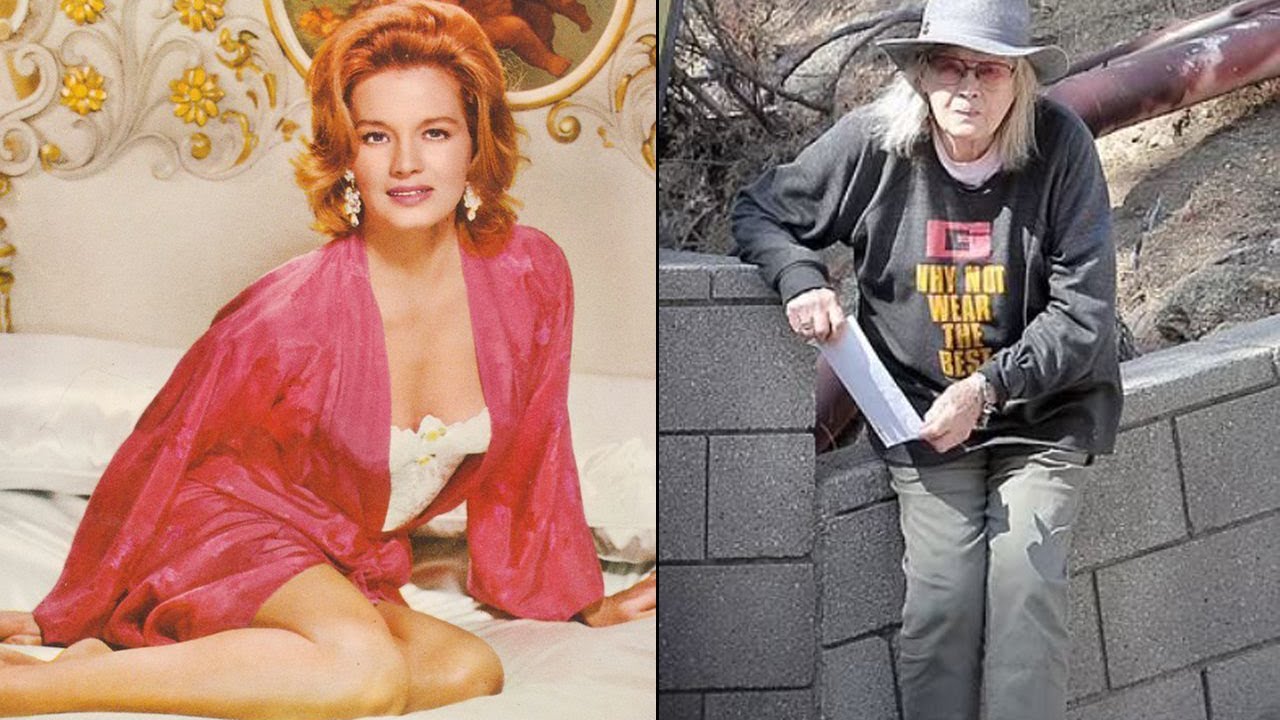
Even at 93, he remained active in the industry, influencing new generations of comedians with a body of work that outlasted most of his contemporaries. Angie Dickinson followed a different path to the same longevity. Born on September 30, 1931, in Kulm, North Dakota, she rose to fame in the 1950s and 1960s as a leading lady in both film and television. Her breakthrough came in 1959 with Rio Bravo, where she played Feathers, a sultry gambler opposite John Wayne.
The role earned critical acclaim and established her as one of the most talented actresses of her era. She went on to appear in Ocean’s 11, The Killers, and Dressed to Kill, building a reputation that stretched across genres. On television, she starred in the hit police drama Police Woman from 1974 to 1978, playing Sergeant Suzanne “Pepper” Anderson. Her portrayal of a tough, no-nonsense officer was groundbreaking for women on the small screen and inspired many young women to consider careers in law enforcement.
Even in her nineties, Dickinson continued to make occasional appearances, serving as a role model for actresses who followed her trailblazing lead. Gene Hackman’s story is one of resilience and reinvention. Born in San Bernardino, California, in 1930, he endured a tumultuous childhood, with his parents divorcing when he was thirteen. After serving in the Marines, he attended the Pasadena Playhouse and launched his career on stage before moving to New York for Off-Broadway productions.
For years he struggled, but his casting in the 1967 film Bonnie and Clyde turned him into a household name. Hackman built a reputation as one of the most accomplished actors of his generation, known for his intense commitment to roles. He once remarked that acting was “so much more real than life,” a philosophy that guided him through decades of acclaimed performances. After retiring from acting in 2004 following his role in Welcome to Mooseport, he turned to writing, co-authoring the novel Justice for None with Daniel Lenihan in 1999 and publishing his own memoir, Wake of the Perdido Star, in 2004.
His legacy as an actor remained intact long after he left the screen. Barbara Eden became a television icon through a single magical role. Born in Tucson, Arizona, in 1931, she began her career as a singer and dancer before making her film debut in 1956 in Back from Eternity. Over the years she appeared in numerous films and shows, but it was I Dream of Jeannie, which aired from 1965 to 1970, that made her a star.
As Jeannie, a beautiful and magical genie who falls in love with an astronaut, Eden combined comedy and fantasy in a way that captured the public imagination. Her character’s iconic harem costume and the now-familiar nod-and-head movement when she blinked became instantly recognizable. After the show ended, Eden continued working, taking on notable roles in Dallas, Sabrina the Teenage Witch, and Army Wives. Her influence extended beyond entertainment through philanthropy, including work with the American Cancer Society and the Children’s Burn Foundation.
She received a star on the Hollywood Walk of Fame in 1988 and was inducted into the Television Hall of Fame in 2003. Clint Eastwood represents perhaps the most expansive career of this generation of survivors. Born on May 31, 1930, in San Francisco, he began in Hollywood in the 1950s, taking small roles in films and television. Worldwide recognition came in the 1960s with his portrayal of the Man with No Name in Sergio Leone’s spaghetti western trilogy.
He then cemented his place as an action icon through tough-guy roles in Dirty Harry and Magnum Force. But Eastwood did not limit himself to performing. As a director, he helmed more than thirty films, including Million Dollar Baby, Mystic River, and Unforgiven, the last of which won the Academy Award for Best Picture in 1992. Known for working quickly and efficiently while maintaining high quality, he remained active into his later years, directing American Sniper, Sully, and The Mule.
Across his career he won four Academy Awards and five Golden Globes. These five performers represent a remarkable chapter in popular culture, one in which longevity itself became part of their legacy. They began in an era of radio comedy, live television, and studio-era film, and they carried their careers through the rise of cable, streaming, and digital media. Their early struggles—whether a mind-numbing sales job in Newhart’s case, a difficult childhood for Hackman, or the long climb to a breakout role—shaped performers who understood the value of persistence.
With the passage of time, they did not simply fade away. Some remained on screen, others moved behind the camera, and others turned to writing or philanthropy. Their continued presence into their nineties served as a living record of an era when a performer’s voice, face, and persona could become part of the cultural fabric.
Age, for them, was indeed just a number, but the work they left behind proved to be far more enduring.