In August 2009, a prosecutor conducting a routine inventory of a Detroit police storage facility opened a door and found 11,341 rape kits sitting on shelves in cardboard boxes. Some dated back to the 1980s, hundreds more to the 1990s. Each box contained biological evidence collected from a sexual assault victim who had undergone a forensic exam lasting up to twelve hours. Each kit held DNA.
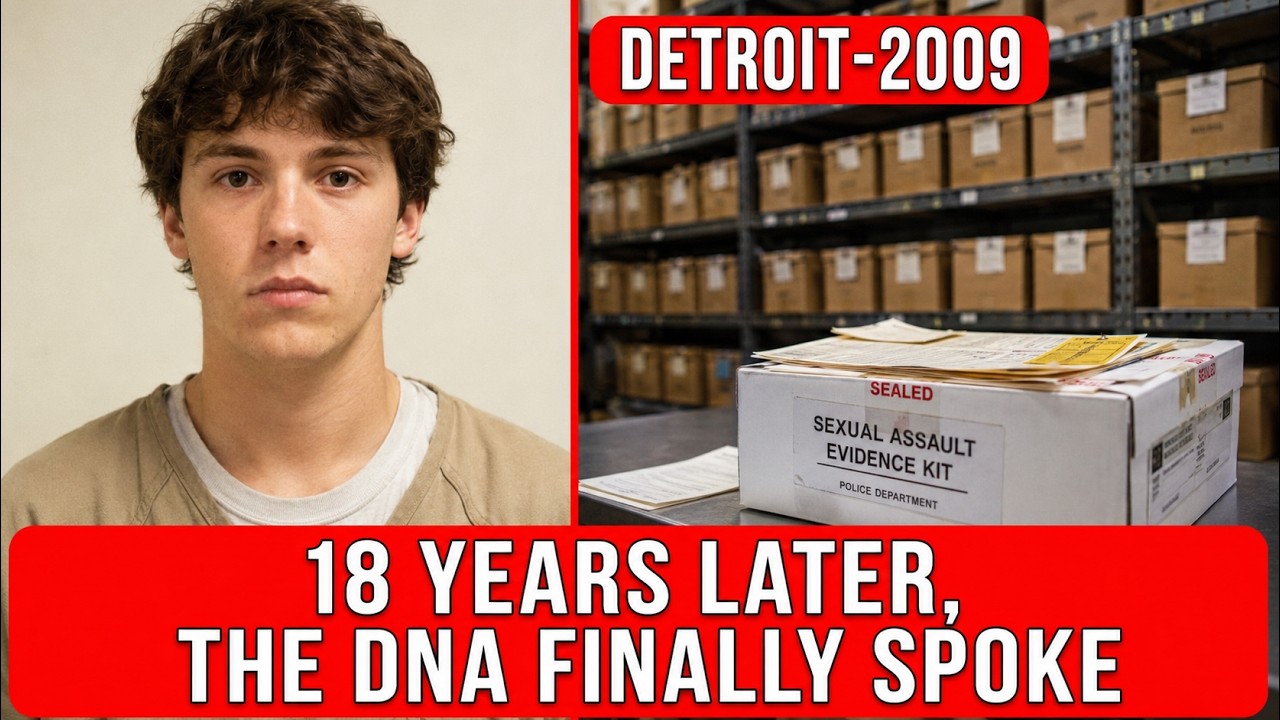
None had ever been tested. The attackers, including what would prove to be hundreds of serial rapists, had walked free for years while the evidence sat untouched. The discovery fell to Wayne County Prosecutor Kym Worthy, who had taken office in 2004. When her staff told her testing every kit was impossible—no funding, no lab capacity, cases too old—she pushed forward anyway.
She later explained the stakes with a stark statistic: a rapist rapes on average seven to eleven times before being caught. Among the Detroit kits, more than fifty serial offenders would eventually be linked to ten to fifteen assaults apiece. Testing took years. It required federal money, private fundraising, and legal battles over statutes of limitations.
By the time the work concluded in 2022, the results were staggering: all 11,341 kits tested, 3,162 DNA matches, 858 confirmed serial rapists, and 264 convictions. The DNA from those kits connected to crimes in 41 states and Washington, D. C. These were not isolated offenders.
They were men who had moved through American communities for years, assaulting, relocating, and assaulting again, confident that no one was running their DNA. Detroit was not alone. Cleveland’s Cuyahoga County investigation found nearly 5,000 untested kits, some dating to 1993. Ohio’s statewide initiative uncovered more than 9,600.
Memphis found 12,000. The pattern was national. When states and cities finally ran the DNA, the storage rooms yielded not just statistics but identities. One of those identities belonged to Nathan Ford.
By day, Ford was a probation officer in Lake County, Indiana, supervising criminals returning to society. By night, beginning in the mid-1990s, he committed a series of sexual assaults in the greater Cleveland and Northeast Ohio area. He chose women who were alone, often strangers. He attacked, fled, and used methods designed to prevent identification.
His victims went to hospitals. Rape kits were collected. The evidence was submitted to police and moved into storage, untested. Box after box went onto shelves, and Ford kept going.
In 2006, without DNA, investigators in Cuyahoga County managed to connect enough evidence to charge Ford with the rapes of eight women. He was convicted on all counts and sentenced to 113 years in prison. He entered prison at age 42. Ohio had not yet begun testing its backlog.
In 2011, Ohio Attorney General Mike DeWine took an unusual step. He asked every law enforcement agency in the state to send its untested rape kits to the state crime lab. The results came back in dozens, then hundreds of hits. Men already in prison suddenly had new cases attached to their names.
Unknown offenders, John Doe profiles in the DNA database, were finally matched to faces. Ford’s file exploded. The Cuyahoga County Sexual Assault Task Force, a team of prosecutors, police, and state agents, began building cases from the DNA results. Ford was already serving 113 years, but each tested kit added a new chapter: a 1995 rape, a 1998 assault, two cases from 2000, a 2003 rape in Akron.
By the time investigators finished, Ford’s DNA had been matched to 18 separate cases spanning more than a decade. Some of the evidence had waited 18 years in storage while he served time on the cases where investigators had enough to charge him without it. The FBI Law Enforcement Bulletin later documented the reach of what was found. Ford, the former probation officer, was linked to 18 rape kits in Northeast Ohio and to several other sexual offenses for which no DNA existed.
His combined sentence eventually reached 138 years in prison. As conviction announcements came in over the years, some of the women whose kits had sat in the Detroit warehouse were still alive to hear about them. Some had moved on, built lives, and tried to put the assaults in a different part of their minds. Others never could.
In 2019, Maquetta Travis stood before a room and spoke plainly. She had been assaulted twice. Two kits, two different years, both untested for over a decade while her attackers remained unidentified. She thanked Prosecutor Worthy for the work that finally moved those kits.
On behalf of 11,341 people, she said, she wanted to say thank you. The number was almost impossible to hold. Each kit represented a person who went to a hospital, trusted the process, and submitted to a forensic exam that documented what had been done to them. Then their evidence was placed in a box, on a shelf, in a storage facility, for years.
Detroit changed something. Not immediately and not completely, but something shifted. By 2015, the Obama administration had announced $41 million in federal grants for rape kit testing. States began passing laws mandating timelines for kit submission and testing.
Ohio required all kits, old and new, to be submitted for DNA analysis. California, New York, Illinois, Michigan, and Texas followed with their own reforms. The organization End the Backlog, founded by the Joyful Heart Foundation, began tracking the problem nationwide, pressing every police department and prosecutor’s office to account for untested kits. Investigators came to understand what Worthy had articulated early on: the backlog was not a clerical failure.
It was a public safety crisis. Every kit that sat untested was a potential match not being made to a serial offender still on the streets. As the kits were tested across the country, the DNA did not just match rapes. It matched murders, armed robberies, and kidnappings.
The biological evidence sitting in storage was a thread connecting crimes across years and jurisdictions that had never spoken to one another. Nathan Ford’s DNA connected to crimes in Indiana, Ohio, and beyond—multiple counties, multiple agencies, none of whom had initially been talking because they had no reason to. The box on the shelf was why they had not talked. The test was why they finally did.
As of 2025, the Wayne County effort has produced 264 convictions directly traceable to the kits found in that Detroit warehouse. More than 170 unknown DNA profiles remain in the system, people whose DNA matched multiple cases but whose identities are still unconfirmed. People still out there. The national backlog, once estimated at 400,000 untested kits, has been significantly reduced.
But the true count remains unknown because dozens of jurisdictions have never fully audited their evidence storage. Eighteen years is roughly how long a kit from 1991 sat before being tested. It is a child being born, going through school, and entering adulthood while the evidence from their parent’s assault sat in a labeled box no one was actively working. The DNA did not expire.
The names inside those kits did not change. The obligation to the people who submitted that evidence did not diminish with time. It waited.