Princess Margaret spent 71 years as the second daughter of the British monarchy, forever one rung below her sister, Queen Elizabeth II. For the people who worked for her, that gap was felt every single day.
Peter Russell served in the Royal Household for 14 years, from 1954 to 1968. At formal events, his job required him to stand beside Princess Margaret for the entire evening holding an ashtray. Not because there were no ashtrays in the room, but because she smoked continuously and didn't want to look down to find a surface when she flicked the ash.
In the documentary Royal Servants: Behind Closed Doors, Russell described the duty precisely. At a banquet or big social function, it meant dancing attendance on her all night by standing to her left or right with an ashtray, so she didn't have to look to see where she flicked her ash.
The public image of Margaret was glamorous, the rebel royal, the wild one who smoked, drank, and went to parties. Behind palace doors, however, was a woman who enforced deference with almost military precision. Staff, courtiers, and even celebrities who found themselves in the same room nearly all came away with a story.
None of the stories were good.
Biographer Craig Brown spent years assembling those stories for his 2017 book Ma'am Darling: 99 Glimpses of Princess Margaret. Brown's thesis was that Margaret suffered from a perpetual identity crisis. She had been given an inflated sense of her own value while her confidence was continually undermined by comparisons with her sister.
The result was a woman who looked at the world from between the bars of an extremely comfortable cage.
Brown also noted that Margaret felt most at home with the camp, the cultured, and the waspish. It was her misfortune that such a high proportion of them kept diaries written with a view to publication.
Her daily routine was documented across multiple sources. She woke around 9:00 in the morning and had breakfast in bed. She spent about two hours there, listening to the radio and reading newspapers, which she routinely left scattered across the floor.
Smoking began at 9:00. Her first vodka and soda arrived at 12:30 in the afternoon. Lunch followed with half a bottle of wine.
The bath came around 11:00 and lasted an hour.
By 1991, when she finally stopped smoking, the providers sent back 2,000 unsmoked cigarettes. The household logistics around the smoking alone were a dedicated operation. Footmen tracked her movements the way air traffic controllers track aircraft, ensuring the correct surface was in the correct place before she arrived.
Staff at Kensington Palace in the 1950s were told not to look at Margaret directly or speak to her unless she initiated the conversation. If they encountered her in a corridor, the instruction was to move aside and look down. Royal Household staff were paid below market rate on the theory that the prestige of the position compensated for the wage gap.
One former maid described a moment that revealed something essential. She made a mistake, couldn't later remember what, and Margaret snapped at her. The maid was young and felt tears coming.
Margaret noticed and said, "Take no notice of me. I'm just a bad-tempered old devil who can't help it."
The maid never forgot it. It was the only time she saw Margaret's vulnerable side. What makes the story interesting is that Margaret knew exactly what she was doing.
She named it herself, named it accurately, and then went right on doing it.
The protocol Margaret imposed wasn't invented by her. Most of the rules were real features of British royal life. What distinguished her was the manner of enforcement.
No one ate before she arrived. No one left before she chose to leave. Queen Elizabeth held the same privilege but was punctual to the point of obsession.
Margaret wasn't.
In 1959, at a dinner party in Paris thrown expressly in her honor, the guests assembled at the appointed time. Dinner was scheduled for 8:30. At 8:30, Princess Margaret's hairdresser arrived.
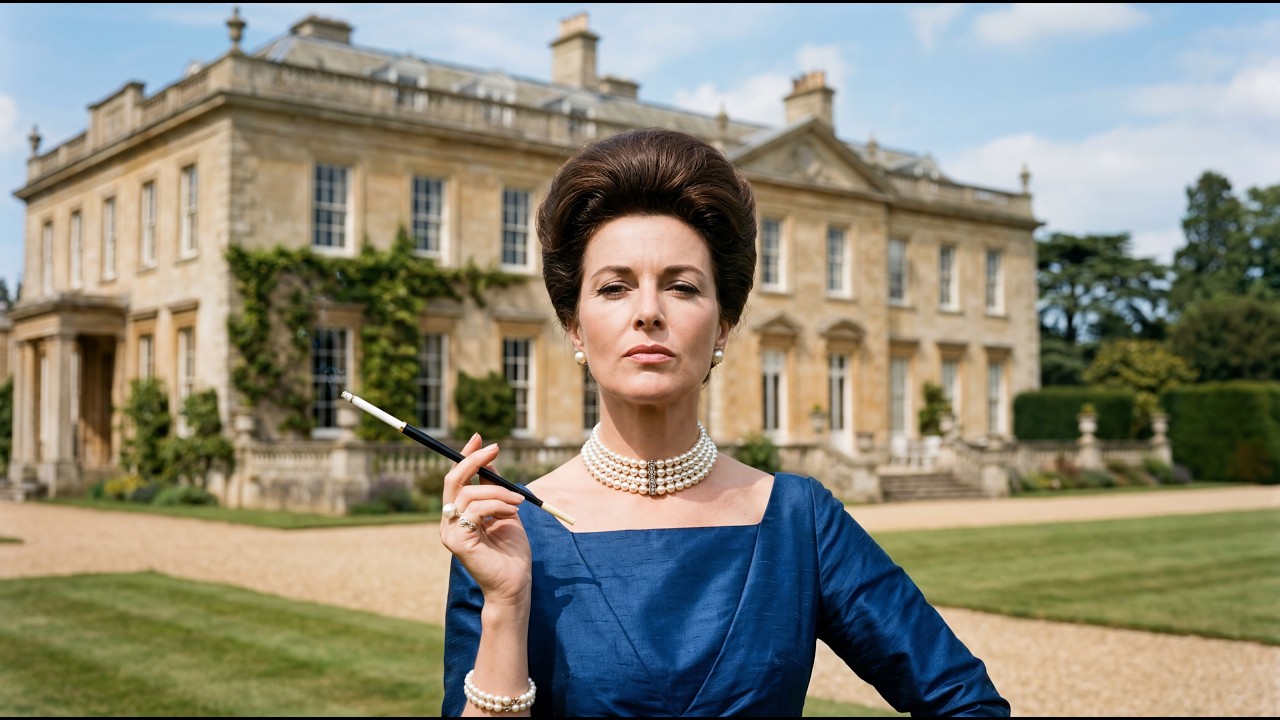
Not Margaret, her hairdresser.
Writer Nancy Mitford was among the guests and documented the evening. Dinner was at 8:30, and at 8:30 Princess Margaret's hairdresser arrived. So, they waited for hours while he concocted a ghastly coiffure.
The guests sat dressed for a formal dinner while the person they were honoring had her hair arranged.
At her own dinner parties, she wasn't a substantial eater. She would take small amounts and then stop, set down the fork, done, at which point everyone else had to stop too. Guests who had been waiting two hours to eat might manage four or five bites before the signal came.
The departure rule created its own problems. No one left before her, and she liked to stay late. At her own parties, she stationed waiters holding bottles of Famous Grouse Scotch every 50 feet.
Vanity Fair editor Graydon Carter hosted a dinner party for her and reportedly found himself unable to get her to leave. The host sat in his own house, adding fresh bottles to the table, watching the clock, and waiting.
The mandatory address was "Ma'am," rhyming with "ham," not "harm." This came after the initial "Your Royal Highness." Even people who had known her for 30 years were required to observe this sequence.
Actor Derek Jacobi encountered this rule directly. He had spent a pleasant dinner in Margaret's company and leaned across to light her cigarette. She stopped him cold.
"You don't light my cigarette, dear. Oh, no, you're not that close."
The warmth of the evening vanished in one sentence. That snap, the instantaneous recalibration of exactly where he stood in relation to her, was the mechanism at the center of the reputation. She could be genuinely charming, then the boundary appeared from nowhere.
Her close aristocratic friends developed a linguistic compromise. They called her "Ma'am darling." The required formal address fused with the social warmth of "darling."
Neither term could be dropped.
The private island of Mustique sits in the Caribbean, part of Saint Vincent and the Grenadines. Colin Tennant, the third Baron Glenconner, owned it. When Margaret married Anthony Armstrong Jones in 1960, Tennant gave her a plot of land as a wedding present.
She built a villa there, completed in 1972, which she called Les Jolies Eaux.
By the 1970s, it had become her primary retreat. The island's atmosphere was genuinely relaxed. Rum punch, beach parties, informality and pleasure.
Margaret was tremendous company there at 2:00 in the morning when the singing started. She had a ribald sense of humor and sang off-color songs.
She was also greeted with a bow on that same beach while collecting shells. The protocol on Mustique was identical to the protocol at Kensington Palace. British guests were required to bow or curtsy when they met her, not in a ballroom but on a sand beach in the Caribbean sun.
Americans were technically exempt. The British couldn't.
Actor Nicholas Courtney observed that when Margaret finally departed for London at the end of a visit, Tennant collapsed with exhaustion. Not metaphorically. He was the man who had given her the island, knew her for decades, was her friend and host.
The departure still leveled him.
In November 1965, Margaret made her first visit to the United States. She arrived in Los Angeles with her husband, staff, and luggage. The presidential suite at the Beverly Hills Hotel had been prepared with cigarettes, Chesterfields for Margaret, Gauloises for Lord Snowdon.

The five-city tour had started well enough. San Francisco's old money families were charmed. New York's social set was enchanted.
President Johnson received her at a White House dinner. Then came Hollywood.
The climax was a dinner party hosted by Sharman Douglas at the Bistro restaurant in Beverly Hills. The guest list read like an annotated catalog of Hollywood in its prime. Gregory Peck, Fred Astaire, Grace Kelly, Frank Sinatra, Mia Farrow, Natalie Wood, Warren Beatty, Rock Hudson, Gene Kelly, Judy Garland, Jimmy Stewart, Elizabeth Taylor, Richard Burton.
In a single evening, Margaret managed to damage relations with four of them.
Taylor and Burton arrived and discovered they had not been seated at the head table. They were near the kitchen. Burton found this personally offensive.
He got extremely drunk and left before Margaret arrived. On his way out, he publicly accused Judy Garland of being inebriated. Burton sent an apology the following morning, blaming an early call time for Who's Afraid of Virginia Woolf?
The apology was graceful, but the message wasn't subtle. He'd rather invent a filming excuse than admit he'd been put near the kitchen.
Grace Kelly was first to feel the edge of Margaret's social manner. When they were introduced, Margaret looked at her and said, "You don't look like a movie star." Kelly managed to find a response.
"Well, I wasn't born a movie star."
Brown described the tendency as almost a tick. It was almost as though early in life she had contracted a peculiarly royal form of Tourette's syndrome, causing the sufferer to be seized by the unstoppable urge to say the wrong thing.
Judy Garland's offense was different in kind. Margaret wanted to hear her sing. She sent an aide across the room to request it, didn't walk over, didn't ask in person.
Garland sent a response back through the same intermediary. According to the British ambassador's subsequent report, Garland's message was, "Go and tell that nasty, rude little princess that we've known each other for long enough. She should skip the ho-hum royal routine and just pop over here and ask me herself."
British officials later barred Margaret from returning to the United States in 1973, citing the negative press generated by her behavior on this visit.
The Krupp diamond exchange came later. Richard Burton had purchased Elizabeth Taylor the Krupp diamond. Upon encountering it at a social gathering, Margaret declared it "the most vulgar thing I've ever seen."
At a subsequent occasion, Taylor offered to let her try it on. Margaret slipped it on her finger, held out her hand, and said, "Doesn't look so vulgar now, does it?"
It's the best story in the collection because it's the only one where the subtext becomes text. She wanted the diamond. She knew she wanted it.
Taylor loved that story and reportedly told it for years.
Paul Burrell, who served Princess Diana, offered a detail that cuts to something specific about Margaret's management philosophy. When she returned from an outing, she would touch the television set to check whether it was warm, testing whether the servants had been watching it while her back was turned. Not because she necessarily cared about the television, because the act of testing established that she was paying attention.
Author Anne de Courcy put the broader pattern plainly. Margaret treated those who looked after her inconsiderately and with maddening demands that often caused endless extra work.
Tom Quinn documented that Margaret would almost run at servants who came within earshot of an argument with her husband, shouting, "Shoo! Shoo!" to chase them off.
One former palace staffer also recalled that when a servant was going through a painful divorce, Margaret gave her two weeks off and told her that if it wasn't enough, she should take more. Both things were true. Neither cancels the other.

The Rome anecdote is perhaps the cleanest available summation of how Margaret was perceived. A senior British diplomat stationed in Rome had arranged a formal lunch. His 10-year-old daughter had been coached to say grace.
The child froze, couldn't remember the words, and whispered to her mother for help. Her mother encouraged her to say what Mommy and Daddy said before meals. The child said, "Oh God, why do we have to have this difficult woman to lunch?"
The reputation preceded her everywhere, even into the minds of 10-year-olds who had absorbed it wholesale from their parents' conversations.
There is a different perspective. Anne Glenconner, born Lady Anne Coke in 1932, childhood friend to both princesses and Margaret's lady-in-waiting for approximately 30 years, described the relationship in terms that don't easily fit the prevailing account. She called Margaret "the best friend I ever had."
Glenconner was positioned differently from the domestic staff. As an aristocrat serving as lady-in-waiting, she was a social near equal, not a paid domestic worker.
What Glenconner offered that matters here is this. Margaret visited AIDS patients in the 1980s without notifying the press. She was a patron of the London Lighthouse, an AIDS charity.
This was during a period when the disease carried crushing stigma. Margaret went anyway, quietly, without photographers.
Glenconner's son, Henry, was diagnosed with AIDS during this period, and she recalled Margaret's support during that time.
The phrase that circulated among her staff was "her rude Highness." Its exact origin is untraceable to a single named source, but it appears across enough independent accounts to confirm it was in wide circulation.
Brown's psychological reading is the most carefully assembled explanation available. Margaret's position was structurally impossible. She outranked virtually everyone in Britain.
The one exception her entire life was her sister. At Buckingham Palace, Margaret once made a dash for a wheelchair that had been set aside for the Queen Mother. Elizabeth stopped her.
"For God's sake, Margaret, get out. That's meant for Mummy."
Brown's conclusion was that she was given an inflated sense of her own value while her confidence was continually undermined by comparisons with her sister. The protocol she demanded from everyone else was the space where she could be unambiguously, non-negotiably, first.
Tom Quinn's research added one more dimension. Royals further down the pecking order tend to be imperious with their staff in proportion to their own relative lack of status. Margaret, one rung below the throne and locked there permanently, enforced the rung she occupied with a thoroughness that left footprints in memoir after memoir.
She had the same chauffeur for 26 years and barely spoke to him. The silence in a car, day after day, year after year, was the daily texture of what it meant to be served by someone she didn't consider worth addressing.
She never said any of this publicly. What she said publicly, on the one documented occasion when she named her own behavior, was that she was a bad-tempered old devil who couldn't help it.
She died on February 9th, 2002. She was 71. She had stopped smoking 11 years earlier.
Her villa on Mustique had already been sold, reportedly against her wishes.
Everyone who worked for Princess Margaret had a story. The remarkable consistency across those stories suggests none of them were exaggerating. The woman who was second in everything found, in her own household, the one space where she was unambiguously first.
She enforced that status with a thoroughness that left footprints in memoir after memoir, diary after diary, anecdote after anecdote.
The rebellion was entirely selective. She broke conventions freely when it suited her. The late nights, the famous friends, the Caribbean parties.
What she didn't break, not once, not for anyone, was the requirement that the people around her treat her like the queen she could never be.