In late April 1945, with the Third Reich collapsing, a German commander faced an order that would define the final days of his life. The order, issued from Berlin, was simple: execute 200 American prisoners of war before Allied forces could liberate them.
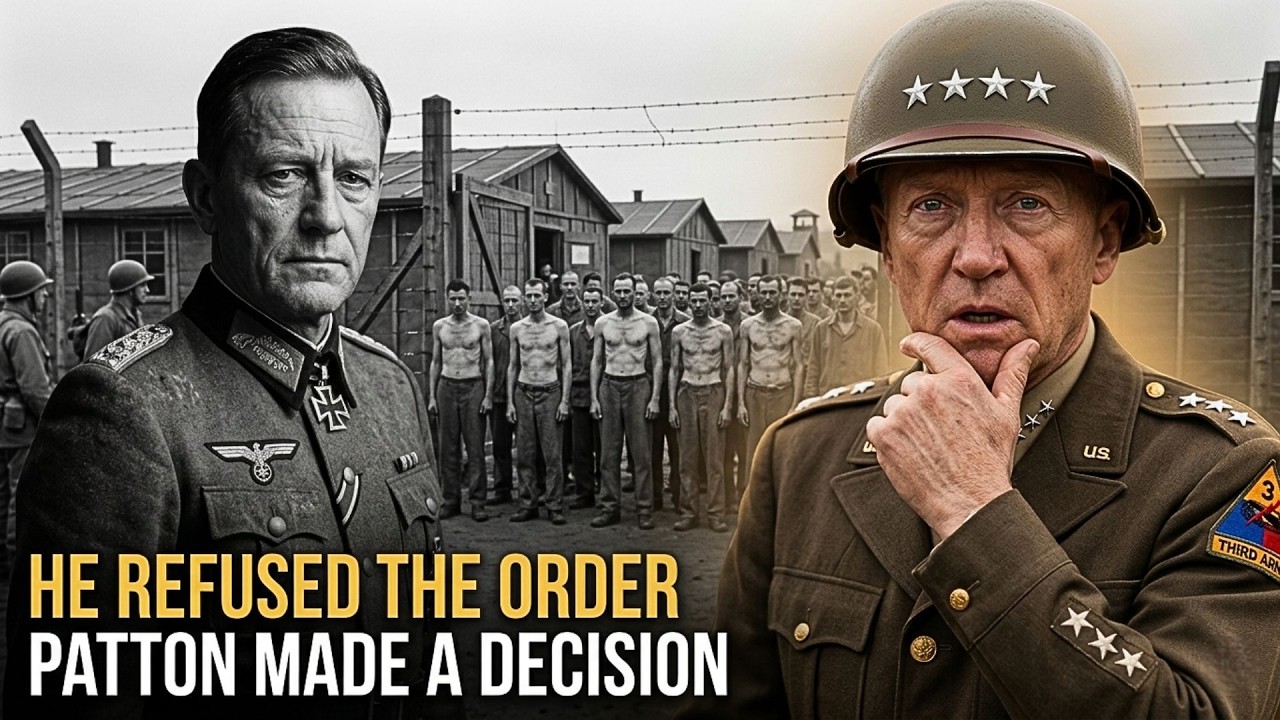
The American soldiers were held in a camp near the Bavarian town of Waldau. They were starving, sick, and barely alive. Some had been prisoners for nearly two years.
They did not know that an execution order had been issued. But one man did.
Colonel Friedrich Kock, a 51-year-old career officer from Nuremberg, read the order and made a decision that could have cost him his life. He refused to carry it out.
## The Order Arrives
On the morning of April 26, 1945, an SS courier arrived at the camp with a sealed document. Kock read it once, then again. He dismissed the courier and sat alone with the paper for nearly an hour.
The order required the liquidation of all prisoners before American forces reached the camp. It was signed by an SS general and carried the full authority of the command structure behind it.
Kock called his officers into his office. He closed the door. He told them what the order said, reading it word for word without comment.
Then he placed it on the desk and told them what he intended to do.
He would not obey it.
Kock understood the risk. Disobeying a direct SS order in the final days of the Reich was not safe. Officers had been executed for far less.
But Kock looked at the prisoners in that camp and made a calculation that had nothing to do with orders or authority. He would not execute 200 men who had done nothing but serve their country.
Two of his officers agreed immediately. A third hesitated but stayed. A fourth requested a transfer, and Kock approved it.
## Holding the Line
Kock positioned his remaining men around the camp perimeter. He sent word to a nearby SS unit that the order was being carried out. He was buying time.
The next day, an SS representative arrived to check on progress. Kock told him there were complications and that the situation was being handled. The representative left.
That night, Kock walked through the prisoner barracks. He did not speak to anyone. He looked at the men sleeping on their bunks or lying awake staring at the ceiling.
They had no idea what order had arrived. They did not know that the man walking quietly through their barracks had just risked his life to keep them alive.
The following morning, another SS representative came. This one was less patient. He demanded to know why the order had not been carried out.
Kock told him directly that he would not execute American prisoners of war, that he had no intention of doing so, and that he was prepared to face the consequences.
The representative left to report to his superiors. Kock knew he had hours, perhaps less, before a larger SS force arrived to take control of the camp. He held his position and waited.
## Liberation
On the morning of April 28, the vanguard of Patton's Third Army reached the outskirts of Waldau. An advance unit from the 14th Armored Division, led by Lieutenant Colonel James Porter, moved toward the camp.
They expected resistance. The camp had been operating for over a year and held 200 prisoners. Standard procedure was to approach at full combat readiness.
What they found was Colonel Kock standing at the camp gate with three of his officers, all unarmed, waiting for them.
Porter approached through his interpreter. "Are you the camp commander?" Porter asked.
"Yes," Kock said.
"And the prisoners?"
"Inside. All of them. Two hundred men.
They are alive."
Porter went in to verify. The process took 30 minutes. He walked through every barracks and cell.
He counted. He checked the records. He came back outside and found Kock standing where he had left him, in the same position, waiting.
"I understand you received an execution order," Porter said.
Kock confirmed that he had received it and read it.
"Why didn't you carry it out?"
Kock paused for a moment. "Because they were no longer soldiers," he said. "They were prisoners, sick men.

Following an order to kill sick prisoners was not something I was willing to put my name on. Whatever Germany becomes after this war, I did not want that to be part of what I did."
## The Report Reaches Patton
Porter recorded this. The report reached Patton's headquarters that evening. Colonel Thomas Reed brought it in and placed it on his desk.
Patton read it carefully. He read the section about the execution order first, then the section describing Kock's refusal, then the account of the three days Kock had stood against the SS while 200 American soldiers slept in the barracks behind him, unaware of what was happening outside.
He read it through again. He set the report aside. The room was quiet.
"What is Kock's current status?" Patton asked.
"In American custody at the Waldau facility, sir, awaiting instructions."
Patton was silent for a moment. What Kock had done posed a problem with no clear answer. He was a German officer who had disobeyed an order from his own command.
He had also kept 200 American soldiers alive when they were supposed to be dead. Under standard occupation procedure, he was a prisoner of war to be handled like any other officer. But Patton was not thinking about the situation in conventional terms.
"Keep him in custody," Patton said. "Standard POW conditions, no special privileges. He is a German officer and will be treated as an officer."
He paused.
"But I want a note in his file," Patton continued. "Documented, official, and signed by me, so that what he did is recorded. Even when this is over and decisions are made about the future of these men, whoever looks at that file will know what Friedrich Kock did in April 1945."
He picked up a pen. "I want to speak with him tomorrow."
## The Meeting
Patton met Kock the following morning in a simple room at the facility. The two men sat across from each other through an interpreter. Patton looked at him for a moment before speaking.
"I read the report," Patton said.
Kock nodded.
"You knew what refusing that order could mean for you."

"Yes," Kock said.
"Why did you do it?"
Kock gave the same answer he had given Porter. They were sick men. He would not put his name on killing sick prisoners.
Patton was silent for a moment.
"Those men have families," he said finally. "Two hundred families who have spent the last months or years not knowing whether their sons were alive. Some of them will get their sons back because of what you decided to do when that order arrived.
I want you to know that I understand what that decision cost you, and that it is documented."
Kock looked at him steadily. He said nothing.
Patton held his gaze for another moment. Then he stood.
"You will be treated according to the Geneva Convention," Patton said. "No more, no less. But what you did will not disappear from the records."
He walked out without looking back.
## Aftermath
Kock was held as a prisoner of war and released in 1946. He returned to Nuremberg. The note Patton placed in his file followed him through the denazification process, and the review board cited it as evidence of his conduct.
He was classified in the lowest category of offenders and faced no further proceedings.
Several of the American soldiers liberated at Waldau submitted written testimony on his behalf during the review. Those testimonies described what they had learned about the execution order and Kock's refusal to carry it out. They remain in the records alongside the note Patton signed in April 1945.
Kock died in Nuremberg in 1961.
Of the 200 American prisoners liberated at Waldau, 187 survived the war. Thirteen died in the weeks following liberation due to illnesses and injuries sustained during their captivity. The other 187 returned home.
Each of them eventually learned how close they had come to death.
Patton's decision to document Kock's actions rather than punish them ensured that the record would reflect the truth of what happened in those final days of the war. The note he signed, along with the testimonies of the liberated prisoners, preserved the story of a German officer who chose not to follow an order he considered unconscionable.