In 1849, a young woman walked out of slavery on Maryland’s Eastern Shore and into the free state of Pennsylvania. Born into bondage as Araminta Ross around 1820 or 1821, she had taken the name Harriet Tubman and found work in Philadelphia doing odd jobs. Freedom, however, did not mean safety for those she had left behind. When word reached her that her niece and the woman’s two children were about to be sold, Tubman went back to Maryland—an act of extraordinary risk, since any return meant capture and re-enslavement.
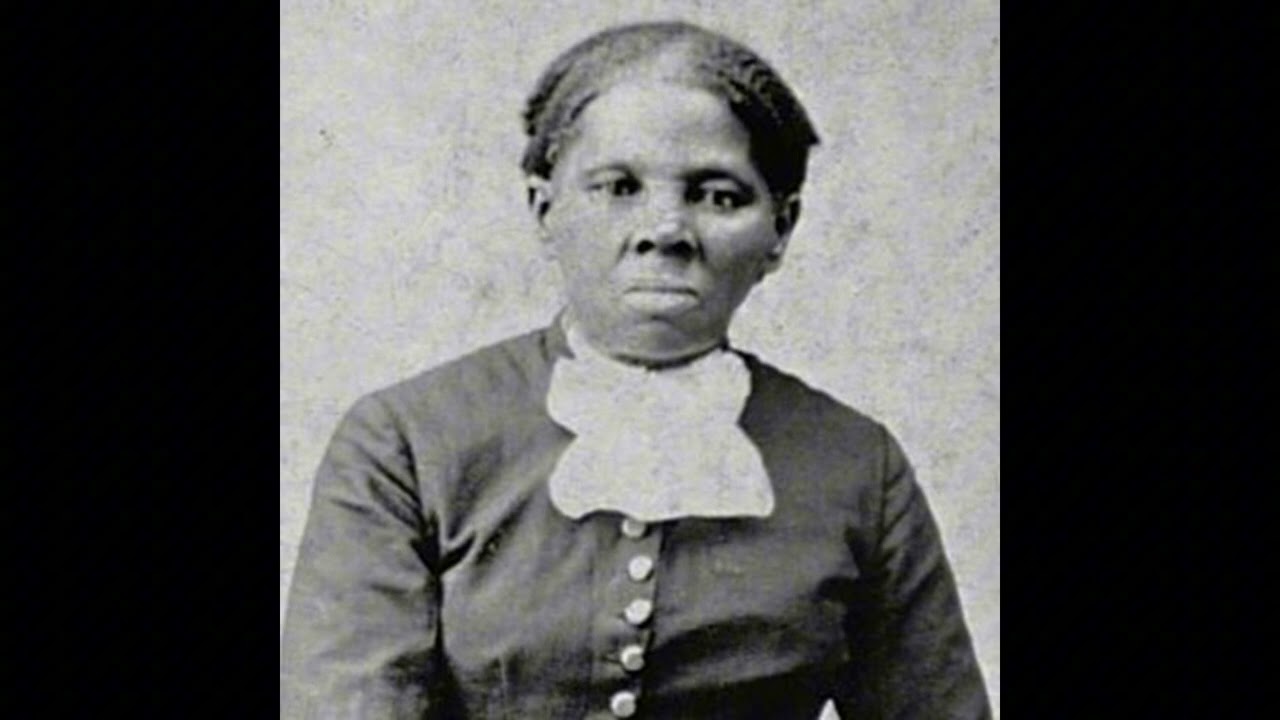
She brought them north, and in doing so discovered her true calling. Over the next eleven years, Tubman made repeated journeys into the heart of slave country. Her method was built on secrecy, careful timing, and an unshakable resolve. She traveled at night, avoided main roads, and relied on a network of safe houses and allies known as the Underground Railroad.
Armed and determined, she threatened to shoot any fugitive who lost courage and turned back, understanding that one weak link could doom the entire group. In total, she personally escorted more than seventy enslaved people out of Maryland. She also helped fifty or sixty others find their way to Canada, where the law offered greater protection from recapture. As her reputation grew within the abolitionist movement, Tubman found herself moving among its most prominent figures.
She became acquainted with the great orator and writer Frederick Douglass, who later praised her as a singular force in the fight against slavery. She also met John Brown, the fiery militant who believed that slavery could only be ended through armed insurrection. Tubman supported Brown’s plans and knew of his intention to seize the federal arsenal at Harpers Ferry, though she was not present during the raid itself. Throughout this period, she shifted her base of operations to Auburn, New York—a location closer to the Canadian border and farther from the reach of slave catchers.
Her final rescue mission came in November 1861, just as the nation was being torn apart by civil war. By that time, the slaveholding states had seceded, and Union armies were mobilizing to restore the country by force. For Tubman, the conflict presented both danger and opportunity. She offered her services to the Union Army, and in early 1862 she traveled to South Carolina, where the war had already broken the old plantation order.
There she found desperate need for nurses, particularly among Black soldiers and the newly liberated slaves who had flocked to Union lines. Tubman took on that work with the same fierce commitment she had shown on the Underground Railroad. Her usefulness quickly expanded beyond nursing. Working with General David Hunter, a Union commander committed to undermining the Confederacy, Tubman began conducting spying and scouting missions behind enemy lines.
She knew the terrain, the waterways, and the movement of people in the region well enough to gather intelligence that white officers could not easily obtain. Her knowledge of local communities, gained during years of clandestine travel, proved invaluable. She moved through Confederate-held territory collecting information about troop positions, supply routes, and the conditions of the enslaved population, then reported back to Union commanders. The most dramatic moment of her wartime service came in June 1863.
Colonel James Montgomery, a Union officer known for his aggressive raids against Confederate property, planned an assault on several plantations along the Combahee River. Tubman accompanied the expedition, acting as a guide and intelligence officer. She knew the location of Confederate torpedoes and the landing points where Union gunboats could safely come ashore. Under cover of darkness, the Union force moved up the river, surprising Confederate defenders who had expected no such attack.
The raid was a stunning success. Union troops swept through the plantations, destroying Confederate supplies, burning buildings of military value, and—most importantly—liberating the enslaved people who worked the land. When word spread that the gunboats had arrived, hundreds of enslaved men, women, and children rushed to the riverbank. They understood that the blue uniforms meant freedom.
Tubman stood among them, helping to calm the crowd, organize the desperate scramble aboard the vessels, and ensure that as many people as possible made it onto the boats before they pulled away. More than seven hundred slaves were rescued in that single operation. It was one of the largest emancipation events of the war carried out by Union forces in the region, and Tubman had been at its center. She had moved from conductor on the Underground Railroad to soldier and scout for the Union cause.
The raid demonstrated that the war was not simply about preserving the nation—it was also about destroying the institution of slavery itself. With the war’s end in 1865, Tubman returned to Auburn, New York. She had spent more than a decade risking her life for the freedom of others, first as an Underground Railroad conductor and then as a nurse, scout, and spy for the Union Army. In the years that followed, she married Nelson Davis, a Civil War veteran, and settled into the quiet rhythms of life in the small upstate town.
Her own family and friends gathered around her in her later years, and she remained a respected figure in the community. Harriet Tubman died on March 10, 1913, surrounded by those closest to her. She had been born into slavery and had refused to accept its bounds, freeing herself and then leading dozens of others to safety. In war, she had carried that same defiance into the heart of Confederate territory, bringing freedom to hundreds more.
Her life had moved through phases of escape, rescue, and military service, but the thread that connected them all was a simple, unyielding conviction: that no human being should live in bondage. She had done more than preach that belief—she had acted on it, again and again, at tremendous personal risk. By the time she died, the nation she had served had long since ended slavery, and her own journey—from a Maryland slave to a Union scout—had become one of the defining stories of the age.