On the afternoon of July 1, 1863, the advance elements of the Army of Northern Virginia pressed hard against the Federal lines northwest of Gettysburg. The Union 11th Corps, already bloodied and driven back through the town, anchored its right flank on a low, open rise of ground known locally as Barlow’s Knoll. It was here that Brigadier General Francis Barlow, a young and aggressive division commander, chose to make a stand. He placed roughly 2,000 of his soldiers atop the knoll, positioning them around the flagpole that marked the crest, and waited for the Confederate assault that was certain to come.
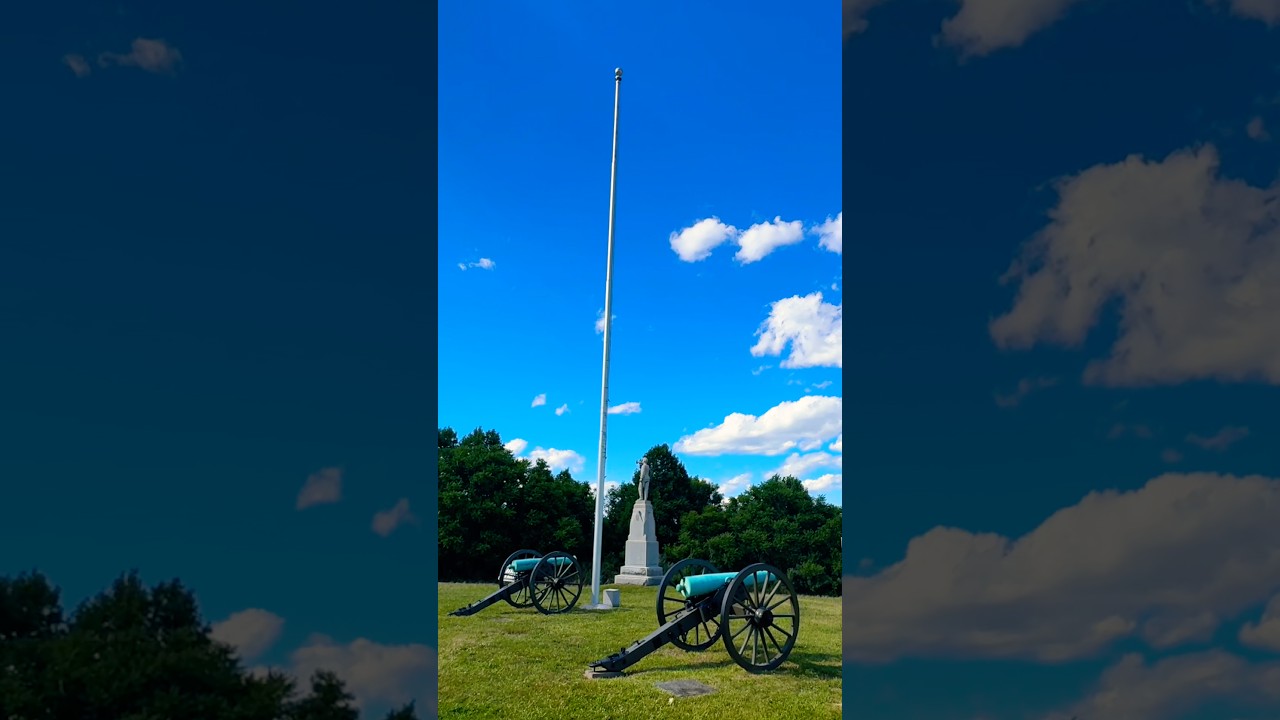
Barlow’s confidence in his men, however, was not matched by his respect for them. He had commanded the 11th Corps since the spring, and his opinion of them had soured badly after the disastrous Battle of Chancellorsville two months earlier, where the corps had been routed by a flank attack and had become the subject of bitter criticism throughout the Army of the Potomac. Barlow carried that resentment with him to Gettysburg, and he would later write home in terms that were far from flattering about how his soldiers performed on this hill. But the men under his command were about to give him reason to reconsider, whether he chose to acknowledge it or not.
The Confederate force moving against Barlow’s position was led by Brigadier General John B. Gordon, a skilled and aggressive brigade commander from Georgia. Gordon’s troops advanced across the fields east of the knoll, their lines sweeping forward with the momentum of an army that had been on the offensive all day. The Federals on the crest waited, holding their fire until the gray lines came within effective range.
When the order was given, the 11th Corps opened up with volleys that tore into the advancing Confederates. The fighting was sharp and sustained. Gordon later reported that his men came within fifty paces of the Federal line before the resistance finally broke them. That single detail, fifty paces, speaks to the ferocity of the stand on Barlow’s Knoll.
It was not the kind of weak, half-hearted defense that Barlow’s later letters would suggest. The men of the 11th Corps, despite their poor reputation and the lingering humiliation of Chancellorsville, stood their ground and fought hard. They were not easily dislodged. The Confederates had to press the attack with real determination before the Union line finally gave way.
For a time, it seemed possible that Barlow’s men might hold the knoll and deny the Confederates the high ground that dominated the northern approaches to Gettysburg. But the situation on the broader battlefield was already deteriorating. While Barlow’s troops held their ground, Confederate pressure was building across the entire Union line to the south and west. The 11th Corps was stretched thin, and Barlow’s advanced position on the knoll left his flanks exposed.
Gordon’s attack, though costly, was not the only threat. As the fighting on the knoll reached its peak, Confederate reinforcements began to overlap the Union right and rear. The men who had fought so stubbornly on the crest now found themselves in danger of being surrounded. The breaking point came when Gordon’s brigade, reinforced by fresh troops, surged forward once more.
The Federals, their ammunition running low and their flanks collapsing, were forced off the hill. Barlow himself was hit and fell into Confederate hands, wounded severely. The retreat that followed was not orderly. The Union soldiers streamed back toward the town of Gettysburg, mixing with other retreating units from the 11th Corps.
The Confederate pursuit was relentless, and the streets of Gettysburg became choked with fleeing Federals and pursuing Southerners. By late afternoon, the Union line had been driven through the town entirely, and what remained of the 11th Corps was forced to regroup on Cemetery Hill, south of the town, where the rest of the army was hurriedly forming a defensive position. The loss of Barlow’s Knoll was a serious setback, but it was not the decisive disaster it might have been. The Union position on Cemetery Hill and Cemetery Ridge held, and the Confederate pursuit halted at the edge of town rather than pressing the attack against the new Federal line.
The fighting on the knoll had bought time, even if it ended in retreat. Gordon, for his part, would remember the stand on Barlow’s Knoll as a tougher fight than many of the other engagements of that day. He acknowledged the stubborn resistance of the soldiers he had faced, a grudging admission from a man who had seen his own share of hard fighting. For the 11th Corps, the stand on Barlow’s Knoll did little to rehabilitate their reputation in the eyes of their own army.
The rapid collapse of the Federal right flank and the chaotic retreat through Gettysburg only reinforced the narrative of a corps that could not be trusted in a fight. Barlow’s own letters, written in the aftermath of the battle, continued to disparage the men he had commanded, describing their performance in unflattering terms. But the evidence of the fight itself, including Gordon’s report of coming within fifty paces of the line, suggested a more complicated story. The soldiers on Barlow’s Knoll had not run at the first volley.
They had stood, fought, and inflicted real losses on the Confederates. They had only fallen back when the position became untenable and the rest of the line around them collapsed. The exact circumstances of the final moments on the knoll remain a matter of some uncertainty. Accounts differ on how long the Federals held and whether the retreat was orderly or a rout.
What is clear is that the stand delayed the Confederate advance long enough to prevent a complete collapse of the Union right. The men who fought there were forced off the hill, but they were not broken. Barlow’s Knoll fell, but the cost to the Confederates was real, and the time gained was precious. In the end, the 11th Corps did not win the day at Barlow’s Knoll.
The position was lost, the ground was surrendered, and the Union line fell back to Cemetery Hill. But the stubborn resistance offered on that open slope, so close to the flagpole that marked the crest, was not the performance of a corps that had given up. The men fought, and they fought hard. Whether Barlow ever acknowledged that fact in his letters home is uncertain, but the record of the battle itself suggests that the soldiers of the 11th Corps did their job that afternoon, even if the outcome was not what they had hoped for.
The stand on Barlow’s Knoll was not a victory, but it was not the shameful rout that history would sometimes remember. It was a desperate, bloody defense by men who held their ground, and it ended only when they had no choice but to let it go.