On the morning of April 17, 2021, a dark green carriage stood empty in the quadrangle of Windsor Castle. Two black fell ponies, Balmoral Nevice and Notaw Storm, were harnessed and waiting. On the driving seat, arranged with precision, sat a brown cap, a pair of driving gloves, and a whip.
A small red pot held sugar lumps for the ponies. No one climbed up to take the reins. The carriage simply stood there, a silent eulogy for the man who had designed it and would never drive it again.
Inside St. George’s Chapel, the arithmetic was brutal. COVID-19 regulations had capped the congregation at 30 people for the funeral of Prince Philip, the longest-serving consort in British history.
Every name on the guest list was a decision, and every name had displaced somebody else. In the choir stalls sat a woman in a black day coat and a black pillbox hat. She was not a Windsor by blood, nor a Mountbatten.
She was a countess nearly 32 years younger than the man in the coffin, and for nearly three decades she had been his carriage-driving partner.
Her name was Penelope Knatchbull, Countess Mountbatten of Burma. The press called her Penny. The tabloids called her many other things: the blonde in the passenger seat, the rival, the mistress in waiting, the woman who supposedly took a prince away from a queen.
But the full story of what existed between the Duke of Edinburgh and Penny Knatchbull is less lurid and considerably stranger. It was a friendship conducted in daylight for 27 years, photographed at public events, encouraged by the Queen, rooted in family, and forged in the aftermath of a five-year-old’s death.
Prince Philip was born on June 10, 1921, on the island of Corfu, into a family that had specialized in losing thrones and countries. In the autumn of 1937, when he was 16, his sister Cecile and her children were killed in a plane crash. Philip traveled to the funeral in Germany, walking behind coffins draped with swastikas, flanked by relatives in Nazi uniform.
What he did afterward was the part that mattered. He went back to school. He kept moving.
Biographer Gyles Brandreth described him as a restless pragmatist, a man who did not do public grief and reacted to being asked how he felt the way a cat reacts to a bath. Decades later, Brandreth recorded him driving a carriage around Sandringham at speeds that alarmed onlookers. For a certain kind of mind, grief is not something you sit down with.
It is something you outrun.
Penelope Meredith Mary Eastwood was born in London on April 16, 1953, six weeks before the Coronation. She was the only daughter of Reginald Eastwood, a butcher who built his fortune by founding the Angus Steakhouse chain. The enterprise made the family extremely comfortable and completely unacceptable to a certain kind of drawing room.
She was educated in Switzerland and graduated from the London School of Economics in 1976.
The bridge between Penny and the Prince was a man named Norton Knatchbull, born on October 8, 1947. Prince Philip was Norton’s godfather. Norton’s grandfather was Louis Mountbatten, the last Viceroy of India, Philip’s uncle, and the closest thing Prince Charles had to a mentor.
The Knatchbulls were not royal adjacent; they were royal entangled. Their family seat was Broadlands in Hampshire, the Mountbatten estate where Princess Elizabeth and the newly created Duke of Edinburgh had spent their honeymoon in November 1947.
When Penny Eastwood married into that house, she was not marrying into the outer suburbs of the royal family. She was marrying into a property the Queen had honeymooned in and a family the Duke of Edinburgh regarded as his own. On August 27, 1979, the IRA detonated a bomb aboard Lord Mountbatten’s boat, killing him, Norton’s 14-year-old brother Nicholas, and others.
Penny Eastwood was weeks away from joining the family. Less than eight weeks later, on October 20, 1979, she married Norton Knatchbull at Romsey Abbey. Prince Charles was best man.
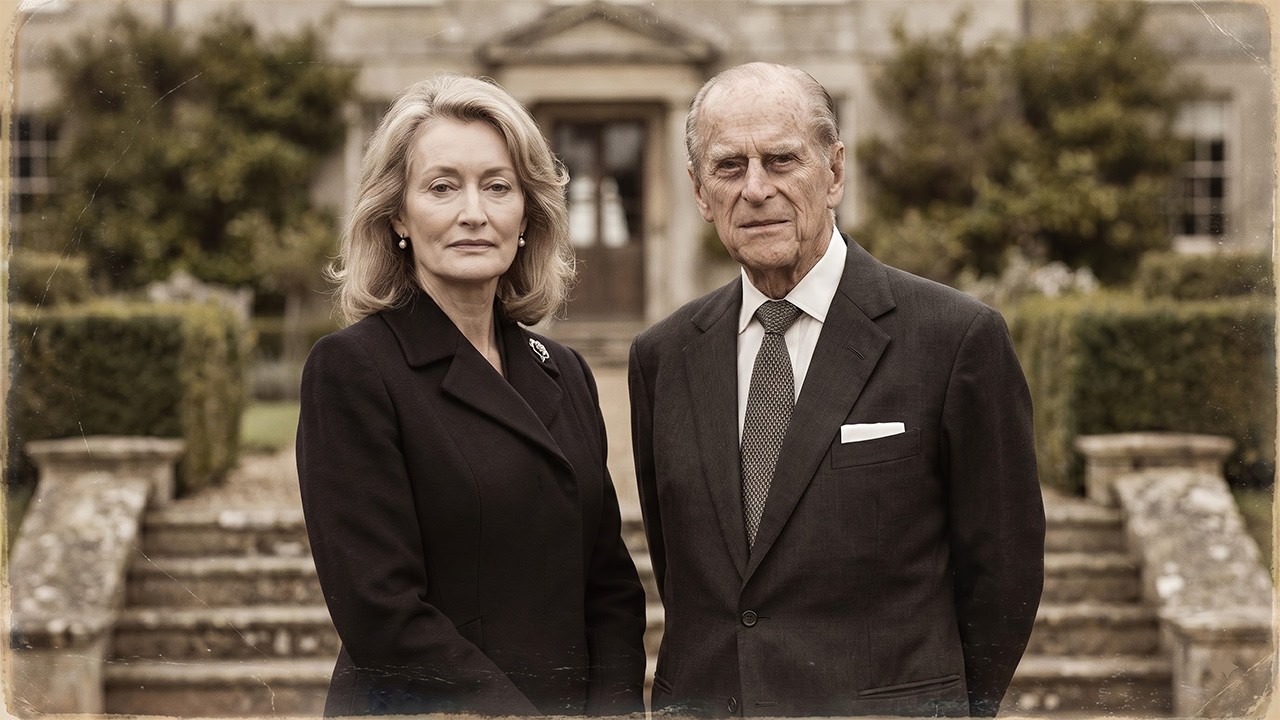
She became Lady Romsey that day. Penny Eastwood entered the royal orbit through a funeral into a family whose defining characteristic was sudden violent loss. For the next decade, she had children: Nicholas in 1981, Alexandra in 1982, and Leonora on June 25, 1986.
In the summer of 1991, Leonora was photographed on the balcony of Buckingham Palace during Trooping the Colour in a bright red hat. By then, she had been ill for almost a year.
The diagnosis was kidney cancer. She was four years old. What followed was 14 months of treatment.
On October 22, 1991, at St. Bartholomew’s Hospital in London, Leonora Knatchbull died. She was five years, three months, and 27 days old.
Four days later, she was buried at Romsey Abbey, the same abbey where her mother had been married 12 years earlier. Penny Knatchbull was 38 years old.
What Prince Philip did afterward, according to every biographer who has examined the friendship, was show up. The support he offered Penny after Leonora’s death is identified as the precise point at which an in-law acquaintance of 12 years became something much closer. At some point in this period, Prince Philip, a man whose public reputation was built on brusqueness and walking away from conversations that bored him, sat down at an easel and painted a watercolor of the five-year-old girl’s grave in the grounds of Broadlands.
That detail, reported by The Times, contains not one spoken word.
In 1994, the family founded the Leonora Children’s Cancer Fund. And in the same year, Prince Philip did something considerably less conventional. He taught Penny Knatchbull to drive a carriage.
Sandringham, 1994. A woman of 41 stood before four horses harnessed in a line. Four-in-hand carriage driving means one person, one seat, and four animals, each weighing more than the vehicle.
The reins come as a heavy leather bundle gathered into the fingers of one hand. The physics are unforgiving. The margin for inattention is zero.
Beside her was a man of 73 in a tweed cap. He had spent the last three years watching this woman bury a child. He handed her the reins.
There is no recorded speech at that moment, no consoling homily, nothing on the record at all. What we have is a transaction of equipment between two people on grass in silence. Prince Philip’s documented response to catastrophic loss, from the age of 16 onward, was never to sit with it.
It was to move at speed, at difficulty, with total concentration required. What he gave Penny Knatchbull in 1994 was not consolation. It was a discipline that makes introspection impossible because you cannot grieve properly while four horses are deciding whether to obey you.
She kept doing it for the next 27 years. British carriage driving is not a gentle amble. Competitive driving trials include a timed cross-country marathon with hazards, water crossings, and tight turns between fixed obstacles.
People are injured doing it. Philip had come to it in his 50s. Asked why he had taken it up instead of polo, he said, “I am getting old.
My reactions are getting slower.” He was entirely self-taught, a fact Penny herself noted in an ITV documentary, describing his driving as “quite remarkable.”
The friendship was never a secret. If you were designing a covert relationship between a member of the royal family and a married countess, you would not conduct it at the Royal Windsor Horse Show in front of grandstands, wearing a competitor’s number, timed and judged and photographed by the press pack. They did all of it for decades in matching kit at public events.
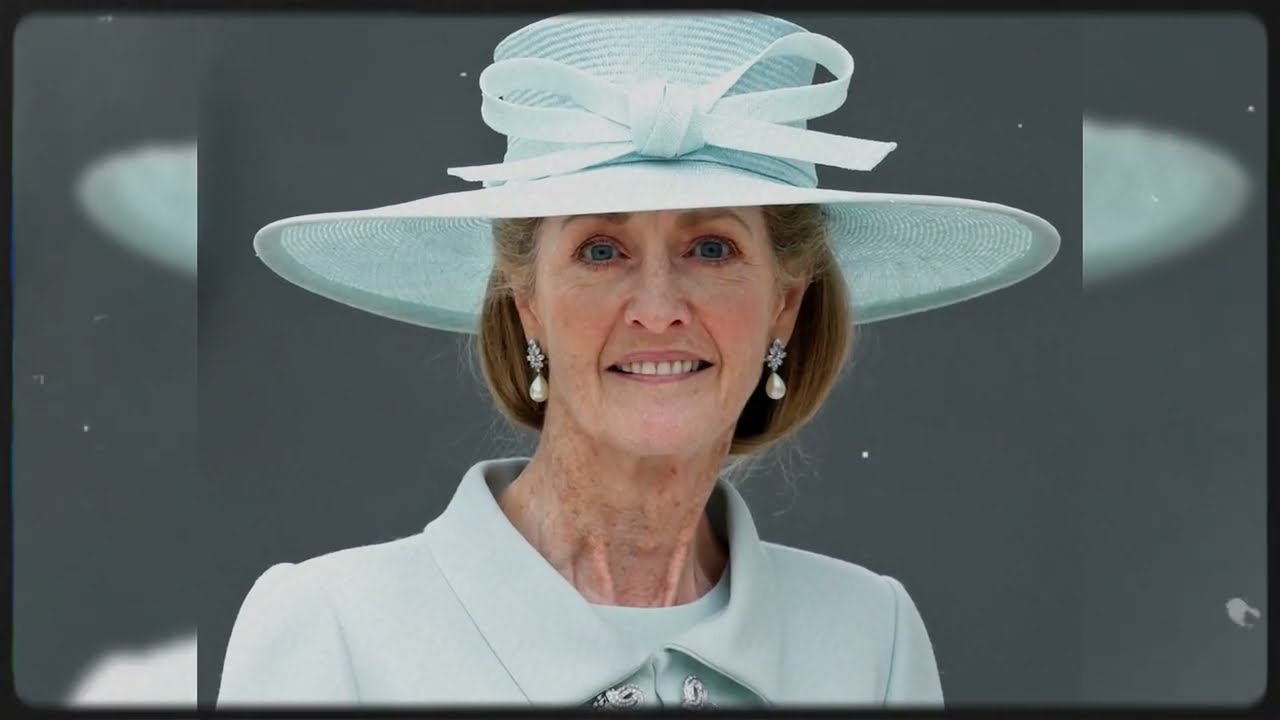
That is not how affairs are conducted. That is how hobbies are conducted.
By the mid-1990s, the whispering had started. When a journalist put the question of other women to Philip directly in 1992, his reply was seven words long: “How could I? I’ve had a detective in my company.”
By the 2000s, the speculation was a fixture.
In 2010, the marriage that had put Penny inside this family fell apart. Norton Knatchbull left, going to the Bahamas with fashion designer Jeanie, Lady Nuttall. He left behind a wife of 31 years.
The contemporaneous reporting attributed the departure to Norton’s own relationship. Nobody at the time connected it to the Duke of Edinburgh. The chronology was a coincidence; the causation was an invention.
When an aristocratic marriage detonates, the standard operating procedure of the royal family is to withdraw slowly and let the awkward party evaporate from guest lists. Penny Knatchbull was, by that logic, extremely evaporable. She was not a blood relation.
Her connection ran entirely through the man who had just walked out. The royal family did the opposite. Richard Kay, the Daily Mail’s royal correspondent, reported palace aides in 2010 summarizing the position in eight words: “The Queen and Duke will not see her cast out.”
The wife stayed. The godson went. Philip’s loyalty remained with Penny, not with his own godson.
The Queen was on the same side of that decision as her husband. The woman the papers called a home wrecker was the one the royals protected when her home got wrecked.
The affair allegation itself consists of no named witness, no document, no letter, no diary entry, no settlement, no palace inquiry, no staff member who has ever gone on the record, not even anonymously, in three decades of the most aggressively surveilled family on earth. What exists is a large age gap, a lot of photographs of a public sport, and a Netflix drama. Every serious biographer who has examined the relationship—Ingrid Seward, Hugo Vickers, Sally Bedell Smith, Gyles Brandreth—independently describes it as deep, sustained, and platonic.
There exist archival photographs from the 1990s of the Queen and Penny Knatchbull sitting together in the back of a Land Rover at Windsor, laughing. At the event the tabloids had insisted would produce a confrontation, the Queen provided the transport. Philip’s impatience was legendary; he would walk out of a conversation that had stopped being interesting, midsentence if necessary.
Yet the same man sat still in a carriage box beside the same woman hour after hour across three decades. The Times reported in 2021 that the two of them talked about religion and philosophy on those drives.
In 2005, Norton’s father died, and Norton became the eighth Baron Brabourne. On June 13, 2017, Patricia, the second Countess Mountbatten of Burma, died. Norton inherited the title.
Penny became Countess Mountbatten of Burma, a title she holds by marriage to a man who had been living apart from her for the better part of seven years before returning to the estate.
In early August 2017, Prince Philip carried out the last official public engagement of a working life that had lasted longer than most of his audience had been alive. Then he went home—not to Windsor, but to Wood Farm on the Sandringham estate in Norfolk. It is a farmhouse, not a palace.
From August 2017 until the beginning of 2021, it was where Prince Philip principally lived. The Queen returned to Windsor and traveled up to Norfolk by train at weekends. Penny Knatchbull was a regular house guest.
Hugo Vickers wrote that Penny “often stayed with him there” and went further in a phrase that has been detached and flung around ever since: “In a sense, they separated.” But Vickers describes intermittent stays by a house guest inside a picture in which the Queen kept coming every weekend by train for three and a half years to a farmhouse in Norfolk in her 90s. That is not a woman being pushed out of a marriage.
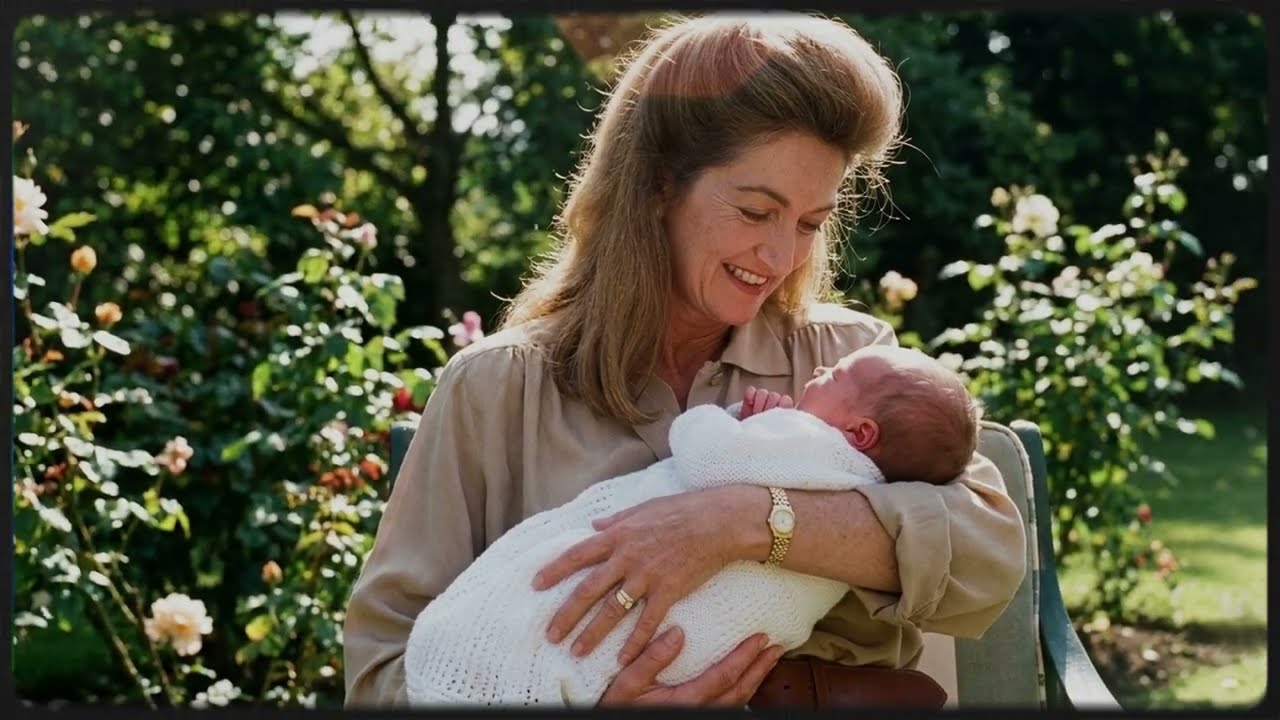
That is a couple arranging the geography of old age around the fact that one of them had retired and the other had not.
The strongest evidence against the replacement theory arrived on January 17, 2019. A 97-year-old man pulled a Land Rover Freelander out of a driveway onto the A149 near the Sandringham estate. A Kia was coming.
The two vehicles collided, and the Freelander went over. Philip climbed out unhurt. In the Kia were two women and a baby; one woman had a broken wrist.
Breath tests came back negative. Within weeks, the Duke of Edinburgh voluntarily surrendered his driving license.
How do you get a 97-year-old man with seven decades of documented stubbornness to give up the wheel? According to accounts that reached his biographers, the Queen did not try. She asked Penny Knatchbull to talk to him.
No record of that conversation exists. What is documented is the request and the outcome. The Queen, faced with a problem inside her own marriage of 71 years, outsourced it to the woman the newspapers had spent 20 years calling her rival.
In May 2019, four months after the crash, Penny Knatchbull was photographed at the Royal Windsor Horse Show driving Prince Philip in a Land Rover. He had lost the license. She had not.
Palace staff reportedly had a nickname for her, said to derive from the way Philip would reach the end of a guest list and add the same three words: “And also, Penny.”
On April 9, 2021, at Windsor Castle, Prince Philip died. He was 99 years old, two months short of 100. Eight days later, COVID regulations set the number of mourners permitted inside St.
George’s Chapel at 30. The palace published the list. Every name had to earn its chair.
Penny was the only person on that list who was not a member of the royal family. She wore a black day coat and a black pillbox hat. Contemporary reports described her as looking heartbroken.
Outside in the quadrangle, the dark green carriage stood with the cap and the gloves and the whip on the empty seat and the sugar lumps in the little red pot. The two black fell ponies waited for a driver who was in the chapel.
The case against her, honestly stated: she was a much younger woman who occupied an enormous amount of a married man’s time and attention for 27 years, whose presence at Wood Farm coincided with a period Vickers is willing to call “in a sense” a separation, and whose closeness to the Duke was sufficiently obvious that a serious royal biographer ranked her second only to the Queen among the women in his life. Those are not tabloid inventions.
The case for her is the entire evidentiary record: not one witness, document, letter, settlement, or admission in 30 years of surveillance. A friendship that began through her husband and Philip’s godson, deepened in a hospital in October 1991, and was then conducted at timed public events in front of grandstands and press pens. A Queen who put her in the back of the royal Land Rover in the 1990s, sent her to argue about a driving license in 2019, seated her in the chapel in 2021, and whose own state funeral she attended on September 19, 2022.
The two of them found each other where they did because of what they had both survived. Philip walked behind his sister’s coffin at 16 and spent the following 83 years refusing to sit down with it. Penny buried a five-year-old and was handed, three years later, four horses and a set of reins and a discipline in which there is no spare attention left over for anything at all.
He did not console her. He gave her something to outrun it with, and then rode beside her for 27 years while she did.
As of today, Norton Knatchbull, third Earl Mountbatten of Burma, is 78, living with Alzheimer’s disease. Their son Nicholas has returned to Broadlands, married with children, and is understood to have been reinstated as heir. Penelope Knatchbull, Countess Mountbatten of Burma, is 73 years old.
She runs the Broadlands estate. She has given no interview about Prince Philip then or since. In July 2025, she appeared in public to open the garden of an oncology center in memory of a girl who died in 1991.
Somewhere in the grounds of Broadlands, there is that grave. And somewhere there is a watercolor of it painted by an old man at an easel who was famous across three continents for having no feelings whatsoever. A man devoid of empathy does not spend an afternoon painting the resting place of his friend’s child.
And a woman who is merely a tabloid story does not make the 30-person guest list at a sovereign’s farewell.