Rain in the Face, a Hunkpapa Lakota war chief, carved his name into history at the Battle of the Little Bighorn in 1876. His reputation as a fierce warrior was matched only by his deep hatred of George Armstrong Custer, whom he blamed for the deaths of his brother and sister in an earlier fight. Some claimed Rain in the Face had delivered the fatal blow that killed Custer, though historians have long debated the truth of that day. After the battle, Rain in the Face surrendered, spent time in prison, and later became an advocate for Native rights, even performing in Wild West shows.
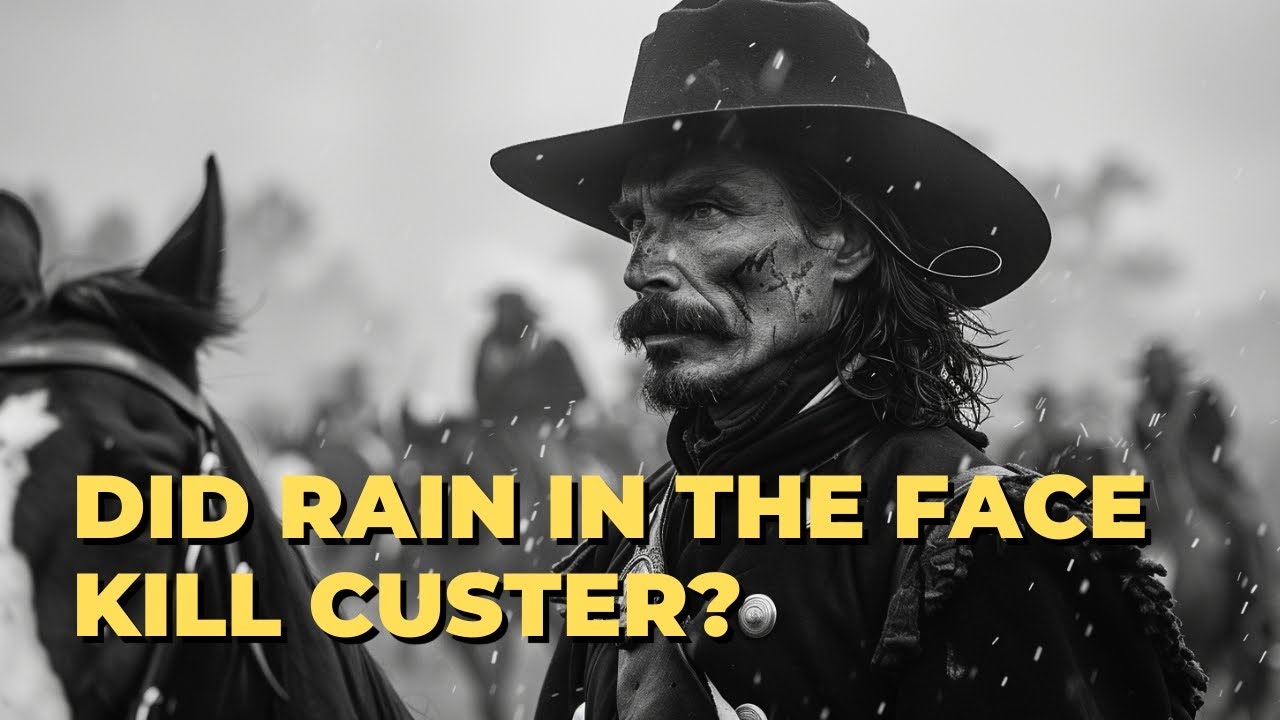
His fierce reputation softened with age. “I was a man feared before I needed crutches,” he once said. “The soldiers trembled, and the Crows would check to see if their scalps were still intact when I was near. ”
It was at one such gathering that a man named Harry, who knew the ways of the Native warriors, pressed him directly.
“We know you were a tough man,” he said, “but tell us about the time Tom Custer beat you. ”
Rain in the Face frowned deeply. He had kept silent for years, resisting the promises and threats of army officers and government agents who wanted details about the battle. But now, unexpectedly, he spoke.
His story began two years before the Little Bighorn. The Hunkpapa camped at Standing Rock, strong and afraid of no one. Life there was filled with dancing, racing, and hunting. Rain in the Face admitted he was favored by the women, while the men kept their distance, knowing his temper.
One day, a young woman dared him to prove his courage by killing a white man near Fort Lincoln. He accepted the challenge. “I painted my face black, armed myself, and set out under cover of darkness,” he said. He found a storekeeper and a horse doctor, shot them both, and took their buttons as proof.
The young woman sewed the buttons onto her shawl. But the escape was narrow, and Custer—whom the Lakota called Long Yellow Hair—gave chase. Later that winter, Rain in the Face was captured and thrown into a freezing guard room. Yet he made a daring escape, leaving behind a buffalo skin marked with a bloody heart—a vow of vengeance he intended to keep.
When shown a sketch of Custer’s famous last charge, Rain in the Face laughed. “This picture is a lie,” he said. “We fought with guns and war clubs, not bows. The soldiers were on foot, and their guns jammed.
It was like hurting sheep. Some begged for mercy, but none was given. ” He took the paper, turned it over, and drew a long S-shaped line with a pencil. “This is the Little Big Horn River,” he said.
“Our lodges were like a bent bow along its banks. ”
Harry asked how many lodges there were. The answer was staggering. “Many, many times ten.
We were like the blades of grass. There were four to six thousand people, easily over a thousand lodges. ” Sitting Bull, whose medicine was powerful, stood on a hill with a sacred bundle and gave a great speech. He said the Great Spirit had shown him the soldiers approaching but promised victory.
His words filled the warriors with joy. The next day, scouts reported the soldiers were coming. Sitting Bull ordered the women to set up decoy lodges to fool the white scouts, while the brush and bends of the river hid the real camp. Then he left to make more medicine, not returning until the battle was over.
“He was a wise chief,” Rain in the Face said, “but Gall led us that day. ” Crazy Horse guided the Cheyenne, and Goose led the Arikara. Rain in the Face commanded a fierce band of Hunkpapa warriors. They saw the soldiers’ tired horses and knew the whites had underestimated their strength, believing they were attacking a small camp.
The soldiers made a fatal mistake when they split their forces. Gall led most of the warriors upriver to cut them off, while the Crow scouts stayed behind with Long Yellow Hair. The Lakota let the soldiers come over the bluffs, then showed their line. The soldiers charged but soon retreated under heavy fire.
Rain in the Face saw officers talking and pointing, but they all looked the same to him. He did not see Long Yellow Hair that day, either then or later. The Crow scouts began their death song, knowing they were doomed. They dismounted, with every fourth man holding the horses.
The Lakota circled them, rushing in like a wave upon the sand. They shot the horse holders, and the ponies stampeded. “I had sung the war song, breathed in the smell of gunpowder, and my heart had gone bad,” Rain in the Face recalled. “My mind was wild.
I charged in, grabbing their flag, but my pony was shot dead. I cut its thong, struck down the flag man with my war club, and brought the flag back to our lines. ”
The fight raged on. Blood and brains splattered across his face, hot and bitter.
He mounted a new pony and charged again, slashing and shooting. When that pony fell, he found another. Then he saw Little Hair—the man he believed was Custer’s brother, Tom Custer—and his vow came back to him. “I was crazed, unafraid, trusting my white weasel tail charm to protect me,” he said.
“I don’t know how many I killed trying to reach him. But he saw me and recognized me. He was afraid. I laughed and yelled, but the noise drowned out his words.
When I got close enough, I shot him. ”
He dismounted, cut out the man’s heart, bit a piece off, and spat it in his face. Then he shook the heart and rode off. “I had kept my vow, and that was all that mattered,” he said.
He did not scalp him. He had no need. He left the battlefield satisfied. Later, the women finished off the wounded, taking their belongings and cutting off boots for leather.
They even removed fingers to get rings faster. They searched for Long Yellow Hair’s scalp but found nothing—he wore no uniform and had cut his hair short. That night, the Lakota feasted and danced. Sitting Bull claimed his medicine had given them courage, but Gall challenged him.
“We did the fighting, not your medicine. ” The tension between the two leaders grew, with some people siding with one and others with the other. Rain in the Face followed neither. He led his own band and cared only for dancing.
When news came of more soldiers approaching with big guns, the Lakota moved north, crossing the border into Canada. Rain in the Face stayed there until Sitting Bull returned, and he came home with him. “It felt good to be back,” he said. When he finished his story, someone asked, “If you didn’t kill Long Yellow Hair, who did?
”
“I don’t know,” he answered. “No one knows. It was like fighting in darkness. ”
He was also asked why Long Yellow Hair had not been scalped like the others.
“No man is too brave to be scalped,” he said. “The women couldn’t find him, likely because his body was hidden beneath others. ”
As for Curley, the Crow scout who claimed to have escaped the battle and survived to tell the tale, Rain in the Face was blunt. “Curley is a liar.
He wasn’t even in the fight. His pony failed, and he ran off like a coward. ”
Now nearing sixty, Rain in the Face remained one of the few surviving chiefs who could still tell the tale of the Little Bighorn. He could write his name in English, though he did not fully understand its meaning.
Despite his fierce appearance, he was dependable when he gave his word, though getting him to promise anything took much patience. Even at his age, he remained a strong and imposing figure, a living testament to a bygone era and one of the last voices of the great Sioux War of 1876.