In the spring of 1943, the German Africa Corps surrendered in Tunisia, and more than 150,000 German soldiers were shipped across the Atlantic to the United States. They did not come as occupiers but as prisoners of war. The Geneva Convention of 1929 permitted fit prisoners to work, and America needed hands. Between 1943 and 1945, roughly 265,000 German prisoners worked at some stage of American farm production.
What these prisoners found on American farms did not match what their leaders had told them. Nazi propaganda had painted America as a broken country. In January 1939, Joseph Goebbels wrote that America had eleven to twelve million unemployed. When Adolf Hitler declared war on the United States in December 1941, he told the Reichstag that America had thirteen million unemployed and that the New Deal had failed.
A Nazi Party training booklet the next year went further, calling the New Deal a failure and claiming Roosevelt had gone to war to rescue his economy. The prisoners themselves saw something different. American farms were full of machines. In 1940, American farms had more than a million and a half tractors, more than a million trucks, and more than four million automobiles.
Germany’s farms had nothing close to that. A count of German farms in 1933 found more than 3. 2 million horses but only about 24,000 tractors and 9,000 trucks. Even in 1939, German agriculture still counted about 3.
4 million horses and only about one tractor for every 950 acres of land. For every tractor on a German farm, American farms had about sixty-five. Then the war made the difference worse. The German army’s mobilization plan called for taking horses and motor vehicles out of the civilian economy, with their owners registered in advance.
By September 1, 1939, the Wehrmacht had 573,000 horses. For the invasion of the Soviet Union in June 1941, it set aside 750,000 horses. The horses went to war with the men. American farms moved the other way.
By January 1, 1945, tractors on American farms numbered almost two and a half million, trucks almost a million and a half, and automobiles still more than four million. Horses and mules dropped from fourteen and a half million to under twelve million. The war expanded American farm mechanization even as it stripped German farms of their horsepower. The prisoners worked alongside both the old and the new.
Near Hatch, New Mexico, a farmer named E. C. Alvarez hauled twenty-five prisoners and a guard to his farm in a small truck. On that farm, a Farmall tractor worked alongside the work horses.
At Clarinda, Iowa, starting in February 1944, farmers came to the camp to pick up prisoners for the day. Out at the farm, a prisoner would sometimes drive the owner’s car to where the work was. On one Iowa farm, when the owner had to leave, he simply said, “Bruno will know what to do. ”
Heinrich Kraftczyk worked on farms in Illinois, Wisconsin, and Michigan.
Decades later, he put it plainly: “We worked in the fields for the farmers. In Wisconsin, I had to pick potatoes. ”
In Utah, prisoners worked the sugar beet fields. One family there still tells how the grandfather did it.
“My grandfather would take his truck, go to the camps, pick up the POWs, and drive them to a farm he was working on in Clarion, farming sugar beets. ”
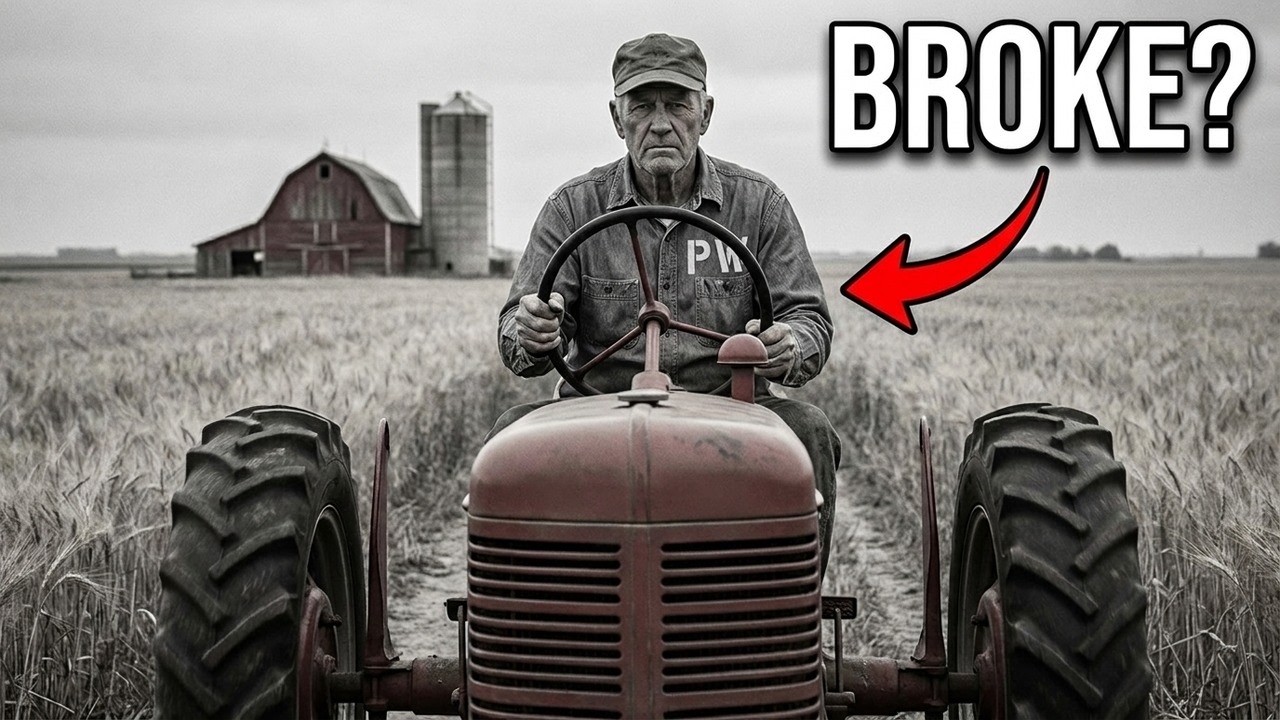
The prisoners were not just riding past machines; they were running them. Near Albuquerque, on the Mann farm, June Mann remembered prisoners driving the tractors. They also irrigated the orchard and pruned the trees.
In Michigan, prisoners worked on William Bishop’s celery farm, a fully mechanized operation. Years after the war, in letters they wrote back to the family, they still remembered the tractors. The army put machines in their hands too. At Camp Wallace, Texas, a Signal Corps photographer found German prisoners on a work detail with a mowing machine.
Others worked in the camp shop, repairing army trucks and spraying them with fresh paint. The locals were wary at first. When the first prisoners arrived in Hall County, Nebraska, in the spring of 1944, twenty-eight came ahead to convert the old Dodge school in Grand Island into their quarters. Then the first hundred workers arrived.
Dietmar Neubert, one of the prisoners there, remembered it later: “Some must have thought we were all Nazis, and had two horns on our forehead. ”
After the morning roll call, the farmers arrived in trucks to pick them up. In Wisconsin, a farmer named Ronald Greiner would run into town with his pickup each morning to get his crew of eight to ten men. In Michigan’s sugar beet country, a driver named Ernie Abraham remembered his schedule years later.
He had to be out in Freeland by 7:00 in the morning, then take twenty-four prisoners to Frankenmuth. In 1945, on a farm near Walpoon, Wisconsin, a German prisoner of war named Alois Gugemos drove the Dreykosen family’s tractor. As he drove, he sang. The family remembered it years later.
During a lunch break that day, Gugemos said something the family never forgot. In Germany, he told them, they had diesel tractors. The Dreykosen’s tractor was not a diesel. This was not a man seeing his first machine.
Germany had tractors, even diesel ones. What Germany did not have was this many of them, on ordinary farms, run by ordinary farmers, while a war was on. The Nazi propaganda had carried a contradictory picture all along. In the same article where Goebbels counted America’s unemployed, he described Americans drowning in wealth, prosperity, foreign currency, gold bars, and raw materials.
The party’s own training booklet admitted that America should never run short of food, and wrote of millions of trucks carrying it. It was not true that every American farmer had a truck. In 1945, only about one American farm in five reported a motor truck. But at Grand Island, the farmers who came for the morning work crews arrived in trucks.
Nazi leaders had described America as a country whose economy had failed. The German soldiers who were captured and shipped across the ocean found farms that were adding tractors in the middle of the war, and farmers who let an enemy soldier take the wheel. In 1945, on a farm in Wisconsin, a German prisoner from a country with far more horses than tractors drove an American family’s tractor and sang. The difference had never been the machine itself.
It was how many there were.