Mercer Gaines and Quentin Farrell had been working together for six weeks, mapping the high country east of Mount Timpanogos for the United States Geological Survey. It was hard, isolated work, exactly what Mercer wanted. He preferred the company of maps and theodolites to people. Quentin, a young packer from the valley below Heber City, knew the mountains and kept the mules calm.
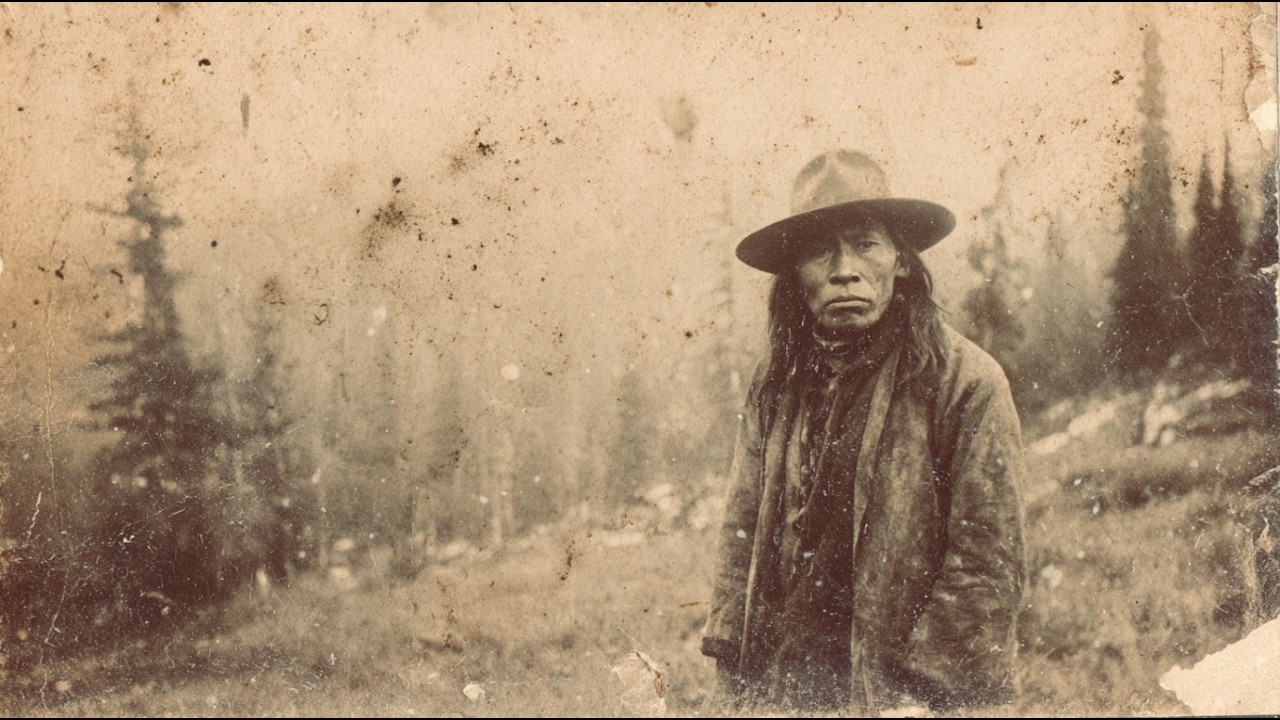
By mid-June of 1911, they had established a base camp at nine thousand feet and were ahead of schedule. On the morning they planned to push into an uncharted glacial valley, a Ute man appeared on the trail without warning. He spoke little English at first, then asked where they were going. When Mercer explained their survey work, the man told them the valley was forbidden.
He said the old people had marked it with stone so no one would enter. He said nothing lived there, that the water did not taste right. People who went in did not always come out, and those who did were not the same afterward. He was not hostile, but there was a sadness in his face, the kind that comes from watching someone walk toward danger you cannot stop.
Mercer thanked him, then said they had a job to do. The man replied that being careful would not help them in that place, and left. Mercer and Quentin finished loading the mules and climbed toward the ridge. The descent into the valley was slow, the slope loose and unstable.
The moment they reached the floor, the silence hit them. No birds, no insects, nothing. Even the stream seemed muted. The mules had their ears back and pulled at their lead ropes.
Mercer’s compass needle spun in fast, full circles. He told himself it was a magnetic anomaly. He did not want to consider other explanations. They walked deeper into the valley.
The vegetation was wrong, low bushes with leaves too dark and waxy, no flowers, no seed heads. There were no trees at all, nothing taller than the bushes. They passed a cairn of stacked stones, topped with faded cloth and a bundle of dried plants. Two more appeared as they moved deeper, each marking a rough line across the valley floor.
Mercer set up his transit near the stream and began taking readings. The work helped push back the unease. Mid-afternoon brought a new smell, like decay mixed with something chemical. It came from the upper valley, from patches of darker ground they had not explored.
As the sun dropped, the temperature fell fast and the light drained from everything until the valley looked monochrome. They camped near the stream because there was nowhere else, but neither man slept. At around midnight, the smell intensified until it was nearly unbearable, and then they heard the silence move. It came toward them from the upper valley, a zone of deeper absence that approached like a sound of its own.
The mules made a low, terrified sound Mercer had never heard before. Quentin said they should go. Mercer wanted to argue, but every instinct in him was screaming to leave. They packed in the dark, stuffing gear anywhere it fit.
As they finished, Mercer looked toward the head of the valley and saw a shape moving. It was long and low, but its height seemed to shift, and it flowed rather than stepped, and where it passed, the ground darkened as if it had absorbed the light. It was large, maybe eight or ten feet long, and it had too many appendages, moving in a pattern that made Mercer’s vision blur. Then it stopped moving.
Mercer knew with absolute certainty that it was looking at them. Quentin grabbed his arm and dragged him. They ran toward the western ridge, not back the way they had come. The mules followed on their own, their fear overriding all caution.
Behind them, Mercer could hear wet sliding sounds and something that might have been breathing. The climb took maybe forty minutes, though it felt like hours. When they reached the ridgeline, Mercer looked back. The valley below was darker than simple night shadow.
He could see multiple shapes moving in patterns that hurt to watch, and the smell reached them even at that height. They did not stop. They followed the ridgeline east all night, stumbling through scattered pines until they found a way down to familiar terrain. They reached their base camp meadow at dawn.
Mercer’s hands were torn from the climb, but he barely noticed. For two days they barely spoke. On the third day, Mercer told Quentin he was going back. He needed photographs, physical evidence, or no one would ever believe them.
Quentin refused to go. He agreed to wait at the base camp while Mercer made a solo trip to the ridge line, no farther. Mercer climbed back the next morning and reached the crest by mid-afternoon. The valley below looked ordinary, empty and barren under clear light.
His compass worked fine at that elevation. He took several photographs with his large-format camera and watched through binoculars for three hours. Nothing moved. He began to doubt himself.
But he had smelled the thing. The mules had been terrified. That was not suggestion. He packed up and started down as the sun dropped.
Halfway down, he heard a low-frequency vibration from the valley, a hum he felt in his chest and teeth. It lasted about thirty seconds, then stopped. He descended fast and did not look back. They broke camp at dawn and returned to Heber City.
Mercer spent the rest of the season surveying other areas and completed his assignment. In his field notes, the page for those days in June contained only one sentence: “Unable to complete survey of valley at approximately 40°46′N 111°3′W due to equipment failure and adverse conditions. Recommend avoiding this area for future survey work. ” The photographs he had taken showed only an empty valley.
But in one image, a dark area in the background had altered the photographic emulsion itself, a change no one could explain. He never submitted the photographs and never spoke of the valley again. Quentin returned to his family’s ranch. In 1913, he wrote to Mercer that he was having nightmares, always the same dream of walking in the valley at night, the smell overwhelming, shapes at the edge of his vision.
A doctor called it nervous exhaustion. Quentin wrote that he was selling his share of the ranch and moving somewhere with no hidden valleys. Mercer wrote back twice. There was no reply.
Years later, he learned that Quentin had moved east and left no forwarding address. Mercer transferred to the Coast and Geodetic Survey in 1915, married, and raised a family in Oakland. He lived a successful, ordinary life. He never returned to Utah and never told anyone what he had seen.
But sometimes, on quiet summer nights, he would wake and lie in the dark, listening to the silence, checking it the way you might check a wound, making sure it was ordinary silence, not the other kind. In 1943, near the end of his life, Mercer wrote a letter describing the valley and what he had seen, including the coordinates as best he could determine them. He sealed it with instructions that it not be opened for fifty years. A graduate student found it in 1993.
The letter ended with a warning: some places on this earth are not meant for human exploration. Some doors, once opened, cannot be closed. Let it remain forgotten. The student organized a hiking trip to locate the valley.
After three days of difficult terrain, they gave up. One member of the party, a geology student, wrote in her private journal that from a distant ridge she had seen a valley below that looked wrong, the vegetation darker, the shadows deeper. She had felt an instinctive revulsion toward it and had nightmares for weeks afterward about walking through a barren place where nothing made sound. The valley is still there, somewhere in the Wasatch Range at about ten thousand five hundred feet, hidden by ridges and marked with cairns that have probably weathered beyond recognition.
Whatever Mercer and Quentin saw in 1911 is still there too.