On July 5, 1966, a maid at the Roper’s Motel in Pecos, Texas, rushed into the office with terrible news: there was a body at the bottom of the swimming pool. Fifteen-year-old employee Sandy Moore ran to the pool, dove in, and tried to pull the young woman up, but she could not. Guests jumped in and eventually managed to get the body out, but the woman was not breathing. Police arrived to find her unresponsive, with a quarter-sized abrasion on her forehead.
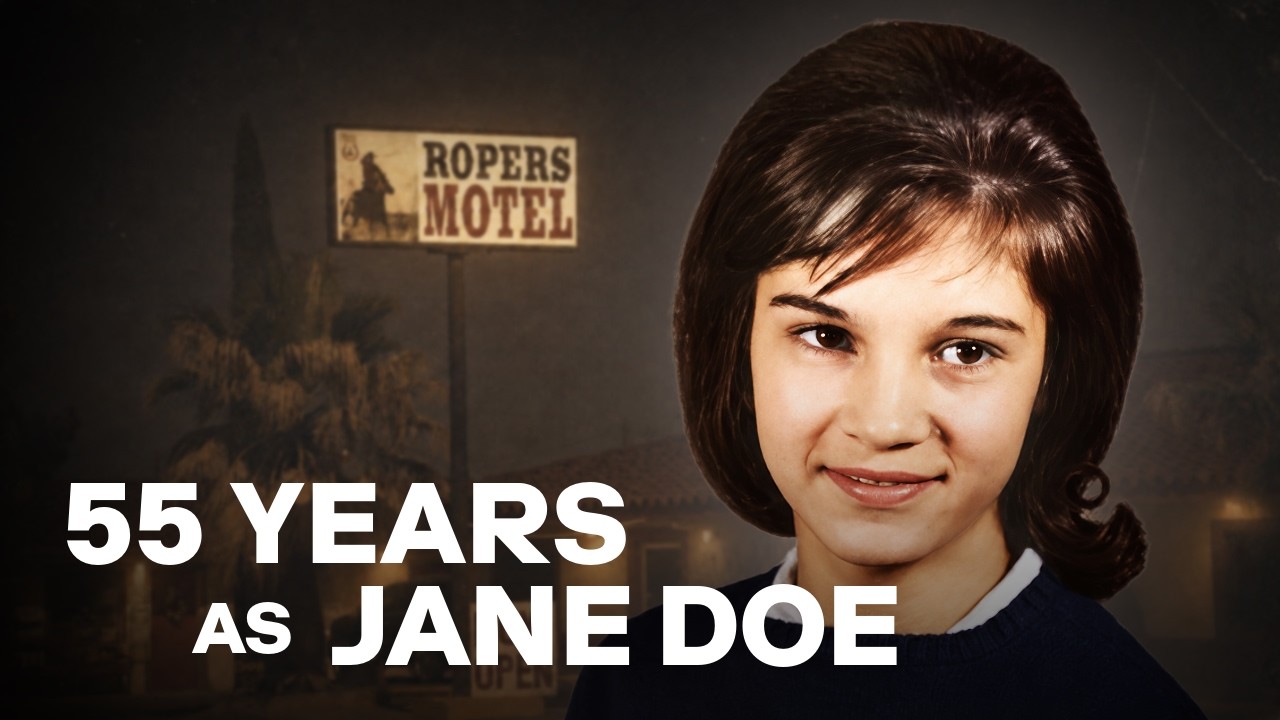
It was unclear whether she had been struck before entering the water or injured during the rescue attempt. Someone also noticed writing in ballpoint pen on the sole of her foot: two words, “Joe” and “Lean. ” Nobody knew what it meant. The couple had checked into the hotel earlier that day as Mr.
and Mrs. Russell Betuyn, according to the registration card. The woman looked to be around twenty; the man appeared about ten years older. A witness had seen them by the pool, where he drank a beer and she drank a soda.
When the man was told that his wife had been taken to the hospital, he asked for his registration card, claiming he needed it to identify himself to the police. The hotel clerk handed it over. He followed the ambulance away from the motel and never appeared at the hospital. Law enforcement issued a lookout for the man, but without the registration card they had little to work with.
Descriptions varied: a dark vehicle, then a dark sedan, possibly with Kansas license plates. Nothing was ever confirmed. A search for the name Russell Betts produced only one hit, an active-duty soldier at Camp Lejeune, but investigators ultimately concluded the man was traveling under an assumed name. They could not find him or identify him.
The young woman’s body was sent to a medical examiner’s office in Odessa, Texas. The death was ruled an accidental drowning, not a homicide. The local sheriff told the media that the only thing this man had clearly done wrong was leave without paying his hotel bill. Because no crime was suspected, the search for him was not urgent.
Her body was returned to Pecos, where the funeral home kept her for several weeks, hoping someone would come forward. Hundreds of mothers called or visited, wondering if this was their missing daughter. Newspaper stories about the mysterious drowning were syndicated across the country, and letters arrived from all over, asking whether this could be a lost relative. Between fifteen hundred and two thousand people passed through the funeral home to view the body.
One couple from Odessa was so certain she was their daughter that they traveled to Pecos, only to be disappointed when dental records did not match. Still, they were so moved that they established a trust fund to pay for her burial. The town buried her in Fairview Cemetery with a headstone that read “Unknown Drowned Girl 1966. ” A Catholic priest and a Baptist minister said last rites, and about fifty people attended the funeral, wanting to show that someone cared.
Sandy Moore, the teenager who had found her in the pool, left flowers on the grave whenever she returned to Pecos. Over time, the young woman became known as Pecos Jane Doe, then simply Pecos Jane. For more than five decades, that was all anyone knew her as. In 2014, Todd Matthews, an employee of the National Missing and Unknown Persons System, received a strange email from a Hotmail address registered in the Netherlands.
The sender identified only as JCJ pointed him to the 1966 drowning in Pecos. Matthews entered the information into the NamUs database, but no one had reported a missing person matching her description. It was unclear whether her family was unaware of the database or had simply stopped looking. Matthews connected with the National Center for Missing and Exploited Children, and the case moved into high gear.
In June 2019, the organization contacted Police Chief Lisa Thetford of the Pecos Police Department and asked whether she would restart the investigation. She agreed and assigned Corporal Felix Salcedo to the case. They soon discovered the original police file was gone, lost at some point in a fire or flood, according to the sheriff’s department. With nothing to start from, they turned to the local museum, where newspaper articles led them to the funeral home.
There, a man named Pablo Carrasco, who had helped pick up the body as an eighteen-year-old in 1966, retrieved an old file from the garage. It contained a copy of the death certificate, letters from families hoping she was theirs, and Polaroid photographs taken for documentation. The photos showed the abrasion on her face and what appeared to be burn scars on her knee and ribs. Despite the breakthrough, no investigative lead produced a name.
Thetford and Salcedo decided they needed DNA, which meant exhuming the body. On August 27, 2019, workers dug down to the wooden coffin. Salcedo helped count bones as the remains were gathered. The skeletal remains were sent to the University of North Texas for testing, but the work stalled when the COVID-19 pandemic sent laboratory personnel home.
Eventually, a DNA profile was built using traditional STR testing and uploaded to CODIS, the national DNA database. There was no match. Cases this old rarely produce a CODIS hit, and this one was no exception. But the case was not over.
In May 2020, Astrea, a company specializing in forensic genetic genealogy, came across Pecos Jane Doe in the NamUs database and offered assistance. The city of Pecos provided some funding, and a crowdfunding campaign raised the rest in less than a week. Astrea extracted DNA from molar teeth, which had preserved enough genetic material despite decades underground. Using forensic-grade genome sequencing, they built a DNA profile with hundreds of thousands of markers, far more than the twenty or so used in traditional CODIS testing.
When that profile was uploaded to genealogical databases consented for law enforcement use, the genetic trail led to a family in Kansas with fifteen children. Pecos Jane Doe was likely one of them. In late 2020, a seventy-four-year-old retiree named Joyce Hemy answered a knock on the door of her trailer in St. Petersburg, Florida.
A cold case investigator asked whether she had a missing sister. Joyce explained that her sister had been missing for fifty-five years. She gave a DNA swab, and the results confirmed a 100% sibling match. Pecos Jane Doe was Jolene Hemy.
In January 2021, Chief Thetford and Corporal Salcedo traveled to Kansas to deliver the news formally to the Hemy family. For fifty-five years, the family had not known what had happened to Jolene. Their mother, Alberta, had died in 2000, speaking of Jolene on her deathbed, saying she had seen her and knew she was in heaven. Jolene Hemy had been the ninth of fifteen children, raised on a 160-acre farm near Salina, Kansas.
As a child, she had been badly burned when Christmas wrapping paper she threw into a fireplace caught her pajamas on fire, leaving scars on her knee and ribs. The Polaroid photographs from 1966 matched those scars exactly. Jolene graduated high school at seventeen and moved to Kansas City to live with two older sisters. She worked at two fast food restaurants and met an older man at one of her jobs.
Joyce took an instant dislike to him, thinking he did not treat Jolene well, but Jolene said she liked him. On Friday, July 1, 1966, Jolene never came home. Joyce and another sister searched for her, put up signs, and went to her workplace, where they learned she had never picked up her final paycheck. The police were dismissive, suggesting the couple had simply run off together.
Then a postcard arrived, postmarked Las Vegas on July 3, saying, “See you in a couple weeks. ” It was signed “Joe. ” But Jolene always went by Jolene, and the family never believed she had written it. Some have noted that the postmark date could have been an eight, worn away over time, which would mean it was sent three days after her death, possibly by the man she was with, trying to throw the family off the trail.
Jolene had always been afraid of water. She never wanted to go swimming, even as she got older. Her sister believes the man she was with killed her, possibly striking her on the head before she entered the pool. The case was never ruled a homicide, and the man who checked in as Russell Betuyn was never found.
At one point, a vehicle with Kansas tags was stopped in 1966, but law enforcement released it, not considering it important at the time. Jolene’s remains were sent to Kansas, where her family gave her a new burial with a headstone bearing her real name. She was laid to rest next to her mother and father. For the people of Pecos, she had become part of their community; many still called her their girl.
But now she was finally home. The investigation gave Jolene Hemy her name back after more than half a century. Her identity had been locked away, a young girl who seemed to have never existed.
What remained unanswered was who had been with her that day, and whether her death in that swimming pool was an accident or something worse.