On an afternoon in late October 1991, a 79-year-old woman was shopping near a supermarket in Queens when a teenager knocked her to the ground and snatched her handbag. There were fourteen dollars inside. The woman suffered fractured ribs, a brain hemorrhage, and permanent damage to her sight and hearing. Her name was Mary Anne Trump, and she had arrived in New York sixty-one years earlier with fifty dollars and a single word written beside her name on a passenger list: domestic.
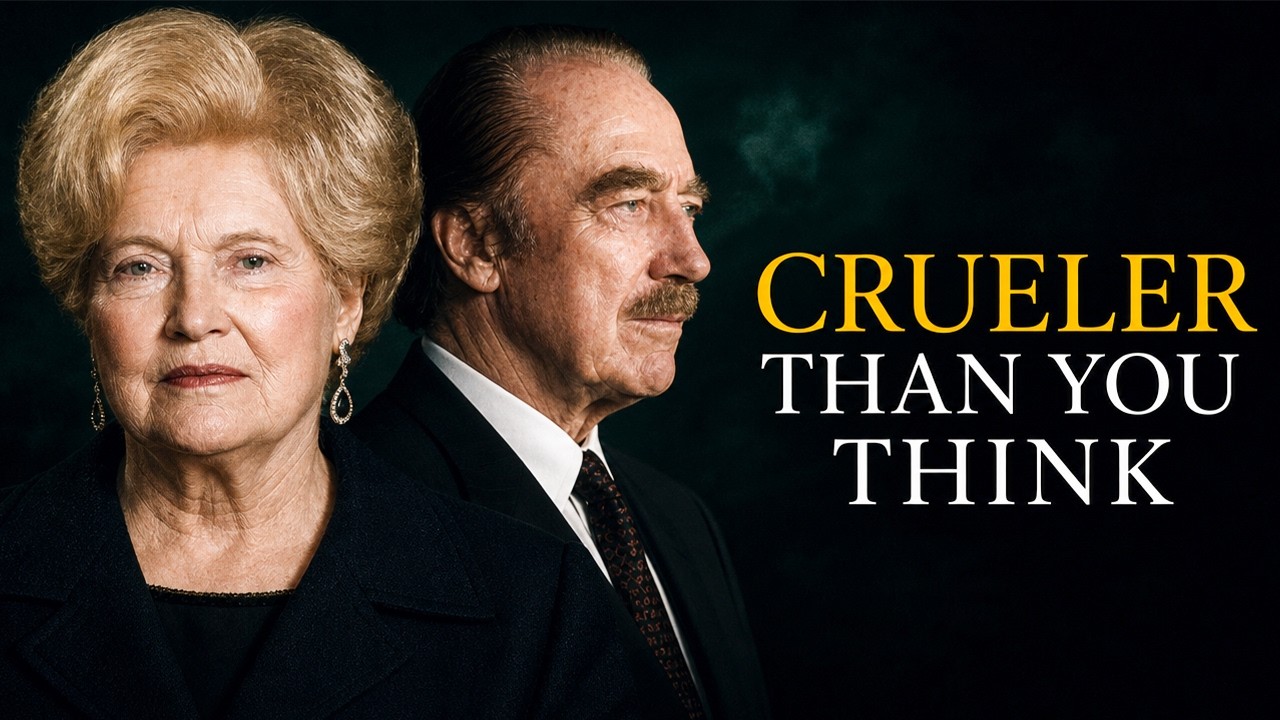
She was born on May 10, 1912, in the village of Tong on the Isle of Lewis in Scotland’s Outer Hebrides, the youngest of ten children. Her father was a crofter and fisherman who also served as the local school’s attendance officer. The family spoke Gaelic; English came second. The islands had lost a disproportionate number of men in the First World War, and in January 1919 a naval yacht carrying servicemen home ran onto rocks at the entrance to Stornoway Harbor, killing more than two hundred men within sight of shore.
For a girl growing up on Lewis in the 1920s, the futures available were few: gut herring, marry a survivor, or get on a ship. Mary Anne chose the ship. In 1930, at eighteen, she was issued an immigration visa at Glasgow and sailed on the RMS Transylvania, landing in New York one day after her birthday. She declared her intent to stay permanently and become a citizen.
She had fifty dollars and went to live with her older sister in Astoria, Queens. For roughly five years she worked as a domestic, cleaning and minding children in the homes of wealthy New Yorkers, learning at close range how such households operated. It was not a tragic backstory, though it is often told as one. It was training.
In the mid-1930s, at a dance in Queens, she met Fred Trump, a builder five years into a career that had begun when he was practically a child. His own father had died in the 1918 influenza pandemic, and the family construction firm had been incorporated under his mother’s name because Fred was too young to sign contracts. By the time he met Mary Anne, Fred was around thirty, selling houses in Queens, moving fast, already a man with a car and a reputation. She later described him as the most eligible bachelor in New York.
The marriage made strategic sense for both. Fred’s family had spent years telling people they were Swedish, an increasingly useful claim in an era when American attitudes toward Germans were turning hostile. A fair-haired Presbyterian bride from the British Isles was, among other things, extremely useful. She told her family in Scotland she had met the man she was going to marry before he had asked her.
The wedding took place on January 11, 1936, at Madison Avenue Presbyterian Church, with twenty-five guests and a reception at the Carlyle. The bride wore white satin with a long train and carried white orchids and lilies of the valley. Fred’s brother, who had a doctorate in physics from MIT, served as best man. The hometown paper in Stornoway carried the description of the gown, a message home that the island’s girl had made it.
The couple honeymooned in Atlantic City for two days because Fred had deals, then returned to move into his mother’s house. Elizabeth Christ Trump, the mother-in-law, still held the company’s name and had run the household for a decade. Mary Anne, whose entire American resume consisted of working in other women’s homes, moved into a house she did not run, attached to a business she did not own, under the authority of a woman who had held both for years. The arrangement had not moved an inch.
She was pregnant within a year. By the 1940 census, the family had moved up, and living with them, employed by them, was a Scottish domestic servant. Ten years after she had written the word domestic next to her own name, Mary Anne Trump had a Scottish maid. The immigrant success story, complete in a single line of a federal document.
She became an American citizen in March 1942. Her first child, Mary Anne, was born that year; Donald followed in 1946, Robert in 1948. The birth of Robert nearly killed her. She hemorrhaged, underwent an emergency hysterectomy, then peritonitis set in, requiring more surgeries.
Her daughter, then eleven, recalled that her father came home and told her her mother wasn’t expected to live, but that she should go to school and he would call if anything changed. At the same time, Fred Trump, who sat on the board of Jamaica Hospital, used his position and one of the few car telephones in New York to track down a surgeon from Columbia’s medical school and went to get the man himself. He moved everything he had to save her body and told his daughter to go to school. That was the system.
In this family, a crisis was a logistics problem. Mary Anne survived, but the surgeries left her with damage that compounded for the rest of her life. She was thirty-six and would never have another child. She never left.
There is no evidence she wanted to. She had no money in her own name, five children, a church that took marriage seriously, and an island back home where she was the great success story. Returning to Tong as a divorced woman was not an escape; it was the most public failure available to her. What the record shows is a woman who stopped expecting the marriage to be something other than what it was and got to work inside it.
In the 1950s, she became very good at the job. The family moved into a twenty-three-room house in Jamaica Estates that Fred built on land he owned. She ran it. She served on the Women’s Auxiliary of Jamaica Hospital, worked with the Jamaica Day Nursery, raised money for cerebral palsy causes and programs for adults with intellectual disabilities.
The family was active with the Salvation Army, the Boy Scouts, the Lighthouse for the Blind. It was not cynical; the Scottish island she quietly funded for decades, including a village hall and a hospice, attested to that. But it was useful. Fred Trump had been publicly humiliated by a Senate committee in 1954 over federally backed housing loans, and in 1973 the Justice Department sued his company for racial discrimination.
Through it all, the Trumps remained the family with the hospital auxiliary and the Presbyterian pew. Mary Anne had become the part of the family the newspapers could photograph without wincing. She was also the performer of the household. Donald has said he got his sense of showmanship from her; her daughter described her as the star of family gatherings.
Fred built the buildings. Mary Anne worked out what the family should look like standing next to them. The system could not absorb a child who refused to play his position. Fred Jr.
, the eldest son, wanted to fly, not build. He flew for TWA and was good at it; his father regarded it as a joke. Donald later confirmed he pressured his brother into a business Fred Jr. was never going to want.
Fred Jr. drank, lost his career and marriage, and eventually lived in the unfurnished attic of his parents’ house, doing maintenance on his father’s buildings. On September 26, 1981, he died of a heart attack at forty-two. The circumstances of that night are contested, but in every account, there is no description of his mother at his side.
The surviving record contains much about who inherited what and nothing about where she was. Mary Anne had thirty-two years left. In the last decade of them, she became something the family’s public story could not easily explain. In 1991 came the mugging.
Her son Donald invited the man who chased the thief to dinner at the Plaza, offered him a job, and gave him a check. Mary Anne never fully recovered. The following year, the family incorporated a company called All County Building Supply and Maintenance. It had no real offices and did no real purchasing.
According to the New York Times investigation that won a Pulitzer Prize in 2019, it took purchases Fred’s own employees had already made and marked them up, sometimes by 20 percent, sometimes by 50, sometimes double. The inflated money flowed to Fred and Mary Anne’s children, untaxed, gifts wearing the costume of invoices. Fred Trump used the padded numbers to justify raising rents in rent-regulated buildings. In 1995, Fred and Mary Anne each executed a trust arrangement that transferred the empire to their children while valuing it on paper at $41.
4 million. The actual worth was closer to a billion. The tax bill should have been in the neighborhood of $550 million; they paid $52. 2 million.
Trump’s attorney denied fraud and called the reporting inaccurate. Mary Anne Trump was not a bystander. She was a signatory. The domestic servant from the Transylvania who arrived with fifty dollars spent the last decade of her life co-executing the largest documented tax maneuver in her family’s history while partially blind and partially deaf from a mugging over fourteen dollars.
The paperwork says she was a principal. Fred Trump died on June 25, 1999, at ninety-three. The bulk of the estate went in equal shares to the four surviving children; each grandchild got $200,000. Fred Jr.
’s two children contested the will, arguing their grandfather had been unduly influenced. The family responded by cutting off the medical insurance the foundation had been providing to them. At that moment, Fred III had a newborn son with seizures who needed months of intensive neonatal care. The later lawsuit described it as unfathomable cruelty; it was transparently leverage.
Mary Anne was alive for all of it. She died on August 7, 2000, at eighty-eight. There is no record of her objecting, and no record of her being asked. The family settled in 2001, with a confidentiality agreement that should have sealed everything.
But the New York Times found the thread through a public document: a financial disclosure form filed by Mary Anne, the family’s federal judge, unredacted, which showed a $1 million contribution to an entity called All County Building Supply and Maintenance. The family’s own paperwork opened the family’s books. And then there are the letters. In 1926, a girl in Dundee named Agnes Stiven won a painting competition run by a Scottish newspaper, and her name and address were printed.
Mary Anne, fourteen and hundreds of miles away, wrote to her. They became pen pals for years and met once in Glasgow before Mary Anne sailed for New York. Agnes kept the letters. Decades later, a filmmaker on the Isle of Lewis built a documentary around them.
Nobody in the Trump family signed off on that. The only substantial body of Mary Anne MacLeod’s own words that survives outside her husband’s world survives because a girl who won a painting contest in 1926 held on to her mail, and because a woman who had crossed an ocean and changed classes and buried a son and signed the papers still wanted, at eighty-three, to hear from someone who had known her before any of it. On January 20, 2017, her son placed his hand on a Bible she had given him in 1955 when he was nine and swore the presidential oath. She had been dead seventeen years.
It was the only possession of hers that ever appeared on the steps of the Capitol. A gift that cost nothing, proves nothing, and can be photographed. She would have understood exactly why they chose it.