Lady Sarah Chatto has long been described as the quiet survivor of the Windsor dynasty. Born to Princess Margaret, the rebellious and glamorous sister of Queen Elizabeth II, she grew up amid the wreckage of a golden marriage that turned toxic. Her story is not one of scandal, but of quiet resilience — a daughter who transformed an inheritance of pain into a life of dignity and peace.
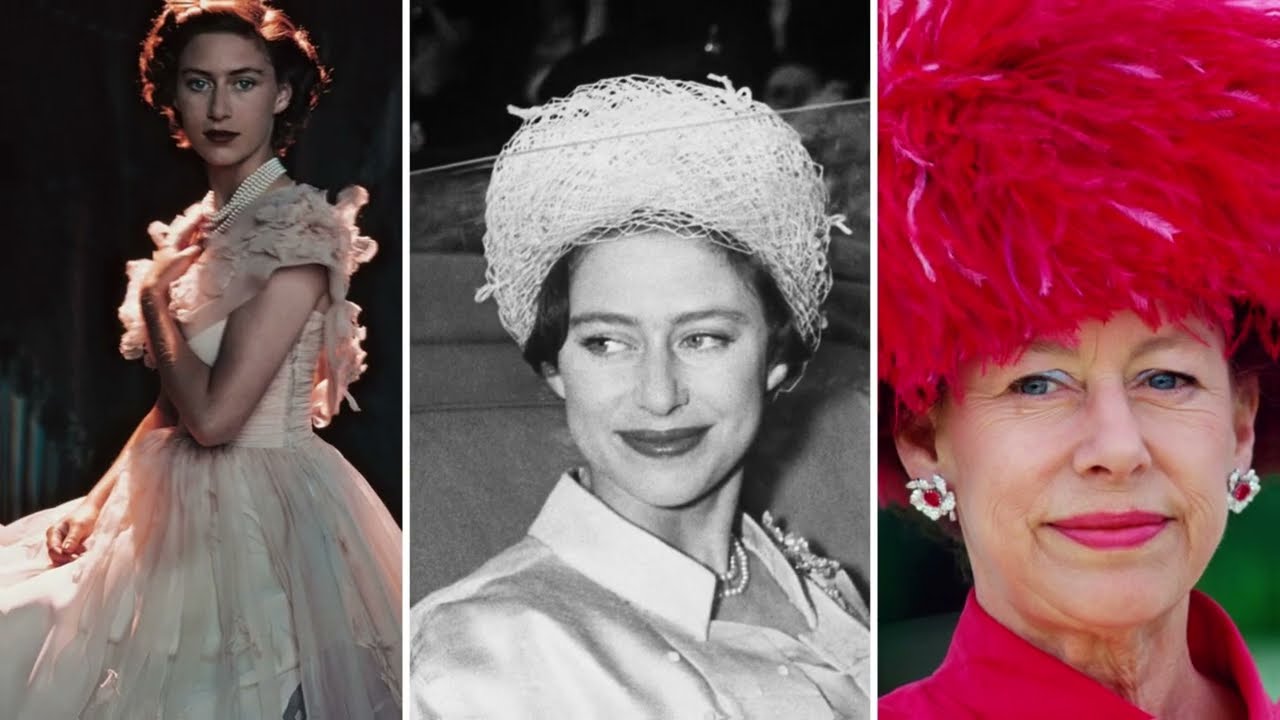
To understand Sarah, one must first understand her mother. Princess Margaret was born in 1930 and was the nation’s darling. She was witty, beautiful, and magnetic, with striking violet-blue eyes and a sharp tongue.
Her father, King George VI, famously said of his daughters: “Lilibet is my pride, and Margaret is my joy.” She was a style icon of post-war Britain, embodying glamour and hope.
But beneath the sparkle lay deep vulnerability. Her life changed forever at age six when her uncle, King Edward VIII, abdicated to marry the divorced Wallis Simpson. The lesson was clear: love and duty were often enemies within the royal family.
That lesson would define her life. In the early 1950s, Margaret fell deeply in love with Group Captain Peter Townsend, a decorated Battle of Britain hero and her father’s former equerry. He was handsome, kind, and sixteen years her senior.
But he was divorced, and in 1950s Britain, that was an insurmountable obstacle. The Church of England, of which the Queen was Supreme Governor, did not recognize divorce. The government and church made it clear: Margaret could not marry him without renouncing her royal rights and living in exile.
The affair was exposed in 1953 when a television camera caught Margaret tenderly brushing a piece of lint from Townsend’s uniform during the Queen’s coronation. The story exploded. Townsend was sent to Brussels, effectively exiled.
Margaret was forced to choose between love and duty. In October 1955, she issued a heartbroken public statement, choosing duty over love. Something inside her broke that day.
The vibrant princess began to fade, replaced by a woman who was harder, more cynical, and deeply wounded.
She threw herself into a frantic social life, seeking a new kind of man. She found him in Antony Armstrong-Jones, a talented photographer from a non-aristocratic background. He was charming, clever, and dangerously indifferent to tradition.
He treated her not as a princess but as a woman. Their romance was a rebellion against the establishment that had broken her heart.
They married on May 6, 1960, in the first royal wedding to be broadcast on television. Around 300 million people watched. The public was captivated.
The couple, now Earl and Countess of Snowdon, became the undisputed leaders of London’s fashionable elite. Their home at Kensington Palace was the most sought-after salon in the country, hosting actors, dancers, and designers.
But the fairy tale was built on sand. The same qualities that brought them together — fierce independence, artistic temperaments, sharp tongues — soon became weapons in a private war of astonishing cruelty. Lord Snowdon resented the constraints of royal life and retaliated with psychological cruelty.
He left Margaret nasty notes, including one that read: “You look like a Jewish manicurist and I hate you.” At dinner parties, he would ignore her deliberately. Margaret responded with her own weapons: her royal status and her biting wit.
Their arguments became volcanic, fueled by heavy drinking.
Their son David was born in 1961, followed by their daughter Sarah on May 1, 1964. By the time Sarah was born, the marriage had completely collapsed. She was born directly into the wreckage.
She never knew her parents as a loving couple. Her entire life was surrounded by emotional warfare, icy silences, and a profound lack of security.
The children’s primary source of stability was their nanny, Verona Sumner. She was more than a caregiver; she was the architect of their childhood. She created a bubble of normalcy amid the chaos.
She established routines, provided comfort, and was, in every practical sense, their mother. Lord Snowdon later acknowledged her vital role, admitting she was a second mother to them.
Meanwhile, Princess Margaret’s life descended into a rigid routine of self-soothing centered on cigarettes and alcohol. She woke late, read the papers in bed, and had her first vodka and tonic at 12:30 pm. Her children learned to approach her cautiously, reading her mood before speaking.
Lord Snowdon was increasingly absent, immersed in his work and affairs. The children felt his distance keenly.
David developed a protective shell, becoming the little man of the house. Sarah, naturally quiet and observant, retreated into herself. She found solace in art, which became her escape and her language.
Painting and drawing allowed her to create order and beauty in a world that was chaotic and ugly.
The fragile equilibrium shattered in 1976. Photographs were published of Princess Margaret on her beloved Caribbean island of Mustique, vacationing with a man named Roddy Llewellyn, a landscape gardener 17 years her junior. The public reaction was brutal.
The media, which had once adored her, now portrayed her as a corrupt, lazy royal embarrassment. For 12-year-old Sarah, it was a bewildering and painful experience. There was no escape from the headlines.
The scandal hastened the couple’s formal separation. Lord Snowdon left Kensington Palace for good. In 1978, the divorce was finalized — the first royal divorce since Henry VIII.
For Sarah, it was official confirmation of what she had always known: her family was irreparably broken.
During this turbulent period, her father made a decision that proved crucial. He despised the traditional, stuffy aristocratic education and insisted his children attend Bedales, one of Britain’s most progressive boarding schools. It focused on creativity and self-expression.
Students called teachers by their first names and wore their own clothes. For Sarah, it was like breathing fresh air. For the first time, her identity was not defined by her royal connections.
She was simply Sarah Armstrong-Jones, a quiet, talented student with a passion for art. Her talent was nurtured and celebrated. Bedales gave her confidence and a vision of a different kind of life.
After graduation, she pursued art with quiet determination. She studied at Camberwell School of Art and the Royal Academy Schools. Then she did something almost unprecedented: she learned a craft from the ground up, becoming an apprentice in the wardrobe department of the film industry.
This culminated in a two-year trip to India in the early 1980s, where she worked as an assistant on David Lean’s epic film “A Passage to India.”
It was a formative experience. She was thousands of miles from the stifling atmosphere of London, away from the press and the court. She was part of a collaborative creative team, valued for her skills and work ethic.
In this environment, she met a young actor named Daniel Chatto. He was handsome, kind, and shared her quiet, serious nature. Their meeting was the opposite of her parents’ dramatic, high-society romance.
It was a quiet, natural bond between two people who shared the same values.
Their relationship developed slowly, away from the spotlight. It was built not on grand romantic gestures but on deep friendship and mutual respect. For Sarah, who had grown up watching love destroy her parents, Daniel’s calm, steady affection was a safe harbor.
She had survived the storm and found a partner who saw and loved the woman she had become.
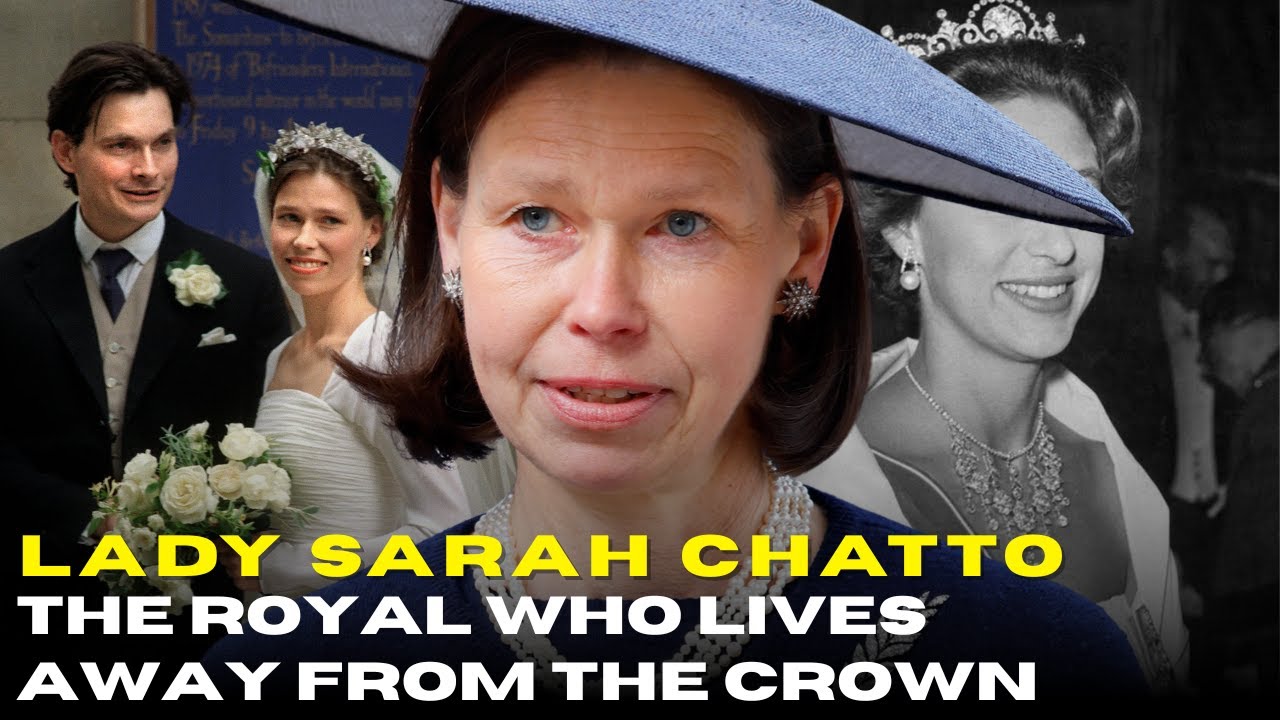
They married in July 1994. The wedding was a profound statement of privacy. The venue was not Westminster Abbey but St.
Stephen Walbrook, a small, beautiful church in the City of London designed by Sir Christopher Wren. Her dress, designed by friend Jasper Conran, was simple and elegant, made of crisp white linen with a square neckline. It was the dress of a working artist, not a fairy-tale princess.
But the most powerful symbol was what she wore in her hair: the Snowdon Floral Tiara. It was not an ancient heirloom but a piece with painful personal history. Her father had designed it for her mother to wear at their wedding.
By wearing it, Sarah was not rejecting her past but embracing it from a place of redemption. She was breaking the curse of her origins, transforming a symbol of a failed union into a beacon of hope for a new marriage.
The ceremony was short, and the guest list was small. Photos from that day show a woman radiating quiet joy and serenity. She looks completely at home.
The life they built after the wedding was an extension of these vows. They settled in a comfortable home in Kensington, living a life that was astonishingly normal by royal standards. Daniel continued his career as an artist, and Sarah devoted herself to painting and family.
Their first son, Samuel, was born in 1996, followed by Arthur in 1999. For Sarah, motherhood was an opportunity to provide the childhood she never had. She was determined to give her sons the gift of a normal life, shielding them from the suffocating pressures of royal fame.
They were raised to value the arts and personal exploration. Samuel studied art history and became a successful potter. Arthur studied at Edinburgh before joining the Royal Marines — a personal choice, not one dictated by tradition.
Sarah had broken the cycle.
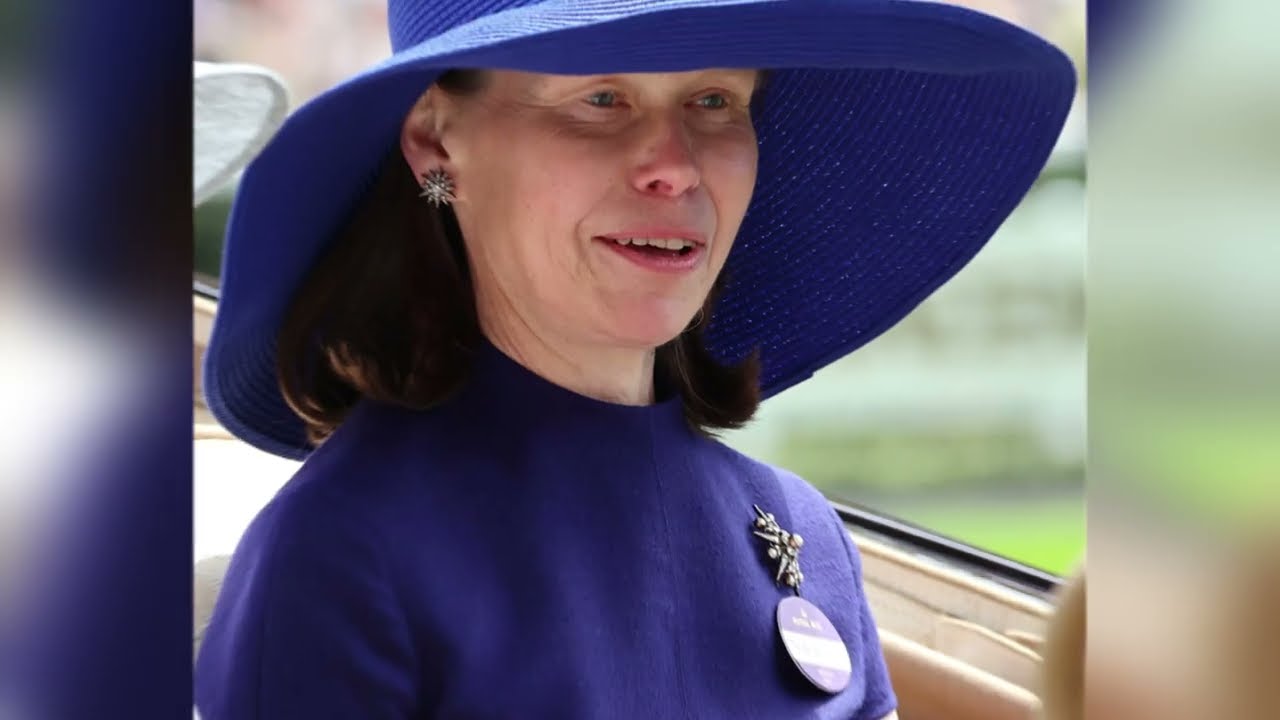
Alongside motherhood, Sarah pursued her career as a painter with quiet dedication. She exhibited under her maiden name, Sarah Armstrong-Jones — a nod to her father’s professional legacy and a way to carve out her own identity. Her paintings are intimate landscapes, still lifes, and studies of interior spaces.
They are calm and contemplative, reflecting a person who has learned to find beauty in ordinary things.
Her public role, though limited, was carefully chosen. She became vice president of the Royal Ballet, a position she inherited from her mother. Princess Margaret had adored ballet, and for Sarah, taking on this role was an act of redemptive love — a way to honor her mother’s memory by supporting the art that brought her genuine joy.
But perhaps her most important role was within the royal family itself. As the family was torn apart by the scandals of the 1990s, Sarah became a figure of unique importance. She was the quiet center, the still eye of the storm.
Her relationship with her aunt, Queen Elizabeth II, deepened into a bond of profound affection and trust. Sarah was one of the few people with whom the Queen could relax and be herself. She was also a bridge between warring factions, maintaining warm relationships with both Prince Charles and Princess Diana.
She was neutral ground, a safe haven.
This universal trust was recognized formally. She was asked to be godmother to Prince Harry, and later to Lady Louise Windsor and Lady Rose Gilman. In a family where trust is the rarest currency, Sarah Chatto was the gold standard.
While Sarah built her sanctuary, her mother entered a final, painful chapter of decline. Princess Margaret’s health deteriorated due to a lifetime of smoking and drinking. In 1985, she had part of her left lung removed.
In 1993, she suffered a severe bout of pneumonia. In 1998, she had her first stroke. A year later, a tragic accident in her bath at Mustique left her with severe burns on her feet, causing permanent nerve damage and mobility problems.
The vibrant princess was now an invalid, confined to a wheelchair, plunged into deep depression.
During this dark period, Sarah’s role reversed. She became her mother’s guardian and most constant source of comfort. She visited her mother at Kensington Palace almost every day.
She sat with her for hours, reading to her, talking about her children, and ensuring she was never alone. It was a task of immense emotional difficulty. Margaret was often angry, demanding, and difficult.
But Sarah approached her with unwavering compassion. She saw past the difficult patient to the vulnerable, frightened woman within. She faced her mother’s anger and grief not with judgment but with steady, quiet love.
In early 2001, further strokes robbed Margaret of more of her abilities. On February 8, 2002, she suffered a final, massive stroke. She died peacefully in her sleep the next morning, with her children David and Sarah by her side.
She was 71.
At the funeral, the most poignant image was of Lady Sarah Chatto. As her mother’s coffin was placed in the hearse, cameras caught her face. For almost the only time in her life, her carefully guarded privacy vanished completely.
She wept openly, her body shaking with grief. In that moment of public pain, the world saw the truth of their relationship: a bond of deep, complex, and ultimately unconditional love. Sarah had cared for the source of her own childhood pain, bringing peace and dignity to the woman who had carried that burden first.
With the deaths of Princess Margaret and the Queen Mother, a chapter of royal history closed. In the new century, Sarah’s story gained new significance. For years, the media had settled on a comfortable narrative, calling her the “royal ghost” — a woman so damaged by her parents’ drama that she retreated into a half-life.
But this interpretation was deeply wrong.
The more compelling argument is that Sarah was not a ghost but a quiet revolutionary. She had a front-row seat to the destructive effects of a life lived for public consumption. She watched her mother, one of the most famous women in the world, die of a loneliness that no amount of public adoration could cure.
From this painful vantage point, she learned a rare lesson: true power lies not in visibility but in autonomy. Her privacy was not a wall built from fear but a garden she carefully cultivated so that something real and beautiful could grow.
Her life became a powerful counter-argument to the narrative presented by Prince Harry and Meghan Markle, who claimed that life within the institution was impossible. Sarah proved there was always a third path. She achieved privacy not by demanding it but by demonstrating over decades that she was not a source of drama.
She proved that one could remain a loyal, integrated, and even beloved member of the royal family while maintaining a protected private life. Sometimes the most powerful act is simply refusing to play the role offered to you.
Her ability to navigate complex family dynamics extended to her father. Despite his flaws and the bitterness of the divorce, Sarah and David remained loyal to both parents. When Lord Snowdon died in 2017, Sarah was the model of quiet dignity at his funeral, mourning the father who, despite everything, had given her the gift of an enlightened education and a passion for the arts.
The highest recognition of her unique role came in a moment of profound national grief. When Queen Elizabeth II died on September 8, 2022, Sarah was a constant, steady presence throughout the mourning period. During the “Princes’ Vigil” at Westminster Hall, where the Queen’s children and grandchildren stood guard around her coffin, Sarah was seen in a position close to the senior royals.
Her visible presence near the heart of this sacred ritual was a powerful, unspoken statement. She was not a working royal or a headline-maker, but an essential member of the tight emotional circle. She was there not for the cameras but as a daughter, niece, and cousin performing a final, silent act of love and duty.
So what of the curse? The curse of Princess Margaret — born of a broken heart, a life lived under the microscope, and a brilliant spirit denied meaningful purpose. Lady Sarah Chatto inherited this legacy.
She inherited the shattered remains of her mother’s life. But she did not inherit the curse. Because a curse only has power if you allow it to define you.
Where her mother’s life was a frantic search for a public stage, Sarah found purpose in the quiet sanctuary of her art studio. Where her mother’s marriage was a public battlefield, Sarah built a private partnership of lasting love and stability. Where her mother sought fulfillment in the fleeting admiration of crowds, Sarah found it in the steady love of her family and the simple joy of raising her sons.
She did not reject her mother. In fact, her life may be the deepest tribute she could have paid her. By caring for Margaret in her painful final years with such unwavering compassion, Sarah gave her mother the unconditional love and security she had always craved.
And by building the happy, quiet, purposeful life that Margaret herself could not achieve, Sarah fulfilled the potential that was denied to her mother.
In the great, noisy, and increasingly controversial saga of the House of Windsor, the life of Lady Sarah Chatto is a quiet but powerful counter-melody. It is a story that reminds us that legacy is not always written in headlines. Sometimes the strongest legacy is the invisible one: a cycle of pain broken, a loving family nurtured, a private peace won against all odds.
She is not the tragic figure, nor the ghost in the machine. She may be the wisest of them all. She looked at the glittering, treacherous world into which she was born, understood its rules and risks with complete clarity, and chose to build her own kingdom — not on pomp and appearance, but on integrity, art, and love.
The curse was broken, and in its place, a blessing remained.