When Ozzy Osbourne was fired from Black Sabbath in 1979, it felt unthinkable to millions of fans. He was not just the band’s singer; in many eyes, he was its identity, the madman whose presence defined the sound and spirit of the most legendary metal band on Earth. The idea that Sabbath could continue without him seemed impossible. Then Ronnie James Dio walked in, and instead of collapsing, the band reinvented itself.
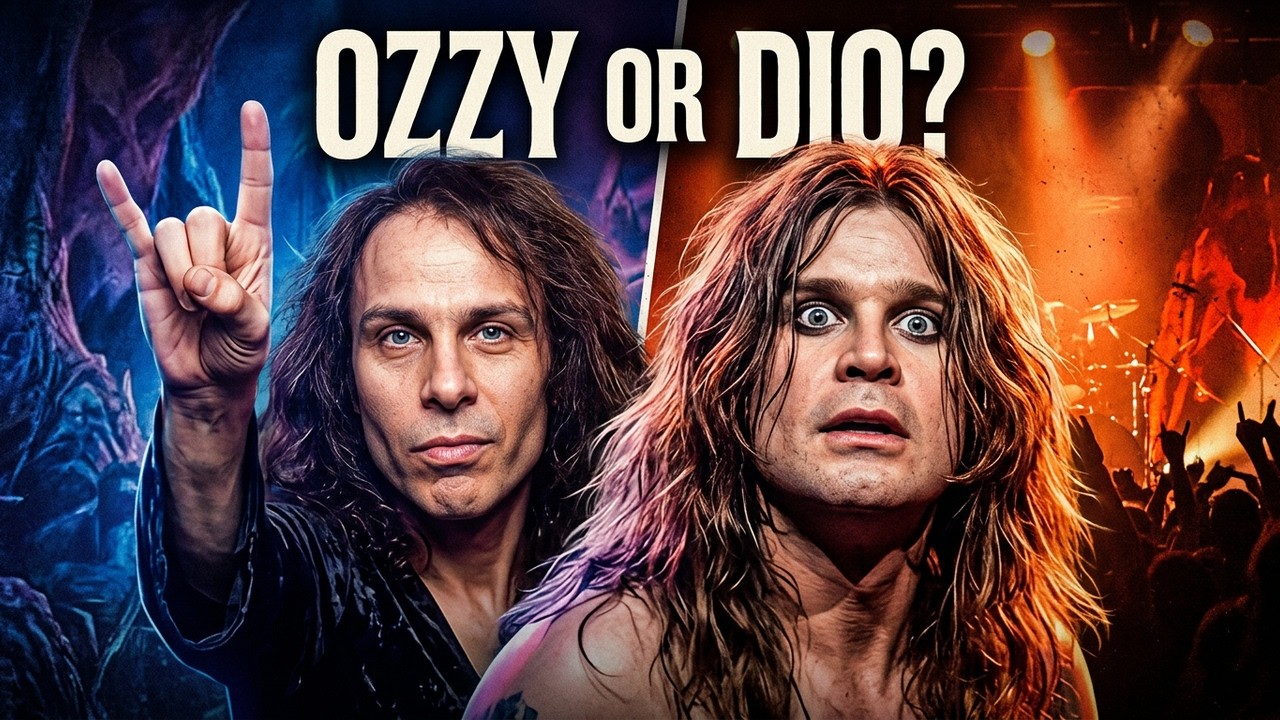
In doing so, it split its fanbase in two and created one of rock’s most enduring and awkward rivalries, a rivalry defined less by direct conflict than by the impossible reality that both men occupied the same sacred space in metal history. Dio brought something entirely different to Black Sabbath. His vocals were more polished, his lyrical themes more rooted in fantasy and the operatic, his stage presence more theatrical and commanding. Where Ozzy had been chaotic and primal, Dio was controlled and powerful.
The shift was immediate and unmistakable. Fans were suddenly forced to choose sides, like children of divorced parents deciding which household to spend Christmas with. One camp insisted that nobody could replace the original frontman, that Sabbath without Ozzy was not Sabbath at all. The other argued that the band had evolved into something technically stronger and more ambitious than ever before.
The division was bitter, and it was born whether either man wanted it or not. What made the rivalry so strange was that, publicly, neither Ozzy nor Dio spent much time attacking the other. There were comments over the years, some playful jabs, some frustration, some competitive energy, but it was never an all-out war. It was less a blood feud and more a situation in which two alpha personalities were forever aware that they were being compared.
Consider what it meant for Dio. He stepped into one of the biggest bands in rock history, and every night a portion of the audience silently judged whether he was worthy of the role. Consider what it meant for Ozzy. He watched the band that had made him famous continue without him, and he heard critics and fans alike praising the new singer for taking Sabbath in a direction he never could.
That kind of circumstance inevitably bred tension, but it did not necessarily breed hatred. Beneath the public rivalry, there was genuine respect. Dio openly acknowledged Ozzy’s importance to Black Sabbath and to heavy metal as a whole. He understood that he had inherited a role shaped by a predecessor of enormous influence.
Ozzy, for his part, never pretended the comparisons did not bother him, but he also recognized Dio’s immense talent and the quality of what Dio had achieved. They were different singers, different front men, different forces entirely. Comparing them was like comparing a thunderstorm to a dragon. They belonged to the same category, but they offered completely different experiences.
The real source of the tension was not personal animosity. It was legacy. Both men knew they occupied the same sacred territory in metal history, and they knew that fans would debate their relative merits for decades. Who was better?
Who fit Black Sabbath more naturally? Who had the stronger voice? Who had the greater impact? That endless debate itself may have done more to keep the rivalry alive than anything either man ever said.
In rock history, two legends do not need to hate each other for their fans to turn a professional succession into mythology. The story of Ozzy and Dio is ultimately a story about the power of reinvention and the weight of legacy. When Ozzy was dismissed from the band he had helped create, it seemed like the end of an era. But Black Sabbath did not fade away.
Dio gave the band a new identity, a new sound, a new sense of purpose. The albums they made together during his first tenure, beginning with Heaven and Hell in 1980, found the band performing at a level of technical and creative strength that surprised even longtime followers. Sabbath had not merely survived the loss of its original singer; it had found a new voice and a new direction. Meanwhile, Ozzy launched a solo career that would make him an icon in his own right, proving that his appeal extended far beyond the band that had launched him to fame.
The two men were linked by circumstance, by the shared history of fronting the same legendary group, and by the endless comparisons that followed them for the rest of their lives. Neither escaped the shadow of the other. Dio remained the brilliant successor who helped reinvent Black Sabbath, the man who proved that the band could evolve without losing its power. Ozzy remained the original icon, the face and voice of the band’s earliest and most foundational years.
Both men became untouchable legends, and both left indelible marks on the history of heavy metal. The question their rivalry raises is one that fans have never fully resolved. When two artists define different eras of the same band, is it necessary to choose one over the other? The answer, for many, has been to hold both in high regard, to recognize that they offered different strengths and different contributions.
Ozzy’s chaotic energy and raw charisma built the foundation. Dio’s technical skill and theatrical vision expanded what the band could be. Both men mattered, and both remain essential to the band’s legacy. In the end, neither man needed to defeat the other.
Their rivalry, such as it was, became part of the larger story of heavy metal itself. The debate over who was the greater frontman continues, but the historical record is clear: both men were essential to the survival and evolution of Black Sabbath, and both achieved legendary status on their own terms. The rivalry was real, but so was the respect.
And both men, in their own ways, helped ensure that Black Sabbath would remain one of the most important names in the history of rock music, not just for one era, but for several.