On May 6, 1950, roughly 3,000 fans gathered outside the Church of the Good Shepherd in Beverly Hills to watch an 18-year-old MGM contract player marry a 23-year-old hotel heir. The bride was Elizabeth Taylor. The groom was Conrad Nicholson Hilton Jr.
, known as Nicky. The wedding was a meticulously engineered publicity event, timed to promote Taylor’s upcoming film Father of the Bride. The gown was designed by MGM’s Helen Rose.
The bridesmaids were under studio contract. The press coverage was coordinated with the film’s June release.
The marriage lasted eight months. Taylor filed for divorce in January 1951 on grounds of mental cruelty. Decades later, private audio recordings revealed the full extent of what she said happened during the honeymoon.
The story of that marriage, and the institutional silence that surrounded it, became a defining chapter in the history of one of America’s most powerful hotel dynasties.
Conrad Hilton Sr. built that dynasty from nothing. Born in 1887 in New Mexico Territory, he entered the hotel business in 1919 when he bought the 40-room Mobley Hotel in Cisco, Texas for $40,000.
By 1925 he opened the first hotel bearing his name in Dallas. Over the next two decades, he acquired the Roosevelt and Plaza hotels in New York, the Palmer House in Chicago, and in 1949, the Waldorf-Astoria, which he called the greatest of them all. He incorporated Hilton Hotels Corporation in 1946, the first hotel company listed on a major U.
S. exchange. In 1949, he appeared on the cover of Time magazine.
He was a devout Catholic who hosted the first congressional prayer breakfast. His will, filed after his death in 1979, quoted a passage about charity and the relief of the suffering. Yet for 28 years after his eldest son’s divorce from Elizabeth Taylor, Conrad Sr.
never made a single public statement about the allegations of abuse against Nicky.
Nicky Hilton was born in 1926 in Dallas, the first son of Conrad Sr. and Mary Adelaide Barron. His parents divorced in 1934, and Nicky was raised primarily by his devout Catholic mother.
He attended Loyola High School, briefly enrolled at Loyola University, and dropped out to join the Navy during World War II. He was sent to the École hôtelière de Lausanne, the most prestigious hospitality school in Europe, and was suspended after six months. By the time he met Elizabeth Taylor in October 1949 at the Mocambo nightclub in Los Angeles, he was 23, a known playboy with a drinking problem.
Taylor was 17 when she met Nicky. The engagement was announced in February 1950. The wedding date was set for May 6, 1950, to align with the release of Father of the Bride.
The studio paid for the dress, the bridesmaids, and the publicity. Approximately 600 guests attended the ceremony. The reception was held at the Bel Air Country Club.
The honeymoon was a European trip that MGM had already publicized. The couple sailed on the Queen Mary. In her 1965 memoir, Taylor wrote that the honeymoon lasted two weeks, and that the marriage lasted two weeks.
In her 1988 memoir, she described Nicky as sullen, angry, and abusive, both physically and mentally. She wrote that he had been on the wagon during their nine-month engagement, and that she had no idea the person he became after drinking existed.
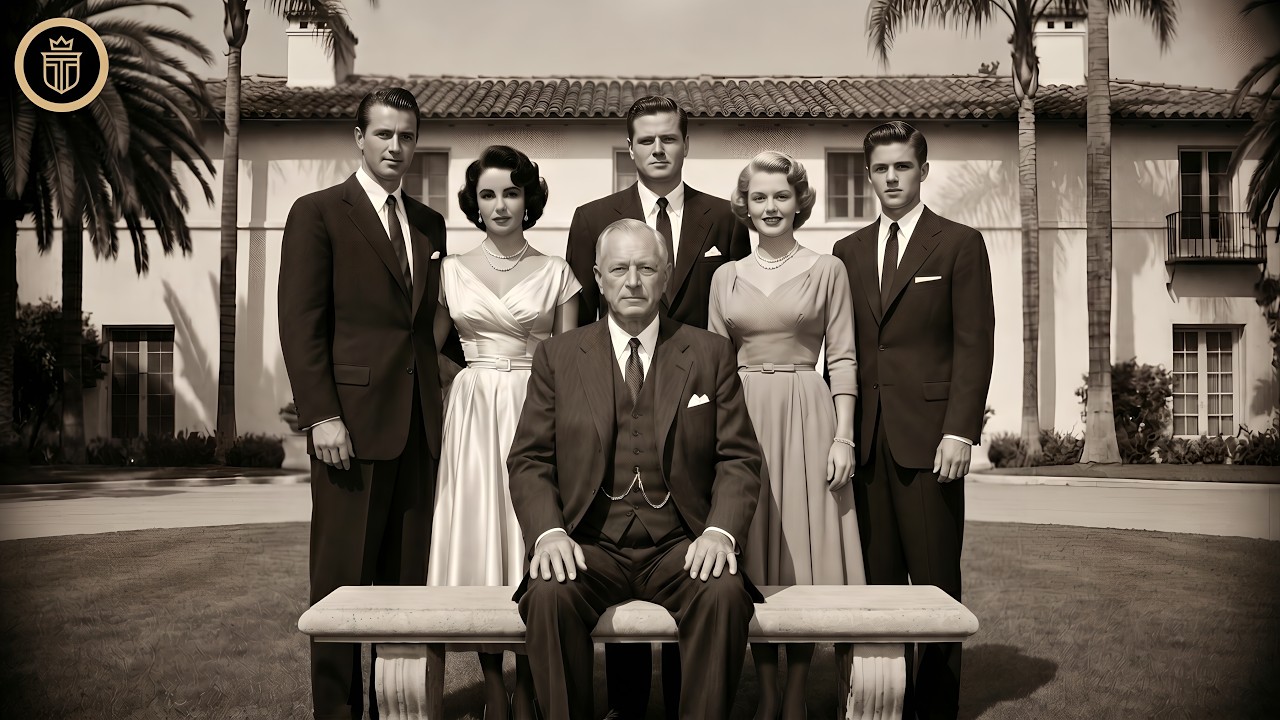
The most direct account came from private audio recordings Taylor made in 1964 with journalist Richard Meryman for a book that was never published. The tapes, comprising roughly 40 hours of audio, were sealed for six decades and released in August 2024 as the documentary Elizabeth Taylor: The Lost Tapes. In one conversation, Taylor described being kicked in the stomach and forced to have a miscarriage.
She described split lips and a life of mental and physical abuse. She also disclosed that she had attempted suicide during the marriage by taking a large quantity of sleeping pills.
The marriage formally ended in stages. Taylor announced the separation in December 1950. She filed for divorce and appeared in court in Santa Monica on January 29, 1951.
She testified that her husband had been indifferent to her and used abusive language. The divorce was granted on grounds of mental cruelty. She refused alimony.
MGM’s response was to cast her in a B picture, Love Is Better Than Ever, as a professional reprimand for divorcing too quickly and creating a public scandal.
Within seven months of the divorce, Nicky Hilton was engaged again, this time to actress Betsy von Fürstenberg. That wedding never occurred. He was linked publicly to Terry Moore, Mamie Van Doren, Natalie Wood, and Joan Collins.
In May 1954, he was arrested in Los Angeles for drinking in public and received two years’ probation.
In November 1958, Nicky married Patricia Trish McClintock, an Oklahoma heiress. They had two sons. The marriage lasted in name until his death, but the court record tells a different story.
In February 1964, McClintock filed for divorce on grounds that Nicky had caused her extreme mental and physical suffering. That action did not produce a divorce; the couple reconciled. In August 1967, she filed a second time, alleging repeated acts and threats of violence.
That filing also did not produce a final decree. The couple were separated at the time of his death but legally still married.
Joan Collins, who dated Nicky in approximately 1957, told the BBC documentary Elizabeth Taylor: Rebel Superstar in 2024 that he was nuts and volatile. She described an incident where he took out a gun from a bedside table and shot it into the ceiling. She said she did not think he got a lot of love from his father.
The pattern across nearly two decades is consistent. Two wives filed formal court papers alleging violence. A third intimate partner described volatility on camera.
Nicky’s addictions to alcohol and Seconal, a prescription sleeping pill, were continuous. He mixed the sedative with hard liquor throughout his adult life.
Despite all of this, the Hilton empire did not strip him of formal standing. He held the title of director and chairman of the executive committee of Hilton’s international operations. He served as president of the Conrad N.
Hilton Foundation. He continued to draw an income and appear at corporate events. The corporation knew.
The board knew. The patriarch said nothing.

The most controversial allegation in the family’s history appears in J. Randy Taraborrelli’s 2014 book The Hiltons, published by Grand Central Publishing. According to Taraborrelli’s reporting, a hotel maid named Virginia Larson was sexually assaulted by Nicky Hilton in a guest room at a Hilton property.
The book does not specify the year or the property. According to the account, Larson’s colleagues encouraged her to report the incident to Conrad Sr. When Nicky learned of her intent, he confronted her, they argued, and he struck her across the face.
Before Larson could complete a report, Nicky wrote her a check in exchange for her silence.
The Virginia Larson account is single-sourced to Taraborrelli’s book. There is no police report, no court filing, and no contemporaneous press coverage. There has been no public response from any member of the Hilton family to the publication of the allegation.
The family has neither denied it on the record nor acknowledged it.
What the account describes, if accurate, is the structural shape of institutional silence. The maid was intercepted before she could reach Conrad Sr. The check was drawn on the corporation.
The matter closed before it reached the patriarch’s desk. The cover-up was not an order from Conrad Sr. It was the architecture his name had produced, making the silence possible.
Conrad Sr. made no public statement about the Taylor divorce in 1951. None about her 1965 memoir.
None about her 1988 memoir. None about the 1964 or 1967 McClintock filings. None about Nicky’s 1954 arrest.
He was not a private man. He gave speeches on charity and the relief of suffering. About his son and the women his son was alleged to have hurt, he said nothing for the rest of his life.
Nicky Hilton died on February 5, 1969, in Los Angeles. He was 42. The official cause of death was a heart attack.
The underlying cause was alcoholism complicated by Seconal dependence. He was buried at Holy Cross Cemetery in Culver City. His father was 81 years old.
Conrad Hilton Sr. died of pneumonia on January 3, 1979, at age 91. His will valued the estate at approximately $100 million, a figure that understated the market value of his 27.
4% stake in Hilton Hotels Corporation. His specific bequests to family were modest. Each of his two surviving sons received $500,000.
His daughter received $100,000. Each grandchild received $15,000. The bulk of the estate went to the Conrad N.
Hilton Foundation.

Conrad Sr. had drafted 35 wills in his lifetime. Each new draft consistently reduced the amount left to his children and grandchildren.
The litigation that followed was nicknamed Hilton versus the nuns. Barron Hilton contested the will, arguing that an option clause gave him the right to purchase the 27. 4% stake at January 1979 market value.
The courts ruled against him, then reversed, then let the reversal stand. A settlement was reached in November 1988. Barron received 4 million shares outright, worth approximately $195 million.
The foundation received the rest.
Barron Hilton continued as chairman until 1996. In 2007, he oversaw the sale of Hilton Hotels Corporation to the Blackstone Group in a transaction valued at approximately $26 billion. On December 25, 2007, Barron announced he would leave approximately 97% of his estate, then valued at approximately $2.
3 billion, to the foundation. He died on September 19, 2019, at age 91.
The Conrad N. Hilton Foundation now holds approximately $7. 36 billion and has awarded more than $3.
6 billion in grants over its history. Its work includes support for Catholic sisters, foster youth, refugees, homeless programs in Los Angeles, and safe water projects in Ethiopia, Ghana, and Uganda.
The Hilton name has done more documented charitable work than almost any private American foundation outside the Gates and Ford organizations. That is the public legacy. The other legacy, the one Nicky left in court papers, in audio tapes, in a single biographer’s chapter, is the one the foundation does not finance and the corporation does not run.
Elizabeth Taylor died on March 23, 2011, at age 79. The 1964 audio she recorded with Richard Meryman sat in a private archive for 60 years before being released in August 2024. Joan Collins was 91 when she gave her account to the BBC.
Patricia McClintock’s divorce filings remain in Los Angeles County Court records.
The Hilton family has not contested any of the four primary sources: Taylor’s tapes, McClintock’s filings, Collins’s BBC interview, or Taraborrelli’s chapter. The silence has held through the end of the studio system, through the Blackstone acquisition, through the re-IPO of Hilton Worldwide in December 2013, through the sale of the Waldorf Astoria in October 2014, through Barron Hilton’s death in 2019, and through the release of the Meryman tapes in 2024.
Living members of the Hilton family were not adults at any of the events described. Paris Hilton was born 12 years after Nicky’s death. Her own disclosed history of abuse occurred at the Provo Canyon School in Utah, a different generation’s story.
What remains is the architecture of a name. A 40-room hotel in Cisco, Texas, bought in 1919 for $40,000. The Waldorf-Astoria in 1949.
A foundation now holding approximately $7. 36 billion. A market capitalization of approximately $62 billion.
A name on more than 9,000 buildings across six continents.
And inside that architecture, three women. Elizabeth Taylor in 1951. Patricia McClintock in 1964 and 1967.
Joan Collins in 1957 and again in 2024. And one woman, a single biographer says, named Virginia Larson.
None of them received from the founder, in 28 years of public life after the divorce in Santa Monica, a single sentence on the record.