In May 2023, the Carter family announced that Rosalynn Carter had been diagnosed with dementia. She was 96, and the announcement landed with the weight of an ending. The woman who had spent her adult life as the caretaker of everyone around her, starting at thirteen with three younger siblings and a dying father, was now the one being cared for. She died on the nineteenth of November 2023, in the same small town where she had been born.
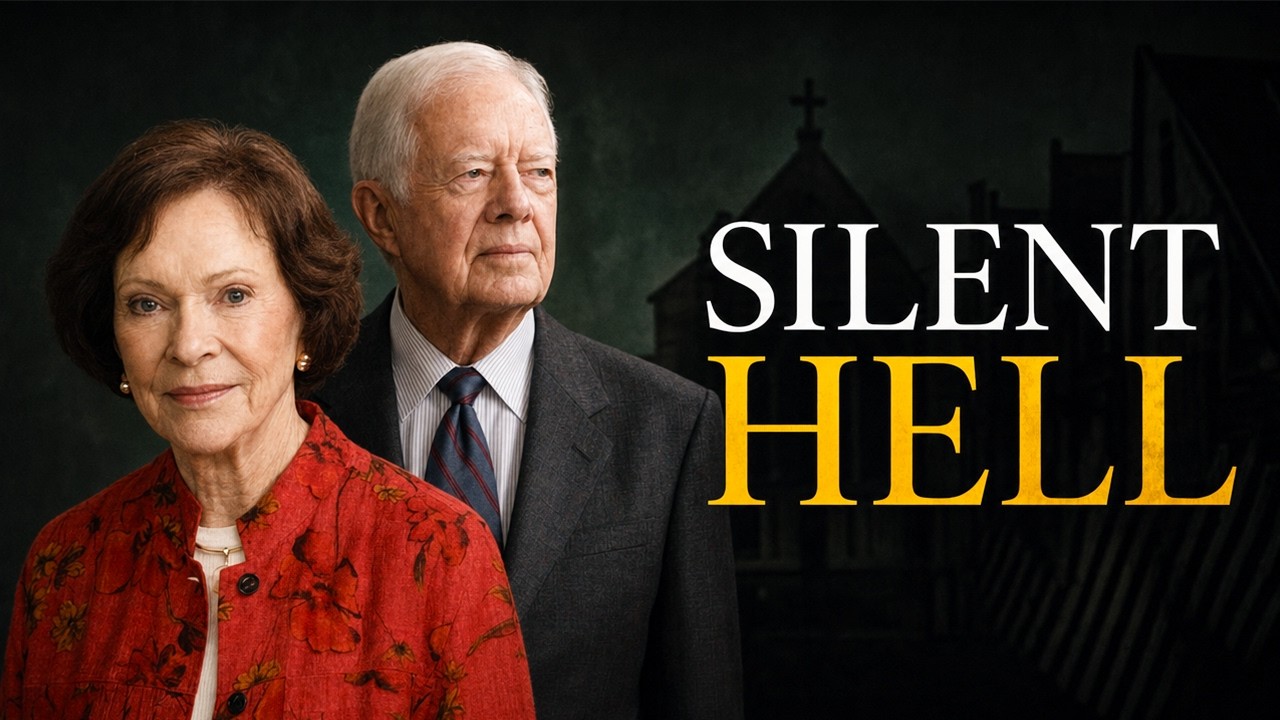
The public story that followed was simple: seventy-seven years of marriage, two people in their nineties holding hands on a porch in a town of six hundred, still building houses for strangers. The country decided that was the whole story. It was not. The image the public inherited was the quiet one.
The wife who stood a half step behind her husband at the microphone. Southern, soft-voiced, deferential. That image leaves out nearly everything that mattered. Rosalynn Carter sat in cabinet meetings and took notes.
She kept a working office in the East Wing with a staff and a standing weekly lunch with the president, where she brought her own agenda. In 1977, she was sent to seven Latin American countries as his envoy, briefed by the State Department and carrying substantive positions on arms sales, human rights, and nuclear proliferation. In February 1979, she testified before a Senate subcommittee, the first first lady to do so since Eleanor Roosevelt. She told her husband he was wrong, on a regular basis, in private, at volume, for decades.
None of that made it into the myth. Some of that omission was sexism, some of it was the seventies, but a great deal of it was her. She was raised in a house where you did not make a scene, and she got very good at making her opposition invisible. That skill was the whole story.
It was also, eventually, the weapon. She was born Eleanor Rosalynn Smith in August 1927, three miles of red dirt from where she would die. Her father, Edgar Smith, drove the school bus and ran a garage and farmed a little on the side, which in Plains during the Depression was three jobs adding up to almost nothing. Her mother, Allie, sewed for other people.
In 1940, Edgar Smith was diagnosed with leukemia. He was thirty-nine. Rosalynn was thirteen and the oldest of four. He called the children into his room and told them he was dying, and that he wanted them to go to college.
Then he was gone. Her mother took in more sewing and eventually took a job at the post office, and Rosalynn became the one who ran the younger children. The cooking, the watching, the keeping of a house where grief was not discussed, because discussing it did not accomplish anything. What that produced was not fragility but competence.
She learned that if she was useful enough, nobody would look too closely at what she was feeling, and that being useful was the only currency a girl in Plains actually had. She learned to manage. She learned to keep her mouth shut and get the thing done anyway. And she learned to want out.
Plains was not a place she loved. It was a place she was stuck in, taking care of everyone with a dead father’s instruction about college sitting on her chest. Her best friend was Ruth Carter, whose family farmed a few miles out at Archery, and whose older brother was away at the Naval Academy. There was a photograph of him in Ruth’s room.
Rosalynn saw it, and by her own later telling, thought about it more than she should have. She went out with him in July 1945, home on leave, to a movie. She was seventeen. He was twenty, in the summer between his last two years at Annapolis.
He went home that night and told his mother he had met the girl he was going to marry. The timeline that followed was aggressive. By Christmas, he proposed. She said no.
That refusal is the single most underreported fact in this marriage. She was eighteen, being asked by a Naval Academy midshipman to leave a town that was suffocating her, and she turned him down because she had promised her dying father she would finish college, and she was in the middle of doing it. She had a competing obligation, and she chose it over him. In February 1946, she went to Annapolis to visit, and he asked again, and she said yes.
From the first negotiation of their lives, she made him ask twice. They married on the seventh of July 1946, a month after his graduation. He was twenty-one. She was eighteen.
What followed were, by her own repeated account, the happiest years of her life. Norfolk first, on battleships. Then he volunteered for submarines, and they went to Honolulu, then New London, Connecticut, then Schenectady, New York, when Hyman Rickover pulled him into the nuclear program. Four postings, three sons, each born in a different place.
He was at sea constantly, and the standard reading gets it exactly backward. The absence was not the injury. The absence was the freedom. She had her own household in cities where nobody knew her father had died broke, where no mother-in-law lived down the road, where she made every decision about money, children, housing, and doctors alone, because there was no one else to make them.
She handled the finances. She moved the family. She raised three boys on a junior officer’s salary in four states in six years, and she was very, very good at it. She had built exactly the life the thirteen-year-old had been promised she would never get.
In the spring of 1953, Earl Carter was diagnosed with pancreatic cancer. Jimmy went home to Plains that summer and watched half the county come through the house. His father had been quietly caring for people, paying for medicine, covering debts, funding kids through school, and none of the family had known the scale of it. Earl Carter died in July.
Jimmy came back to Schenectady and told his wife he was resigning his commission and taking them back to Plains to run the peanut farm. He did not ask her. She argued with him the whole way, and it was, in her telling, the angriest she had been at him in their marriage. She did not want to go.
She had nothing waiting for her in Plains except the version of herself she had spent her entire adult life escaping. She argued. She lost. In the fall of 1953, they moved back to a place where they qualified for public housing, making the future president of the United States the only one who had ever lived in government-subsidized housing.
And then she did something nobody in either family expected. She went to the warehouse and took the books. The first crop year, 1954, was a drought year, and the Carter peanut business cleared somewhere around two hundred dollars for twelve months of work. Rosalynn started keeping the accounts, and when she found she did not know enough, she signed up for a correspondence course in accounting and taught herself the rest.
Within a few years, she was running the books, the payroll, the ordering, and the scales. Her husband said later that she knew as much about the business as he did. In some tellings, he went further and said she knew more. That was the trade she made in Plains.
She lost the argument about where to live and immediately went and acquired the one thing the argument had cost her: control. Not over him. Over the money. For the next twenty years, almost every fight in this marriage ran on the same mechanism.
He decides. She objects. He wins. She then takes possession of some piece of the resulting situation and runs it better than he could have.
In 1962, he ran for the Georgia State Senate, and the race produced one of the last genuinely unembarrassed election thefts in the American South. In Quitman County, a local boss named Joe Hurst ran the machine, and on election day the ballot box was stuffed in front of witnesses. Carter lost the county by a wide margin and lost the nomination. He fought it, got a lawyer and the press interested, had the ballots examined, and had the result overturned in time to be seated.
For Rosalynn, the lesson was structural. Politics was not a hobby he was going to get out of his system. It was the thing that was going to determine where she lived and what she did. She began campaigning.
She was terrified of public speaking, genuinely, physically. Her solution was not to conquer the fear but to route around it. She went door-to-door, county to county, alone in a car, shaking hands one at a time. In 1966, he ran for governor and lost, coming out of the race in debt and in a depression that lasted months.
The next year, he had a religious experience, a re-dedication, the language of being born again. He talked about it publicly for the rest of his life. She did not follow him into it. Rosalynn was a lifelong practicing Methodist who taught Sunday school and prayed daily, but she never described a moment of conversion.
Their marriage was not a spiritual partnership. It was a working partnership between a mystic and a manager. In 1970, he ran for governor again, and he ran ugly, hunting for the voters who had elected the segregationist Lester Maddox. He never made an explicit segregationist pledge.
He did not have to. He won. And in January 1971, standing on the Capitol steps at his inauguration, he announced that the time for racial discrimination in Georgia was over. Both things are true, and they happened four months apart.
Rosalynn campaigned inside that strategy. She was in those counties, shaking those hands. She knew what the campaign was doing. She kept doing it.
The woman who had learned at thirteen that grief is handled silently had grown into a woman who could hold a great deal of knowledge without visible discomfort. It was during that same 1970 campaign that she found her subject. She was working a shift change at a cotton mill, and a woman told her she worked nights so she could be home during the day with a daughter who was mentally ill. Rosalynn started asking about it everywhere she went and kept hearing the same thing.
Families were doing this alone. There was nothing. He created a commission on services to the mentally and emotionally handicapped, and she served on it. Georgia went from sixteen community mental health centers to well over a hundred during his single term.
She had found the thing that was hers. By 1976, they had built a two-headed campaign. She campaigned separately, on her own schedule, with her own staff, running her own map. Then, in September, the campaign nearly detonated over an interview her husband gave to Playboy in which he said he had looked on a lot of women with lust and committed adultery in his heart many times.
It cost him something like fifteen points of a lead. They won in November anyway. What actually happened in the White House was stranger than the story of partnership and reward. She took an office in the East Wing and ran it like an office, with staff and memos.
She started attending cabinet meetings, sitting off to the side, taking notes. She instituted a working lunch and came with items. She could not chair the President’s Commission on Mental Health because a federal anti-nepotism statute prevented it, so she was made honorary chair and simply did the work anyway. In June 1977, he sent her to Latin America: seven countries in thirteen days.
The reaction at home was brutal, and the objection was always the same sentence in different mouths. Nobody elected her. She kept going anyway. On the seventh of February 1979, she walked into a Senate hearing room to testify under her own name, the first first lady to do so since Eleanor Roosevelt.
The Mental Health Systems Act was signed in October 1980, three weeks before the election. In August 1981, Ronald Reagan’s budget reconciliation bill converted almost all of it into block grants and cut the funding. It was effectively dead before a single dollar reached most of the programs it authorized. She had spent a decade on it.
It lasted less than a year. The one everyone talks about is Iran. From November 1979, when the embassy in Tehran was seized, the administration had fifty-two hostages and no leverage, and the president made a decision he never really reversed. He would not campaign.
He stayed at the White House. She thought that was wrong, and she said so, repeatedly. She was overruled. She went out and campaigned in his place in a season where every stop meant answering for a rescue attempt that had failed in the desert and a hostage count that never moved.
He lost forty-four states. He came to terms with it fairly quickly. She did not. She said without much decoration that she was bitter, and that it took her a long time to stop being bitter, and that she was angry at the country in a way he never allowed himself to be.
She had lost the office, the program, and the argument all inside twelve months. Then they came home to Plains and found out they were about a million dollars in debt. The peanut business had been in a blind trust for four years and had been badly managed while they were gone. They sold it.
The thing she had taken over in 1954 and taught herself accounting to run was gone, sold to pay off what the trust had lost. She was back where she started, in the same small town, with less than when she had left. So she built something. The Carter Center opened in 1982, initially his idea as a place to mediate conflicts, and then increasingly a joint enterprise where she took mental health as her portfolio and kept working for the next forty years.
In 1984, they went to New York on a bus with a church group to work on a building for Habitat for Humanity, and the image of two former occupants of the White House swinging hammers became one of the most durable pieces of political iconography in modern America. In 1987, they nearly ended the marriage over a book. They had agreed to co-write something about the years after leaving Washington, published as Everything to Gain. He wrote fast in bursts and considered a draft finished.
She wrote slowly, revised endlessly, and considered nothing finished. They were working from the same computer files, which meant each could rewrite the other. They stopped speaking about it and started leaving each other notes on the machine. Both of them described it afterward as the worst period of the marriage, and by both accounts it got bad enough that the editor at Doubleday had to intervene.
The resolution was to identify the disputed passages by author, so that certain paragraphs in the finished book carry initials indicating which Carter wrote them. That is a peace treaty. Two people who could not agree on a shared account of their own life resolved it by publishing separate versions side by side and marking whose was whose. And then she wrote her own version.
First Lady from Plains came out in 1984, while the wounds were fresh, three years before he ever published his own account of the White House years. She spoke first. She wrote four books under her own name, including a book on caregiving in 1994 and Within Our Reach in 2010, still arguing at eighty-three. She founded the Rosalynn Carter Institute for Caregiving in 1987 at Georgia Southwestern, the same junior college in Americus she had promised her dying father she would finish.
She built fellowships for journalists covering mental health, spending decades quietly funding and training the people who would write the coverage. The woman who could not stand to give a speech ended up shaping how an entire subject got reported. She was not secretly miserable. She loved him, and the affection is documented from every direction and across every decade.
What she was, was overruled. On leaving the Navy in 1953, on the timing and terms of his political life, over and over, on Iran, when it mattered most. Three times the direction of her entire existence was set by a decision she argued against and lost. And each time, instead of leaving or sulking or accepting the role she had been assigned, she went and took possession of whatever the loss had put within reach.
The books at the warehouse. The mental health commission. The campaign map. The Senate hearing room.
The archive of her own story. The image of the old man in the wheelchair under the casket was not a picture of a woman who followed a man. It was a picture of the end of a seventy-seven-year argument that she conducted almost entirely out of public hearing. Because she was raised in a house where you did not make a scene.
And because she figured out very young that a woman who appears to be agreeing is a woman nobody thinks to stop.