On the night of the masked ball at the Palace of Versailles, a commoner in a costume of the huntress Diana caught the eye of King Louis XV. The king, dressed as a yew tree, made his affections for her publicly known before the assembled court. For Jeanne Antoinette Poisson, the moment was the fulfillment of a prediction made years earlier by a fortune teller who told her she would one day reign over the heart of a king. For the French court, it marked the beginning of a reign that would shape politics, culture, and the fate of the monarchy itself.
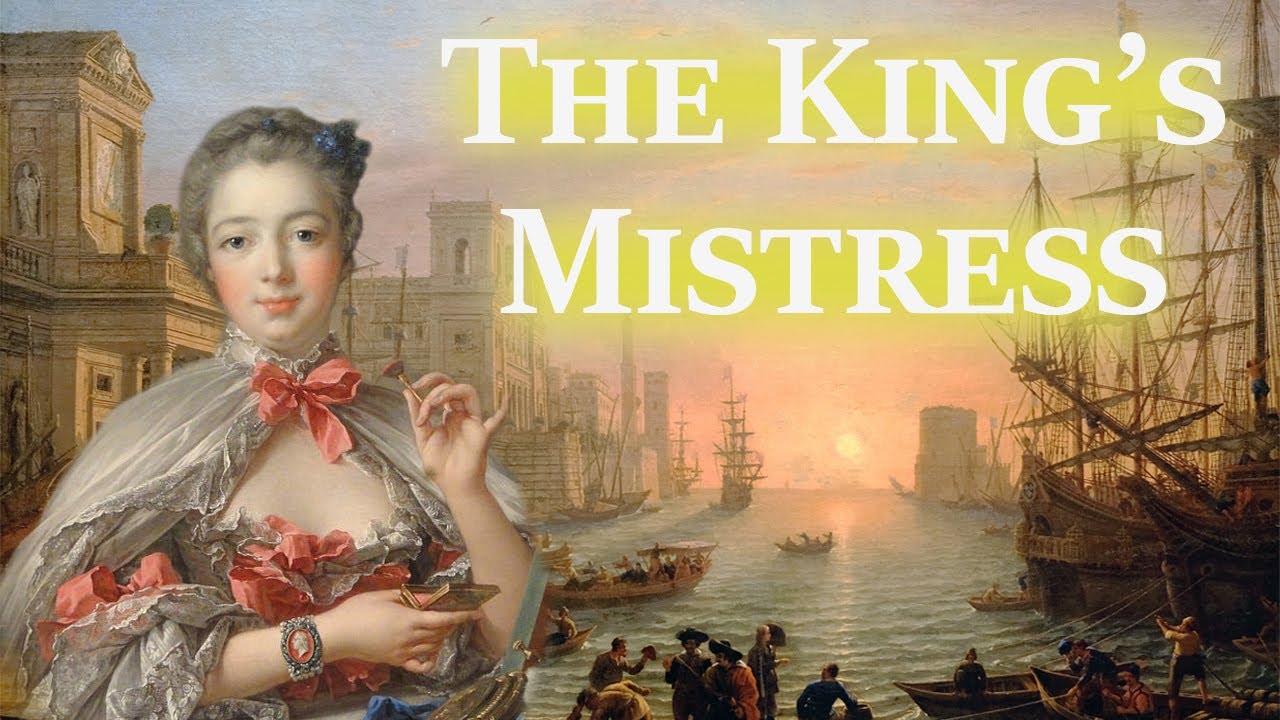
Jeanne was born in Paris on December 29, 1721, to François Poisson and his wife Madeleine de la Motte. François was a successful financier, though the family’s fortunes were complicated by rumors that Jeanne’s biological father may have been either the financier Jean Pâris de Montmartel or the tax collector Charles François Paul Le Normant de Tournehem. When François fled the country in 1725 to escape unpaid debts, Le Normant de Tournehem stepped in as Jeanne’s legal guardian. He arranged for her education, first at an Ursuline convent in Poissy where she was sent at age five, and later at home under private tutors after she fell ill with what was likely whooping cough at age nine.
Though she never excelled at traditional academics, Jeanne flourished in the arts—dancing, drawing, painting, and theater. She could memorize entire plays and developed a lifelong passion for creative expression. After her return from the convent, Jeanne’s mother took her to see a fortune teller who predicted her daughter would one day reign over the heart of a king. Her mother clung to the prophecy, calling Jeanne “Reinette,” or little queen.
The prediction shaped Jeanne’s ambitions from childhood. At nineteen, Jeanne married Charles Guillaume Le Normant d’Étiolles, the nephew of her guardian. The marriage served Le Normant de Tournehem’s financial interests, as he stood to gain considerably from the union. He made his nephew his successor and awarded the estate at Étiolles to the newlyweds.
The property sat on the edge of the royal hunting grounds, a position that would prove crucial to Jeanne’s future. The marriage was a relatively happy one. Charles fell deeply in love with his wife, and though Jeanne’s feelings may not have matched his intensity, she cared for him. She privately resolved to remain faithful unless the man in question was the king himself.
As a married woman, Jeanne gained entry to the popular salons of Paris, where men and women gathered for intellectual discussion. There she met Voltaire, Helvétius, and Montesquieu, learning from their company and sharpening her wit. She eventually established her own salon at Étiolles, which became remarkably successful. Her reputation as a master of conversation grew, and she perfected the sharp intelligence that would define her later years.
The marriage produced two children: a son who died in infancy and a daughter, Alexandrine, born in 1744, who was dearly loved by her parents. Jeanne never forgot the fortune teller’s words. Determined to meet the king, she used her proximity to the royal hunting grounds to arrange a meeting. On one occasion, she deliberately positioned herself in the middle of the hunting grounds despite not being permitted there, wearing a blue dress while seated in a pink carriage.
On a later occasion, she returned wearing a pink dress and sitting in a blue carriage. The strategy worked. The king took notice and sent her a gift of venison as a sign of his affection. But because the position of chief mistress was already occupied by Madame de Châteauroux, nothing could come of the gesture at the time.
In December 1744, Madame de Châteauroux died. Less than a month later, Jeanne received a formal invitation to a masked ball at Versailles. The costumes chosen for the encounter were deliberate: the king dressed as a yew tree, a reference to the hunting grounds, while Jeanne dressed as Diana the huntress, recalling the moment he first saw her. At the ball, the king publicly proclaimed his affection.
To compensate her husband for taking his wife, Louis XV offered Charles the position of ambassador to Turkey, but he refused. Charles was heartbroken and never forgave Jeanne, consoling himself with affairs in Paris, fathering several children, and later remarrying. By March 1745, Jeanne had officially separated from her husband and secured her place at court as the king’s mistress. She was granted royal apartments and the marquisate of Pompadour, which gave her a title.
On September 14 of that year, she was presented at court as Madame de Pompadour, escorted by the king’s cousin. To solidify her position, she mastered court etiquette and cultivated friendships with those above her, especially the queen. She made clear to Queen Marie Leszczyńska that she respected the queen’s role and had no intention of overstepping it. The queen appeared to accept and appreciate the gesture, officially welcoming the new mistress.
The role of chief mistress extended far beyond personal companionship. Madame de Pompadour became a duchess and eventually the thirteenth lady-in-waiting to the queen, the highest position available to a woman at court. She functioned as a de facto prime minister, responsible for appointments, advancements, favors, and dismissals. Her influence reached into domestic and foreign policy.
In 1755, the Austrian diplomat Wenzel Anton, Prince of Kaunitz-Rietberg, approached her to intervene in negotiations that led to the Treaty of Versailles, which promised mutual aid between France and Austria if either were attacked by Great Britain or Prussia. Her involvement in the Seven Years’ War, however, ended disastrously for France, which lost its North American colonies and fell into near bankruptcy. After the loss, Madame de Pompadour was said to have comforted the king through one of the most difficult periods of his reign. Her support for various figures and policies that ultimately failed brought further negativity onto a country already suffering from the war’s consequences.
The king’s willingness to listen to her ideas, combined with courtier resentment of a commoner exercising such influence, made her many enemies at Versailles. Yet despite the disastrous policies she had championed, she also advocated for ministers who introduced important fiscal and economic reforms, including trade infrastructure and income taxes that improved France’s financial position. In 1750, the sexual relationship between the king and Madame de Pompadour ended, but she remained his closest friend and advisor. The king was prone to bouts of melancholy, and it was often said that only she could lift him from such moods.
Over time, she became the only person he fully trusted. She organized parties and hunting trips for him, maintaining the personal bond that kept her at the center of power. Her most enduring influence may have been in the arts and the ideas of the Enlightenment. She supported the physiocrat school of economic thought, which later influenced Adam Smith.
She purchased a porcelain factory, served as a model for paintings and sculptures, and supported stage actresses performing at Versailles. Her patronage helped inspire the rococo style of art and played a significant role in making Paris the perceived capital of taste and culture in Europe. Her health, however, had long been fragile. Since the whooping cough she contracted at age nine, she had suffered from recurring colds, bronchitis, headaches, and episodes of spitting blood.
She also endured three miscarriages during her involvement with the king, which further weakened her condition. Madame de Pompadour died at age forty-two after contracting tuberculosis. The king remained devoted to her to the end, trying and failing to nurse her back to health. Her enemies rejoiced at her death, but those she had supported were devastated.
Voltaire wrote that he was very sad at her death, that he was indebted to her and mourned her out of gratitude, noting the absurdity that an ancient, barely mobile old man should still be alive while a beautiful woman in the midst of a splendid career died at forty-two. As her body departed Versailles in a rainstorm, the king reportedly remarked that the marquise would not have good weather for her journey.