When the Allies finally swept into the Bergen-Belsen concentration camp in April 1945, they found a scene that defied comprehension. Thousands of unburied corpses lay scattered across the grounds, while some sixty thousand surviving prisoners, many near death from starvation and disease, waited in horror. Among those captured by British forces was a 52-year-old woman named Johanna Borman, a senior overseer known to prisoners as the “woman with dogs. ” Her trial, held in the same camp she had helped terrorize, would expose the cruelty of a lesser-known corps within the Nazi system: the female guards of the concentration camps.
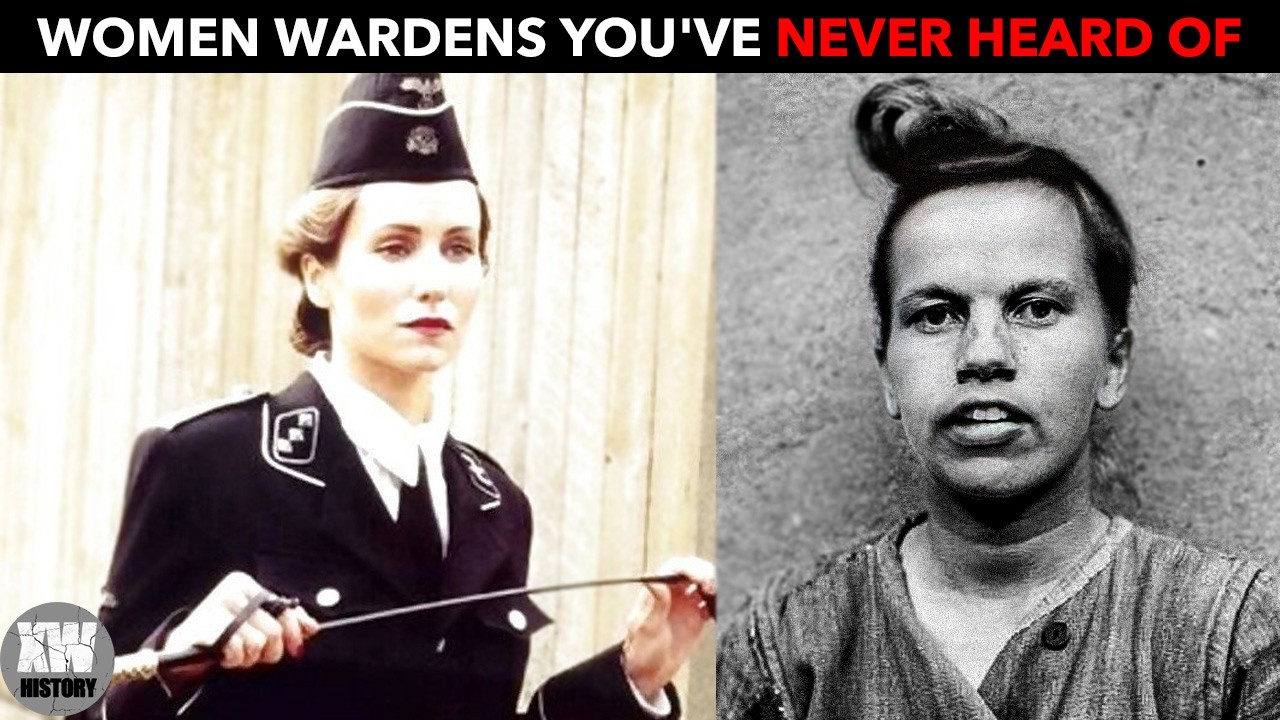
During their trials, many of these women laughed and exchanged glances, showing no remorse for the abuses they had inflicted. Louisa Dan was born in 1917 on a farm in the municipality of Waldorf, in the mountainous and forested region of Thuringia. She was an ordinary German girl who graduated from public school in the district of Schmalkalden and later moved north to Brandenburg, where she found work in a bakery. In 1940, she returned to her home district to work as a postman.
But by 1943, with the Nazi regime expanding its network of camps and the workload becoming colossal, recruiters were scouring every German state for personnel. The 26-year-old did not hesitate. That same year, she took up duties at Ravensbrück, the largest and, at the time, the only women’s concentration camp in Europe, located in Brandenburg about 90 kilometers north of Berlin. She was later transferred to Majdanek, then to Auschwitz, and finally to Malchow.
The testimony of surviving prisoners painted a grim picture of her conduct. Dan severely beat imprisoned women who objected to having their winter clothes confiscated. In Malchow, where she served as a senior warden, she withheld food from prisoners, sometimes for two days at a time. Those who voiced their dissatisfaction were beaten harshly on their sides with fists or sticks on her orders.
In April 1945, her sense of impunity reached a final, fatal limit: she personally killed an underage girl. Historians studying the case argued that Dan had grown accustomed to watching the torment of the beaten and tortured, but this time she wanted to watch the death agony from the very beginning, making the execution a direct result of her will. Why she chose a minor as her victim remains unknown. Dan was arrested on the first day of June 1945 in Mecklenburg, three weeks after the war had ended.
She had attempted to blend in with the small civilian crowd in the community of Lüto, about ten kilometers from Schwerin, but the community was too small, and everyone knew each other. Women who knew what she had done in Malchow quickly recognized the stranger. She was tried by the Supreme National Tribunal in Poland, a trial that lasted almost a month. For the totality of her criminal acts, she was sentenced to life imprisonment.
She remained a prisoner until mid-1956, when the 39-year-old was released for health reasons. Her health was nevertheless sufficient to allow her to live until the year 2009. Hildegard Lächert was born in Berlin in March 1920. As a teenager, she began studying to be a dressmaker, but she did not finish her studies; the money was needed urgently, and from the beginning of the Second World War, she worked in a factory.
There, too, things did not work out well, for the girl had a painfully hot-tempered character and was extremely picky. Such temperament was seen as ideal for service in the concentration camps being opened across Germany and Central Europe. From April 1942, the 22-year-old worked in Ravensbrück, and from October she was in Majdanek. In April 1944, she was registered at Auschwitz.
From January to April 1945, she committed atrocities in the suburbs of Bolzano, Italy, proving that the death factories had been organized even in Italy and France. Prisoners remembered her with fear. In Ravensbrück, she beat prisoners with anything she could lay her hands on. In Majdanek, she once set a dog on a pregnant prisoner.
She loved to beat young women with ironbound shoes, and after executions, she could casually go to flirt with the male staff, becoming pregnant in 1943. Witnesses testified that she beat some pregnant prisoners to death, hounded others with dogs, and drowned still others in the dirty cesspools of the camps. She was called “the beast,” and prisoners dubbed her “Bloody Brigitte,” after the Celtic goddess of war. She was detained by an Allied army unit only in 1946, having evaded justice for a time.
A year later, she was interned at the second session of the Supreme National Tribunal in Poland and sentenced to life imprisonment, but she was amnestied after eleven years. She later worked as a brothel cleaner until 1975, when new accusations surfaced. She was held in custody for six years while charges were formed based on witness statements and was sentenced to twelve years in prison, though the time she had served in Poland was deducted. She lived freely for another fourteen years.
Haska came from a family of Germans in Silesia, born in 1921 in Friedberg, the town now called Stary Jaworzyn in Poland. Raised by poor parents, she finished a vocational school and then found work at a textile factory in the town of Lublin, a region already integrated into the Third Reich. Unlike many of her eventual colleagues, she had no connection to the SS at all. Working peacefully at the factory until August 1944, she then decided to enlist in the staff of the Gross-Rosen concentration camp, where she trained to work at another institution: Bergen-Belsen in Saxony.
The motives were not surprising: the salary was 105 marks, an impressive amount at the time, with free food, free housing, and bonuses for overfulfillment of the plan, or, in other words, for driving prisoners to the grave. The 22-year-old trained in the brutal treatment of prisoners and added her own refinements. At Bergen-Belsen, beginning on February 26, 1945, she controlled the distribution of food. Anyone dissatisfied with a portion or who merely looked at it crookedly was beaten with a rubber tube fitted on a stick.
At the end of the day, she decided who received food, how much, and whether to provide it at all. She worked for only a month and a half before being detained by a British Army unit in April 1945, yet in that short time, she inflicted so many injuries that she was sentenced to ten years in prison at a trial in Luneburg in November 1945. She served only six years before being released for good behavior or as a result of an amnesty. Anneles Kohlmann was born in March 1921 into an unusual Hamburg family, the daughter of a representative of the German Lodge of Freemasons.
She was raised with a sense of inner superiority and exclusivity over most people. After graduating from school and a tram-driver school, she received her NSDAP party card. In November 1944, she became part of the so-called SS retinue, personnel responsible for signals, secretaries, senior gardeners, and other economic functions within the death camp structure. Any of them could be transferred to a warden post and sent to any concentration camp in the system.
Kohlmann was sent to the Neuengamme branch near Hamburg, where she worked until March 1945, before being transferred to the main Hamburg camp and later to Bergen-Belsen. Prisoners recalled that she beat people with any improvised means, with or without reason, until she grew tired. For any single offense, a prisoner was beaten until choking in blood. In one known case, a prisoner caught stealing a piece of bread had her hands beaten until they swelled, blackened, and stopped moving.
Kohlmann inexplicably hated elderly prisoners and pregnant women, beating both groups with special diligence until they showed no signs of life. Her other form of cruelty was harassment, and despite her brutality, she sometimes mingled in the barracks without fear of revenge. Prisoners called her “Bubi,” and according to testimony, she was interested in Jewish women. One former prisoner, Vera Foukalová from Czechoslovakia, testified that Kohlmann fell in love with fellow prisoners, including a Jewish woman from Bohemia and another prisoner named Charlotte.
A prisoner named Helena Sommer was so favored that the guard reportedly planned to flee with her to Prague after liberation. After the camp was liberated, Kohlmann was put on trial in Luneburg in November 1945 and sentenced to only two years in prison. She served her time in the German town of Celle and was released in 1947. After eighteen years, she moved to West Berlin but ultimately returned to Hamburg, working as an ordinary cook at a hospital.
She died relatively early, at the age of 56. Johanna Borman was born in East Prussia in 1893, in the city of Birkenfeld, where her father ran a farming business. She was not only short but almost dwarf-like, and local Germans who knew her claimed she had no suitors even at age twenty. She had secretly idolized Adolf Hitler, keeping his photo under her mattress, and signed up to study in Königsberg.
Her crimes spanned the widest geography of any guard on the list, serving in Lichtenburg, Ravensbrück, Auschwitz, the Hindenburg auxiliary camp, and finally Bergen-Belsen, rising to the rank of senior overseer. In Ravensbrück, she beat women who could not keep pace on long marches. In other camps, she used two midwives, both convicted of infanticide, to deprive pregnant women of their children. These two assistants had once served time for drowning and strangling infants, and Borman ordered them not to hide the dead but to throw them out for their mothers to see.
In Auschwitz, she served under the notoriously cruel Maria Mandl, learning to break prisoners’ jaws with a single blow. Prisoners gave her the nickname “woman with dogs” because she loved to set dogs on them and personally sent to the gallows those captives she deemed useless. Borman was captured by British forces during the liberation of Bergen-Belsen. At the Belsen trial, she appeared alongside Irma Grese and Elisabeth Volkenrath, and all three were hanged.
Elisabeth Volkenrath was born in 1919 in Lower Silesia, into a simple family bearing the name Mulan. Only two details are known of her pre-war biography: she became the wife of an SS man and deeply hated the Poles, who outnumbered Germans in her native land. In 1941, when the number of camps doubled, she decided to work as a civilian laborer in one of them, as she had no SS membership. Her first tasks were household duties, but a warden vacancy soon opened, and she submitted her candidacy.
She was assigned to Ravensbrück, later serving at Auschwitz-Birkenau. Beginning in 1943, she felt herself the mistress of life and death, taking an active part in the selection of prisoners for the gas chambers, sending those deemed unprofitable to be “recycled. ” In 1944, she became a senior warden. When that camp was closed, she was transferred to Bergen-Belsen, where people were disposed of without hesitation until the Allied forces arrived.
She was arrested there, and there was no shortage of evidence: witnesses, victims, and bodies. She was found guilty of sending several thousand women to the gas chambers. She told the judge that she had treated them all well, but it made no difference. Together with Irma Grese and Johanna Borman, she was hanged in the prison of Hameln, executed by Albert Pierrepoint, a British executioner with a medical background who oversaw the executions of war criminals.
The fates of her SS husband remain unknown.