Tony Accardo ruled the Chicago underworld with an authority that made the Federal Bureau of Investigation hesitate and local police behave like his private security. He had spent fifty years at the top of organized crime without a single night in jail. Rival gangs, Italian or Irish, were erased with cold efficiency. He had earned the nickname Joe Batters by personally executing traitors with a baseball bat, and his reputation was so brutal that hardened killers stepped back in silence.
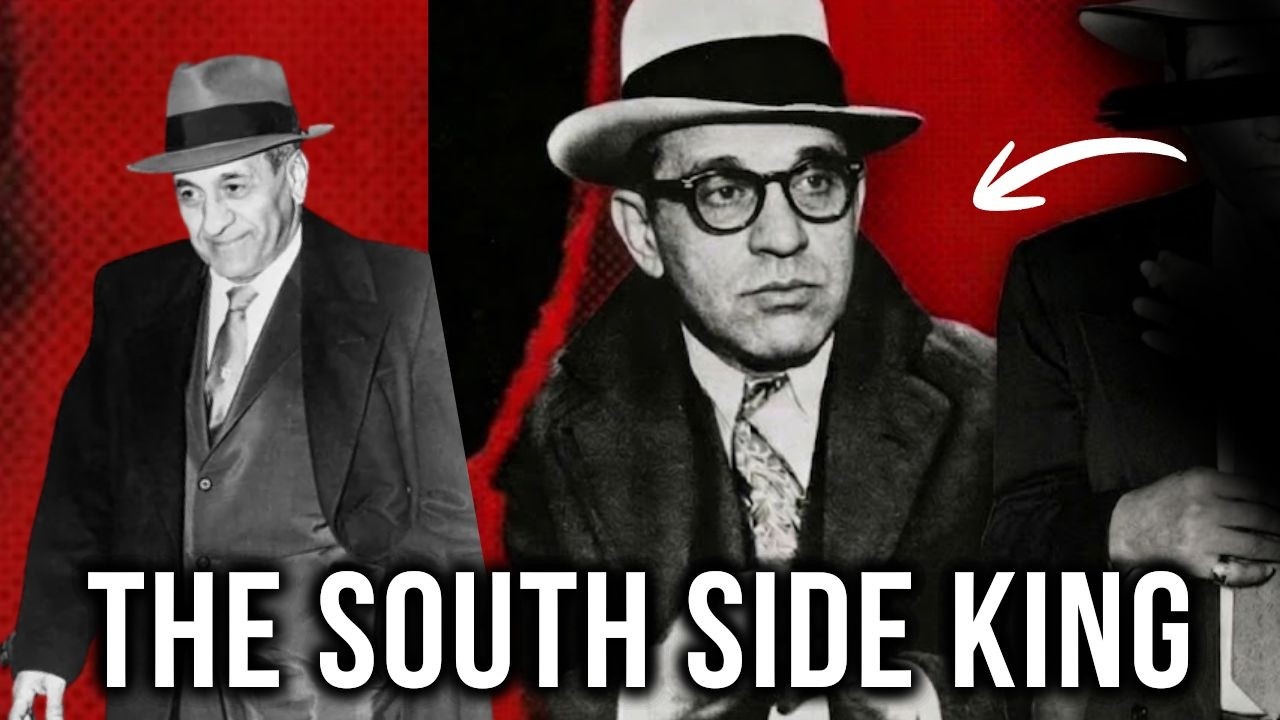
Judges, state senators, and police chiefs ate from his hand. Yet there was one part of Chicago he would not touch. He looked at the map of his own city, studied the South Side, and chose to stay away. Because a man there had made it clear what would happen to anyone, Italian, Irish, or otherwise, who crossed his lines.
That man carried a heavy revolver every day of his adult life. He had a temper that moved from calm to devastating action in an instant, settled disputes in the street, and walked away while rivals lay dead on the pavement. He disciplined his own collectors with his bare hands if they shortchanged working-class customers by even pennies. He commanded a crew of off-duty police officers who served as his bodyguards, not because he feared the mafia, but because his conflicts were drawing attention from the downtown press.
When word reached him that the Italian mafia was asking questions about his operation, he sent back a simple message that every hitman in Chicago understood. They could come and try to take it, and see what happened. Accardo studied the man’s history, did the brutal arithmetic of street warfare, and made the only cautious decision of his criminal career. He backed off.
Because the man controlling the South Side was not an Italian mobster with a connected family. He was a black sharecropper’s son with no formal education, a custom-tailored suit, and a long habit of leaving mafia enforcers defeated on the pavement. Theodore Teddy Roe was born in the Louisiana bayou in 1898, in a world as far from power and wealth as possible. He grew up in crushing poverty, surrounded by agricultural debt, and never stepped inside a classroom.
Everything he learned about survival, economics, and human psychology came from the streets. When he moved to Chicago seeking a better life, he discovered the policy game, an illegal street lottery where working-class citizens bet pennies, nickels, and dimes. To downtown bankers those small coins meant nothing. But in the segregated neighborhoods of Bronzeville, those nickels compounded daily into a river of untraceable cash.
The men who ran these operations were known as policy kings and served as the financial backbone of the community. They provided jobs to thousands of runners and clerks, paid hospital bills for sick children, and funded local businesses that segregated banks refused to help. Roe started at the bottom as a street runner collecting coins in freezing rain. His sharp intellect and capacity for controlled violence propelled him to the top of the organization.
By the mid-1940s, the policy game on the South Side generated an astonishing $25 million a year. Roe had transformed himself from a penniless migrant into a millionaire, a community hero, and a powerful underworld boss. For twenty years, the old mafia bosses respected the danger of the South Side and stayed away. They understood the community was fiercely loyal to the policy kings and that invasion would mean an unwinnable conflict.
But in the late 1940s, Tony Accardo took the throne of the Chicago Outfit. He operated with a corporate mindset and cared nothing for old neighborhood treaties. He looked at the $25 million flowing through Bronzeville every year and decided the South Side belonged to him. Accardo and his lieutenants expected a simple takeover.
They assumed intimidation and a few broken windows would force the local operators to surrender. They had no idea they were walking into a fight against a man with nothing to lose. The Outfit launched its campaign with a terrifying strike. They ambushed Roe’s business partner, the most senior policy king in the city, and held him hostage in a secret location for days.
They taped his eyes and stuffed cotton in his ears to disorient him. The ransom demand was exorbitant, accompanied by an ultimatum to surrender the entire South Side operation or suffer the consequences. Roe paid the ransom to secure his partner’s release, but the psychological damage was done. Panic spread through the South Side.
The kidnapped policy king was so traumatized he fled to Mexico and never returned. Seeing the might of Accardo’s empire, the other operators felt their courage evaporate. Some quietly agreed to pay street tax, effectively handing their businesses to the mafia. Most simply vanished.
Within months, every black numbers operator in Chicago had surrendered or fled. Every one except Teddy Roe. Accardo waited for Roe to run like the others. Instead, Roe absorbed the abandoned territories, consolidated his power, unified the remaining workers, and bought more ammunition.
Bronzeville became a combat zone where neither side would surrender an inch. The Outfit deployed its most vicious enforcers into the black wards. They bombed Roe’s residence in the middle of the night. They fired warning shots at his associates.
They attacked his collectors and established heavily guarded bookie joints inside local taverns and barbershops. Roe refused to retreat. He fought back with ferocity that stunned the mafia bosses. In a tense span of six months, multiple Italian mob soldiers and an unknown number of Roe’s men were found dead in alleys across the city.
The most powerful criminal organization in America was deadlocked against one man and his local crew. Roe was holding the line against staggering odds. Every time they hit his operation, he hit them back harder, disrupting their illegal casinos. His survival became a daily humiliation for Accardo.
The community rallied behind Roe, transforming him into a modern, heavily armed Robin Hood. Placing bets with him became an act of political defiance. The South Side was voting with its nickels, rejecting mafia intimidation and choosing to fund their own king. Realizing the war was costing too much money, drawing federal attention, and creating terrible public relations, the Outfit changed strategy and offered to negotiate.
They offered Roe a quarter of a million dollars in untraceable cash to walk away and leave the city forever. In the 1950s, that was an astronomical sum, enough to live like a king anywhere in the world. Roe looked the most dangerous men in America in the eye and said he would perish first. He told them, If I am going down, I am going down fighting like a man.
The Italians realized they were not dealing with a rational businessman. They were dealing with a man ready to burn the city down before bowing to Accardo. The tension reached a boiling point in the summer of 1951. The Outfit dispatched an elite crew to abduct Roe off the street in broad daylight.
The plan was not to kill him, but to kidnap him, drag him to a soundproof location, and break him until he handed over his empire. The squad was led by Leonard Caifano, a fully initiated made man and the brother of one of Accardo’s most terrifying captains. They set an ambush, flashing fake police badges to pull Roe’s car over on a busy avenue. Roe was sharp, vigilant, and armed.
As the mobsters approached, he recognized the trap. He did not freeze and did not surrender his weapon. A violent struggle erupted on the hot pavement. Punches were thrown, men grappled against the steel of the vehicle, and then a single gunshot rang out.
A made member of the Italian Mafia dropped dead on the street. In 1951, a black man had killed an untouchable mobster in broad daylight and walked away alive. Accardo demanded total retaliation. Roe was arrested and charged with first-degree murder.
The mafia exerted crushing political pressure on the legal system, demanding he be locked away or executed. He was denied bail while Accardo plotted revenge. But Roe’s expensive defense attorneys argued justifiable self-defense, exposing the mafia ties of his attackers to the jury. Against all odds and despite the weight of the Chicago political machine, the jury acquitted him.
Roe walked out of the courthouse a free man. He became a legendary symbol of resistance, living proof that a man could stand against Accardo’s empire and win. The Outfit launched an apocalyptic campaign against the community, targeting anyone associated with Roe’s operation. Anticipating retaliation, Roe fortified his mansion and hired dozens of guards.
He was ready for a siege. But in August 1952, the threat came not from a mobster’s weapon but from a doctor’s diagnosis. Terminal stomach cancer. The disease was aggressive and moving fast.
Roe decided he would not let it dictate his final chapter, nor would he give Accardo the satisfaction of seeing him wither in fear behind brick walls. He chose to dictate the terms of his departure. He called his bodyguards into his living room, paid them their final wages, and sent them home to their families. He knew the mafia assassins were prowling the streets outside his iron gates, waiting for any opportunity to strike.
Three days later, on the evening of August 4, 1952, Roe dressed himself slowly in his master bedroom. He put on a tailored three-piece suit, a crisp shirt, polished shoes, and his signature wide-brimmed hat. He dressed one last time like the king he had fought to become. He told his weeping wife he was stepping out for fresh air.
He opened his front door and walked down the stone steps into the humid Chicago night, alone and unprotected. Hitmen who had been staking out the property for weeks were waiting in the shadows. As Roe approached his vehicle, a harsh voice called his name. He did not flinch and did not run.
He turned toward the sound. Multiple gunshots shattered the evening silence. He died instantly, slumped against a tree directly outside his own home. His funeral brought the city to a standstill.
More than six thousand grieving citizens packed the church while thousands more lined the streets in silence. No one was ever charged for his murder. The corrupt police closed the files. Decades later, federal investigators listening to classified FBI wiretaps caught the high command of the Chicago Outfit discussing the man who had defied their empire.
Even in death, long after the turf war was over, the ruthless mob bosses admitted what they could never say while he lived. They said that guy went out like a real man and had serious guts. Accardo eventually took the physical territory of the South Side, but Teddy Roe kept his soul.