Patricia Helen Kennedy married Peter Lawford in April 1954, stepping past a crowd of three thousand strangers gathered outside the church in Manhattan. Twelve years later, a quiet court in Idaho ended the marriage, making them the first couple in the Kennedy family to divorce. Between those two dates lay a courtship her father tried to stop and a marriage caught between the demands of the most powerful political family in America and the unraveling of two people who could wound each other easily. For more than half a century after that divorce, she signed her name the same way: Patricia Kennedy Lawford.
She never told her own story publicly, and almost everything known about her inner life comes through her son Christopher, who spent decades trying to understand what happened. She was born in Brookline, Massachusetts, on May 6, 1924, the sixth of Joe and Rose Kennedy’s nine children and the fourth of their daughters. In that household, sons were raised to seek office and daughters were raised to help them get there. When her father served as ambassador in London, Pat studied at the Sacred Heart convent in Roehampton.
Later came school in Bronxville and then Rosemont College in Pennsylvania, where she directed and acted in plays before graduating in 1945. Her son described her as the sibling most like her grandfather: a sharp business mind, a strong independent streak, and the ability to embarrass you with a single look. That characterization gives shape to a woman usually remembered only as the quiet sister standing at the edge of campaign photographs. After college, she went to work in television production at NBC in New York.
From there she moved to the Kate Smith radio show and later to the Family Theater program with Father Patrick Peyton. Her name is also tied to I Love to Eat, a 1946 NBC program with James Beard, often called the first cooking show on American network television. No one expected a Kennedy daughter to work in production in the 1940s, but she did. When she later moved to Los Angeles hoping to produce films, that career never materialized.
Instead, she met a man. Peter Lawford was born in London in September 1923, the son of a British general. A childhood accident left his right arm permanently damaged, and he spent much of his life hiding his hand. MGM had signed him to a long-term contract in 1943 and used him mostly as a handsome face.
By 1953, the studio had dropped him in a cost-cutting round, and he was working occasional television guest spots. Pat had the money and the famous father but no career to match her ambition. They met in 1949 through her brother Jack, according to most accounts, including the Kennedy libraries. For years nothing serious came of it.
Then in the early 1950s, he pursued her across the country, and when the relationship became serious, her father reacted first. Pat never argued publicly. Instead, she did something harder. Years later, she told her son what happened.
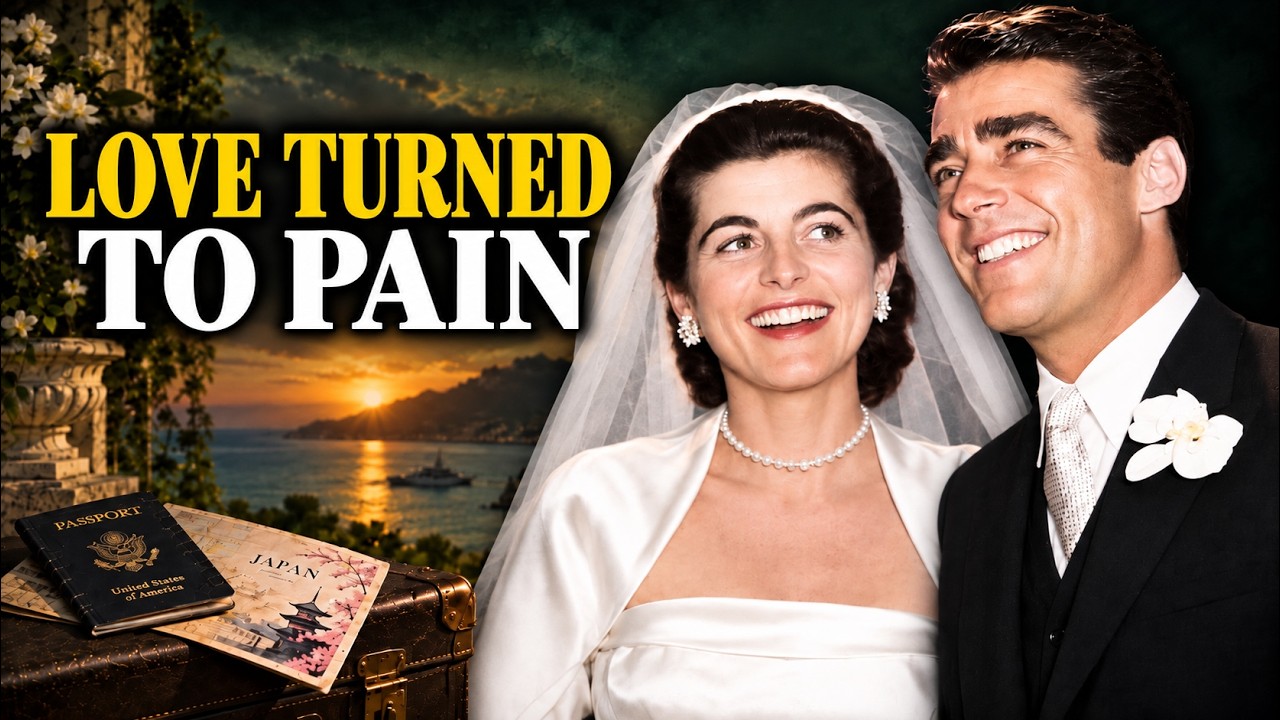
She said she fell in love with his father the moment she laid eyes on him because he was so handsome, and that her grandfather sent her around the world to get her out of his life. She reached Japan and turned straight back. Joe Kennedy met the romance with displeasure. He reportedly told Lawford that the only thing he would hate more than an actor for a son-in-law was a British actor, and he asked J.
Edgar Hoover for an FBI file on Lawford before giving his approval. Lawford went to New York to ask for Pat’s hand personally, and he admitted he was nervous. The engagement was announced by Joe Kennedy himself from Palm Beach in February 1954. They were married on April 24 at St.
Thomas More Church in Manhattan, with roughly three thousand people crowding the street outside. The priest who performed the ceremony was the former president of Notre Dame, brought in for the occasion. The daughter who had been sent around the world to forget the man was now walking up the aisle to marry him. They settled in Santa Monica in a beach house on Palisades Beach Road that had once belonged to Louis B.
Mayer, the head of the very studio that had let Lawford go. The children came quickly: Christopher in 1955, Sydney in 1956, Victoria in 1958, and Robin in 1961. Pat had spent years supporting her brothers’ campaigns. She hosted Kennedy gatherings for Jack’s first congressional race in 1946 and again for his Senate race in 1952.
By the late 1950s, Lawford had found a new way to be useful. Frank Sinatra brought him into the circle the press called the Rat Pack, where a nickname stuck that revealed his position: Brother-in-Lawford. He became a naturalized American citizen in April 1960, just in time to vote for his brother-in-law. He brought singers, stars, and money to the Kennedy campaign.
For one election season, the actor Joe Kennedy never wanted looked like the family’s best recruit. Pat traveled across the country speaking for Jack and voted for him as a California delegate at the 1960 convention. For a brief period, the Santa Monica house was where politics and Hollywood met, with Pat standing at the door between them. Inside the family, Lawford remained an outsider.
One story reveals how far outside he stood. Christopher wrote that on the night Jack accepted the nomination, Pat turned to her husband and said he could not come because he was not a Kennedy. According to that account, Jack cut in and said Pat, he was her husband, and that qualified him. Lawford offered his own perspective years later when he told his son that Pat’s love for her father preceded her love for him.
Pat’s life ran on two clocks, her family’s and her own, and the family clock usually won. Then in December 1961, Joe Kennedy suffered a stroke at Palm Beach, leaving him partially paralyzed and barely able to communicate. A stranger stopped Pat while she was driving her children to lunch and told her she had just heard the news on the radio. Three months later, Lawford lost his standing over something he had no part in.
President Kennedy was due to stay at Sinatra’s house in Palm Springs in March 1962. Robert Kennedy, worried about Sinatra’s alleged ties to organized crime, moved the visit to the home of Bing Crosby. Lawford was the one told to break the news. Sinatra never forgave him and cut him off completely.
Lawford lost a film role to Bing Crosby. Within three months, his father-in-law could barely speak and his closest friend in the entertainment world had turned on him. In the summer of 1962, Marilyn Monroe entered the story. Pat considered Monroe a sort of younger sister, and Christopher remembered Monroe teaching him the twist.
On the night of August 4, Lawford called Monroe to invite her to join friends at the beach house. Pat was away on the East Coast with the family. In the account Lawford repeated many times, Monroe’s voice sounded heavy and upset. She asked him to say goodbye to Pat, to the President, and to himself because he was a good man.
Lawford called his business manager, who reached Monroe’s lawyer. Her housekeeper said she was fine. Lawford was advised not to go to her because the presence of a Kennedy brother-in-law at her door would cause a media storm. Monroe died that night.
When Pat and Peter came for the funeral, researchers of Monroe’s life say they were turned away. It is easy to assume the marriage ended because of Dallas. Christopher’s account suggests it was already over before that. He said the decision was made inside the White House to wait until after the 1964 election.
The reason is not hard to understand: a public divorce for the sister of the first Catholic president during his re-election year would have dominated the headlines. According to that account, the Lawfords were to remain married on paper until after the votes were counted. The campaign came first, and the divorce was meant to follow. Then history canceled that timetable.
President Kennedy was assassinated in Dallas on November 22, 1963. Pat heard the news in Santa Monica. The next day, a Los Angeles Times photographer captured her and her daughter Sydney in a police car on the way to the airport, with Peter traveling with them to Washington. Whatever was falling apart between them, he was on that flight.
Then the reason for waiting disappeared. Christopher summed up the rest in one plain sentence: after his uncle died, his mother left immediately. The first word used publicly was separation. In the spring of 1965, reports spread that the Lawfords had separated.
Peter denied it, saying the separation was only geographical because his film work kept him in Hollywood while Pat and the children were in Manhattan. Pat had moved the children east in stages, settling in Manhattan only a few blocks from her brother’s widow. In 1964 she became one of the early directors of the John F. Kennedy Library Foundation.
She also added the Kennedy name to her son’s, and the world came to know him as Christopher Kennedy Lawford. He later said he rarely saw his father after that. The legal problem remained. Until a reform took effect in 1967, New York granted divorce only on grounds of adultery, which would have meant accusing her husband in open court.
For the sister of a murdered president and a sitting senator, that would have been a public ordeal. Idaho required only a six-week residence. In January 1966, Time reported that Peter’s lawyer announced an amicable separation in Manhattan. Pat was skiing in Sun Valley, Idaho.
Friends said she might stay for six weeks, and she did. In February, an Idaho court granted the divorce. The daughter who had crossed an ocean to return and marry him had now crossed the country to end the marriage. In the reports, there is no statement from Pat herself, not one word through a lawyer.
She did it quietly, on her own schedule, in a state of her choosing. He began to be defined by the marriage in the years that followed. He remarried several times and struggled with alcohol and drugs. On Christmas Eve 1984, he died at Cedars-Sinai Hospital in Los Angeles at sixty-one, after liver and kidney failure.
His son put it plainly: his father died of alcoholism. The UPI obituary noted that his greatest fame came from marrying Patricia Lawford, sister of President Kennedy, even though he had appeared in more than sixty films. Ted Kennedy called his death a special loss to all of them in the Kennedy family. Pat built a second chapter of public life.
She founded the National Committee for the Literary Arts at Lincoln Center, organized author lectures, and worked on scholarship programs. She also worked with the National Center on Addiction and Substance Abuse at Columbia University. She devoted years to charity auctions and fundraising for the arts and helped the Kennedy Library with its museum exhibits. The woman who once wanted to produce films spent decades producing something else: the way her brothers would be seen and remembered.
She organized speakers, raised money, and shaped exhibits. None of that told the story of her marriage. All of it told the story of her family. She outlived her former husband by more than two decades.
She died at her home in Manhattan on September 17, 2006, from complications of pneumonia, at eighty-two. Ted Kennedy said she was irreplaceable, that everyone who knew her adored her, and praised her style, her love of the arts, her intelligence, and her generosity. The family statement said her greatest gifts were her beautiful heart, whether in campaigns for her brothers or her advocacy for literacy and the arts. She left behind four children and ten grandchildren.
Those were the public words. As always with Pat, the private words stayed absent. She kept the name Lawford for the rest of her life, on her letters, her committees, her obituary. It might have been loyalty to Peter, or loyalty to the children who all bore the name.
She never explained. She added Kennedy to her son’s name and kept Lawford for herself, side by side. What that cost her, she never told anyone.
She left only what she did, and that began in Japan on the day she decided to come back.