In the autumn of 1929, a servant found a woman alone in the garden of a Rhineland castle, her arms wrapped around the trunk of an old tree, dazed, hours after the last of her furniture had been sold to strangers. She had waited all afternoon for one of her relatives to come and stop the sale. No one came. Her name was Princess Victoria of Prussia, Queen Victoria’s granddaughter and the sister of Kaiser Wilhelm II, born into the most powerful family in Europe.
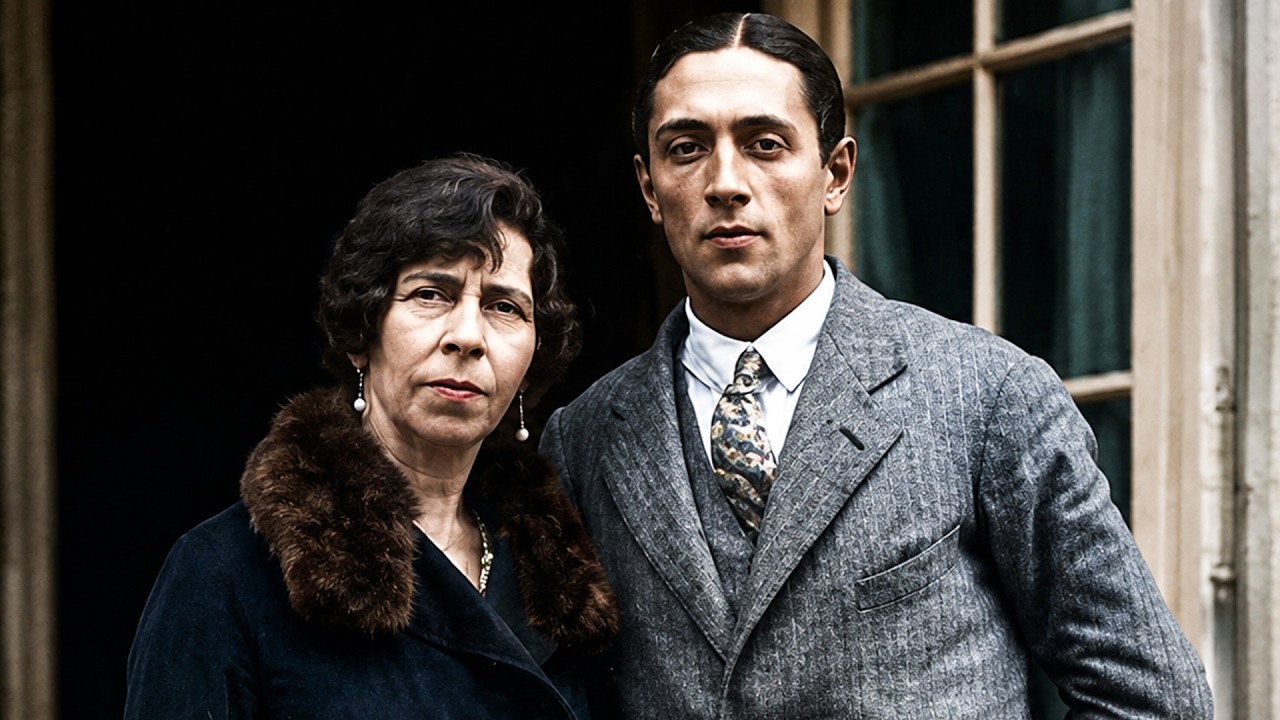
On the day her life was dismantled, the family that had once guarded her name could not be reached, or would not be. She was born on the 24th of May, 1866, in Potsdam, the fifth daughter of Crown Prince Frederick William of Prussia and his wife Victoria, the Princess Royal, Queen Victoria’s eldest child. The family called her Moretta. Her mother, an English liberal married into a Prussian court that never forgave her for it, raised her children on the conviction that love ought to matter.
Moretta absorbed that belief more completely than any of her siblings. She grew up in a household of English governesses and warm afternoons in the gardens at Bornstedt, where the children were encouraged to run rather than pose. By the time she was fifteen, she was old enough to be considered for marriage. Her mother and grandmother had already settled on a candidate: Alexander of Battenberg, the reigning Prince of Bulgaria, nine years her senior and, by nearly every surviving account, extraordinarily handsome.
When he visited the Prussian court in 1882, Moretta fell thoroughly and helplessly in love. Her parents approved. Her grandmother wrote from Windsor with enthusiasm. But her grandfather, Emperor Wilhelm I, and his chancellor Otto von Bismarck watched the courtship with alarm.
Alexander’s rule in Bulgaria had already provoked the Tsar of Russia, and Bismarck feared a marriage tying him to the German imperial family would provoke Russia further still. Her paternal grandmother put the opposition bluntly: as long as she lived, a Hohenzollern princess would never marry a Battenberg. For seven years, whether Moretta would be allowed to marry the man she loved ceased to be a private matter. It became a question of foreign policy, debated in ministries and weighed against the temper of the Russian court.
In 1885, the King of Portugal offered his son as an alternative on condition she convert to Catholicism. She refused. A year later, Alexander abdicated his Bulgarian throne under mounting pressure from Russia and Bismarck. Still, Moretta waited.
In the winter of 1887, the family traveled to San Remo because her father’s voice had gone hoarse and would not clear. The diagnosis, when it finally came, was cancer of the larynx. German and English physicians argued over it for months. In March 1888, the old Emperor Wilhelm I died, and Frederick William, too ill to speak above a whisper, became Emperor Frederick III.
He would hold the title for ninety-nine days. During those days, with his voice already gone, he wrote by hand to his eldest son and heir, Wilhelm. He stated that he gave his full consent to the marriage of his second sister with the ex-Prince of Bulgaria, and charged his son, by the love he bore his father, to carry out this wish. He signed it simply, “Your loving father.
” On the 15th of June, 1888, Frederick III died. Wilhelm, now Kaiser, moved through the Neues Palais within days and ordered every room searched for his mother’s private correspondence. He did not find the letters. What he did find was his father’s letter about Moretta.
In November of that year, five months after her father’s death, Moretta asked her brother in person to honor it. Wilhelm refused. The reasoning was the same Bismarck had offered for seven years: a marriage to Alexander still risked antagonizing Russia. Alexander went on, within a year, to marry an opera singer.
Moretta was twenty-two years old. In November 1890, she married Prince Adolf of Schaumburg-Lippe, a man she had not chosen and did not love, but who came with her brother’s approval attached. There is remarkably little to record about the wedding. No biographer describes what she wore.
No letter survives describing her face that day. Adolf was not unkind, not cruel, not unfaithful. He was simply not the man she had spent seven years fighting for. The marriage lasted twenty-six years and produced no children, no scandals, and, as far as history can find, no love letters worth preserving.
In 1915, in the middle of the First World War, Moretta and Adolf left Berlin for Bonn, settling into the Palais Schaumburg. Adolf died the following year, killed by the same war that was already dismantling the world both had been raised to inherit. Moretta was fifty. She had a nephew close enough in the family that a marriage would have kept her within the same social world.
She went to her brother once more and asked his permission. Wilhelm refused. No chancellor needed to weigh in this time, no foreign power stood to be offended, no plausible reason of state remained. It was simply his answer, offered without much explanation at all.
Germany’s defeat in 1918 was followed within a few years by an inflation so total that fortunes built over generations were reduced to nothing. Moretta did not lose everything, not yet, but the castle began to feel less permanent than it had. In the mid-1920s, running low on money, she accepted a paid offer to write her memoirs. In the summer of 1927, she opened the gates of the Palais Schaumburg to a crowd of university students.
Among the guests was a twenty-seven-year-old law student who called himself Alexander Anatolyevich Zubkov. He told her he had once been a baron in Russia, that he had fled the revolution with nothing. He was charming. His familiar name was Sasha.
The man she had loved forty-five years earlier had gone by his own diminutive, Sandro. Within weeks, Moretta was showering him with gifts. Within two months, he had proposed. No one could confirm the barony he claimed.
Around Bonn society, questions circulated, but she did not appear to let them change anything. Her family was united in horror. Her brother made his disapproval known from his exile in the Netherlands. It changed nothing.
For possibly the only time in her adult life, Moretta had stopped waiting to hear what Wilhelm thought. On the 19th of November, 1927, she married Zubkov. For the Greek Orthodox ceremony, she wore the same lace bridal veil her mother had worn at her own wedding nearly seventy years earlier. The chapel was small enough that the empty pews were impossible not to notice.
No brother, no sister, no cousin came. The date was the thirty-seventh anniversary of her wedding to Adolf. To the press, she said she was seeking to exchange the title of princess for that of a happy woman. She renounced her royal rank and her German citizenship.
The happiness did not last through the winter. By early 1928, Zubkov had begun spending her dwindling fortune with the same confidence he had used to describe his lost barony. There were debts, nights he did not come home, and soon headlines. Within months of the wedding, German authorities deported him.
In Luxembourg, he found work in a restaurant whose owner hung a sign in the front window: “The emperor’s brother-in-law is serving you here. ” He was expelled from Luxembourg as well, then returned to Bonn briefly, long enough to be photographed beside the woman who was still, on paper, his wife. A Bonn barmaid became part of the story too, an affair Moretta would later cite as grounds for divorce. By 1929, the fortune was almost entirely gone.
In October of that year, the contents of Palais Schaumburg were sold at public auction to satisfy claims against her. According to the Chicago Daily Tribune, Moretta held out hope that her brother or some other member of her family would step in at the final minute and stop the sale. They did not. A servant found her afterward, alone in the garden, standing with both arms wrapped around the trunk of an old tree, as though it were the only solid thing left in a life that had just been sold out from under her.
She moved into a single rented room in Mehlem, a modest suburb on the edge of Bonn, sharing the space with a woman who had once worked for her as a servant. She filed for divorce in early November 1929. Her memoir, written before the wedding, before the auction, before the rented room, was already in bookstores. Its final lines read that she felt a fresh life had opened out to her, one that, with the graciousness of providence, would be full of happiness in her newly found companionship.
She wrote one more letter that year, addressed to Sasha, dated the 13th of July. It said, in full: “Well, such is life. Nothing but disappointments and misery. ” No answer to that letter has ever been found.
By the first week of November, Moretta was ill. On the 6th of November, a doctor forced his way into the room in Mehlem and found a sixty-three-year-old woman burning with fever, too weak to have called for help herself, sharing the bed with the former servant. She was carried to Bonn’s Hospital of St. Francis.
The diagnosis was pneumonia. Her sister Margaret, the one relative who had never stopped writing to her, traveled to Bonn and arrived at the hospital within days. She was not permitted to see her. A door stayed closed to her until it no longer mattered whether it opened at all.
Asked whether the former Kaiser intended to attend his sister’s funeral, a spokesman for Wilhelm II answered that his attendance was wholly out of the question. Princess Victoria of Prussia died on the 13th of November, 1929, in a hospital bed in Bonn. She was sixty-three years old. She died under the name of a man who was somewhere in Europe, still calling himself a baron to whoever was willing to believe it.
She was buried three days later at Schloss Friedrichshof, the home her sister Margaret had inherited. No one poisoned her. No war was fought over her broken heart. No country rose or fell because a chancellor once decided her happiness was worth less than a foreign policy.
What happened to her happened quietly across sixty-three years, in a series of rooms getting smaller: from a golden nursery in Potsdam to a castle by the Rhine to a rented room shared with a woman who had once curtsied to her, to a hospital bed no family member was allowed to sit beside. She had asked, across her whole life, for permission to choose for herself. Twice she was refused by men who had every reason in the world and used none of them particularly well. Once, only once, she stopped asking and chose for herself anyway.
It cost her everything she had left. After the autumn of 1929, the lace veil she wore twice does not appear again in any inventory. No record says what became of it.
It simply stops being mentioned, the way most of what belonged to her stopped being mentioned, folded into an auctioneer’s ledger and carried out through a door that closed behind it.