South Texas, 1840. On the bank of Chicoete Creek, northeast of the town of Victoria, a large bearded man sat alone beside a small campfire. The oppressive Texas sun had sunk below the horizon hours before, but he could not sleep. As he stared into the flames, he gripped the handle of his knife until his knuckles whitened.
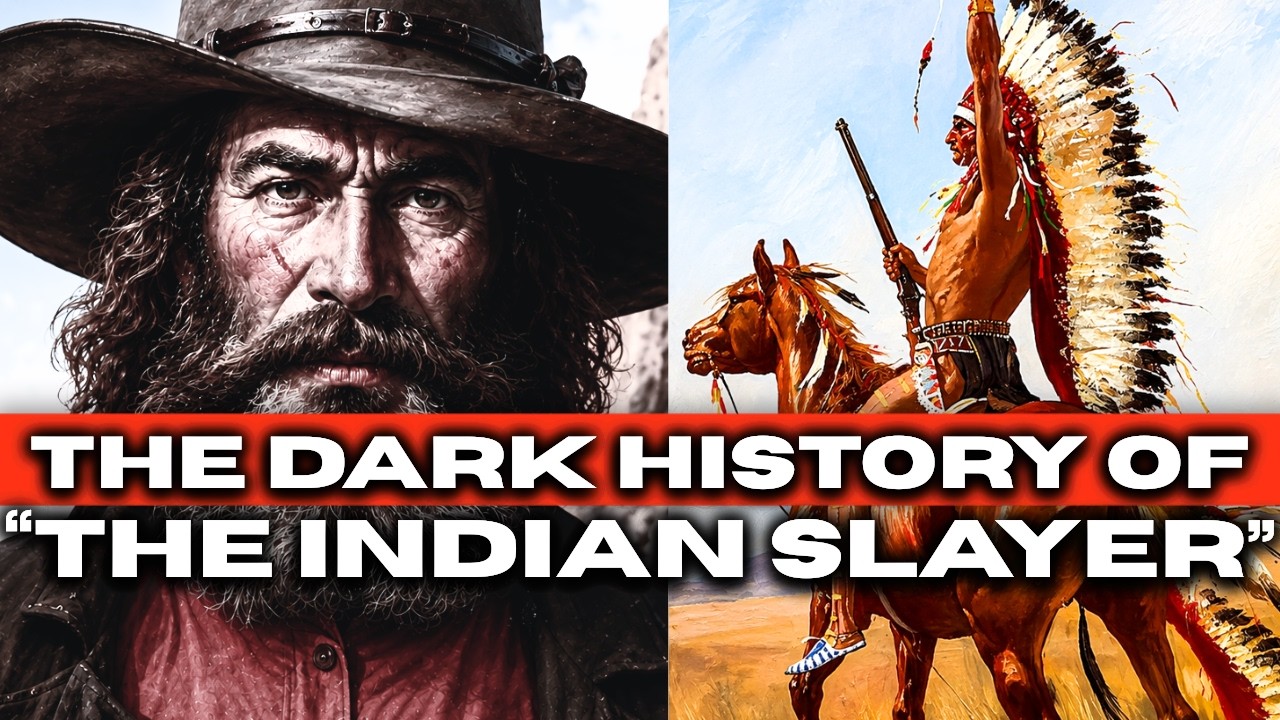
His thoughts were not in his Spartan camp, shared only with his trusted horse, Pepper Pod, but on a farmstead sixty miles away on the banks of the Guadalupe River. The man was Jeff Turner, a Kentucky native who had come to Texas in the 1830s. Born and raised in the Bluegrass State, he had always planned to farm near his birthplace. He married a young woman from his hometown, and within a few years the couple had a small but thriving farm and three young sons.
Life was good. Then one day, a stranger stopped by the Turner farm asking for a hot meal and a night’s lodging. Such requests were not uncommon, so he was welcomed inside. As the family ate, the traveler spoke of his destination: Texas.
He described a land of open, free country, rich for farming and cattle, full of wild game and fish, available to any settler with the gumption to take it. The next morning, the traveler went on his way, but Jeff Turner could not shake the thought of Texas. Though his family lived comfortably, they lived meagerly, and there was little hope of amassing enough wealth to secure his children’s future or his wife’s comfort after his death. For months, he was dogged by the notion that he could do more.
Finally, he decided the Turners would sell their farm and move to Texas. It took months more to convince his reluctant wife, who feared leaving their reliable lifestyle for a territory known for more than prosperity. Though Texas would soon become an independent republic, everyone knew the land did not really belong to the Texians, nor to the Mexican government before them, nor the Spanish before that. For a century and a half, Texas had belonged to the Comanche.
Even for Kentuckians in the 1830s, the stories of Comanche atrocities were unlike anything they had heard before. Their forefathers had fought tribes like the Shawnee and Cherokee, and violence had marked both sides for generations. Still, accounts from survivors of Comanche raids were jaw-dropping. Spanish missionaries, Mexican settlers, and tribes like the Tonkawa, Waco, Delaware, Kickapoo, and Apache had fallen victim to Comanche depredations.
Entire families, even entire villages, had been wiped out. Men were killed, children not old enough to be self-sufficient were killed, and women were taken as slaves and concubines, often killed when no longer of use. Despite the volume and veracity of horrific reports flooding out of the young republic, settlers continued to pour in, driven by dreams of fortune and legacy. In the fall, just after the traveler’s visit, Jeff Turner convinced his reluctant wife that the risk was worth the reward.
He sold the farm for a decent profit, and the family packed everything they owned and made their way south to the Republic of Texas. After spending a few weeks near San Antonio, they followed the Guadalupe River southeast, eventually staking a claim on a tributary not far from present-day Seguin. Turner, with the help of his two eldest sons, built a small cabin and, in the early spring, began clearing brush to plant crops. Mrs.
Turner began to warm to their new homestead. The land was rich for farming, her husband kept the family well-fed on wild game, and the nearby creek was bountiful and beautiful. It seemed the arduous trip and countless hardships had been worth it. The Turner family had found their home in Texas, and they were happy.
Then, one morning early that May, Jeff Turner set out with his rifle on a hunt. Before leaving, he absorbed the scene: his three sons, all under the age of ten, played near the stream with wooden hoops, their faces full of carefree joy. On the side of the cabin, Mrs. Turner worked in the vegetable garden, singing her favorite songs.
She cheerily bid her husband farewell. Jeff Turner’s heart was full as he ventured down the creek and around a bend, entering a timbered thicket not much more than a mile from home. In the silence of the early morning, the rippling of the stream was broken by the percussive retort of what sounded like a dozen or more rifles. All at once, Jeff Turner was washed in pure cold terror.
Visions of the worst possibilities flashed through his mind as he took off in a dead run toward his homestead. Seconds later, he heard the screams—triumphant war cries interspersed with the shrieks of his beloved family. By the time he reached the bend around which lay the cabin, there were only war cries. Coming into view of the house, Turner saw a scene of utter devastation.
The attack had come from the rear. Through the front door, he saw the bodies of his wife and his youngest son, pale from the loss of blood, the child clasped desperately in his mother’s arms. Near the back door lay his two older sons, who, despite their youth, had fought to the last. Both were covered in blood and freshly scalped.
Just as Turner took in the horrifying sight, the Comanche came back, dismounting and walking idly toward the cabin, unaware of his return. Blind with rage and grief, and not fearing for his own life, Turner sprang from the door, placing a lead ball from his already loaded hunting rifle into the heart of one of the approaching warriors, killing him instantly. Then, drawing his large hunting knife from his belt, Turner, in his own words, rushed upon the balance like a tiger. Still shocked at the sudden death of their cohort, the Comanche were in momentary disarray, affording Turner time to inflict mortal wounds on several as they attempted to flee to their mounts.
The ensuing minutes were a blur. Like a rabid animal, Turner slashed and cut at any moving body until he was felled by a volley of shots from Comanche rifles. He lay on the ground yards from his family, his own blood draining into the dirt. The warriors, unsure if more Texians might suddenly return, took what provisions they could carry and disappeared into the rolling hills and thickets.
Turner lay unconscious, coming into consciousness only for brief, traumatic bouts. That afternoon, a neighbor passing by noticed the farm was uncharacteristically quiet. Investigating, he found the same macabre scene that had greeted Turner hours earlier, only now with several additional, grievously mutilated bodies. According to the neighbor’s later account, Turner was found lying across one of his Comanche attackers, his hands around the warrior’s throat, the other hand stiffly grasping the knife he had driven between the warrior’s ribs to the hilt.
Nearby lay three more warriors, all with horrific knife wounds. The neighbor saw the faintest signs of life in Turner and, with much effort, managed to pull him from the cabin, drape him across his horse, and get the nearly dead man back to his own homestead. The neighbor and his family tended to Turner’s wounds. Upon initial examination, most thought it would be a matter of time before he succumbed.
But Turner did not die. For weeks he was plagued by fever dreams and great pain, but with time and care, the frontiersman regained his physical health. His mind, however, had been forever scarred. The memories were too much to bear.
He abandoned all notions of family and farming and took to living alone in the wilds of central Texas. His life’s sole purpose became revenge. For years, Turner spent every waking moment tracking Comanche parties deep into their territories, initiating a one-man campaign of terror and violence that hounded the tribe and earned him renown among settlers. Yet even those grateful for his undertakings held an underlying attitude of pity for and fear of the clearly traumatized, openly homicidal frontiersman.
Every night since regaining consciousness, he pondered the same question: was it better to fall asleep, or to be kept awake by the memories? Years later, at his camp on Chicoete Creek, he still had no answer. The next day, Turner made his way toward a nearby settlement for supplies. The settlement was abuzz.
A group of Texas Rangers, the still young but already notorious law enforcement and military force, had just walked into town. That morning, all of their horses had been stolen by raiding Comanche. They were footbound, angry, and slightly embarrassed, intent on procuring new horses and exacting revenge. A local rancher with a fresh remuda told them they could take any horse they liked to give chase.
After fifteen minutes of cautiously saddling the barely broke animals, the Rangers were on the trail. Among the group was a twenty-three-year-old rookie named William Alexander Anderson Wallace, better known to history as Bigfoot Wallace. Though he would go on to a legendary career with the Rangers, at this time he was a relative novice to combat with the Comanche. He led the party but was nervous and unsure.
As his mind churned through the perils of the chase, he heard the barely perceptible approach of a rider trailing them from not far away. The Rangers braced for an attack, then exchanged unsure glances as the figure of Jeff Turner approached on his raw-boned and ill-tempered horse. None of the young men had seen anything quite like him. As Wallace later recorded in his account, he saw as curious a specimen as he had ever seen in any country: a tall, spare-built man dressed in buckskin hunting shirt and leggings, a skinning cap on his head, a long old-fashioned flint and steel Kentucky rifle on his shoulder, and a tomahawk and scalping knife stuck in his belt.
His hair was matted together and hung around his neck in great, uncombed swaths. His eyes peered out from among it as bright as a couple of mesquite coals. As Wallace put it, he had seen panther eyes, wolf eyes, catamount eyes, leopard eyes, and Mexican lion eyes, but never eyes that glittered and flashed like those in that man’s head. Wallace asked Turner if he was a stranger in these parts.
Turner replied that he was not, and that he knew every watering hole between their present location and the Rio Grande. Wallace asked if he was not afraid to travel alone through such dangerous territory. Turner grinned a sickly smile, his fingers clutching his tomahawk, his eyes dancing a perfect jig in his head. No, he answered.
The Indians are more afraid of me than I am of them. If they knew I was waylaying a particular trail, they would go forty miles out of their way to give me a wide berth. But the trouble is, they never know where to find me. And besides, the best horse this side of the Brazos can’t come along old Pepper Pod when I want him to work in the lead.
Turner put spurs to his mount, causing the horse to rear in a maneuver that would have thrown all but the most skillful horseman. He told the Rangers that his family had been murdered by the Comanche years earlier and that he now spent his time in pursuit of perpetual retribution. As he recalled the murder of his wife and young children, his eyes grew even wilder, his hands began to shake, and his manner became agitated. He told the Rangers he had forty-six Comanche scalps hanging from the walls of his lodge on Chicoete Creek, and intended to add far more.
To a mixed reaction of reluctance and relief, he offered his services in tracking and killing the raiding party. Though many were unnerved, they agreed his skill and experience could prove vital. So it was that the man known as Jeff Turner, the Indian hater, came to ride with Bigfoot Wallace and his Rangers. The party headed west, Turner’s tracking skills proving invaluable.
After much hard riding, they came upon the camp of raiding Comanche. There, many of the Rangers saw their first taste of combat, and Jeff Turner forever solidified his reputation as a vicious fighter and a deeply troubled man. Wallace would go on to an illustrious career with the Rangers.
Turner would eventually meet his fate at the hands of his hated enemy, dying a hard death in a hard land.