The Gestapo did not need a photograph to know Virginia Hall. A description circulated through their offices, a woman with a limp, moving through Lyon with papers that never quite matched the name on them, and a network of agents who trusted her enough to die for the cause. By 1942, Klaus Barbie, the head of the Lyon Gestapo, had made her capture a priority. In their files, she was simply listed as the most dangerous Allied spy in France.
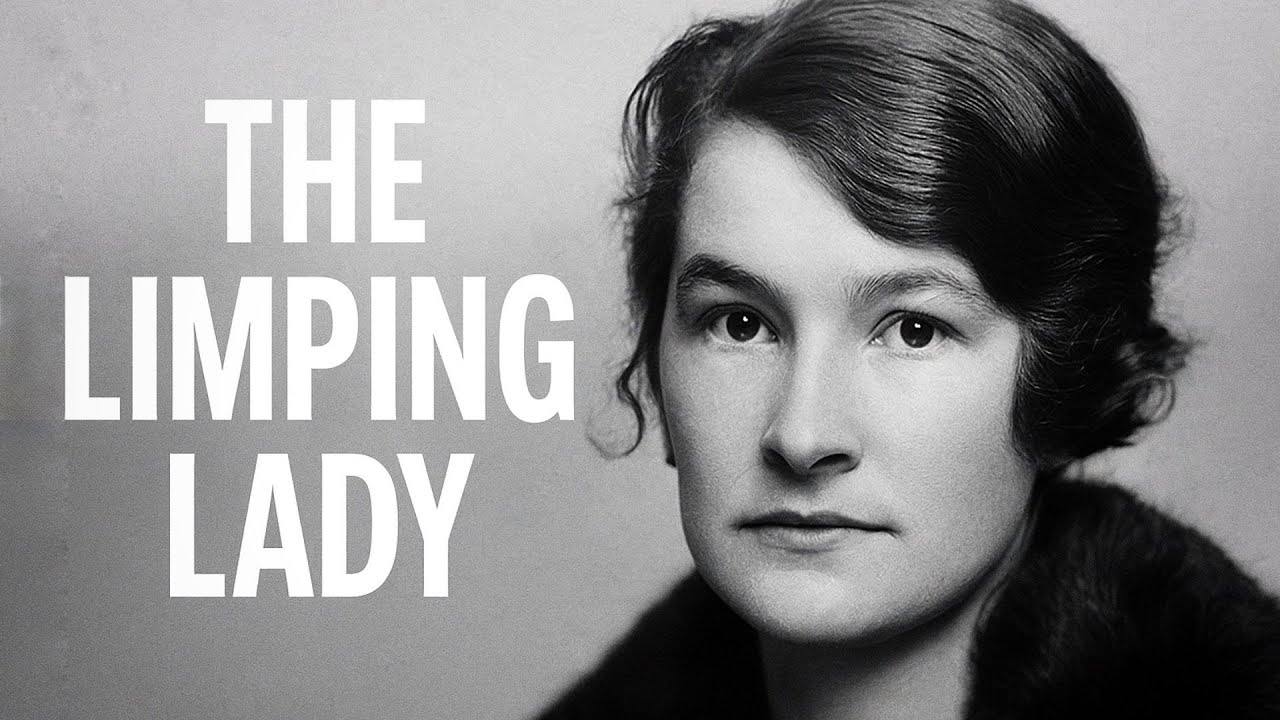
Hall had not started the war as a spy. Born in Baltimore on April 6, 1906, into a prosperous family that valued education and travel, she had shown an early gift for languages, mastering French and German almost effortlessly. She studied in Paris and Vienna, absorbing the political currents of interwar Europe, and set her sights on joining the US Foreign Service, a path rarely open to women at the time. In 1933, while hunting birds in Turkey, a misfire shattered her left foot.
Infection followed, and doctors were forced to amputate the leg below the knee. She adapted quickly, fitting herself with a wooden prosthetic that she named Cuthbert, and refused to let the injury redirect her life. She kept traveling, kept working abroad, and kept pursuing roles that defied convention. When war broke out in 1939, Hall volunteered as an ambulance driver for the French army.
She drove roads under bombardment, evacuating wounded soldiers from the front lines, until the surrender of France in June 1940 split the country in two. The north fell under direct German occupation. The south came under the Vichy regime, nominally self-governing but heavily monitored. Cities filled with soldiers, checkpoints, and propaganda posters.
Rural areas turned into corridors for refugees and smugglers. It was in that atmosphere that Hall shifted from humanitarian work to clandestine service. The British Special Operations Executive, created by Winston Churchill with the mission to set Europe ablaze, was recruiting operatives with local knowledge and the ability to disappear into a crowd. Hall fit the profile.
In August 1941, she entered Vichy France under the cover of being a reporter for the New York Post. The role gave her privileges, the freedom to travel, ask questions, and send cables abroad. But it also made her visible. Journalists were monitored, and any inconsistency in her story or her contacts could arouse suspicion.
She based herself in Lyon, a hub of underground activity sitting strategically between the occupied north and the unoccupied south. From there, she built her first resistance network. It included everyone from city clerks to farmers, each taking on specific roles, storing weapons, relaying messages, moving fugitives across borders. To communicate with London, Hall used one-time pads to encrypt messages and transmitted on portable radios that had to be moved constantly to evade German radio detection vans.
Operators could not afford to stay on the air long; transmissions had to be kept under twenty minutes, each one sent from a different location to avoid triangulation. Life under occupation demanded constant awareness. By day, the streets of Lyon were crowded with markets, trams, and schoolchildren. But every wall carried signs of German control, posters announcing curfews, announcements of arrests, propaganda urging loyalty to the regime.
Hall learned to read the landscape like a map. She knew which cafés were safe for a quick meeting and which side streets to avoid entirely. Her skill was not only in passing information but in making her presence so ordinary that suspicion slid past her. Her successes mounted.
She coordinated sabotage of supply lines, arranged parachute drops of arms, and organized the escape of downed Allied pilots across the border into Spain. But the Gestapo took notice. Klaus Barbie, soon to be known as the Butcher of Lyon, was determined to find her. He circulated descriptions and offered large rewards.
The woman some now called the Limping Lady became one of the most wanted spies in France. The danger escalated in November 1942, when Germany occupied all of France. Arrests swept through her network. Agents she had trained and trusted were taken, some tortured, some executed.
Hall knew her face was known. Staying in Lyon meant capture, and capture meant a Gestapo interrogation that would almost certainly end in death. She made the decision to flee. The escape route ran through the Pyrenees.
In winter, that meant freezing winds, steep icy slopes, and days of exhausting climbing. For Hall, with Cuthbert strapped to her leg, every step was a battle. There was no medical evacuation, no quiet border crossing arranged through channels. There was only the mountain and the cold and the constant risk that a stumble would end everything.
She made it out. From Spain, she made her way to England, where the SOE recognized the value of what she had built and the knowledge she carried. But the war was not over, and Hall had no intention of sitting out the rest of it. The London office that had trained her in sabotage and espionage sent her back to France, this time not as a reporter but as an operative with a mission to support the resistance in the lead-up to the Allied invasion of Europe.
Equipped with a radio operator and a new identity, Hall returned to occupied France in 1944. Her task was to train resistance fighters and organize sabotage operations in support of the D-Day landings. She moved through the countryside in disguise, sometimes posing as a peasant woman, sometimes as a midwife, depending on the region and the situation. Her new alias suited her.
She was older now, weathered by years of war, and she could blend into rural life in a way the younger, more conspicuous agent she had once been could not. The operations she directed in 1944 were significant. Resistance groups under her coordination attacked German supply lines, destroyed railway infrastructure, and harassed enemy movements in the days surrounding the Allied landings in Normandy. German forces in the region found their rear areas in chaos, with communication lines cut and reinforcements delayed by successive acts of sabotage.
The havoc her networks created was not a minor footnote; it directly affected the German military’s ability to respond to the invasion. The Gestapo never caught her. By the time the Allies pushed through France and liberated Lyon, Hall had survived years of occupation without once being identified and arrested. Klaus Barbie, who had hunted her relentlessly, escaped westward and eventually found refuge in South America, where he lived for decades before being brought to justice.
After the war, Hall received recognition for her service, including the Distinguished Service Cross, an honor rarely awarded to civilians and even more rarely to women. She continued to work in intelligence for the United States, joining the CIA in its early years, operating again undercover in a career that stretched well beyond the conflict that had made her name. She retired quietly, and for years her story remained little known outside intelligence circles. In the end, the most dangerous Allied spy in France was a woman with a wooden leg, a forged press card, and the will to cross the Pyrenees on foot in winter rather than surrender.
Her war was fought not in grand set-piece battles but in small acts repeated over years, a message passed, a pilot guided south, a supply line cut, a network rebuilt after betrayal. The Gestapo knew her only as a signature, the limp that marked her step. They never got close enough to see her face.