On a July morning in 1979, a Chicago commodities broker named Arthur Gerald Jones kissed his wife goodbye, stepped out of his suburban home, and vanished from the face of the earth. He left no body, no note, no phone call. His car was found abandoned near O’Hare Airport. His credit cards went untouched.
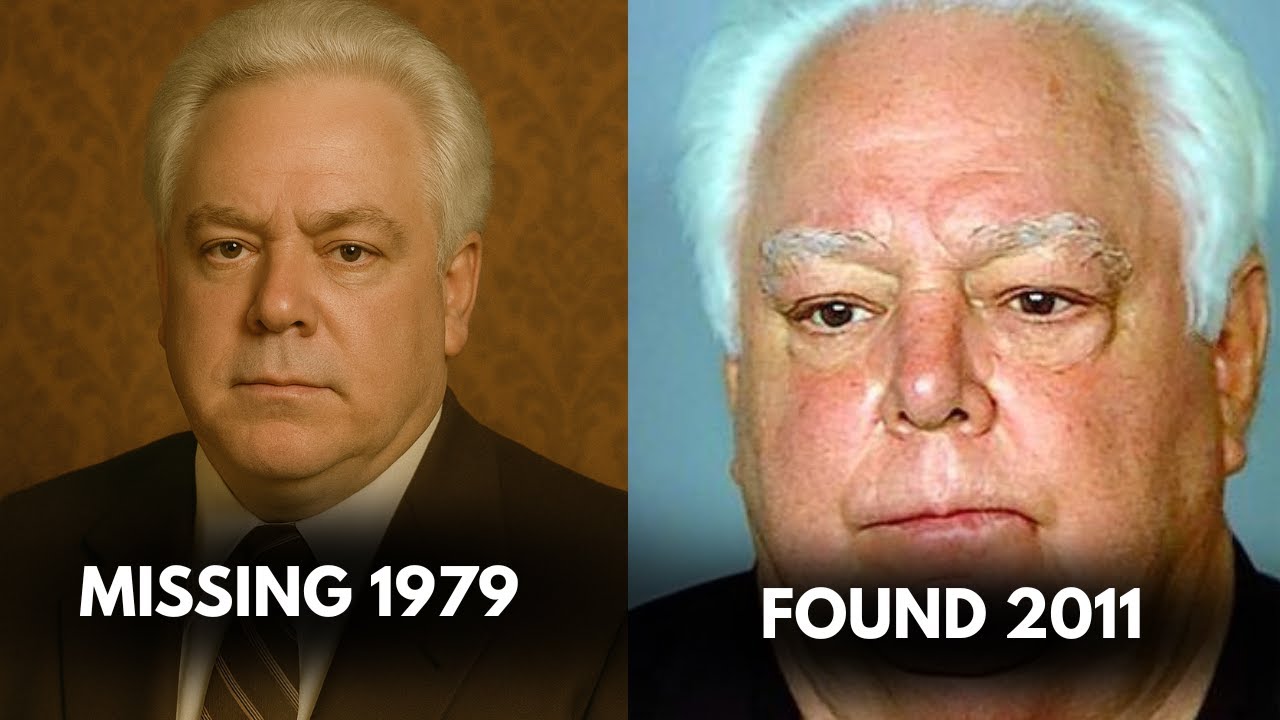
There was no sign of violence, no forced entry, no ransom demand. He was simply gone. For decades, investigators and family members alike assumed the worst. Some believed he had been murdered, possibly by men connected to his gambling debts.
Others whispered that he had run away from financial ruin or something darker. But with no evidence of foul play, no body, and no trace, the case eventually went cold. Arthur Jones was declared legally dead. His wife Joanne grieved.
She raised their children alone. In her mind, her husband had been taken by some cruel twist of fate. The truth was far stranger. Arthur Jones had not been murdered.
He had not been abducted. He had walked away on purpose, built a new identity, and spent the next 32 years living openly in Las Vegas under the name Joseph Richard Sandelli. He was found alive in 2011, not because of a confession, not because someone recognized him, but because a routine government audit of Social Security records flagged an impossible inconsistency: a man declared dead decades earlier was filing taxes, collecting paychecks, and clocking into work every day. To understand how Arthur Jones pulled off one of the most baffling disappearances in modern American history, it is necessary to look at the cracks forming in his life before he vanished.
By the late 1970s, Jones was a successful commodities broker in Chicago, married, a father, disciplined and hardworking from the outside. But he was under tremendous pressure. Heavy financial losses weighed on him, and reports suggest he had developed a dangerous gambling habit. Some accounts linked those debts to figures connected to organized crime, people you do not want to owe money.
Whether those threats were real or merely perceived, Arthur Jones saw himself cornered. His disappearance was deliberately engineered to look like something terrible had happened. The abandoned car near the airport pointed investigators toward the possibility of flight or foul play. The absence of a body kept every theory alive.
But no one ever collected on his life insurance. He never touched his savings. Detectives found no evidence that he had planned an escape, and so the case stalled. What investigators did not know was that Arthur had planned his exit with extraordinary care.
To build his new life, he assumed the identity of a real person, Joseph Richard Sandelli, a child from the East Coast who had died young. It was a perfect ghost: real enough to pass scrutiny, dead long enough that no one would come looking. Arthur obtained false documents, a fraudulent Social Security number, a fake driver’s license, and a complete set of fabricated credentials. Then he quietly reintegrated himself into society under this invented name.
He moved west, took quiet jobs, kept his head down, and never drew attention to himself. By the time he reached Las Vegas and found work in the sports book of the Rampart Casino, the Sandelli identity had become second nature. He had been Joseph longer than he had ever been Arthur. For more than three decades, he lived in plain sight.
He worked among hundreds of people daily. He was polite, unassuming, unremarkable, not the kind of man anyone would remember after a brief interaction. He handled betting slips and answered calls about odds, a middle-aged employee in a city full of people reinventing themselves. No coworker recognized him.
No local connected him to the missing Chicago stockbroker. He even had brief run-ins with law enforcement over the years, but no one ever questioned his identity. He was a ghost working a normal job, invisible despite being surrounded by people every day. The unraveling began in 2011, when the Social Security Administration conducted a national audit cross-referencing identification numbers with death records.
Joseph Sandelli’s file did not add up. The man in the system had been declared dead, yet there he was, earning wages and paying taxes. Red flags multiplied. Federal investigators began pulling records, driver’s license photos, employment data.
The evidence pointed to a single conclusion: Joseph Richard Sandelli was a lie, and the man behind him was Arthur Gerald Jones. When federal agents came to his modest Las Vegas home, the man who answered the door did not run. He did not slam the door or invent an excuse. He knew it was over.
Standing face to face with the agents, he answered their question with a quiet admission: no, he was not Joseph Sandelli. He was Arthur Jones. With those words, more than three decades of concealment collapsed. Investigators found no guns, no escape plans, no evidence of a hardened fugitive.
They found only a tired, older man, thinner and grayer, but still carrying the sharp eyes of the broker he had once been. The story exploded in the headlines: a missing man declared dead, found alive after 32 years, living under an alias and working in a Las Vegas casino. For the public, it was baffling. For his family, it was devastating.
Joanne Jones had long accepted her husband’s death. She had grieved and moved forward, only to learn that Arthur had simply chosen to walk away. She never received a phone call, a letter, or an explanation. In interviews after the discovery, she spoke with raw pain, saying he had let them believe he was dead and had made them suffer that pain, and that she did not think she would ever forgive him.
His children, now grown, had lived their entire lives believing their father had been taken from them. They learned instead that he had left by choice. Arthur’s explanation for vanishing was that he had been under unbearable mental pressure and financial ruin. The stress of mounting debts, the pressure of the trading floor, and the threat of gambling-related violence had left him feeling that disappearing was the only way out.
Some reports suggested ties to organized crime, but no hard evidence ever surfaced. Whatever the full truth, one fact remained damning: for 32 years, he never contacted his wife or children. No postcards, no anonymous letters, nothing. The legal system struggled to know what to do with him.
Arthur Jones had not committed murder. He had not stolen money or escaped from prison. His crime was disappearing. He had committed identity fraud, a federal offense, by falsifying Social Security documents and employment records.
But when investigators considered the broader picture, they found themselves in an uncomfortable position. He had not taken money or property. He had taken time. He had stolen years from his family, stolen the truth from his children, and in a sense, stolen his own identity by living as a ghost.
In the end, there was no dramatic trial and no lengthy prison sentence. Arthur Jones pleaded to the charges related to his false identity, received probation, paid a fine, and walked free. His freedom came at a cost no court could measure. There was no reunion with his family, no forgiveness, no reconciliation.
His children never spoke to him again. His ex-wife never forgave him. After being found, he faded back into obscurity as quietly as he had reappeared, a man who had spent half his life hiding and was still, in the end, completely alone. His case left behind a troubling truth that lingered long after the headlines faded.
Arthur Jones was not a killer, but his disappearance was its own kind of violence. The wounds it left were deeper than those of many physical crimes. He abandoned everyone who loved him and never looked back, and when he was finally discovered, the answer to why he did it remained incomplete. His story became a reminder that not every disappearance ends in tragedy, and not every missing person has been taken.
Sometimes people vanish not because harm came to them, but because they chose to leave, and the hardest truth for those left behind is that they never chose to return.