In the winter of 1847, the town of Millbrook sat in a narrow valley in eastern Tennessee, isolated from the nearest settlement by two days of treacherous mountain passes. The roughly forty families who lived there made their living from lumber camps and a small iron forge, surrounded by forests so thick that a man could not see more than twenty paces into them. The people were hardy, descendants of settlers who had carved lives out of land that gave nothing easily. That spring, a thirty-four-year-old lumberman named Gideon Pruitt was leading a logging crew about eight miles north of town.
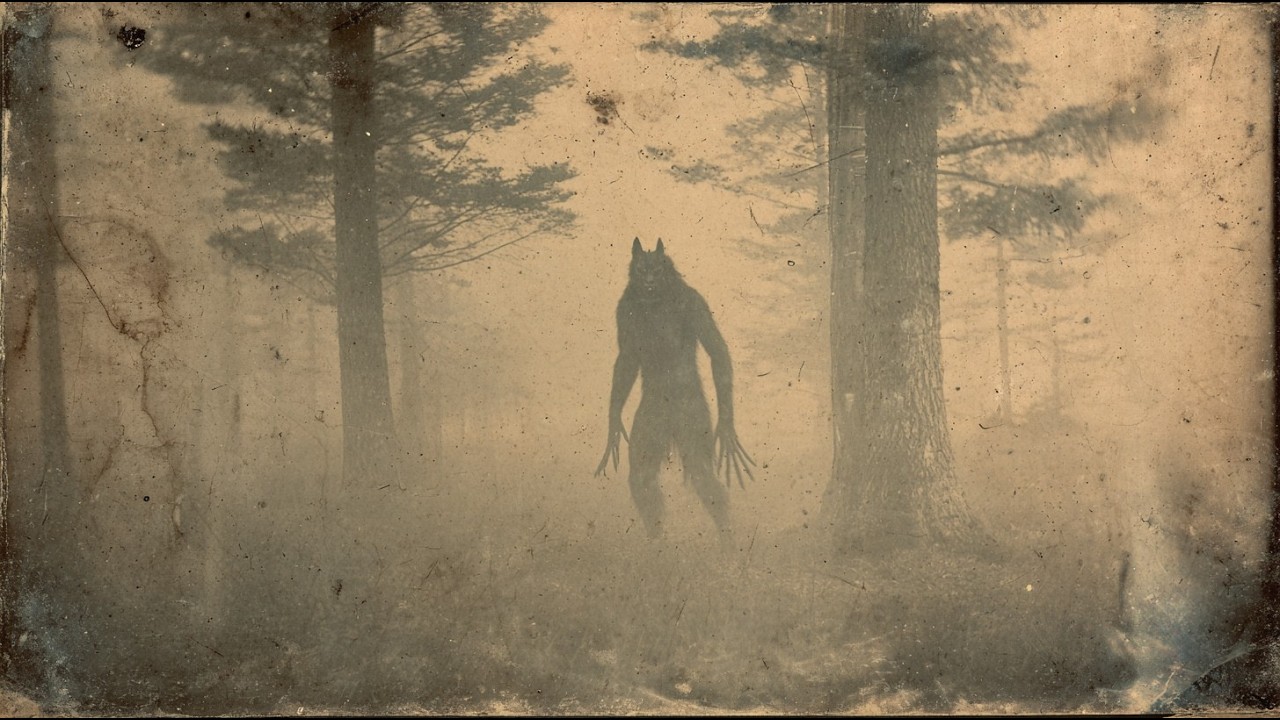
He was a lean, hard man who knew the forest better than anyone in Millbrook, reading signs in the woods that other men would miss. His crew of six had set up a temporary camp in an old-growth section they planned to clear before summer. For three days, the work went normally. On the fourth morning, one of the men did not show up for breakfast.
Jasper Cobb, a reliable twenty-eight-year-old bachelor, was missing. His bedroll looked slept in, and his boots and heavy coat were gone. Gideon waited, then searched, and found Cobb’s tracks in the soft earth near camp. He and two others followed them through the underbrush for about a quarter mile until the tracks stopped in the middle of a small clearing.
Not at rocky ground or a stream, but mid-stride, with one footprint planted and nothing beyond it. It looked as if Jasper Cobb had been lifted out of his own footsteps and carried away into the air. Gideon had tracked animals all his life, and he had never seen anything like it. The crew searched until dark, then returned to town.
Hiram Caldwell, the seventy-three-year-old founder of Millbrook, listened to Gideon’s account in silence. He organized a proper search party of fourteen armed men, all experienced woodsmen. For three days they combed the forest in a grid pattern, covering miles in every direction. They found nothing, not a scrap of cloth or a broken branch.
On the third night, camped near where the logging crew had been, they heard something for the first time. Just after midnight, the forest went silent, unnaturally so. Then a sound rose, a wailing cry that was neither quite animal nor quite human, seeming to come from everywhere at once. It lasted about thirty seconds, then cut off abruptly.
Every man in the camp was awake, rifles in hand. Nobody slept the rest of the night. Back in Millbrook, Hiram called a town meeting in the church. One by one, people began to confess strange experiences they had kept to themselves: heavy footsteps on a roof and deep claw marks in the wood, oversized cat tracks with impossibly long strides, livestock found dead in ways suggesting something powerful and deliberate, and a constant sense of being watched from the forest edge.
Hiram told them of an old Cherokee legend, a story of the Wampus Cat, a creature that walked on two legs like a person but had the head and claws of a great cat. According to the tale, it had once been a Cherokee woman cursed for breaking sacred law, transformed into something neither human nor beast, condemned to wander the mountains forever, neither alive nor dead as people understood those words. After the meeting, nobody went into the forest alone. Rotating search parties covered miles of ground for two weeks, finding nothing.
Then in early April, a carpenter named Silas Drummond vanished from his own cabin. His boots were by the door, his coat on its peg, and the door was barred from the inside. There was no way out. He had simply disappeared from a locked room in the middle of town.
The disappearances continued through the spring. Between March and June of 1847, seven people vanished in circumstances that defied explanation. Some disappeared from the woods, others from locked rooms. One woman stepped outside the church during an evening service and never returned.
The town was paralyzed. People stopped leaving their houses after dark, families moved in together, and the lumber camps shut down because the men refused to work in the forest. In late June, Gideon found a cave in a broken ridgeline about five miles northwest of Millbrook. The entrance was marked with deep scratches in the stone, four parallel gouges that looked like they had been made by claws the size of knife blades.
Inside, the walls bore fresher scratches, and the smell was overwhelming, a mixture of musk and decay. The torchlight revealed enough for Gideon to understand that the missing people of Millbrook had ended up here, but he pushed those details away. Then he heard it, that wailing cry from the forest, but closer now, coming from deeper in the cave, along with a rasping breath like something large breathing in the dark. Gideon backed out and ran, not stopping until he reached the lights of Millbrook.
He told only Hiram what he had found. The old man listened, then admitted he had heard that sound once before, sixty years earlier, when he had gone where the Cherokee warned him not to go. He described seeing a shape moving through the trees at dusk, something that walked upright like a man but moved like a cat. The Cherokee, he said, claimed the Wampus Cat could not be destroyed by normal means, but it could be driven away with fire, a blaze hot enough to scour stone and cleanse the land.
Gideon gathered ten men he trusted completely, men who had lost friends or family. They prepared in secret, collecting deadwood, lamp oil, and bundles of pitch pine. In early July, they set out before dawn and reached the cave as the sun climbed toward noon. They piled the fuel at the cave entrance, poured oil over it, and gathered at the base of the ledge with rifles loaded and primed.
Gideon climbed up one last time, stood at the cave mouth, and issued a challenge. Then he threw the torch into the oil-soaked wood and scrambled back down. The fire caught instantly. For about five minutes, nothing happened.
Then the wailing cry cut through the roar of the flames, full of rage and pain, and the creature emerged. It stood about seven feet tall when it reared up, covered in dark fur, with the head of a great cat. But the eyes were not entirely animal. They held too much awareness, too much intelligence, something almost human staring out from that inhuman face.
The ten men fired. Several shots connected, and the creature staggered, but it did not go down. It moved with impossible speed toward the nearest man, scattering the others. Gideon fired his pistol and spun the creature around.
For a moment, man and monster faced each other across the ravine floor. The creature looked at him with eyes that held calculation, hatred, and patience. Then it turned and fled into the forest with deliberate purpose. When the fire died down, they found evidence that the missing people had ended up in the cave, and evidence of other passages leading deeper into the mountain.
The creature had escaped, wounded but alive. Hiram warned Gideon that he had made an enemy. “It’s smart. Smarter than any animal has a right to be.
And it understands revenge. ” The disappearances stopped for a while, but Gideon could not shake the memory of those intelligent eyes. He began sleeping with a loaded rifle beside his bed. The attacks resumed in September, but they were different now.
The creature was coming specifically for the men who had been at the cave that day, one by one, with what seemed like deliberate malice. By December, only Gideon and two brothers remained of the original ten. The brothers wanted to leave, to head east where there were more people and less wilderness. Gideon refused.
This was his home, and he felt responsible. Looking into the creature’s eyes had told him something: this was personal, and it would not stop until all of them were gone. In January of 1848, almost a year after the disappearances had started, Gideon decided to go back into the mountains and find the creature. He left before dawn in bitter cold, carrying his rifle, his pistol, a hunting knife, and enough supplies for a week.
After two days of travel through the snow-covered mountains, he reached the ravine area. The original cave entrance was still marked with claw scratches but was partially collapsed. After about an hour of searching, he found fresh tracks leading up the slope to the backside of the ridge. There, hidden in a grove of ancient pines, he found another cave.
Inside, just where a little winter sunlight penetrated the gloom, lay the creature. It was in worse condition than he had realized. The wounds from July had never fully healed, and infection had set in. It was breathing in shallow pants, its eyes half closed.
Gideon stood about twenty feet from the cave entrance, rifle raised. It would be easy to pull the trigger. But then the creature’s eyes opened fully and focused on him with obvious effort. Gideon saw something he had not expected: fear.
It was the fear of a being that knew it was dying, that had reached the end of whatever cursed existence had been forced upon it. He understood then that this thing was suffering and had probably been suffering for longer than he could imagine, trapped between human and beast, unable to truly die and unable to truly live. The attacks had not been evil. They had been survival.
Gideon lowered his rifle slowly. Then he backed away, keeping his eyes on the creature, showing no aggression. As he turned to leave, he heard it make a sound, not the wailing cry, but something softer, almost a whimper. He walked away and never saw it again.
Gideon told no one what he had found. When the Walsh brothers demanded to know what had happened, he said he had searched and found no trace, that maybe the creature had succumbed to its wounds or moved on. The disappearances stopped completely after that winter. Spring came, the snow melted, and the people of Millbrook slowly rebuilt their lives.
They avoided the ravine area, treating it as ground best left alone. Gideon lived another forty-three years, passing peacefully in his sleep in the winter of 1891 at the age of seventy-eight. He never spoke of that day in the mountains. But his wife, Miriam, noticed that he never went back to that part of the mountains, never hunted in that direction, and sometimes, in the depth of winter, she would wake to find him standing at the window, staring out at the forest with an expression of sadness mixed with understanding, like he was listening for something in the wind.
The cave where Gideon found the creature has never been located again, despite searches by historians and curious locals. The legend of the Wampus Cat persists in the Appalachian Mountains to this day, with reports of sightings, disappearances that match the pattern, tracks too large for any known cat, and sounds in the night that chill the blood. Whether the creature survived its ailments or passed away alone in that cave, whether there was ever one such thing or many, nobody can say.
The mountains keep their secrets.