Earl Van Dorn did not look like a man who would leave a lasting scar on the Union war effort. Standing barely five feet five inches tall, with a restless energy that earned him a reputation for dash and recklessness, he had spent two decades in the service of the United States Army. But in the spring of 1861, that allegiance ended. When Mississippi seceded, Van Dorn resigned his commission and accepted a brigadier general’s rank in the state militia on January 23, 1861.
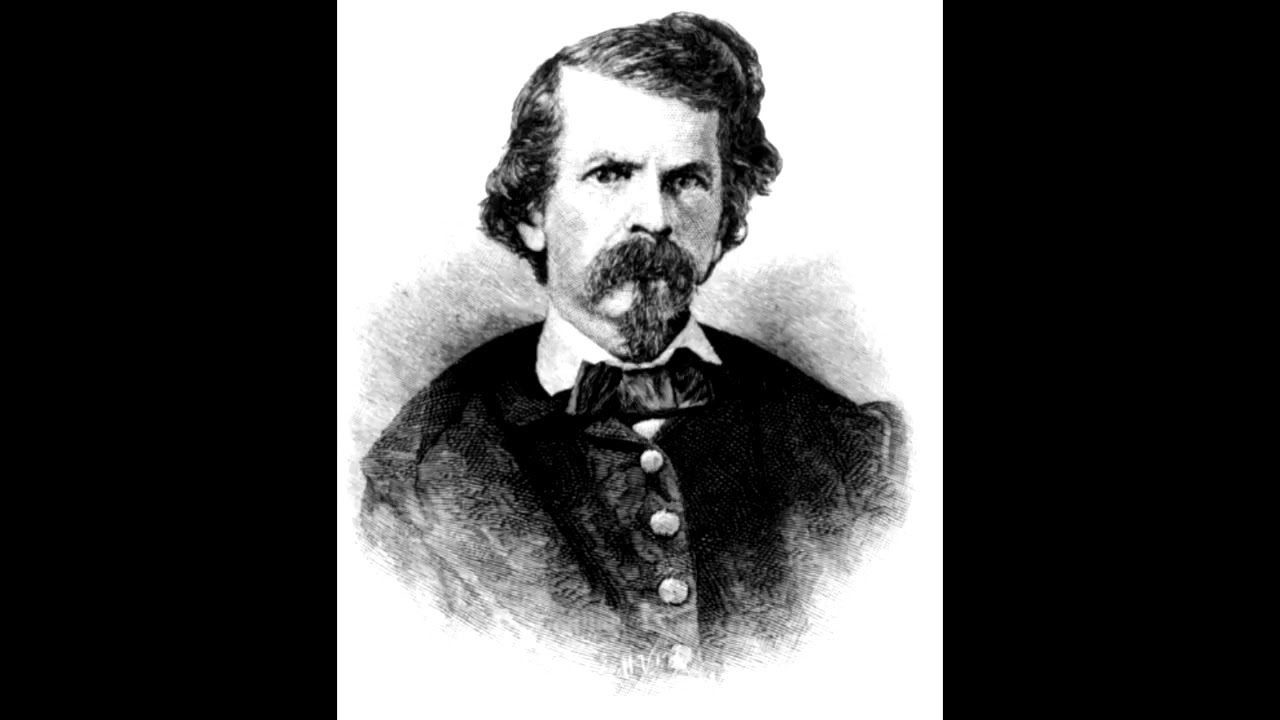
Within months, he moved into the regular Confederate Army, appointed a brigadier general on June 5, 1861. He was a West Point graduate of the class of 1842, though hardly a star pupil, having finished fifty-second out of fifty-six cadets. His early career took him across the American South, then into Texas and Mexico during the Mexican-American War, where he saw combat and earned a brevet promotion to major for his performance. After that conflict, he returned to the southern military posts and sharpened his skills in the field against the Comanche in 1858 and 1859.
He was a man molded by the frontier and by war, and the Confederacy would call on both. His first assignment in Confederate service took him west to Texas. There, his men moved quickly to capture United States Army soldiers stationed in the state before those troops could march north and reinforce the Union. It was a small but significant success, one that stripped the federal government of a portion of its frontier strength at a critical moment.
His superiors rewarded the work. Van Dorn was promoted to major general on September 19, 1861, and briefly transferred to Virginia before being placed in command of the Army of the West in the Trans-Mississippi Theater. That command placed him at the head of a substantial Confederate force, and his first major test came in March 1862 at the Battle of Pea Ridge in northwestern Arkansas. Van Dorn led a combined force of roughly sixteen thousand men, including Cherokee allies, determined to drive the Union out of Missouri and reclaim the region for the Confederacy.
His opponent was Brigadier General Samuel Curtis, commander of the Union Army of the Southwest. The campaign began with a grueling march in harsh winter weather, a movement that cost Van Dorn time and exhausted his troops. When the battle finally came, the fighting was brutal and chaotic. On the first day, Confederate attacks pushed Union forces back, but the momentum did not hold.
On the second day, Curtis launched a crushing counterattack that shattered the Confederate left flank. Van Dorn’s army dissolved in disorder, and he was forced to retreat southward. The defeat was costly. The Confederacy lost control of Missouri, and Van Dorn’s reputation took its first serious blow.
He did not remain in disgrace for long. The Confederacy needed experienced commanders, and Van Dorn was transferred east to the Army of Mississippi. There he took part in the Battle of Corinth in October 1862, a confrontation driven by the Confederate desire to recapture the vital railway junction in northern Mississippi. Van Dorn commanded the Confederate forces in the first phase of the assault, and his men fought well, pressing the Union defenders hard and driving them back in several sectors.
But the attack stalled. Van Dorn misjudged the strength and position of the Union defenses, and when his assaults were repulsed with heavy losses, he ordered a retreat. The battle was a Confederate failure, and the army fell back in disorder. Van Dorn was relieved of command of the army and demoted to leading the cavalry under Lieutenant General John C.
Pemberton. It was a humbling fall for a man who had once led armies. But it was in this reduced role that Van Dorn achieved his greatest military success. In December 1862, Union Major General Ulysses S.
Grant was driving toward Vicksburg, and his army depended on a massive supply depot at Holly Springs, Mississippi. Van Dorn recognized the vulnerability. Leading his cavalry forces on a daring raid, he struck Holly Springs on December 20, 1862. The garrison there was taken by surprise.
Van Dorn’s troopers swept through the town, destroyed warehouses, burned tons of supplies, wrecked railroad tracks, and seized or scattered equipment worth hundreds of thousands of dollars. The raid was devastating in its efficiency. Grant’s supply line was severed at a critical moment, and the blow forced him to halt his campaign against Vicksburg. For a brief moment, Van Dorn had changed the course of the war in the West, buying the Confederacy time and inflicting a humiliating setback on one of the Union’s most capable commanders.
The Holly Springs raid was the high point of Van Dorn’s Confederate career, but it did not restore him to high command. He spent the following months leading his cavalry through a series of minor skirmishes and operations in Mississippi. The war ground on around him, and the opportunities for glory and redemption were slipping away. His demeanor, though, had always been marked by a personal intensity that extended beyond the battlefield.
Van Dorn was known for his charm and his attention to women, a reputation that followed him through the army. On the morning of May 7, 1863, at his headquarters in Spring Hill, Tennessee, Van Dorn was shot and killed. The man who fired the fatal shot was a local doctor named George B. Peters.
The motive, as reported at the time, was personal. Peters accused Van Dorn of an affair with his wife and confronted the general. The encounter ended with Van Dorn dead, cut down not by Union fire but by a husband’s vengeance. The news of his death was met with shock in the Confederate ranks.
He was only forty-two years old. His wartime record had been a mixture of spectacular failure and brilliant success. At Pea Ridge and Corinth, his ambitions had outrun his execution, and his armies had paid for it. At Holly Springs, his boldness had struck a genuine blow against the Union war machine, one of the most successful cavalry raids of the war.
But his private conduct had finally caught up with him. He was buried at Maple Hill Cemetery in Holly Springs, Mississippi, the very town where he had delivered his greatest victory. The Confederate Army lost a controversial but capable officer, and the war in the West lost a commander whose story ended not in the smoke of battle, but in the quiet violence of a personal quarrel.