They are not plants. That simple statement, so obvious today, was not science for most of recorded history. As late as 1969, when ecologist Robert Whittaker of Cornell University proposed a five-kingdom classification of life, he was formally splitting fungi into their own kingdom for the first time. Until then, every mycology textbook in the world placed mushrooms beside ferns and mosses.
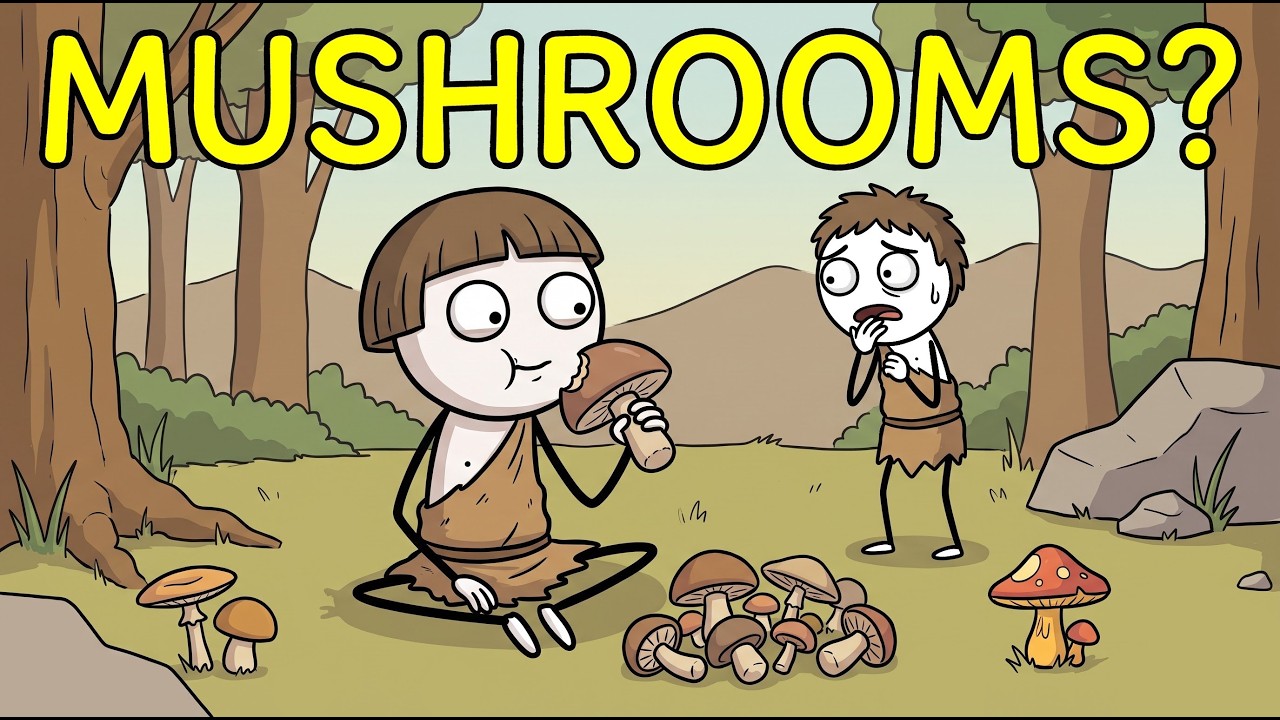
And that placement was profoundly wrong. Fungi possess no chlorophyll. They cannot photosynthesize. They do not make food from sunlight as plants do.
Instead, they feed externally, secreting digestive enzymes and absorbing nutrients from living or dead matter. Their cell walls are built not from cellulose but from chitin, the same material that forms the exoskeletons of insects and crabs. They store energy as glycogen, the carbohydrate animals use, not starch. In 1993, a study published in the Proceedings of the National Academy of Sciences revealed how close the relationship really is.
Fungi are more closely related to animals than to plants, sharing a common ancestor within the supergroup Opisthokonta. The mushroom on your plate, evolutionarily speaking, is closer to you than the lettuce beside it. The scale of this kingdom is staggering. A 2017 study estimated between 2.
2 and 3. 8 million species of fungi exist on Earth, of which only about 150,000 have been formally described. About 2,000 species are edible to humans, and only around 60 are cultivated commercially. And what people call a mushroom is not the organism itself.
The main body is a vast underground network of microscopic threads called hyphae, woven into a structure known as mycelium, spreading through soil, dead wood, and leaf litter, sometimes covering areas the size of entire forests. What appears above ground, the cap and stem, is merely the reproductive structure designed to release spores. One fungus can release billions of spores. A giant puffball can release an estimated seven trillion.
The launch mechanism is extraordinary: each spore is fired using a tiny water droplet that builds surface tension until it flings the spore with acceleration up to 10,000 g. The quiet, slow-looking mushroom fires its spore cannon with force greater than a bullet. When did humans first encounter these beings? Long before we were fully human.
The oldest direct evidence comes from dental calculus, the hardened plaque on ancient teeth. In 2021, a study analyzed remains from a wide range of archaeological groups and found microscopic fungal residue embedded in the teeth of prehistoric peoples. They chewed mushrooms so regularly that fungal remains became part of their dental record. The most famous individual case is Otzi the Iceman, discovered in 1991 in the Otztal Alps on the Austrian-Italian border, preserved in ice for about 5,300 years.
Otzi carried two types of fungus when he died. One was tinder fungus, kept in a pouch as part of his fire-starting kit. The other was birch polypore, strung on a leather cord around his neck. In 1998, a paper in The Lancet proposed that the birch fungus was used as medicine.
Otzi suffered from intestinal whipworm, a parasitic infection. Birch polypore has known antibacterial and antiparasitic properties. A man who lived 5,300 years ago carried a fungus as a remedy, not food, but treatment. The relationship goes much further back.
In El Miron Cave in Cantabria, Spain, research identified charred remains of fungi in deposits dating to about 18,700 years ago, during the Upper Paleolithic. Whether these represent food, fire fuel, or both remains debated, but humans in Ice Age Europe were collecting and processing fungi nearly 19,000 years ago. Then come the images. In the Tassili n’Ajjer mountain range of southeastern Algeria, a vast gallery of Sahara rock paintings dating between 7,000 and 9,000 years old shows human-like figures with mushroom-like bodies sprouting from their forms, or holding them, or radiating from their heads.
A 1992 study argued these paintings are the oldest known representations of psychedelic mushroom use in the world. Pastoral cultures of the green Sahara appear to have used psilocybin fungi in ritual contexts 9,000 years ago. Across the Atlantic in Guatemala and southern Mexico, archaeologists found hundreds of stone carvings from 1000 BC to 900 AD shaped like mushrooms, often with a human or animal figure sitting beneath the cap. Stone mushroom sculptures were catalogued and argued to be evidence of a formal mushroom cult linked to Maya and pre-Maya civilizations.
The Aztecs had a specific word for these fungi, teonanacatl, meaning flesh of the gods or divine mushroom in Nahuatl. A Franciscan friar described how the Aztecs consumed them at banquets and ceremonies, sometimes mixed with honey, to experience visions and altered states. Another chronicler described mushroom use at the coronation feast of Montezuma II in 1502. After the Spanish conquest, Catholic missionaries suppressed such practices as pagan.
The traditions faded from view for centuries. Only in 1955 did they re-emerge in the Western world, when R. Gordon Wasson, an American banker and amateur mycologist, participated in a mushroom healing ritual conducted by a Mazatec curandera named Maria Sabina in Oaxaca, Mexico. Wasson published his account in Life magazine on May 13, 1957, under the title “Seeking the Magic Mushroom.
” Swiss chemist Albert Hofmann, who had already synthesized LSD, isolated psilocybin from samples and published his results in 1958. But the psychedelic story, however significant, is only one thread. For most of human history, mushrooms were about survival, medicine, and status. The ancient Egyptians regarded mushrooms as food for the gods, associating them with immortality because they appeared from the earth without visible seeds.
The Greeks gave us the very word mycology, from mykis, their term for mushroom. Theophrastus wrote about the underground growth of truffles, believing they were generated spontaneously by autumn rains and thunder. The playwright Euripides recorded one of the earliest known mushroom poisonings in Western literature, describing a family killed by toxic fungi. The Romans were obsessed with them.
Pliny the Elder devoted extensive passages to mushrooms, discussing both the prized boletus and the fatal dangers of misidentifying it. He wrote that mushroom was the easiest thing to tamper with and use as a poison vehicle. The poet Martial claimed boletus was such a luxury that a courier could be trusted with silver, gold, and clothing, but no one could be trusted with a boletus. The satirist Juvenal mocked Roman banquet class divisions, where the host ate precious mushrooms while lesser guests were served scraps.
Then there is the most famous mushroom death in history: the poisoning of Emperor Claudius, who ruled Rome from 41 to 54 AD. Ancient historians recorded that his wife Agrippina the Younger engineered his murder, placing deadly Amanita phalloides toxin into a dish of fine boletus. It is said a professional poisoner prepared the dose. After Claudius died and was deified, as was Roman custom for emperors, his stepson Nero reportedly joked that mushrooms were the food of the gods because the mushroom had made Claudius a god.
Nero’s joke contained a deadly truth. Amanita phalloides is responsible for about 90 percent of all fatal mushroom poisonings worldwide. Its cap produces amatoxins, specifically alpha-amanitin, which binds to an enzyme essential for copying messenger RNA. Without messenger RNA, cells cannot produce proteins.
The liver and kidneys fail first. Symptoms do not appear until 6 to 12 hours after ingestion. Vomiting and diarrhea follow. Then comes a deceptive period of apparent recovery.
Within 3 to 5 days of the meal, the liver collapses completely. Half a cap is enough to kill an adult. There is no reliable antidote. There is no simple rule to distinguish safe from deadly mushrooms.
Folk tests fail. The death cap’s cap is greenish-white and easily mistaken for an edible straw mushroom. The only reliable method is accurate species identification, and even trained mycologists make mistakes. For thousands of years, eating wild mushrooms was a gamble.
You had to know exactly what you were picking, knowledge passed from parent, neighbor, or community tradition across generations of hard experience. The knowledge was local, specific, and paid for in lives. So why not cultivate them? The answer lies in biology.
Cultivated crops like wheat, rice, and corn are plants. Put a seed in soil, add sunlight and water, and something grows. A mushroom is not a plant. It grows not from seeds but from spores, microscopically small and invisible to the naked eye.
Ancient farmers could not see spores. They could not collect, store, or plant them in any practical way. And mushrooms do not grow in soil as crops do. They grow on decomposing organic matter, dead trees, rotting leaves, dung.
Conditions must be exactly right: specific temperature, humidity, substrate, and darkness. No one understood any of this for most of human history. Chinese farmers during the Song Dynasty, between about 960 and 1279 AD, were the first to crack the code. Their target was shiitake, a species growing naturally on decaying logs of broadleaf trees in mountain forests of southern China and Japan.
Traditional accounts attribute the development of the technique to a semi-legendary figure named Wu San Kwung, sometimes called the Mushroom God. The method attributed to him was real and effective. Farmers cut logs of certain hardwood species, scored the bark with cuts and notches, soaked them in water, and placed them in shaded, humid forest areas. The notches allowed wild shiitake spores in surrounding forests to colonize the exposed wood.
The soaking stimulated mycelial growth, and within months to a year, mushrooms grew from the logs. A 1313 agricultural book from the Yuan Dynasty contains one of the earliest written descriptions detailing the process of cutting, scoring, watering, and waiting. This was deliberate and reproducible. Chinese farmers were cultivating shiitake on logs a thousand years before Europeans had any concept of mushroom farming.
While Chinese farmers mastered log cultivation, Chinese physicians were classifying fungi as medicines. The Shennong Ben Cao Jing, compiled during the Han Dynasty, lists lingzhi as a superior medicine for longevity and calming the spirit. By the Ming Dynasty, a comprehensive pharmacopoeia published in 1578 documented dozens of fungi species with detailed medicinal properties. Chinese medicine had been systematically studying fungi for more than a thousand years before Western science realized fungi were not plants.
In Japan, the relationship was different. Matsutake, a fungus growing in symbiosis with pine tree roots, has appeared in Japanese poetry since the Heian period and in the eighth-century anthology Manyoshu. It cannot be cultivated because it requires a living partner tree and precise forest conditions no one has been able to replicate artificially. Its scarcity made it one of the most expensive mushrooms on Earth.
The Japanese wrote poems about a mushroom they could not grow, celebrating its wildness as part of its value. Europe lagged behind by centuries. The first deliberate mushroom cultivation in Europe did not occur until the seventeenth century in France, and it happened by accident. French melon farmers near Paris noticed that common mushrooms appeared spontaneously on horse manure used in their melon beds.
A 1600 reference noted that moving soil from areas where mushrooms grew could encourage new growth elsewhere. That was the basic principle of inoculation, discovered without understanding. The leap to deliberate cultivation came in the late seventeenth century, attributed to Jean-Baptiste de La Quintinie, head gardener to King Louis XIV at Versailles, who began cultivating mushrooms in managed manure beds in the 1670s and 1680s. A mushroom at Versailles, served to the Sun King.
But the real revolution happened underground. By the early nineteenth century, Paris mushroom cultivation moved beneath the city into a vast network of limestone quarries and abandoned tunnels. These spaces offered everything mushrooms needed: constant cool temperatures, high humidity, total darkness, and gentle air circulation. At the peak of underground mushroom production in Paris during the nineteenth century, hundreds of kilometers of tunnels were devoted to the crop.
They became known as champignons de Paris. The subterranean labyrinth transformed old quarries into one of the most productive agricultural operations in Europe. The Paris growers faced a fundamental problem. They propagated mushrooms by moving chunks of colonized substrate from productive beds to new ones.
Those chunks carried not only the mushroom mycelium but also molds, bacteria, and competing fungi. Every transfer risked contamination, and quality declined across generations. The solution came from the laboratory. In 1894, two French scientists at the National Museum of Natural History in Paris proved that mushroom mycelium could be grown in pure culture from individual spores on sterile media, yielding clean, genetically stable spawn.
This was the breakthrough that turned mushroom farming from craft into science. In the early twentieth century, American plant pathologist Benjamin Minge Duggar developed commercial-scale pure-culture spawn production. In the 1930s, James W. Sinden at Penn State University developed grain spawn using sterilized grains as a carrier for mushroom mycelium instead of manure.
Grain spawn colonized faster, distributed more evenly, and resisted contamination better than anything before. It became the industry standard and remains so today. Every commercial mushroom operation on Earth uses some version of what Sinden developed nearly a century ago. From France, mushroom cultivation spread to England in the mid-eighteenth century and to the United States in the late nineteenth century.
Kennett Square, Pennsylvania, became America’s mushroom capital after a Quaker florist began growing mushrooms under his greenhouse benches in 1885. Today, that region still produces about 60 percent of cultivated mushrooms in the United States. The common button mushroom, crimini, and portobello are all one organism, Agaricus bisporus, harvested at different growth stages: three products, one fungus, three different grocery store prices. Not every fungus submits to cultivation.
Truffles are ectomycorrhizal fungi. They form obligate symbiotic partnerships with the roots of specific trees, mainly oak, hazel, and pine. You cannot grow a truffle on a log or in a tray of compost. The fungus needs a living tree.
It wraps its hyphae around the root tips, extending the tree’s reach into soil it could not access alone, providing water and phosphorus. In return, the tree feeds the fungus sugars produced by photosynthesis. Without the tree, the truffle dies. The white truffle of Alba, Italy, cannot be cultivated at all.
It is the most expensive food by weight on the planet, routinely fetching $2,000 to $5,000 per kilogram. Traditionally, hunters used female pigs because truffles produce a compound found in boar saliva. There is a problem: the pig wants to eat the truffle. Modern hunters use trained dogs instead.
The black Périgord truffle is somewhat more cooperative. Since the 1970s, researchers have developed techniques to inoculate oak and hazel seedlings with truffle spores, then plant them in prepared orchards. You plant the trees, wait five to ten years, and hope. In the early twentieth century, France produced over 1,000 tons of black truffles annually.
By the 2000s, production collapsed to between 30 and 80 tons. The world wars eliminated a generation of truffle hunters and their knowledge. The fungal world also contains horrors. Ophiocordyceps unilateralis, the zombie-ant fungus, infects carpenter ants.
Spores land on the ant’s exoskeleton, germinate, and penetrate. Fungal cells spread through the body, consuming non-vital tissue first to keep the host alive. Then the fungus hijacks the ant’s nervous system. It forces the ant to leave its colony, climb to a specific height on a leaf or twig, and bite down on the central vein with a death grip so strong its mandibles lock.
The ant dies in that position. Over the following days, a fungal stalk emerges from the back of the ant’s head, extending upward and releasing spores over the forest floor below, where they will land on the next generation of ants. This behavior has persisted for at least 48 million years. A fossilized leaf found in Germany bears the bite marks of a cordyceps-infected ant.
This fungus has been making zombie ants since before the Himalayas fully formed. A related species infects ghost moth caterpillars on the Tibetan Plateau. Traditional Chinese medicine has used it for centuries. Wild caterpillar fungus now sells for $20,000 to $50,000 or more per kilogram, so valuable it is called Himalayan gold.
It cannot be cultivated because its full life cycle has never been replicated commercially. A related species can be grown on grain-based substrates and has become a major supplement industry in China, South Korea, and Thailand. Fungi did not only shape human history. They shaped the planet itself.
During the Carboniferous Period, roughly 359 to 299 million years ago, vast swamp forests covered the Earth. When trees died, they fell and piled up in thick layers because nothing on the planet could efficiently decompose lignin, the tough polymer that gives wood its structural rigidity. These layers of dead wood were buried and compressed, and over millions of years turned into coal. In 2012, a study in Science used molecular clock analysis to estimate when fungi first evolved enzymes capable of breaking down lignin.
The answer matched almost exactly the sharp decline in coal formation at the end of the Carboniferous, about 290 million years ago. The evolution of white-rot fungi may have ended the Carboniferous. Once fungi learned to feed on wood, dead trees stopped accumulating. Coal layers stopped forming.
The fossil fuels powering much of modern civilization exist because organisms could not eat dead trees for about a hundred million years. Fungi ended that monopoly. Even before trees existed, fungi may have been the tallest organisms on land. Prototaxites, living roughly 470 to 360 million years ago, formed trunk-like structures up to 8 meters tall and a meter wide, towering over the small plants of that age.
A 2007 study used carbon isotope analysis to argue it was likely a giant fungus. Fungi may have been the tallest organisms on Earth for a hundred million years before trees evolved. Fungi are also infrastructure. A 1997 study in Nature demonstrated that trees in a forest are connected underground by mycorrhizal fungal networks and actively exchange resources through them.
Paper birch trees transferred carbon to shaded Douglas fir seedlings using the fungal network as a delivery system. The researcher coined the term mother tree for older, larger trees that serve as hub points in these networks. Nature magazine called it the wood-wide web. About 90 percent of all terrestrial plant species form mycorrhizal partnerships with fungi.
The forests covering the planet are not just collections of individual trees. They are networks held together by invisible fungal threads. This partnership has operated since plants first colonized land about 470 million years ago. Now the story enters its newest chapter.
In the twenty-first century, humans have begun turning fungi into things unrelated to food. In the 1960s, a British company discovered a filamentous fungus that could be grown in massive fermenters and processed into a high-protein, high-fiber meat alternative. It reached the British market in 1985 under the brand name Quorn and now sells in more than 17 countries. A global meat-substitute industry was built on a fungus found during a survey designed to feed a planet expected to run out of protein.
Two Rensselaer Polytechnic Institute students developed a process around 2007 to grow mycelium inside molds as a replacement for polystyrene foam. Their company expanded into mycelium-based leather and meat substitutes. In 2021, the luxury fashion house Hermès announced a version of its iconic Victoria bag made from mycelium material developed by another company. An American mycologist has spent four decades arguing fungi can do far more.
His 2005 book presented the case for mycoremediation. In 2018, he co-authored a study showing mycelium extracts reduced viral loads in honey bees suffering from colony collapse disorder. A fungus that might save the bees. The global mushroom industry today produces roughly 42 to 45 million tons annually.
China dominates with about 75 to 80 percent of world production. A thousand years after Chinese farmers began scoring logs in mountain forests, China still grows more mushrooms than the rest of the planet combined. Humans did not domesticate mushrooms the way they domesticated wheat or corn. There was no single founding crop, no single river valley, no one act of planting a seed and watching it grow.
The mushroom is not a plant. It grows from invisible spores on decaying matter in darkness. For almost all of human history, it could not be cultivated at all. It could only be found.
So humans found it, in forests, on dead logs, in meadows, and on dung, at least 19,000 years ago and probably much earlier. They discovered which species nourished you and which killed you. That knowledge was paid for in lives and passed down through oral tradition for millennia. They used fungi to start fires, treat parasites, and communicate with gods.
They carved them into stone in Guatemala 3,000 years ago. They served them at imperial banquets in Rome, where an emperor’s wife used one to carry out the most famous political assassination in history. Chinese physicians classified their medicinal properties 2,000 years ago. Chinese farmers learned to cultivate shiitake on logs a thousand years ago.
French gardeners discovered how to grow button mushrooms on horse manure 350 years ago. Only 130 years ago did scientists develop the pure-culture method. The entire modern mushroom industry, producing 45 million tons annually, depends on technology newer than the automobile. Of the millions of species of fungi believed to exist, barely 5 percent have been described.
The strange organism that is not a plant and not an animal, closer to us than anything green, growing from invisible spores on dead matter in darkness, remains the strangest and least understood food in the kitchen.