On a calm January afternoon in Conyers, Georgia, twenty miles east of Atlanta, a call came in to the police chief’s office. Detectives Ken Swift and Jackie Dunn learned that a homicide had occurred and that the Rockdale County Sheriff’s Department was already on the scene. For them, it was the first murder of the year in a community where one or two homicides a year was already an unusually high number. The victims’ discovery had come from Nikki Whitehead’s sixteen-year-old twin daughters, Jasmia and Tasmia, who flagged down a passing deputy, beating on the side of his car and screaming that they had found their mother dead.
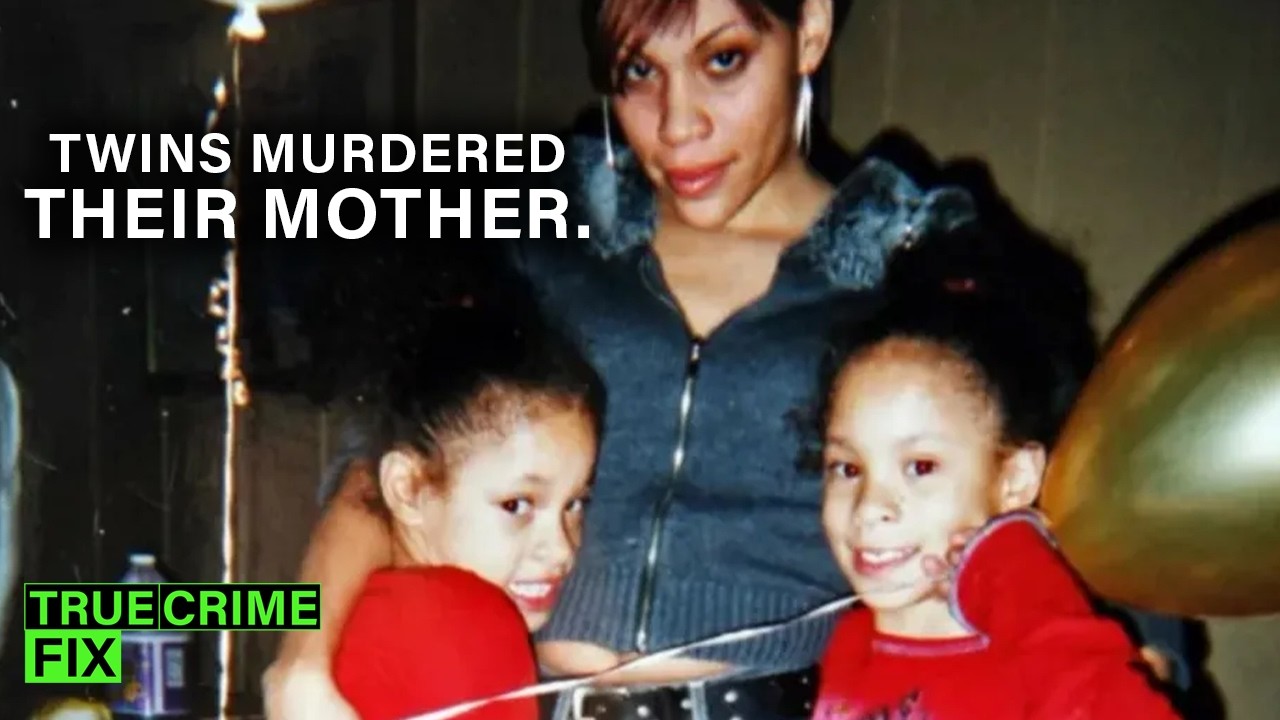
When detectives arrived, the two girls sat in the back of a van, crying hysterically. One of them nervously bit the inside of her forearm, explaining that it was a habit when she was uneasy. The officers handled them gently, careful not to add to their trauma. Inside the home, the scene was chaos.
Overturned chairs, broken vases, and blood everywhere. The smell of blood hung heavy in the air. Nikki Whitehead, thirty-four years old, lay partially submerged in the water of a jacuzzi-style garden tub off the master bedroom, her head above the water. She was naked.
The sheer violence of the room told detectives this was not a simple break-in. Nikki had more than eighty stab wounds. That level of rage, statistically, pointed to someone very close to the victim. The twins told police that the night before, their mother had come home from what they called “partying.
” When they woke up for school, she did not answer their knock on her bedroom door, so they left as usual. They did not see her that morning. They returned home from school around four in the afternoon, unlocked the front door, and made the horrific discovery. That left an eight-to-nine-hour window for the attack.
The crime scene itself painted a devastating picture. Blood streaks along the wall showed Nikki had fought desperately, moving from one end of the room to the other. She had made it to the back door, her bloody grip visible on the handle, but the door was locked. She had slid down the wall near her bedroom door, where the largest concentration of blood marked the fatal struggle.
There were no signs of forced entry, no broken locks, no shattered windows. Whoever killed her had been allowed inside. Police turned first to the man in Nikki’s life. The twins described Robert Head, a truck driver roughly twenty years older than their mother, who owned the house and was often gone for long stretches.
The girls called it a “sugar daddy” relationship. They also mentioned another man. The twins said their mother had recently been talking to someone named Joe. On the night before the murder, Nikki had argued on the phone with Joe, yelling, “No, don’t come to my house.
” A love triangle gave police a motive to investigate. Robert Head was quickly located. His employer confirmed he was driving his truck out west at the time of the murder, and GPS data on his vehicle proved he could not have been in Georgia. He admitted he and Nikki had argued that night because their agreement was that she would not talk to other men in front of him.
He said he loved her, accepted that she saw other men when he was on the road, but that when he came home, it was him. The timeline eliminated him. Attention shifted to Joe Carter, a barber whose shop sat right beside the salon where Nikki worked. A neighbor’s tip about a black car parked in front of Nikki’s house earlier that day connected Carter, who owned a black vehicle.
When detectives confronted him at work, he was shocked, his hands shaking as he tried to light a cigarette. He admitted arguing with Nikki that night but said it was about her drinking and the status of their relationship. He claimed he had spent the entire day at work, sixteen miles away. His co-workers confirmed his alibi, and he passed a polygraph.
The black car was later explained as a vehicle visiting someone up the street, parked innocently enough that the post office had even left a note about it. Another lead emerged when a witness reported seeing a red car in Nikki’s driveway at around three in the afternoon, right within the time of death. The car belonged to a friend who had an appointment for Nikki to do her hair. She had knocked repeatedly, gotten no answer, and left after a few minutes.
Her cell phone records confirmed she was only there briefly. Investigators estimated the struggle inside had lasted about twenty minutes. She was eliminated. As police dug deeper into Nikki’s life, they found a fractured family history.
Nikki had grown up on the streets, raised by her grandmother, Dela Fraser. She became pregnant with the twins at seventeen. Dela had long been the girls’ guardian. When Nikki met Robert Head, she gained stability and wanted her daughters back.
A juvenile court had recently ordered the twins to live with their mother, only weeks before the murder. The relationship between Nikki and Dela had become strained, and Dela had lost state assistance when the girls moved out. Custody and money gave her a potential motive. Dela was asked to come in for questioning but arrived six hours late.
Her alibi checked out, and at seventy-five years old, the physical violence of the killing seemed unlikely for her. But examining the family dynamic uncovered something else. Two years earlier, police had been called to the house where Nikki ran out of the garage screaming, with marks on her neck and scratches on her arms. Nikki said the girls had jumped on her.
The twins, then fourteen, showed no emotion, their faces completely stoic. They had no injuries. The officer who responded found the calm unnerving: “Everything told me that something wasn’t right here and that it wasn’t over. ”
Now the twins’ account of the day of the murder came under closer scrutiny.
Detectives noticed a discrepancy. The twins said they had missed the bus but walked to school, arriving only fifteen minutes late. School surveillance video showed they arrived at 10:15 a. m.
, two and a half hours later than they claimed. Detectives also subpoenaed phone records and discovered that the argument Nikki supposedly had with Joe the night before had never happened. The phone call was with a family friend, who said he spoke to both Nikki and the girls that night and everything seemed fine. The story about Joe was planted.
The twins’ journal was found among the evidence. In it, they wrote about how unhappy they were with their mother and laid out a detailed plan for the future. One entry read, “If we’re ever going to get back to Dela’s, it’s going to have to be soon. ” The other responded, “Yeah, she’s got to go.
”
The autopsy revealed a critical piece of evidence: a hair lodged between Nikki’s teeth. It matched one of her daughters. A bite mark on the twin matched the gap in Nikki’s front teeth. An odontologist concluded that Nikki had bitten her attacker defensively.
The bite mark sealed the case. On May 21, 2010, the twins were arrested just before their high school graduation. Confronted with the evidence, they confessed on tape. The day had begun with an argument with their mother over something minor, likely related to boys or a curfew.
The tension erupted into a physical fight. Both girls, now sixteen and about their mother’s size, attacked her together. One choked Nikki from behind while the other stabbed her repeatedly in the head, neck, chest, and back. Nikki fought for her life, biting one daughter in a desperate attempt to escape.
Then, as if nothing had happened, the girls went to school. One of them veered toward a trash can in the hallway, possibly disposing of the knife, but the school’s trash had already been collected. They briefly claimed self-defense, but the condition of the house made that impossible to believe. In exchange for guilty pleas, the twins accepted a deal of thirty years each for voluntary manslaughter.
They will not be released until they are in their late forties. For the detectives who had watched these young girls cry on the day they reported their mother’s death, it was a chilling realization. “How do you kill your mother and then go to school and continue your day like it never happened and then come in the door and act like you found her that way? ” The case was closed.
Nikki Whitehead paid for her love with her life.