On the night of August 4, 1987, a woman in a nurse’s uniform walked out of Harlem Hospital in New York City carrying a nineteen-day-old infant. The baby’s name was Carlina White, and she would not see her family again for twenty-three years. The woman had been seen earlier that evening wandering the pediatric ward, cradling infants, asking questions that only made sense in hindsight. Security at hospitals in 1987 was minimal.
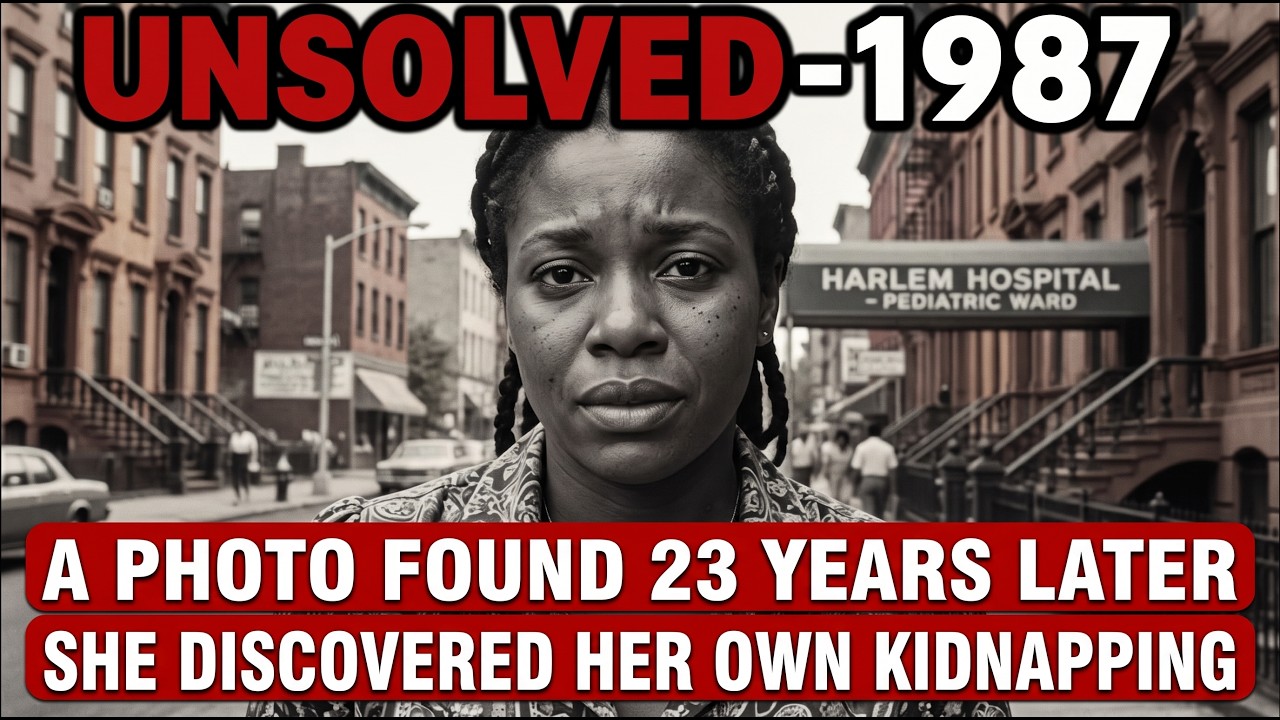
There were no identification wristbands, no cameras on every corridor, no alarms on nursery doors. The woman walked out with the child, and by the time anyone realized what had happened, she was gone. Carlina White had been born on July 15, 1987, to Joy and Carl White, a young couple living in Harlem. Joy was twenty years old, working part-time at a dry cleaners, and had recently moved with Carl into a one-bedroom apartment on West 135th Street.
She had painted the nursery yellow because she didn’t know the baby’s sex when she started and yellow seemed right for anyone. Nineteen days after bringing Carlina home, Joy and Carl returned to Harlem Hospital when their daughter developed a high fever. Medical staff assessed her and determined she was stable. The parents were told to wait.
They sat in the waiting area outside the pediatric ward, exhausted but relieved. That was the last time Joy held her daughter for twenty-three years. At approximately 3:00 a. m.
, when Joy and Carl went to check on the baby, the bassinet was empty. They notified the nursing staff, who searched the floor. Security swept the building. Police were called, but more than an hour had already passed.
The woman was gone, and so was the baby. The investigation that followed was immediate but limited by the tools of the era. No surveillance footage captured the woman’s face clearly. A composite sketch showed a heavyset Black woman in her thirties with close-cropped hair, but it was approximate at best.
Hundreds of tips came in after the story ran in New York papers, and each one led nowhere. Detective Henry Osborne of the NYPD Missing Persons Unit carried the case for nearly a decade before transferring to another division. He later described it as the case that never fully left him. The National Center for Missing and Exploited Children took the case and produced age-progression photographs as Carlina grew.
Posters were distributed across the five boroughs. Joy attended every press conference and community outreach event. Carl organized search committees. Carlina’s grandmother, who lived across the hall, lit a candle in her window every night for twelve years until her eyesight failed and she could no longer safely manage the flame.
By the mid-1990s, the active investigation had slowed to a cold file. There were no new leads, no credible suspects, no witnesses who could be followed. The woman in the nurse’s uniform remained unknown. Then, in the winter of 2010, the case broke open.
Not through any institutional effort, but because a young woman refused to stop asking questions. Nadra Nance had grown up in Bridgeport, Connecticut, believing she was the daughter of a woman named Ann Pettway. But certain things never quite added up. She had no birth certificate matching the identity she had been given.
When she asked for medical records as a teenager, the answers were evasive. By 2010, she had a daughter of her own, and the process of obtaining documentation for her child collided with the absence of documentation for herself. She began searching online. On the National Center for Missing and Exploited Children website, she found an age-progression image of Carlina White as an adult, what she might look like at twenty-three.
Nadra stared at the image for a long time. Then she looked in a mirror. Then she looked at the image again. The date on the case listing matched her own approximate age.
The features were undeniable. In January 2011, Nadra contacted the National Center for Missing and Exploited Children and told them what she suspected. A DNA test was arranged. The results came back within days.
Beyond any scientific doubt, Nadra Nance was Carlina Anne White. She was twenty-three years old. She had been living twenty minutes from the city where she was born. Investigators determined that the woman who had taken Carlina from Harlem Hospital was Ann Pettway of Bridgeport, Connecticut.
Pettway had been unable to have children of her own. She had entered Harlem Hospital that evening intending to take an infant. In the days prior, she had visited the hospital multiple times, studying the layout, the routine, and the patterns of staff movement. She walked out with a nineteen-day-old baby and raised that child for twenty-three years as her own.
When confronted with the DNA results and the evidence in January 2011, Pettway did not deny it. She confessed to the abduction and was arrested. In October 2011, she pleaded guilty to kidnapping charges in federal court and was sentenced to twelve years in federal prison. In the courtroom, Joy White, who had spent twenty-three years not knowing whether her daughter was alive, sat in the gallery and heard the confession and the sentence.
She said nothing would feel like enough, and she was right. But she also said that having her daughter back was the only thing that had ever mattered, and that was right too. Carlina met her biological parents in January 2011. Joy later said that when she held her daughter for the first time in twenty-three years, she didn’t speak.
There was nothing to say that the embrace couldn’t say better. Carlina has spoken publicly about the complexity of the reunion, about mourning the childhood she didn’t have with her biological family while also holding on to the parts of her upbringing that were, despite everything, hers. She wrote a memoir and became an advocate for stronger hospital security protocols, the kind of wristband and alarm systems that now make infant abductions from hospitals nearly impossible. Because of her case and others like it, hospitals across the country changed the way they monitored and protected newborns.
That change has protected thousands of families who will never know they were protected. Carlina White was nineteen days old when she was taken from her mother’s arms. She was twenty-three years old when she found her own way back. The woman who took her had twenty-three years of a stolen life before she was ever held accountable.
It was Carlina herself, not a detective, not a database, not an institutional effort, who finally solved her own case.