A family heading west in a covered wagon in the mid-1800s could expect to spend roughly six months on the road between St. Louis and the West Coast. Straight-line distance suggested a journey of about 1,500 miles, and on a good day, with flat terrain and fair weather, a wagon might cover 20 miles. That was the best case.
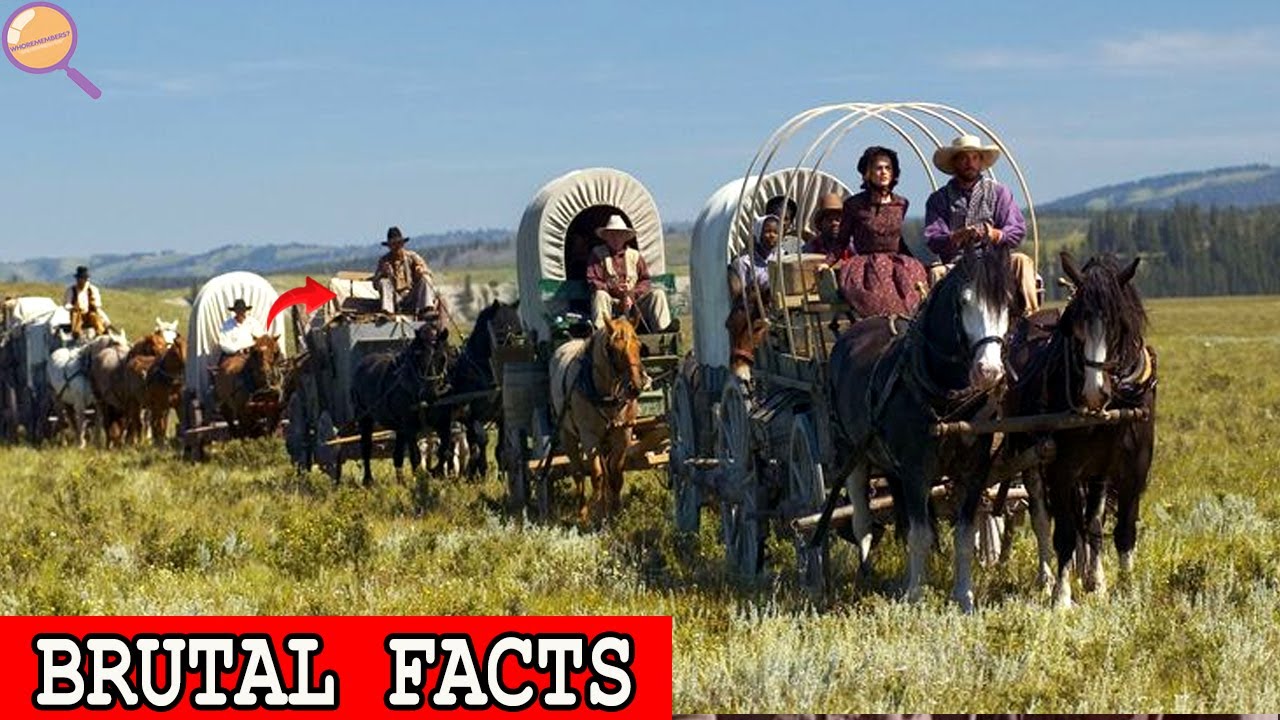
More often, wagons averaged between eight and 20 miles a day. Rough terrain, mountain passes, broken wheels, sick animals, and bad weather all slowed progress, and the actual trails wound around obstacles, adding hundreds of miles to the theoretical distance. Six months of exposure, limited food, and grinding exhaustion was the price of the chance at a new life. Pioneers had two main wagon options.
The most iconic was the Prairie Schooner, a covered wagon with large wooden hoops spanning its length and draped in canvas. From a distance, the curved canvas tops resembled the sails of a schooner ship, which gave the wagon its nickname. The Conestoga wagon was larger and heavier, pulled by teams of up to six horses, but its size made it unsuited for long cross-country travel. It was better used for shorter hauls, like moving goods from St.
Louis into the Kansas or Oklahoma territories. Regardless of which wagon a family chose, the experience was the same: no paved roads, only rough dirt trails that could turn into muddy quagmires in harsh weather. Wheels broke, animals gave out, and wagons got stuck, broke down, or fell apart. The romantic image of families sleeping comfortably inside their wagons at night was far from reality.
The Prairie Schooner was only about four feet wide and ten feet long, and it was packed to the brim with everything a family owned. There was no room for people. Most nights, families slept outdoors, spreading blankets on the ground or rigging up makeshift tents from canvas and poles. When weather turned nasty, they huddled under the wagon or slept on the hard ground beneath it, exposed to scorching heat, freezing cold, rain, and wind.
Food on the trail came from the chuck wagon, the mobile kitchen of the wagon train. Similar in size to a Prairie Schooner, it was designed specifically for food preparation and storage. A water barrel was mounted on the side for easy access to fresh water, and many chuck wagons featured a coffee grinder. Underneath was a storage compartment called the possum belly, used for firewood and, on the treeless plains, dried cow dung known as cow chips, which became a valuable fuel for cooking fires.
The chuck wagon became the heart of camp, where families gathered around simple meals of beans, bacon, and biscuits, a brief respite from the day’s travel and a moment of community. Despite the common association of the Great Plains with horses, most pioneer families did not use them. Horses were too expensive to buy and costly to maintain. Settlers relied instead on mules and oxen, which could survive on the rough forage found along the trail, making them cheaper to feed.
They were also stronger and more durable, capable of pulling heavily loaded wagons across vast distances. Mules, sure-footed in mountainous areas, were especially valuable on difficult terrain. Oxen, while slower, were strong and reliable for hauling heavy loads. Upon reaching their destination, settlers continued to use these animals for farming, relying on them to build their new lives.
The ride itself was brutal. Prairie Schooners were notoriously bumpy, their tall, narrow design making them unstable, and the wooden wheels and axles offered no cushioning. Every rock and rut sent jolts through the wagon, and passengers were bounced around for hours, days, and weeks on end. Settlers tried to minimize the bouncing by packing heavy items at the bottom, but the ride remained rough.
The larger Conestoga was even more prone to tipping over, and its wheels frequently slipped off trails barely wide enough for it. Many pioneers chose to walk alongside their wagons to escape the jolting, but walking hundreds or thousands of miles across rough terrain was exhausting and exposed them to the elements. Neither option was easy. Breakdowns were a constant threat.
Wooden wheels cracked on rocks, axles snapped under strain, and metal parts wore down and broke. There were no garages or tow trucks, so pioneers packed their wagons with hammers, saws, axes, nails, and spare parts. When something broke, they had to improvise repairs using whatever materials they could find. A broken wagon meant unloading everything, a backbreaking task, and often flipping the wagon on its side to reach the undercarriage, all while exposed to the elements and wild animals.
Every successful repair was a hard-won victory. The canvas tops of the wagons offered only limited protection. Canvas itself was not waterproof, so settlers treated it with linseed oil to create a water-resistant barrier for their belongings. Even treated canvas was not foolproof.
Wind was a constant factor on the open prairie, and rain rarely fell straight down; strong gusts blew it sideways under the cover. Wind also whipped up clouds of dust and sand. Settlers added drawstrings to the edges of the canvas, allowing them to pull it tight and create a more enclosed space, but severe weather remained a constant threat. River crossings were among the most dangerous moments on any westward journey.
Larger rivers sometimes had ferries, but they were expensive, and most settlers could not afford them. That meant fording the river, driving the wagon straight through the water. At smaller rivers, pioneers often built their own rafts from whatever materials they could find, lashing logs together if trees were nearby. The key was finding a narrow section with a calm current.
They tried to waterproof the wagon bed, coating it with wax and sealing cracks, turning the wagon into a fragile sort of boat. Then, with oxen straining, they slowly pushed into the current. If the current was too strong or the wagon too heavy, it could overturn, spilling everything into the river. Animals could be swept away, and people could be injured or drowned.
Exactly how dangerous the Oregon Trail was remains difficult to measure. Historians estimate the mortality rate at somewhere between four and six percent of all travelers, translating to between 12,000 and 24,000 deaths, though some estimates go as high as ten percent. The greatest dangers were accidents and disease. Pioneer diaries frequently mention accidental shootings, injuries from encounters with animals, drownings, and deaths from exposure.
Wagon accidents were common, and children were sometimes seriously injured after falling under the wheels of a moving wagon. Disease was a constant threat. Sanitation was a major challenge, with few opportunities to bathe and scarce clean drinking water. Human and animal waste, garbage, and dead animals contaminated water sources.
Cholera, a waterborne disease, was the biggest killer overall. Diphtheria was the leading cause of death among children. Weakened by exhaustion and poor nutrition, pioneers were also vulnerable to typhoid, mountain fever, dysentery, mosquito-borne diseases like malaria, food poisoning, scurvy, and alkali poisoning from contaminated water. Measles, mumps, and smallpox took their toll, especially among children.
Childbirth posed serious risks to women, and the lack of proper medical care meant that even minor illnesses could quickly become life-threatening. The Hollywood image of wagon trains constantly under attack by Native Americans does not reflect reality. Historian John Unrau’s research suggests that fewer than 400 immigrants were killed in Native American attacks between 1840 and 1860. More often, interactions were peaceful and even helpful.
Native Americans traded supplies with pioneers, operated ferries, and assisted with managing livestock. When wagon trains circled their wagons at night, it was primarily to corral animals, not to defend against attack. In the rare instances when attacks did occur, wagons were typically in a line of travel, not a defensive circle. Many conflicts were sparked by the pioneers themselves, through cultural misunderstandings, arrogance, and acts of violence against Native Americans, which sometimes provoked retaliation directed not at the specific group responsible but at the next wagon train to come along.
After the 1850s, attacks on smaller wagon trains and individual travelers did increase, reflecting growing Native American hostility toward settlers encroaching on their lands. Arrival in Oregon was not always a happy ending. Many pioneers arrived in dire straits, some out of food and starving, others sick, exhausted, and destitute, having lost their wagons and belongings or spent their last dollars on tolls. Established Oregon residents often organized relief efforts, forming pack trains to meet new arrivals at The Dalles and providing supplies and assistance for the final leg of the journey.
This aid was often the difference between life and death. The driving of the golden spike at Promontory, Utah, in 1869, completing the first transcontinental railroad, signaled the end of the era of the great overland trails. But the Oregon Trail had been evolving for decades. The California Gold Rush of 1849 brought a flood of forty-niners.
The 1850s saw increased military presence along the route and physical improvements like ferries and bridges. Steamboats began plying the Columbia River. In the 1860s, settlement grew, communication improved with the Pony Express and the transcontinental telegraph, and stagecoach lines expanded. Telegraph lines were strung alongside the trail, and railroad tracks were sometimes laid directly over its path.
The Oregon Trail remained in use the longest of all the westward trails, partly because the railroad did not reach Oregon until the early 1880s. Even after railroads replaced most wagon train traffic, the trail served as a major route for driving cattle and sheep eastward to market. Today, traces of the trail are still visible. Near Guernsey, Wyoming, ruts carved by thousands of wagons are worn as deep as five feet into the sandstone.
Names and dates carved into soft rock at sites like Independence Rock still bear witness to the travelers who passed through more than a century ago. Landmarks like Scotts Bluff National Monument and Chimney Rock National Historic Site are protected, along with historic forts and the Whitman Mission. In 1978, Congress established the Oregon National Historic Trail to preserve and protect the trail’s remnants and provide public access. The Oregon Trail has also become part of popular culture, portrayed in movies, a short-lived 1977 television series, and most famously in the educational computer game that introduced generations of students to the hardships of westward migration.
For those who traveled it, the trail was a grueling test of endurance, a constant struggle against the elements, and a gamble with every mile. Their determination forged a path westward that shaped the American West, at great cost to the Native American tribes who were displaced along the way.