The Osmonds were everywhere in their heyday: the four eldest brothers—Alan, Wayne, Merrill, and Jay—began as a clean-cut barbershop quartet from Utah, discovered on the Andy Williams Show in the 1960s. Donnie joined and sent crowds into a frenzy; little Jimmy scored a number one hit at age nine; and Marie made her mark as a teenager with “Paper Roses. ” The family sold over a hundred million records and built a showbiz empire. But by the early 1980s, the teenybopper craze had moved on.
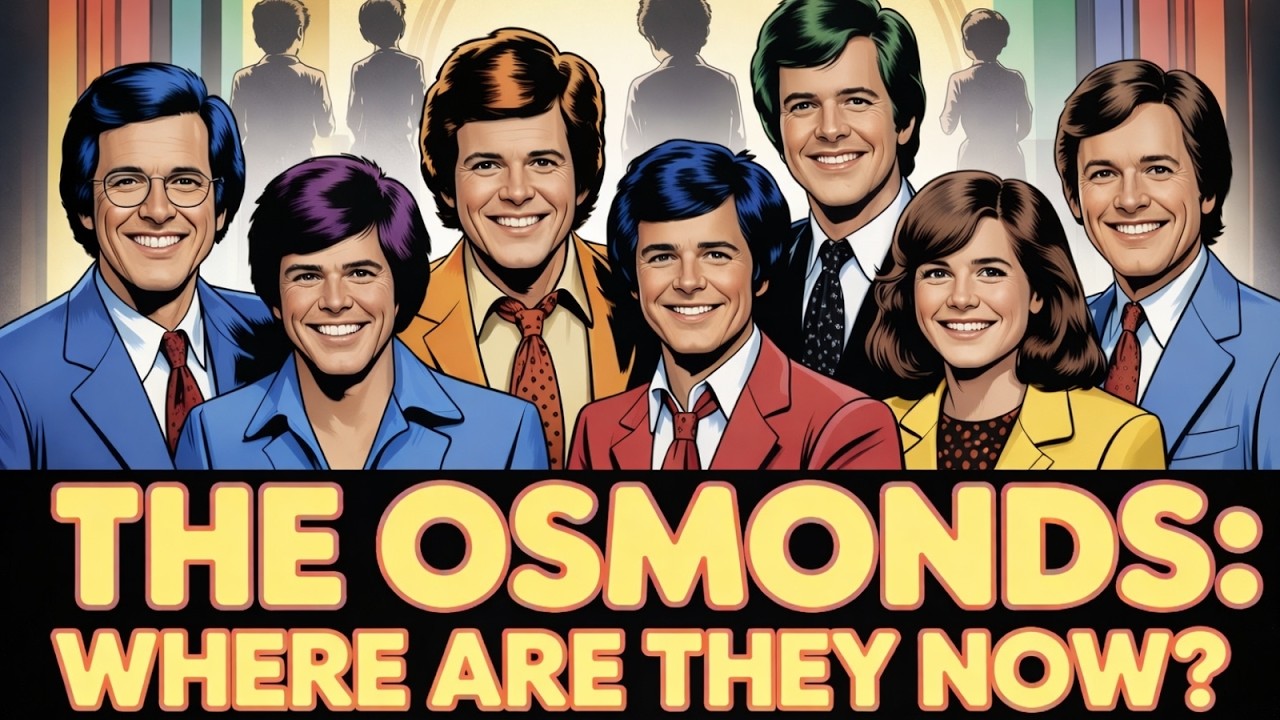
The singing siblings faced a sudden, humbling reality: how to transition from teen idols to adult entertainers, and how to find meaning beyond the screams and glitter. The transition was rough. The family had invested heavily in their own studio and projects in Utah, and when the hits slowed, money tightened; by some reports, they flirted with bankruptcy. Each sibling felt the end of “Osmania” differently.
Donnie struggled with being labeled a has-been in his twenties. Marie grappled with Hollywood expectations. The older brothers wondered whether to settle into normal lives. Jimmy had to figure out being a teenager after childhood stardom.
But the Osmonds proved resilient, each forging a distinct path through the decades that followed. Alan Osmond, the eldest and the quiet backbone of the group, co-wrote many songs and choreographed their moves while letting his younger brothers take the spotlight. After the family’s pop fame waned, he moved behind the scenes, co-creating the annual Stadium of Fire event in Utah in 1980. His biggest battle came in 1987, when he was diagnosed—at just 38—with primary progressive multiple sclerosis, a form of the disease that steadily worsens.
Doctors told him he might soon be confined to a wheelchair. Alan faced it with fierce positivity, adopting the motto: “I may have MS, but MS does not have me. ” He experimented with therapies, diet, and exercise, and defied the gloomiest projections. More than 35 years later, he is still walking with some help and remains active and thriving.
In September 2024, he published his autobiography, One Way Ticket. Now in his mid-seventies, the once-quiet leader still has plenty to say. Wayne Osmond, the second-oldest, was the group’s utility player—lead guitar, baritone harmonies, and a co-writer of the rock anthem “Crazy Horses. ” His health battles were severe.
In 1997, he underwent surgery to remove a brain tumor; the treatment left him with profound hearing loss, a brutal blow for a musician. He continued performing anyway, relying on vibration and muscle memory. In 2012, a stroke weakened one side of his body and forced him to retire from active performance. Through it all, Wayne remained the family’s gentle optimist, cracking jokes and counting blessings.
In late 2024, with his health fragile, Marie felt a strong prompting to visit him at his home for a long heart-to-heart talk. Not long after, on January 1, 2025, Wayne Osmond died in Utah at age 73, after suffering another massive stroke. He was the first of the performing siblings to pass away. Marie broke her social media silence to pay tribute, calling his death “a giant hole in my heart.
” His brothers Merrill and Jay described him as a man of humility and faith, the family’s gentle anchor. Merrill Osmond, the fourth-oldest, was the group’s powerhouse lead voice, fronting hits like “One Bad Apple,” “Crazy Horses,” and “Love Me for a Reason. ” He helped steer the family into a brief second act as country artists in the 1980s, and later performed nostalgia shows with Jay in venues like Branson, Missouri. After six decades on stage—he began singing publicly at age five—Merrill announced in 2022 that he would step back from live performance.
He played his final international show in England in January 2023, singing to cheering British fans one last time. Even in semi-retirement, he has done limited engagements and benefit concerts, and as of mid-2025, he still has a couple of shows scheduled. His family life has had deep purpose: one of his sons was born deaf, which inspired Merrill to become an advocate for the hearing impaired, doing charity work to provide hearing aids to children. The eldest Osmond brothers had originally begun singing to raise money for hearing aids for their two deaf older brothers—a full circle of compassion.
Jay Osmond, the baby of the original four, was the drummer and comic spark of the group, known for backflips and kung fu moves on stage. When Alan and Wayne retired from performing, Jay and Merrill kept the act alive. As he aged, Jay discovered a new talent: storytelling. He wrote and produced The Osmonds: A New Musical, a stage production telling the family’s story through his eyes.
It toured the UK and Ireland to sold-out crowds before closing in late 2022, with plans announced for a US tour in 2024 and other international productions. After that accomplishment, Jay moved to Wyoming for the quiet and open land. He had written a candid autobiography years earlier and is now the family’s historian and creative chronicler, preserving the family’s fun, faith, and trials for future generations. Donnie Osmond, the most famous of them all, became the family’s comeback king—multiple times over.
After the initial fame faded and his name became “uncool” at radio, he scored a surprise Top 10 hit in 1989 with “Soldier of Love,” released to stations without his name attached so DJs played it as a hot new artist. In the 1990s, he became a Broadway star, leading Joseph and the Amazing Technicolor Dreamcoat for over 2,000 performances. From 2008 to 2019, he and Marie reunited for an eleven-year Las Vegas residency at the Flamingo, selling over nine million tickets. Then, at age 65, he launched his first-ever solo residency in Las Vegas, performing five nights a week and packing his six-decade career into 90 minutes—including a rap segment about his life.
He had won Dancing with the Stars in 2009, becoming the oldest winner at the time, and appeared as the Peacock on the first season of The Masked Singer in 2019, delighting a new generation who hardly believed the flamboyant costume hid Donny Osmond. Married to Debbie since 1978 and raising five sons, Donny has also been open about severe anxiety and panic attacks he faced in the late nineties, overcome with professional help, family, and faith. He shows no sign of stopping. Marie Osmond, the only sister in the performing clan, built a remarkable career of her own.
At just 13, she topped the country charts with “Paper Roses. ” At 16, she co-hosted the network variety show Donnie and Marie. Behind her sparkling smile, she endured personal battles: sexism and body-shaming from producers, an eating disorder, anxiety, two divorces, and the unimaginable loss of her son Michael in 2010. She turned pain into purpose, becoming an advocate for suicide prevention, mental health, and postpartum depression—writing openly in her 2001 book Behind the Smile about her own dark moments.
Professionally, she recorded more country hits, starred on Broadway, built businesses, and joined Donnie for the long Vegas residency. In 2011, she remarried her first husband, Steven Craig, after 26 years apart, choosing a wedding date that honored her late son and late mother. She remains deeply involved in the Children’s Miracle Network Hospitals, which she co-founded in 1983. In her sixties, she sounds better than ever.
Jimmy Osmond, the youngest, holds a Guinness World Record as the youngest person to have a number one hit in the UK, topping the British charts at age nine with “Long-Haired Lover from Liverpool” in 1972. As a teen, he carved out a big career overseas, learning fluent Japanese and recording hits there, and later became a producer of TV specials and family reunion concerts. His health took a serious turn in 2004, when he suffered a stroke at age 41 due to a congenital heart defect that doctors corrected with surgery. He recovered privately and kept working.
In 2018, while playing Captain Hook in a production of Peter Pan in Birmingham, England, he suffered a second, more severe stroke on stage, powering through the show before being rushed to the hospital. It left him with vision and physical impairments that required a long recovery. Since then, Jimmy has stayed almost entirely out of the spotlight, focusing on his health, therapy, and his family, becoming a grandfather in recent years. He once ran the Andy Williams Performing Arts Center in Branson, Missouri, carrying on the legacy of the man who gave the Osmonds their start.
Now he lives quietly, enjoying art, nature, and time with loved ones. By 2025, most of the Osmond siblings are still here, living full lives in their sixties and seventies. Alan remains an example of resilience in Utah. Donny still commands a Las Vegas stage.
Marie tours and advocates. Jay keeps the family story alive through theater. Merrill enjoys semi-retirement. And Jimmy has found contentment after the curtain fell.
Wayne’s passing in January 2025 closed the first chapter on the performing siblings, but their story—of fame, reinvention, loss, and stubborn perseverance—remains distinctly theirs.