In June 1987, Linith Man Lewis kissed her twenty-one-month-old son Germaine good morning and packed his small bag for what she believed would be an ordinary visit with his father. Germaine laughed as Alan Mann Jr. scooped him up, and Linith watched them walk away, expecting her baby back in a matter of hours. She never saw him again for thirty-one years.
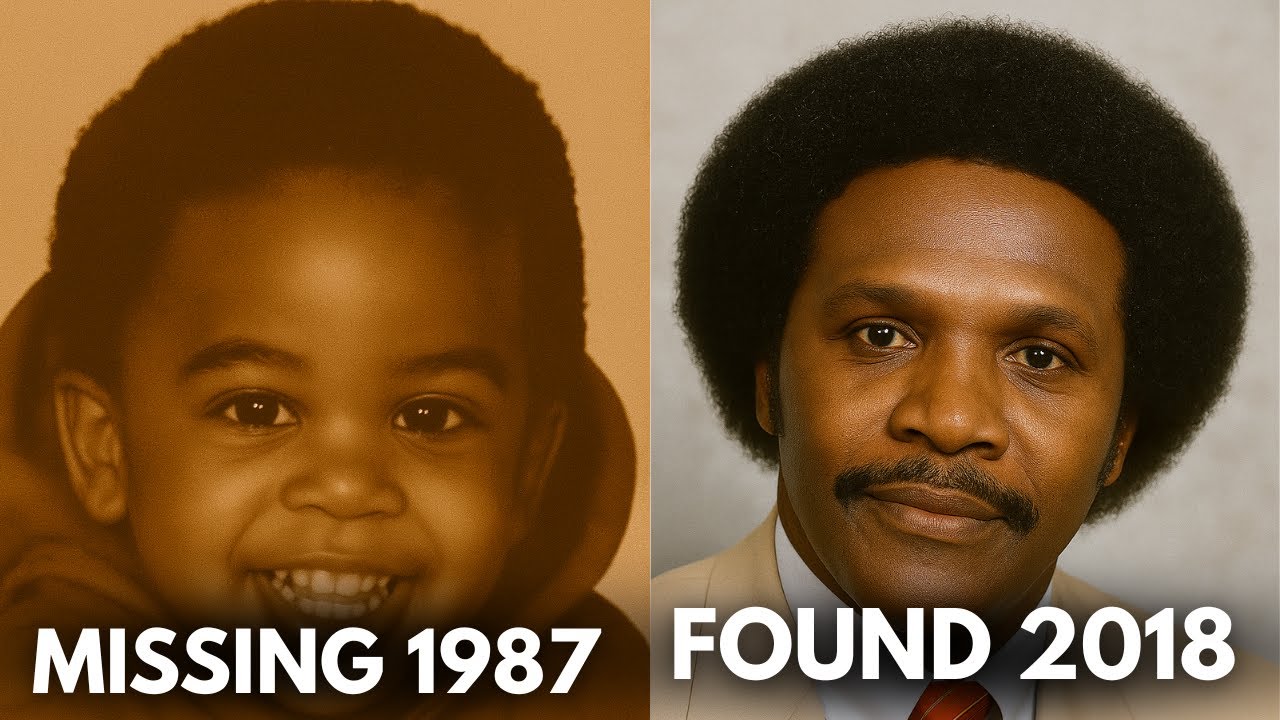
Alan Mann Jr. did not bring his son home that day. When hours stretched into night and night into morning with no word and no sign of them, Linith called the police, her voice shaking as she explained that her son had not been returned from a scheduled custodial visit. Investigators issued alerts and canvassed the community, but Alan had planned his escape carefully.
He forged documents, created new identities, and slipped across the border into the United States before authorities could close in. By the time the case caught up to the paperwork, father and son had vanished into the vastness of America. The trail went cold almost immediately. Toronto in the late 1980s had been a place of new beginnings for many immigrant families, and Linith had believed she was building a safe, stable future for her little boy.
She had separated from Germaine’s father but had wanted her son to still know him, trusting in the importance of a father’s presence in the child’s life. She could not have known that Alan’s intentions were far darker than she ever imagined. In her grief, Linith plastered Germaine’s face on missing child posters, handed out flyers, and pleaded with anyone who would listen. Every night she wondered if her baby was safe, whether he was being fed, whether someone comforted him when he cried.
Friends urged her to move on, but there was no moving on from a child who had been stolen, not by a stranger, but by a man who was supposed to love him too. Weeks became months, months became years, and each passing year marked the milestones that would never come: his first day of school, his birthdays, the day he would have graduated high school. In Canada, tips dried up and leads led nowhere. The whispers began, the suggestion that Germaine would never be found, that Alan had disappeared too well.
But Linith never let go of hope, even when it became a thread so thin it was nearly invisible. For Germaine, meanwhile, there was no loss to grieve. He had been too young to remember any life other than the one his father built for him. Alan took him first to Connecticut, where he presented himself as a single father raising his boy.
He told neighbors and friends that the child’s mother had died, and because Germaine was too young to remember the truth, he grew up believing the lie. Every photograph of his real mother was gone. Every connection to his past erased. He did not know he had been stolen.
He did not even know his real name. Alan moved them from place to place across the United States, always careful, always under new names. He enrolled Germaine in schools, filled out forms, and doctored documents. To teachers and neighbors, they were just another father and son starting fresh, and no one asked too many questions.
But the cracks in the false life began to show as Germaine grew older. In high school, he noticed things other kids never had to struggle with. His paperwork never matched. His identity always seemed off.
He could not get certain documents every teenager needed, like a legitimate social security record. Alan insisted everything was fine, telling him not to ask too many questions, that the government did not need to know every detail of their lives. Germaine trusted him. This was his father, the only parent he had ever known.
As an adult, the holes in his identity shadowed him. Simple things like applying for a job or getting a driver’s license became complicated. He was forced to live in the margins, unable to fully establish himself because his very foundation was a fabrication. Still, he never questioned the man who raised him.
Nearly thirty-one years had passed when the quiet life Alan had built began to unravel. Investigators had started re-examining old parental abduction cases, and Germaine’s name resurfaced. Canadian authorities partnered with the FBI in a joint effort, knowing that these cases often left a digital trail that could take decades to piece together. When they dug into Alan’s life in the United States, inconsistencies appeared: social security numbers that did not match, duplicate names, passports that lined up wrong.
It was enough to spark suspicion. The FBI dug deeper, and what they uncovered stunned even veteran agents. Alan had fled Canada in 1987 and had been hiding in plain sight using forged documents and assumed identities. Germaine, meanwhile, had lived his entire life without knowing who he truly was.
Investigators reached out to Linith in Canada. After thirty years of silence, she received the kind of phone call she had both dreamed of and dreaded: they had located her son. He was alive. He was safe.
And he had no idea who she was. For Germaine, it was an earthquake. One day he was living the only life he had ever known; the next, federal agents were at his door telling him that everything he believed about his past was a lie. His father, the man he trusted, was a fugitive.
His mother was not dead. She was alive, and she had been searching for him for more than three decades. Alan was arrested, his carefully constructed world collapsing around him. He had spent decades running, but the truth had finally caught up.
The reunion that followed was not a simple fairy tale. When the moment finally came, Linith walked into a room she had only visited in dreams. She had pictured this countless times, sometimes with Germaine still a little boy running into her arms, other times as a man, cautious but curious. Nothing could prepare her for reality.
He was a grown man with decades of life experiences she had not been part of. She did not know his favorite food, or his laugh, or the way he thought about the world. Yet as she saw him for the first time in more than thirty years, she knew with absolute certainty that this was her child. She described the reunion later in words that broke hearts.
She hugged him and could not let go, crying out to him that he was her baby, that she did not want to release him. Germaine, shocked and overwhelmed, stood in a haze of disbelief. The woman crying into his shoulder was supposed to have been gone forever. Now she was real, alive, and desperate to hold on to him.
He had spent a lifetime believing his mother had abandoned him, and in that moment, the weight of his father’s lies began to crack. There were no cameras, no flashing lights, no rehearsed words. Just a mother and son robbed of decades, trying to find each other again in a single embrace. The world soon learned of their reunion, and the story spread far beyond Canada and the United States.
For Linith, the nightmare ended in the way she had always believed it would. She was reunited with her son. But for Germaine, the road ahead was complicated. Rebuilding a bond after thirty-one years apart is not easy.
Trust takes time. Healing takes patience. And his identity, something he had thought solid, had to be rebuilt from the ground up. Still, what mattered most was this: he was not lost anymore.
His mother had found him.