In the spring of 1879, Édouard Manet captured a woman in profile whose path through Paris had already become the stuff of legend. The painting would hang one day in the Metropolitan Museum of Art in New York, but the woman it depicted was not a duchess or a celebrated actress. She was Émilie Louise, known to the city as Valtesse de la Bigne, one of the most famous and expensive courtesans of the French capital. Her rise from poverty to the highest circles of art, literature, and even the imperial court was not a matter of luck.
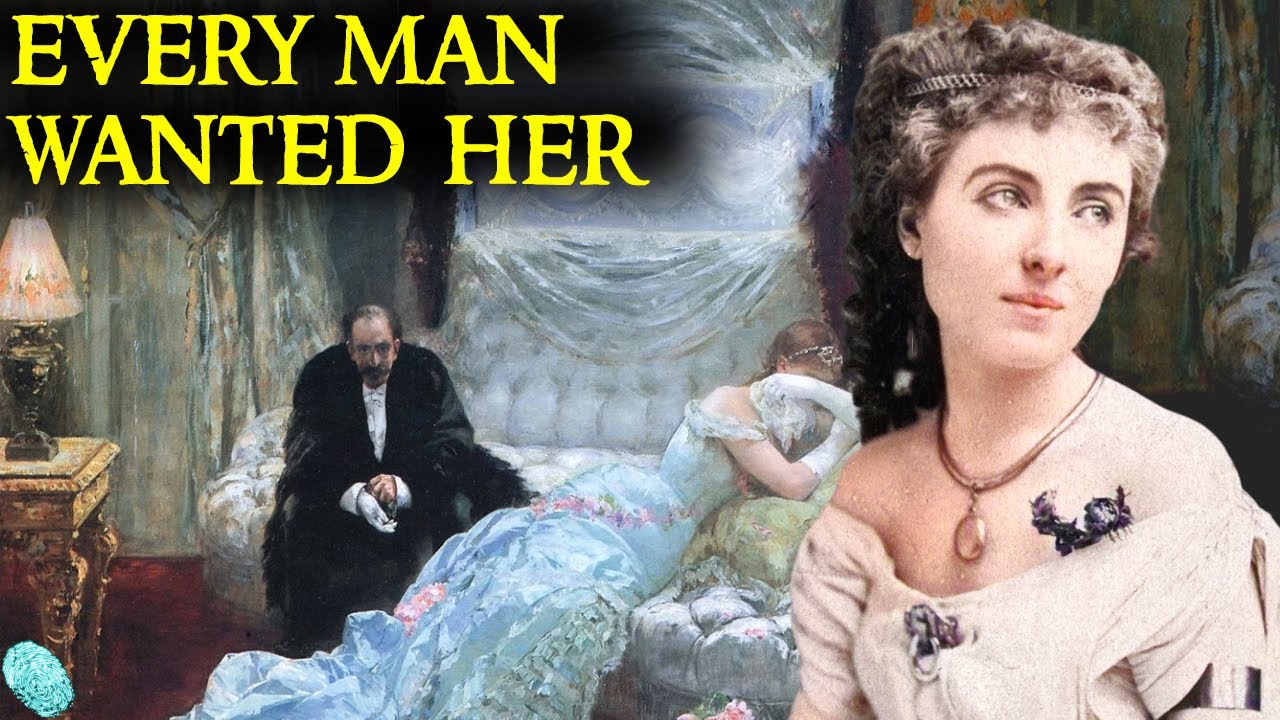
It was a carefully engineered ascent. She was born in Paris in 1848, a year of revolutionary upheaval across Europe. The political and social reforms that emerged from that turbulent spring shaped the world she would grow into, though her own beginnings were grim. Her family belonged to the working class.
Her father was an alcoholic, and her mother, also named Émilie, washed clothes and worked as a prostitute to keep the household alive. The young girl received little education and began working early, as was common for children of her class. At ten, she took a job in a candy shop. By her teenage years, she was apprenticed to a seamstress.
Then came the event that marked her for the rest of her life. Walking through the streets of Paris one ordinary day, she was stopped by an elderly man who assaulted her. The trauma left deep psychological scars that she would carry for years. Not long afterward, she followed her mother into prostitution.
In nineteenth-century Paris, sex work was organized in a strict hierarchy. At the bottom were working-class women who sold themselves part-time in the streets, risking arrest, fines, and public humiliation, which could include having their heads shaved as a mark of shame. In the middle were the lorettes, professional prostitutes who worked from their own apartments or organized brothels. At the top stood the courtesans, women who served only a handful of wealthy clients, earned fortunes, and enjoyed a degree of respect that other sex workers could never claim.
Émilie Louise started as a night girl, but she moved quickly to become the mistress of wealthier clients. Along the way, she reinvented herself with a new name. She called herself Valtesse de la Bigne, crafting a surname that seemed to carry aristocratic weight. In truth, it was a fabricated elegance, an invention designed to open doors.
Her personal life was complicated. Still in her late teens, she gave birth to two daughters. The children were placed in the care of her mother, but the arrangement proved disastrous. The neglect became so severe that one of the girls died.
Émilie Louise sued to regain custody of the surviving daughter, Julia, but even then she did not feel able to raise the child herself. She sent Julia to a Catholic boarding school instead. By the late 1860s, in her early twenties, Valtesse had emerged as one of Paris’s most celebrated mistresses. Much of her success was built on self-promotion.
Beyond the new name, she invented an elaborate backstory, claiming at one point to have been the mistress of Emperor Napoleon III himself. She began courting the wealthy and famous visitors who passed through the city, and she set her sights on money and social standing. She spent much of her time entertaining clients at Le Père Laroze, a restaurant that had been open in Paris for a century and had become a discreet meeting place for the rich and their mistresses. Her fame grew.
In the late 1860s, she began a relationship with Jacques Offenbach, the celebrated German-born composer and cellist. Through him, she secured her first stage role, a small part in Orpheus in the Underworld, his comic opera retelling the Greek myth. It was the first of many minor roles she would play in the theaters of Paris through the late 1860s and 1870s, even as the city recovered from the siege it endured during the Franco-Prussian War of 1870 to 1871. She never won major parts.
Her acting ability was limited, and everyone knew it. Her place on the Paris stage rested on her connections and her appearance. Her theater career may have been modest, but her reputation was not. In the mid-1870s, she acquired a series of wealthy lovers.
The first prominent one was Prince Lubowski of a Polish princely family, who installed her in a luxurious apartment on Rue de Rochechouart in Montmartre. She was ruthless in her social climbing. Whenever a richer suitor appeared, she abandoned the previous one without hesitation. Lubowski gave way to Charles Guillaume, Prince d’Essling, a member of the aristocratic Tascher de la Pagerie family and a prominent figure in high French society.
D’Essling was infatuated with her. He spent a fortune building her an extravagant country house on Rue de la Pagerie, not far from the Arc de Triomphe. The project eventually bankrupted him, which did not stop her from moving on to a newer, richer patron in due course. She was one of many courtesans who amassed enormous sums and collected property and jewelry during the Belle Époque.
France was awash in new wealth drawn from imperial ventures in Africa and Asia and from an era of immense global trade. Much of that money flowed into the hands of those who provided entertainment, and the courtesans were among the greatest beneficiaries. Even today, in the mirrors of Le Père Laroze, one can find scratches left by courtesans testing whether the diamonds their lovers gave them were genuine. In 1876, Valtesse took her self-promotion a step further.
She published her autobiography. The book was called Isola, or The Isolated One, and she signed it simply “I. ” It was a publishing sensation, thanks largely to her skill at manipulating the press, though as literature it was mediocre at best. She mixed genuine biography with wholly invented stories.
The work sold through multiple editions, evidence of just how famous she had become as she approached her thirtieth year. Today she is best remembered for her connections to the leading artists of the Belle Époque. Paris was the cultural capital of the world. Impressionists like Claude Monet and Édouard Manet worked there, the sculptor Auguste Rodin created much of his most famous art there, and writers like Émile Zola, Gustave Flaubert, and Marcel Proust dominated its literary life.
Valtesse knew many of them. She had first sat for the painter Jean-Baptiste-Camille Corot while still a teenager and continued sitting for portraits throughout her youth. Manet’s 1879 profile portrait became her most famous image. Her other relationships were rougher.
She met both Zola and Flaubert in the literary salons of the 1870s, but Zola came to despise her because she rejected him as a client. In 1880, he caricatured her in his novel Nana, the story of a street girl who rises to become a high-class prostitute. The parallels were not entirely precise, but they were unmistakable. She also turned away Alexandre Dumas fils, author of The Lady of the Camellias, telling him bluntly that he was not wealthy enough to be a realistic prospect.
Inevitably, time caught up with her, and her beauty began to fade. It mattered less than it might have. She had managed her affairs well, and by the 1880s she had amassed a substantial fortune. She began to diversify into philanthropy, becoming a patron of the arts in her own right.
One of her main causes was supporting women who wished to become painters or writers at a time when the French art world was still dominated by men. Her Paris salon became a center for aspiring female artists in the 1880s and 1890s. She also built a remarkable art collection. It began informally in her early years, when she often received paintings and drawings from artist clients or from those who sat for her.
Over time she became a devoted collector, and in 1902 she put a large portion of her collection up for auction at the Hôtel Drouot, one of Paris’s major auction houses. The collection was dispersed and can no longer be reassembled. One piece linked to her still survives in public view: her bed, an elaborate work designed and built in 1877 by the famous artist and furniture maker Édouard Lièvre. It now stands in the Musée des Arts Décoratifs in Paris.
In her later years, she continued her patronage and also trained a new generation of courtesans. She taught Liane de Pougy, who would become one of the most beautiful and celebrated courtesans of Paris, everything she needed to know about the profession. Valtesse lived mainly at her home in La Villette, on the western outskirts of Paris, and spent time in the south of France. Her wealth was enough to build a lavish villa in Monte Carlo called Villa Églantine, the Villa of Eglantine.
The grand tower building was a landmark of the Monte Carlo waterfront for decades, though it was largely destroyed in the 1980s when an office complex was built over its garden. She died at her home west of Paris on July 29, 1910, from complications of a ruptured vein. Her exact birth date remains unclear, but she is believed to have been about sixty-two. She wrote her own death notice, which read, in rough translation: one must love a little or a great deal according to nature, but quickly and in a fleeting moment, as one loves the song of a bird that speaks to the soul and is forgotten as soon as its last note fades, as one loves the crimson colors of the sun at the moment it sinks below the horizon.
She was buried near her home after a funeral attended by some of the most famous figures of the Belle Époque. She left behind her daughter Julia, who became an actress.