In the summer of 1944, as Allied forces pressed toward Germany from both east and west, a small circle of senior officers and conservative civilians gathered in secret around a retired general in his Berlin home. They had spent years planning a single decisive act: the assassination of Adolf Hitler and the overthrow of the Nazi regime. The man at the center of this conspiracy, the figure they intended to install as acting head of state once Hitler was dead, was General Ludwig Beck. He had once been one of Hitler’s most valuable military minds.
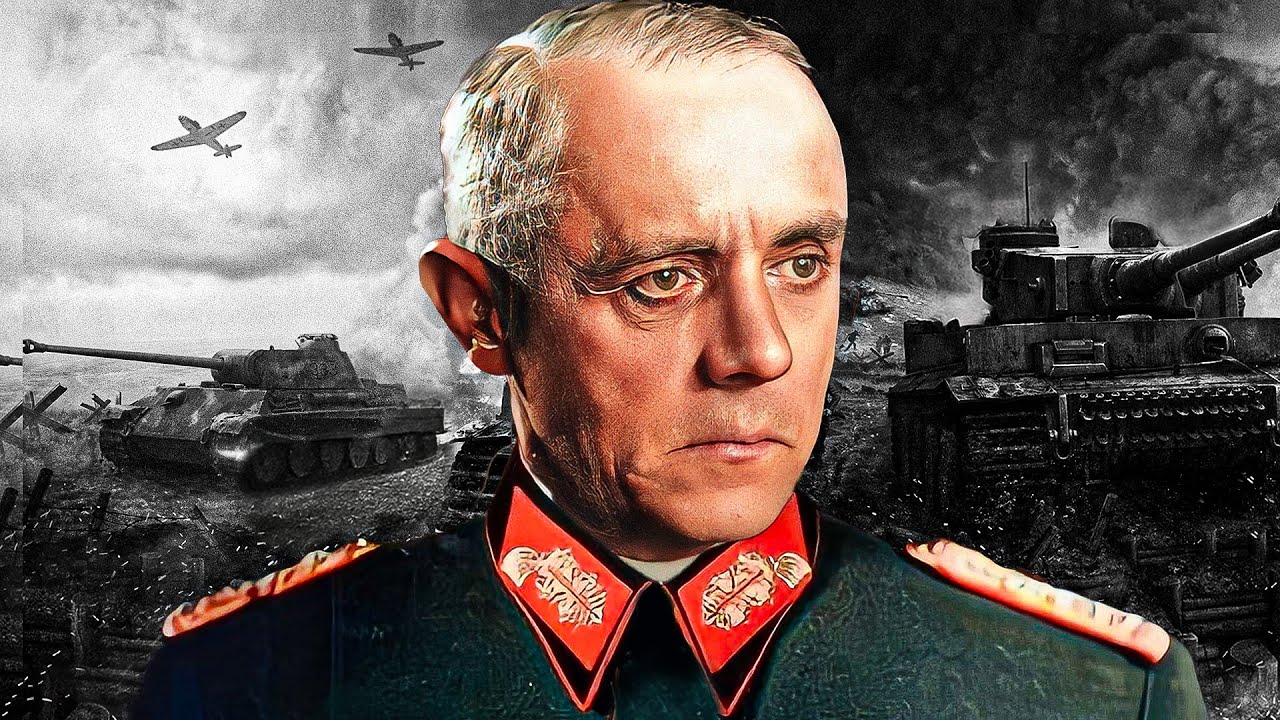
By then, he had become his most determined enemy. Beck’s path to that clandestine circle began long before the Nazi regime existed. Born in 1880, he entered the German army in 1898 and served as a staff officer on the Western Front during the First World War. In the years that followed, he became one of the principal architects of the Reichswehr, the Weimar Republic’s military, which the Treaty of Versailles had deliberately limited in size and capability.
His most lasting contribution came in 1933 with the Truppenführung manual, a doctrine that emphasized flexibility, initiative, and mission-based tactics. It would later form the foundation of German blitzkrieg strategy and influence military thinking well beyond Germany’s borders. When Hitler came to power, Beck was cautiously optimistic. He saw in the new authoritarian government a source of stability that could restore the country’s strength after the chaos of the Weimar years.
As chief of the German General Staff from 1935, he supported rearmament, believing it necessary to restore Germany’s position in Europe. But that optimism did not last. As Hitler’s foreign policy became more aggressive, Beck grew alarmed. He valued military professionalism and international law, and he watched with growing unease as the Führer ignored diplomatic norms and pushed relentlessly toward confrontation.
The crisis over the Sudetenland in 1938 became the turning point. Hitler demanded the annexation of the ethnically German border regions of Czechoslovakia and prepared for war to achieve it. Beck warned repeatedly that Germany was not ready for a major conflict, militarily or economically. He believed the French army was the strongest fighting force in Europe and that Britain would almost certainly intervene on France’s side.
Hitler dismissed these objections. For Beck, the question was no longer one of strategy. It was about preventing a catastrophe that would ruin Germany. In May 1938, Beck wrote a memorandum that marked the beginning of his open defiance.
It warned directly against Hitler’s plans to invade Czechoslovakia, arguing that such a campaign would be disastrous. His concerns went beyond military calculations; he believed Germany’s economy could not sustain a prolonged war. When Hitler ignored these warnings, Beck escalated. In June, he urged senior generals to consider a collective mass resignation to force Hitler to abandon his war plans.
He told them that a soldier in the highest authority who saw his duties only within the limits of his military responsibilities, without consciousness of a higher responsibility to the whole people, showed a lack of greatness. Extraordinary times, he insisted, demanded extraordinary actions. His appeals failed. Most of his colleagues, whether out of fear, ambition, or genuine belief in the Nazi cause, continued to follow Hitler’s directives.
At a summit on August 10, 1938, Hitler rejected Beck’s objections and won over most of the assembled generals. Beck alone resigned on August 18. General Franz Halder succeeded him as chief of the General Staff. At Hitler’s request, the resignation was kept secret, and Hitler promised Beck a major field command in exchange for his discretion.
Instead, Beck was quietly placed on the retired list. With his military career over, Beck could have faded into private life. He chose resistance instead. From his Berlin home, he began building an underground network of officers and politicians determined to remove Hitler from power.
His contacts reached deep into the Wehrmacht, where growing dissatisfaction with the regime’s conduct of the war created an opening for action. His home became a clandestine headquarters for a small circle that included active and retired military officers, conservative civilians, and Admiral Wilhelm Canaris, the head of German military intelligence, the Abwehr. The work was extraordinarily dangerous. Discovery meant execution.
The Gestapo’s reach was long, and trust was scarce. Yet Beck’s reputation and connections allowed the network to grow across military and civilian circles. The group also sought international support. They made contact with the British Foreign Office, informing them of their plans and hoping that a firm warning from Britain might deter Hitler from his planned invasion of Czechoslovakia.
They even dispatched Josef Müller on a secret mission to Rome to ask Pope Pius XII to act as a mediator with the Western allies. These efforts reflected both the desperation of the resistance and their willingness to explore every available avenue. As the war progressed, Beck’s views hardened. The resistance moved from hoping to deter Hitler to planning his removal by force.
They began to contemplate direct action against the Führer himself, though they still harbored hopes of negotiating a peace settlement with Britain and France that would allow Germany to retain some territorial gains. Beck emerged as a central figure in what would become known as the July 20 plot. The conspirators designated him to become the acting head of state in the provisional government that would take power after the assassination. The choice reflected the high regard in which they held him and the need for a figure of authority to stabilize the country in the immediate aftermath of a coup.
On July 20, 1944, the plot was set in motion. Colonel Claus von Stauffenberg, a key resistance figure, carried a briefcase containing an explosive device into a military conference at Hitler’s headquarters, the Wolf’s Lair in East Prussia. Beck was not directly involved in planning or carrying out the assassination, but he was waiting in Berlin, prepared to take control of the provisional government the moment confirmation arrived. Stauffenberg placed the briefcase beneath the table where Hitler sat, positioned it for maximum impact, and then left the room on the pretext of an urgent phone call.
The bomb exploded. The blast shook the Wolf’s Lair. Reports were contradictory. Was Hitler dead or alive?
In Berlin, Beck and his fellow plotters faced a critical decision: proceed with the coup or wait for confirmation. Beck chose action, believing that hesitation would only give Hitler’s loyalists time to regroup. The resistance began issuing orders, moving to arrest key Nazi officials and seize vital communication centers. For hours, chaos reigned, and conflicting information poured in.
Then the truth emerged. Hitler had survived with only minor injuries. A last-minute adjustment by another officer had pushed the briefcase behind a heavy table leg, which shielded the Führer from the full force of the blast. As news of Hitler’s survival spread, the coup attempt unraveled.
Loyal Nazi forces moved to reassert control. The plotters found themselves isolated and surrounded. At army headquarters on Bendlerstraße in Berlin, troops loyal to Hitler closed in on the building. Beck knew what capture meant.
Torture and execution awaited him. He attempted to take his own life, but the attempt only left him severely injured. Unable to finish the act himself, he was killed by a sergeant who shot him in the neck. His resistance ended there, in the building where the coup had collapsed.
Ludwig Beck’s story is one of an unexpected transformation. A general who once supported Hitler because he believed in stability and national strength came to see the regime as a reckless threat to Germany itself. He gave up his career, his safety, and ultimately his life in the attempt to stop it.
His defiance did not succeed, but it proved that not all of Germany’s military leadership followed Hitler blindly.