On the night of July 16, 1999, a small plane carrying John F. Kennedy Jr. , his wife Carolyn Bessette Kennedy, and her sister Lauren disappeared off the coast of Martha’s Vineyard.
For days, the country watched as search boats combed the Atlantic, hoping for a miracle that wouldn’t come.
The world mourned them as America’s golden couple: the son of a slain president and the effortlessly stylish woman who had captured his heart. Their wedding photo was instantly recognizable to millions who had never met either of them in person.
But behind the public image of glamour and fairy-tale romance, friends and biographers describe a marriage that had grown increasingly strained in its final year. There were fights in public and a relationship reportedly heading toward separation.
According to multiple people close to the couple who spoke to biographers in the years after the crash, this is the story of John and Carolyn’s marriage. Not the version splashed across magazine covers, but the one people closest to them say was quietly falling apart right up until the night everything ended.
It’s a story that raises an uncomfortable question: How do you build an ordinary marriage inside one of the most extraordinary spotlights in American history? For John and Carolyn, the answer, by most accounts, was messier and more human than the polished photographs ever let on.
To understand this marriage, you have to understand the weight John F. Kennedy Jr. carried before it even began.
He was just three years old when his father was assassinated in Dallas. The image of him saluting the president’s casket became one of the most enduring photographs in American history.
He grew up almost entirely in the public eye. Every school, every relationship, every misstep was documented by a press that had decided from childhood that he belonged to the nation as much as to his family. Even routine milestones—his first day of school, a summer vacation, a college graduation—were treated by magazines as national events.
By his twenties and thirties, magazines routinely crowned him the most eligible bachelor in America. He dated a string of famous women, including actress Daryl Hannah for several years, all under constant tabloid scrutiny.
Friends describe a man who, despite the fame, longed for a genuinely normal life—someone who understood the burden of the Kennedy name without being consumed by it and who could offer him privacy in a world that rarely gave him any. Those close to him during this period say he was also acutely aware of his family’s history with public marriages under pressure.
His own parents’ relationship had unfolded under similarly intense scrutiny, and his mother, Jacqueline Kennedy Onassis, had spent much of her adult life carefully managing exactly this kind of exposure. Biographers suggest John absorbed some of his mother’s instincts for privacy, even as his own fame made total privacy essentially impossible to achieve.
Carolyn Bessette grew up in Greenwich, Connecticut, the daughter of a school teacher and an IBM executive, in a household biographers describe as comfortable but relatively private compared to the world she’d eventually marry into.
Long before she met John Kennedy Jr., she built a career of her own, working as a publicist for Calvin Klein. Known within fashion circles for an effortless, minimalist style that many credit with influencing an entire era of 1990s fashion, colleagues describe her as sharp, private, and famously guarded with journalists.
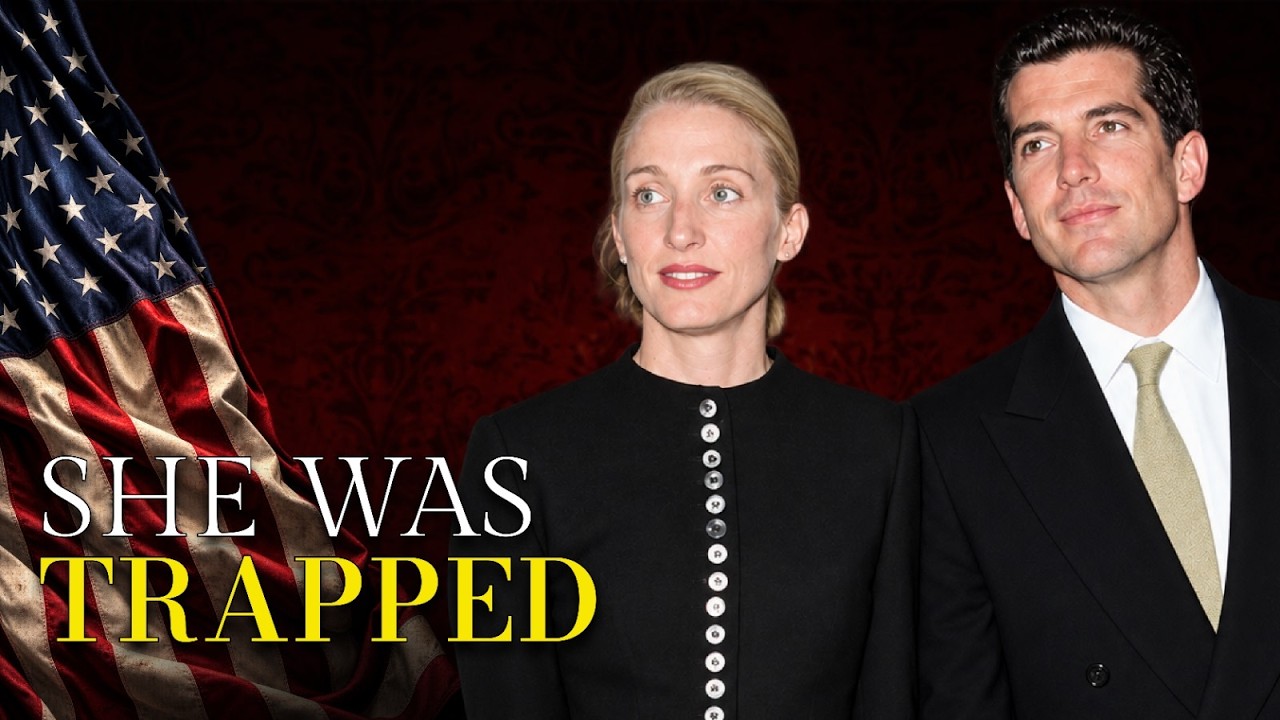
She understood image and publicity professionally but wanted none of that attention directed at herself personally. This is part of what made her so different from the women John had dated before. She wasn’t an actress or a public figure seeking visibility.
Friends recall that she was, if anything, deeply uncomfortable with fame and had no real preparation for what it would mean to marry into arguably the most photographed family in American political history.
That mismatch—a woman who valued her privacy above almost everything, marrying into a life where privacy essentially didn’t exist—would become one of the defining tensions of their entire relationship. Several people who knew her during this period later told biographers that she’d expressed private reservations about the relationship specifically because of what marrying John would mean for her own independence and sense of self.
John and Carolyn crossed paths through Calvin Klein’s orbit in the early 1990s, and by most accounts, their connection was immediate and intense. Friends described John as instantly captivated, not just by her beauty, which the press endlessly commented on, but by her sharp wit and refusal to be starstruck by his fame.
For Carolyn, dating one of the most famous men in America meant an enormous personal tradeoff. One friend said she agonized over it before committing to the relationship.
The courtship itself was conducted with unusual secrecy for two people living such public lives. They went to extraordinary lengths to avoid photographers, reportedly wearing disguises and taking indirect travel routes just to spend private time together, occasionally meeting at friends’ apartments rather than anywhere that might attract attention.
Richard Blow, a former colleague of John’s at George magazine who later wrote a memoir about their friendship, described John during this period as more genuinely happy and more private about a relationship than colleagues had ever seen him before.
In September 1996, John and Carolyn pulled off what remains one of the most famous acts of media evasion in modern celebrity history. They married in complete secrecy on Cumberland Island, Georgia, in a tiny wooden church with only about forty guests—a tiny fraction of the political and social elite one might expect at a Kennedy wedding.
The couple had deliberately misled the press for weeks about their plans, and the ceremony wasn’t publicly confirmed until after it had already taken place, stunning a media industry that had been tracking John’s love life for over a decade.
For a brief moment, it seemed like they’d achieved something remarkable: a genuinely private, personal milestone, protected entirely from the tabloid machine that had shaped both of their adult lives. Guests were reportedly told they were attending a different event entirely until shortly before the ceremony.
But biographers note this victory came at a real cost. The scale of public fascination with their wedding secrecy only intensified media interest afterward rather than satisfying it. If anything, outsmarting the press once made every photographer in the country more determined not to be outsmarted again.
Almost immediately after the wedding, the couple’s life became a near constant negotiation with paparazzi. They were followed to restaurants, on vacations, even on ordinary walks through their own New York neighborhood. Friends and neighbors described photographers camping outside their apartment for days at a time, sometimes renting apartments in nearby buildings specifically to get a clear shot through their windows with telephoto lenses.
Several public incidents captured Carolyn visibly distressed, at times reportedly reduced to tears by the sheer intensity of the following that came with her new last name. Tabloid magazines reportedly paid substantial sums for candid photographs of the couple, creating a financial incentive that meant virtually every public appearance carried real risk of confrontation.
Some photographers, according to later accounts, deliberately provoked reactions from the couple specifically to capture more dramatic, sellable images. This dynamic meant even routine errands could escalate into the kind of publicized conflict that would later be misread by the public as evidence of marital trouble when it may have simply reflected two people’s exhausted reaction to constant harassment.

This constant exposure took a documented toll. Multiple people close to the couple, cited in later biographies, described Carolyn increasingly isolating herself, struggling to leave the apartment some days, and growing resentful of a level of scrutiny she’d never fully understood before marrying into the family.
Some accounts describe her requesting that doormen and building staff help shield her from photographers waiting outside. Friends recall her turning down social invitations specifically to avoid the possibility of being photographed looking anything less than perfectly composed.
One friend quoted anonymously in a later biography described her as feeling as though she’d lost the ability to simply exist in public without being evaluated—a pressure she reportedly found more exhausting than anything she’d anticipated before the wedding.
John, who had grown up under this exact pressure his entire life, reportedly struggled to fully appreciate just how shocking and overwhelming the adjustment was for someone experiencing it for the very first time as an adult. Biographers note a recurring pattern in interviews with friends of the couple: John had built over decades a kind of practiced resilience to public exposure that Carolyn simply hadn’t had time to develop.
By 1997 and 1998, reports of tension between the couple had begun surfacing in the press despite their best efforts to maintain a united public image. Several publicized incidents captured what appeared to be arguments in public settings, including one widely reported confrontation outside their apartment building that tabloids seized on as evidence of a marriage in trouble.
Friends quoted anonymously in magazine profiles described a relationship increasingly strained by John’s demanding schedule at his political magazine, George, and by Carolyn’s reported struggles adjusting to a life she hadn’t fully anticipated.
Some acquaintances from this period also described Carolyn exploring outlets of her own, including brief interest in returning to some form of professional work—an ambition friends say she found difficult to pursue given how much of her public identity had become tied entirely to being John’s wife.
Biographers who later interviewed people close to the couple describe a pattern common to many high-profile marriages under extreme public pressure: genuine love complicated by exhaustion, resentment over lost privacy, and the sheer difficulty of maintaining a healthy relationship when nearly every disagreement risked becoming public property.
Some reports from this period even suggested infidelity rumors on both sides, though these specific claims were never substantiated by any credible named source and remain disputed among biographers to this day.
It’s worth being direct about what’s actually documented here versus what remains speculation. The publicized arguments themselves were witnessed and photographed, which is why they entered the historical record at all. The underlying causes—career stress, privacy exhaustion, or deeper relationship issues—are drawn largely from anonymous friend accounts collected by biographers after the couple’s deaths, which makes them suggestive rather than definitive.
Compounding the personal strain was a significant professional one. John’s political magazine, George, which he’d founded in 1995 with enormous fanfare, was struggling financially by the late 1990s, failing to hit subscription and advertising targets despite John’s constant, exhausting effort to keep it afloat.
Colleagues at the magazine, including some who later wrote memoirs about the experience, described John as visibly stressed during this period, splitting his attention between a failing business venture and a marriage that needed far more attention than he had left to give it.
Some biographers argue this professional pressure compounded the marital strain rather than existing separately from it: a husband stretched thin by a public failure he couldn’t easily hide, married to a wife already struggling with public exposure she’d never wanted in the first place.
It’s within this specific window of overlapping pressures in the months leading up to July 1999 that friends described the couple actively discussing marriage counseling and, in some accounts, even briefly living apart while attempting to work through their problems privately.

By the spring and early summer of 1999, friends closest to the couple described cautious optimism alongside real ongoing struggle. Some accounts suggest the couple had begun actively working to repair the relationship, attending couples counseling and making a deliberate effort to spend more private time together away from both the magazine’s pressures and the constant public attention.
Other accounts drawn from later biographies suggest deeper uncertainty remained about whether the marriage would ultimately survive long term.
What’s not in dispute is the plan for the weekend of July 16, 1999. John was flying Carolyn and her sister Lauren to Martha’s Vineyard for a family wedding, piloting the plane himself despite having logged relatively few hours of night flying experience and despite a recently injured ankle that some friends had privately urged him to consider before taking the controls himself that evening.
The flight was meant to drop Lauren off first before continuing on to the wedding—an ordinary family trip that thousands of small plane pilots make every single week without incident.
Whatever state their marriage was truly in by that point, friends universally described two people who were that night simply trying to get to a family celebration together. A small human detail that later made the tragedy feel even more senseless to those who knew them.
The flight took off from Fairfield, New Jersey, on the evening of July 16th in hazy conditions that reduced visibility significantly, particularly over open water where the horizon becomes difficult to distinguish from the sky—a phenomenon pilots call black hole conditions, especially disorienting at night.
According to the National Transportation Safety Board’s official investigation, John lost control of the aircraft during a descent, likely due to spatial disorientation in the haze, a well-documented hazard for pilots without extensive instrument flying experience. The NTSB report specifically identified this as the probable cause of the crash.
The plane crashed into the Atlantic Ocean off the coast of Martha’s Vineyard, killing all three people on board.
For days afterward, the nation watched as Coast Guard and Navy vessels searched the waters, holding on to hope even as the odds grew increasingly grim with each passing hour. News networks interrupted regular programming for continuous coverage, and crowds gathered near the search area, leaving flowers and tributes even before any official confirmation had been made.
When wreckage and eventually the bodies were recovered nearly a week later, the country grieved not just for a tragic accident but for the abrupt, permanent end of a story that had captivated America for years. A young couple whose real struggles, whatever they ultimately were, would now never have the chance to resolve.
The bodies of John, Carolyn, and Lauren were later buried at sea. A decision made by the Kennedy family and consistent, they said, with John’s own wishes. It brought a quiet, private close to a life that had almost never been permitted a private moment.
More than two decades later, John and Carolyn’s marriage remains frozen in the public imagination almost entirely as it appeared on their wedding day: young, glamorous, and impossibly in love.
The real, more complicated picture that friends and biographers have since described—a marriage under genuine strain, two people struggling honestly with fame, career pressure, and the difficulty of building an ordinary life inside an extraordinary spotlight—rarely gets the same attention as the fairy-tale version that magazine covers and retrospective specials still prefer to tell.
Perhaps that’s the most human part of this story. We’ll never know whether John and Carolyn would have found their way through the difficulties friends describe or whether the marriage would have ultimately ended some other way entirely.
What we’re left with instead is a story interrupted mid-sentence: two young people genuinely trying, whose ending arrived long before anyone could have guessed the real chapter they were quietly living through.