The photograph is famous. A fair-haired woman in a long black coat, chin down, moving fast. Beside her, the man America had watched since childhood.
The press called it the fairy tale marriage of the decade, the most beautiful couple in New York gliding through the late 1990s like they had been cast for it. Millions bought that story. The people standing closest to them told a different one.
The first meeting was not at a gala. There was no ballroom, no yacht, no introduction between famous families. Carolyn Bessette worked in fashion, on the publicity side of Calvin Klein in Manhattan.
John Kennedy Jr. came into her orbit the way anyone does when they need a wardrobe handled. It was a transaction before it was anything else, a professional connection that slowly turned personal.
Before any of this, there was a girl in Greenwich, Connecticut. Carolyn grew up the youngest of three sisters, with a mother who taught school and a stepfather who was a surgeon. Comfortable but not famous.
She went to Boston University, studied education, and drifted into retail before the company pulled her to New York. People who knew her described a quiet confidence, a way of holding a room without raising her voice. She had spent her whole life learning to be invisible.
John was the other half of this, and he came with a weight most people cannot imagine. He was three years old when his father was killed, and the photograph of him saluting that coffin became public property before he could read. By the mid-1990s, he had built a life that was almost normal on paper.
He worked as an assistant district attorney, then launched a political magazine called George in 1995. But the tabloids had tracked him since childhood, and he knew the difference between someone who loved him and someone who loved the name.
He wanted someone unimpressed by all of it. The thing John wanted most from Carolyn was precisely the thing she could never safely give him.
The proposal came quietly. No cameras, no announcement. Friends later said he was genuinely nervous, which was strange for a man who had been performing composure his whole life.
Carolyn hesitated, not because she doubted him, but because she understood exactly what saying yes would cost her. She knew the invisibility she had built was about to end. He promised he would protect her from the worst of it.
She wanted to believe him. They said yes anyway.
They tried to plan the wedding in secret, and for a while it worked. Then word leaked, and the machine woke up. Photographers began camping outside her apartment in Tribeca, waiting for her to step out for coffee.
This was the first time Carolyn felt the full weight of being hunted. Lenses pressed against the glass of the building lobby. Strangers shouted her name to get a reaction shot.
She stopped smiling in public, which the papers read as coldness rather than fear.
Cumberland Island sits off the Georgia coast, a wilderness of live oaks and wild horses. On September 21st, 1996, a few dozen guests gathered there in almost total secrecy. The chapel was tiny, built in 1893, with no electricity, lit by candles.
The whole island was booked so no stranger could wander in. Carolyn walked down the aisle in a bias-cut silk column by Narciso Rodriguez, a dress so simple it would launch a thousand imitations. Not one photographer caught it.
For one evening at the Greyfield Inn, they danced with no lens pointed at them. By every account, it was the last fully unguarded moment either of them would ever have.
The honeymoon was supposed to be the exhale. They flew to the coast of Turkey, a place chosen because no one there would care about their names. For a few days that was almost true, but the quiet carried its own weight.
Staff who saw them recalled a couple that could slide from laughter to silence in the space of a single dinner. He was restless, wired for motion and attention. She had wanted a way out and discovered she had married the one thing she could never step away from.
Back home, the tone turned fast. The same press that crowned her the most elegant woman in America started measuring her against a ghost, holding every outfit up beside Jackie Kennedy. When she wore black, she was cold.
When she repeated an outfit, she had stopped trying. Feuds surfaced in print that had never happened. Every checkout aisle became a verdict on her marriage, her weight, her mood.
So she started making herself smaller. Baseball caps pulled low. Oversized coats.
Sunglasses even on gray days. She timed her exits from the apartment, waiting for the block to clear. She stopped lingering in doorways because a doorway was a place a camera could frame you.
But John’s calendar did not shrink to match hers. There were benefits and galas, campaign events and magazine launches, rooms he was expected to enter with his wife on his arm.
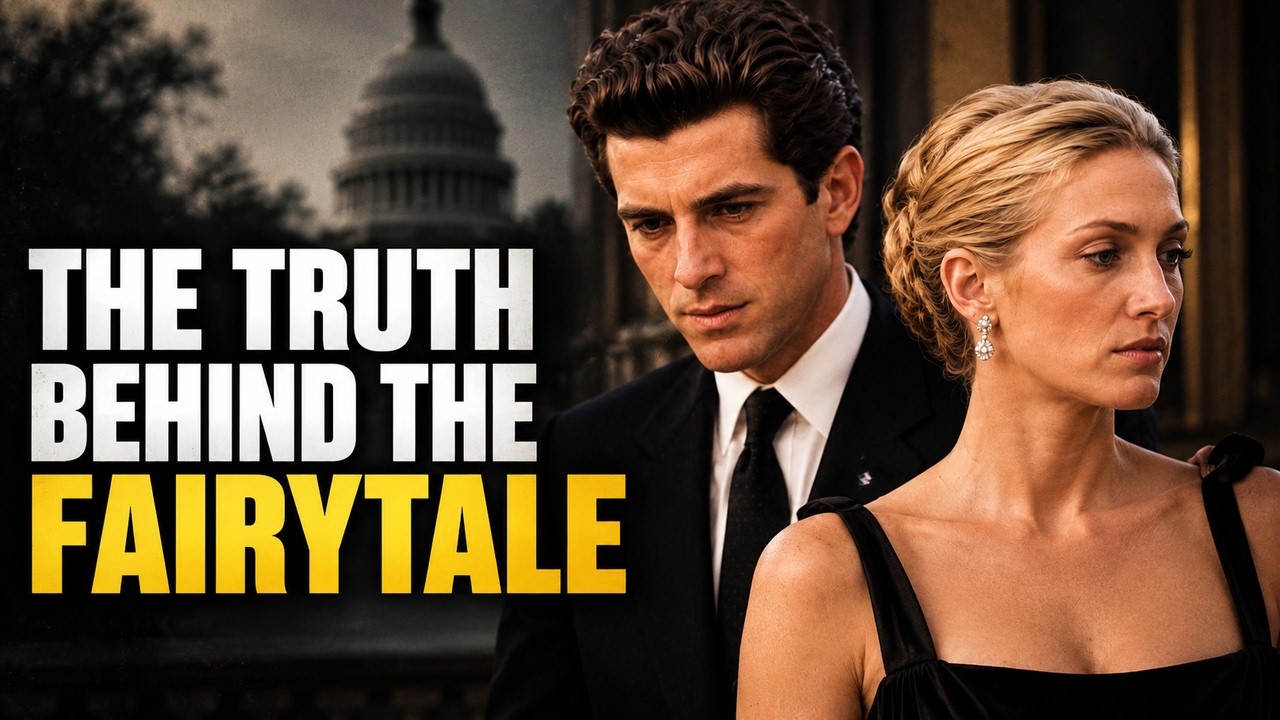
The trouble was that the life itself pulled them in two directions. John had grown up inside the attention, comfortable in a crowd the way other people are comfortable in an empty room. Carolyn had spent her whole life on the other side of that glass.
At events, he moved through a gala like a family reunion. She held a smile that never quite reached her eyes, drifting toward the edges of the room where the lights were dimmer.
Home was supposed to be the escape. Their loft on North Moore Street was elegant but tight, a single open space with nowhere to go when the air got heavy. Friends described clipped exchanges over nothing, silences that lasted too long.
And the loft sat at street level in a neighborhood people had learned to stake out. Even in their own home, they were not alone.
John had launched George in 1995, a glossy magazine that made politics feel like pop culture. He put Cindy Crawford on the cover dressed as George Washington and worked the phones late into the night. The magazine was his proof that he could build something outside the family shadow.
That work pulled him in a hundred directions Carolyn could not follow. She had walked away from her own career at Calvin Klein when she married him. Now she stood at the edge of his schedule, watching him move through a world that ran on his energy and not hers.
By 1997, the tabloids had found their new favorite subject. The New York Post, the Star, the National Enquirer all started running the same kind of story. Trouble in the marriage.
A cooling off. Sources close to the couple confirming the end of a marriage barely two years old. None of these sources ever had a face.
Most of it was garbage. But one of those stories was closer to the truth than anyone realized.
So they fought back the only way that worked. They walked out together looking effortless, John’s arm around her waist, both smiling for the exact lenses that had called them finished the week before. A photograph could kill a headline faster than any statement.
But every staged outing was another performance, another day spent proving something instead of living it.
Years later, one of the people who knew them best started talking quietly. This friend described a couple who could be tender in a way the public never saw and cutting in a way it never suspected. There were good nights, private jokes, the way Carolyn could make John laugh until he forgot who he was supposed to be.
And there were other nights. The phone would ring at two or three in the morning. Sometimes it was John’s voice, tight and low.
Sometimes it was Carolyn’s, and she was not calling to say she was fine.
Then there were stretches when they simply were not there. No sightings, no staged walks. For weeks at a time, two of the most photographed people in America just went quiet.
The people close to them knew that when Carolyn and John pulled back this far, it was not peace. It was something closing in.
Carolyn had married a man, but she had also married a name. The Kennedys moved as a unit, loud and competitive, forged by summers on the Cape. She came from somewhere quieter.
She could be warm with them, but warmth in that family often looked like teasing, like testing. To someone raised on gentler terms, it could feel less like being welcomed and more like being measured.
The arguments looked ordinary at first. A dinner she did not want to attend. A photographer he waved off too casually.
But friends who saw them up close said the fights never really stayed on the surface. Each argument seemed to reach for something older and harder to name, then stop just short of saying it. Underneath them all was the same single question neither would answer.
Whether Carolyn could still be a person inside this marriage. Not John’s wife, not the woman in the photographs. Herself.
Then quietly, in the middle of all of it, Carolyn made a decision no one around her knew about. She began carving out time and space that John did not share. A withdrawal that was not shyness and not sulking.
It was something more deliberate.
The place was a stretch of coastline in Massachusetts, far from the flashbulbs of Tribeca, where she started spending long weekends by herself. She walked for hours, sometimes barefoot, and stopped wearing the dark glasses she used to hide behind in the city. A woman who ran a small shop up there said Carolyn came in most Saturdays and lingered talking about nothing important.
She talked about renting a place of her own, a small one, just for her. Nobody up there knew her as half of a famous marriage.

Then came the photograph that ran everywhere. The two of them on a Manhattan sidewalk, John’s arm around her waist, Carolyn leaning into him, both laughing. It landed on covers within days, framed as the storybook couple back on solid ground.
But the timing was strange to the few paying close attention. It came right after weeks of near silence. It came exactly when John’s team most needed the public to believe things were fine.
What those closest to them described later was not a marriage repaired. It was a marriage restructured, an understanding worked out quietly between two people who had stopped pretending they wanted the same things but had not stopped needing each other. There were terms.
Things each agreed to give and things each agreed to stop asking for. They stayed married. They kept appearing together.
Underneath the surface, a different agreement was holding the whole thing up.
By the late 1990s, the tabloids had a favorite storyline, and it was not about Carolyn. John kept turning up in the same frame as other women. Some of it was manufactured.
But not all of it was noise. There were names that recurred, meetings that were not invented, a pattern close friends later acknowledged. What surprised people was Carolyn’s reaction, or the lack of one the public could see.
Behind that stillness was a woman reading the situation with cold precision.
So she rewrote the terms of her own marriage. She stopped attending the events that turned her into a prop. If she showed up, it was on her schedule.
She insisted on a private life that stayed private, on friendships he did not get to vet, on an identity that existed outside the Kennedy name. She had stopped trying to be a Kennedy wife.
Outside the apartment, the pressure was building fast. By 1998 and 1999, a single clear photograph of Carolyn could sell for tens of thousands of dollars. The men who took those pictures knew it.
She was the one who never smiled, never posed, which only drove the price higher. They camped outside her building. They followed her to the gym, the market, the corner where she bought coffee.
They shouted her name to make her turn because a startled face was worth more than a calm one.
It got physical in a way that never made the tabloids. Motorcycles would swing in close on the Westside Highway, forcing her driver to brake hard while a lens pressed against the window. She learned to leave through service entrances, to switch cars, to stagger her schedule.
People who saw her that spring said she looked thin and hollowed out, the kind of tired that sleep does not fix.
She told people she was afraid of flying. They assumed it was about the crash history. It was not.
She did not like small planes, did not like the feeling of being sealed into something with no way out. On a private plane, there was no service exit, no back door, no way to disappear into a crowd. She said it more than once in the months before that summer.
July 1999. There was a family wedding to get to, a cousin’s on Martha’s Vineyard, then Rhode Island. The plan was to fly up in the small plane, drop Carolyn’s sister Lauren, and continue on.
John had broken his ankle weeks earlier and was still moving in a cast. The weather that Friday was hazy over the water, the kind of thick summer dusk where the horizon dissolves into the sea. They arrived late to the airport, already frayed.
Witnesses later recalled a fight on the tarmac, and no one knew yet what it was about.
John had been flying for about fifteen months. His log book showed roughly 310 hours in the air. He had earned his private pilot’s license but had not finished his instrument rating, the training that teaches a pilot to fly blind when the horizon disappears.
That night, he would need it. Instructors had offered to come along. He told them he wanted to do this one on his own.
The Piper Saratoga lifted off from Essex County Airport around 8:38 p. m. Lauren sat in the back.
As they climbed, the haze thickened. Other pilots flying the same corridor that evening described a sky where sea and air had no seam. John never filed an instrument flight plan.
He never called for help. The final radar contact tracked the plane out past the vineyard’s lights, turning over the water, beginning a descent no one on the ground could explain.

The plane was due at Martha’s Vineyard by 10:00 p. m. When it did not arrive, the calls began.
By early morning, the Coast Guard was searching a stretch of the Atlantic. For five days, the search dragged on. Debris washed ashore first.
Then, on July 21st, divers found the fuselage on the ocean floor about 116 feet down and recovered all three of them still inside.
The National Transportation Safety Board took more than a year to close the file. Their finding was blunt. The probable cause was the pilot’s failure to maintain control of the aircraft during a descent over water at night, the result of spatial disorientation.
With no visible line between sea and sky, the brain invents an up and a down that are not there. The report called it an accident. No mechanical fault, no weather emergency, no distress call.
On Martha’s Vineyard, the wedding that was supposed to happen that weekend simply did not. When the bodies were recovered, the two families made a decision that fit everything the Kennedys had learned about grief. The ashes were scattered at sea from a Navy destroyer in a private ceremony with no cameras.
John had signed his will in 1997, two years before the crash. Most of the estate, valued at around $100 million counting his share of family trusts, was arranged to pass through those trusts. The will did remember Carolyn.
It set aside personal effects and made provisions that acknowledged her as his wife. But it also spoke in the language of contingencies, of what should happen if they had no children. For a marriage the public had crowned as a fairy tale, the paperwork read like a man keeping his options carefully open.
When the estate moved through probate, most of it passed as expected. But there was a residual portion, the money left after the named gifts, and that piece went to Carolyn. Because they died within an hour of each other.
And because Carolyn had no separate will filed, her share funneled into a quiet settlement between the two families. No trial, no public fight, no headline. The numbers were never fully disclosed.
For years afterward, the people closest to them stayed careful. What surfaced slowly was a picture at odds with the magazine covers. Long stretches apart.
Strained phone calls. A wife who had grown wary of the cameras. A husband trying to hold something together that felt heavier every month.
One person finally put the whole thing into a single sentence. In those final years, the marriage had become two people learning how to love each other and how to survive the fame at the same time, and losing ground on both. Not broken, not over, just tired and unfinished and trying.
There was real love there. There was also real exhaustion and no time left to fix it.
Go back to those photographs now, the ones the world adored. Read them again with everything we know, and the same frames turn into something braver. Two people performing serenity while the ground shifted under their feet.
The denials to reporters were not lies to protect a lie. They were protecting a repair still in progress.
One last document surfaced only in fragments, described by people who saw it. A letter. The tone was warm.
The language was forward-looking, the vocabulary of two people planning rather than parting. There are lines that read like a hand reaching back across a distance, an acknowledgement of how hard the last stretch had been and a clear intention to keep going together. Not a goodbye.
A beginning written in the middle of a marriage everyone else had already buried.
Within weeks of the crash, the magazines that had chased her turned reverent. The woman who had been picked apart for her hemlines and her frowns became the face of a whole decade of American style. The myth was tidy in a way her life never was.
It sanded off the arguments, the loneliness, the years she spent trying to disappear from exactly this. The world made her a legend, but the one thing she wanted to be ordinary became the one thing she could never have.
The headline that summer said Kennedy, and the story shrank to a couple. But five people were counted, and the fifth carried her own life that never made the front page. Lauren Bessette, Carolyn’s older sister, was 34, a Morgan Stanley executive who had built a career in Hong Kong finance and spoke fluent Japanese.
She was on that plane for an ordinary reason, a lift on the way to a family wedding.
So what was this marriage really? Two people who loved hard and fought hard, hunted by cameras, straining under the weight of a name one of them never asked to carry. It was strained in the last months.
But strain is not the whole story, and neither is the gloss. They were still choosing each other. They were still on that plane together, still planning, still tangled in the ordinary work of staying married when the ordinary work is done under a spotlight.
Complicated is not the opposite of real. The fairy tale was never the truth. The truth was messier, more human, and more worth remembering.