On a freezing weekend in 1920, heavily pregnant and exhausted, Rose Kennedy made a decision that shocked her family. She packed her things, left the house in Brookline, and went home to her father. Three children under five, a fourth due any day, and a husband who was rarely present had worn her down. She later called the trip a needed rest, but her relatives remembered it as what it was: a real, though temporary, break in her marriage.
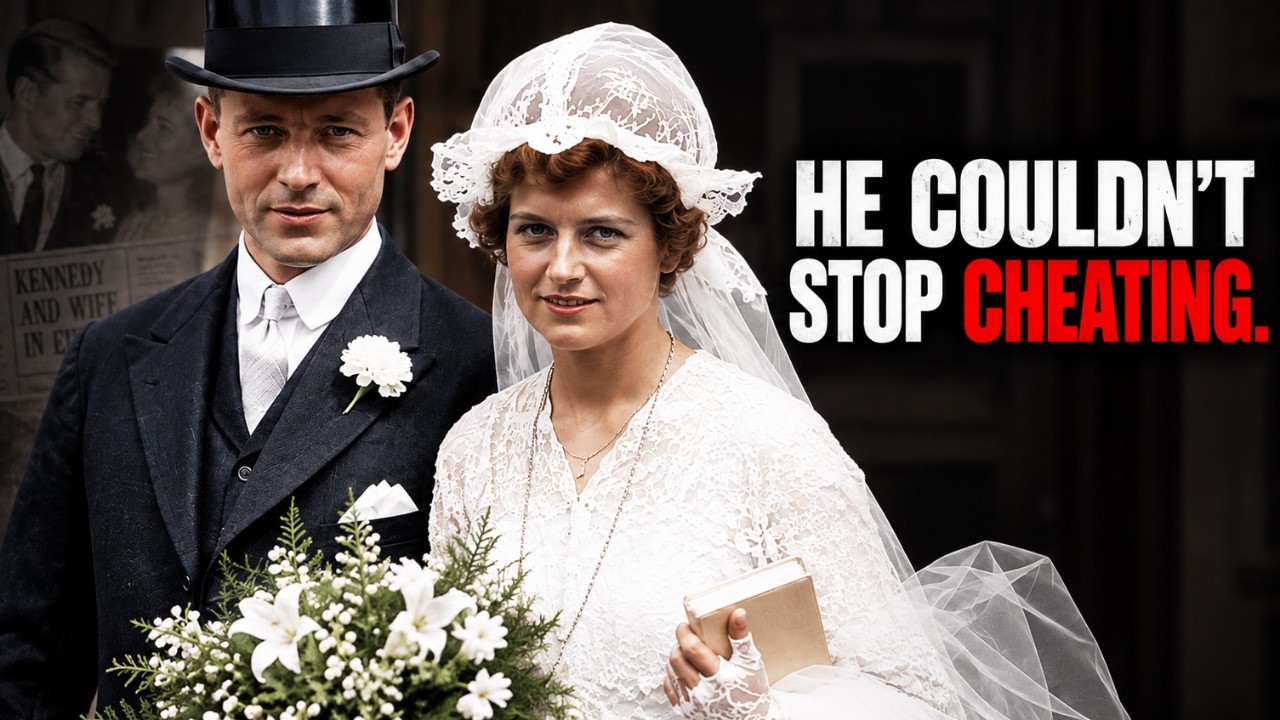
It was not the life she had imagined when she married Joseph Patrick Kennedy Sr. on October 7, 1914. Rose Elizabeth Fitzgerald had been the pride of her father, John Francis Fitzgerald, known across Boston as Honey Fitz. He had grown up with nine brothers and no daughters, and he protected Rose fiercely, sometimes too fiercely.
He took her on political trips, made sure she was well educated, and controlled nearly everything else. He shipped her to Palm Beach instead of letting her attend her junior prom. He enrolled her at the College of Sacred Hearts rather than Wellesley, which she had wanted, because he considered the Protestant influence unsuitable. Her mother’s influence was gentler but deeper: a Catholic faith Rose found inconvenient at first, but one that would shape everything about how she lived and raised her family.
Then came Joe Kennedy. He was not a particularly bright student, but he was charming, athletic, and gregarious, a social butterfly with a weakness for chorus girls. Rose met him at Old Orchard Beach in Maine, where their families vacationed. They met again eight summers later, became affectionate friends, and soon considered themselves sweethearts, or at least she did.
What drew her to him was his self-discipline. He did not smoke or drink, and she saw in him a leader. Her father objected, claiming no man was good enough for her, though family accounts suggest the real objection was political rivalry with the Kennedys. Either way, Rose and Joe kept the courtship alive in secret, arranging coincidental meetings, sometimes with help from her chauffeur.
Seven years later, even after Honey Fitz had shipped Rose to Europe to end the relationship, he finally gave in. In 1914, the Fitzgeralds announced the engagement. The wedding was small, so small that biographer Barbara Perry later called it evidence of Honey Fitz’s lack of enthusiasm, especially compared to Rose’s lavish 1911 debut. Still, the couple were very much in love.
They took a carefree honeymoon, riding horses, playing tennis and golf. Rose wanted perfection. Joe wanted money and power. Between them, without realizing it, they had the ingredients for a political dynasty.
They settled into married life quickly. Nine months and eighteen days later, on July 25, 1915, Joseph Patrick Kennedy Jr. was born. From then on, Rose played the role of the ever-pregnant matriarch, presiding over a growing, noisy household.
The first five children were born in just six years. But by the winter of 1920, Rose’s world had narrowed to a few small rooms in a wood-frame house. Joe was gone for long hours building his fortune, and the loneliness of suburban life weighed on her more than she had expected. She admitted years later that she was realizing how far they had drifted.
Worse, she had watched her own parents’ marriage come apart from living separate lives. So she went home. Three weeks in, she realized she no longer had a place there. She stayed until one night, a moment she would recall sixty years later, when her father came to her room and told her plainly it was time to go home.
“You’ve made your commitment, Rosie, and you must honor it. ” He told her to leave the past behind and focus on her children and her husband. Something about hearing it from him cleared her head. Before returning, she went on a religious retreat and came back with a new understanding of Catholic womanhood.
She needed a mission, and now she had one: building a family. From then on, she treated raising children less like a duty and more like a profession, one she meant to be excellent at. The separation seems to have shaken Joe too, pulling him back toward his family. Rose never once mentioned the separation in her memoir.
She never mentioned the affairs either. To Rose, a good marriage meant having as many children as you could and both spouses knowing their roles. She always claimed she and Joe never fought in fifty-five years because they understood those roles. His job was to be the breadwinner.
She ran everything else. There was, however, one exception to this arrangement, one Rose never forgave. Their first daughter, Rosemary, was not like the other children. She was slow in learning, with obvious mental incapacities, and she could not keep up with her siblings.
Joe thought the problem needed an immediate solution. In the fall of 1941, he authorized a lobotomy. Rose later maintained he had done so without her knowledge, though later research raised questions about how much she knew beforehand. Regardless, the operation failed, leaving Rosemary in a childlike state for the rest of her life.
Overwhelmed, Joe made a decision the family had vowed never to make: he institutionalized Rosemary. The Kennedys told the public she had gone abroad. Joe controlled contact with her after the operation, telling the family she needed to adjust without disruptions from home. Rose later said she did not see Rosemary again for many years.
Only after Joe’s stroke left him unable to run the household was Rose finally in control. Biographer Doris Kearns Goodwin later quoted Rose’s own words: “I will never forgive Joe for that awful operation he had performed on Rosemary. It is the only thing I’ve ever felt bitter towards him about. ”
As the children took up more of both their lives, the marriage changed shape.
The thrill of their old forbidden courtship faded, replaced by something else: a shared love for their kids and real respect for each other as parents. They stopped living for each other and started living for the family. What grew between them was a lifelong companionship rather than a romance. Rose built an independent life within her marriage, a perfect solution for a staunch Catholic for whom divorce was not an option.
She said more than once that she never knew exactly what Joe did for work. She just knew they were rich enough for a bigger house, more help, and more expensive coats. Then came the woman Rose could no longer simply ignore: Gloria Swanson. Joe met her in 1927 while helping her through financial trouble.
Gloria was one of Hollywood’s highest-paid actresses, glamorous, adventurous, and openly unconventional, everything Rose was not. Joe soon took control of much of Gloria’s financial and professional life, and as she became increasingly dependent on him, their relationship deepened. In 1929, Rose found herself traveling to Paris and London with Joe, Gloria, and Gloria’s husband for the premieres of The Trespasser. The affair was already an open secret in Hollywood.
Gloria later wondered how Rose could endure such humiliation, asking herself whether Rose was a fool, a saint, or just a better actress than she was. How much Rose knew remains uncertain. At ninety, she still insisted she had never worried about Joe’s relationship with Gloria, blaming the rumors on a photograph taken together on a ship. “There was never any deceit in her marriage,” she said.
Biographer Barbara Perry compared Rose’s version of events to Jackie Kennedy’s Camelot mythology, a story built after the fact to protect an image rather than tell the truth. According to a recollection from Rose’s niece, Honey Fitz discovered the affair and confronted Joe, warning him to end it or he would tell Rose. Joe reportedly threatened to marry Gloria if Fitzgerald interfered, so Fitzgerald backed down. Later, Rose’s mother apparently decided Rose needed to see what everyone else already knew.
Even confronted with the truth, Rose seemed determined to push it out of her mind. Silence was easier than risking the family’s security and public reputation. So long as she remained Mrs. Joseph Kennedy, the rest did not matter.
Eventually, Joe’s relationship with Gloria soured, but his appetite for other women did not. His political career began to unravel as his support for appeasement of Nazi Germany, his isolationist views, and controversial statements put him at odds with both Britain and Roosevelt. He resigned as ambassador in 1940, effectively ending his political ambitions. The decade brought further tragedy: his eldest son, Joseph Jr.
, was killed in 1944, and his daughter Kick died in a plane crash in 1948. In December 1961, Joe suffered a severe stroke at age seventy-three, leaving him largely paralyzed and unable to speak. He survived for nearly eight more years, living through the assassinations of two of his sons, President John F. Kennedy in 1963 and Senator Robert F.
Kennedy in 1968. He died on November 18, 1969, at age eighty-one. Rose retreated to the beach, searching for comfort in the timeless sea and shore. She requested a white mass, symbolic of the church’s modern interpretation of death, focusing on resurrection rather than loss.
She escorted Joe’s remains seventy-five miles to Brookline’s Holyhood Cemetery and declared, “Next to Almighty God, I had loved him with all my heart, all my soul, all my mind. ”
In 1974, Rose published a memoir, Times to Remember, painting Joe as ambitious, intelligent, energetic, and devoted to his family’s advancement. She did not talk about his infidelities in any real detail, including Gloria Swanson. It was not an oversight.
Rose worked closely with her ghostwriter, sending back page after page of memos full of revisions, cutting anything that hinted at scandal. Her daughters Eunice and Pat asked for even less Gloria Swanson content. The finished book leaves the impression of a far more harmonious marriage than most other accounts suggest. That probably comes down to a philosophy Rose lived by her whole life: protect the family above everything.
As Teddy Kennedy put it, “Mother is a perfectionist. She demanded perfection from herself and tried to perfect everyone and everything around her. What she couldn’t perfect, she ignored or masked. ” Leaving Joe would have meant abandoning the very things she had been taught to protect: her marriage, her faith, and above all, her family.
Instead, she built a life within the marriage. And when reality did not fit the family story, she simply left parts of it out.