The most dangerous badge in the American West did not belong to Wyatt Earp. For decades, popular culture has crowned him the deadliest lawman of the frontier, but the historical record tells a different story. While Earp’s fame rests largely on a single thirty-second gunfight, a man named Bass Reeves spent thirty-two years patrolling the most lawless territory in America, made over three thousand arrests, and survived countless deadly confrontations without a scratch. Yet his name remains largely unknown, overshadowed by the legends Hollywood chose to build.
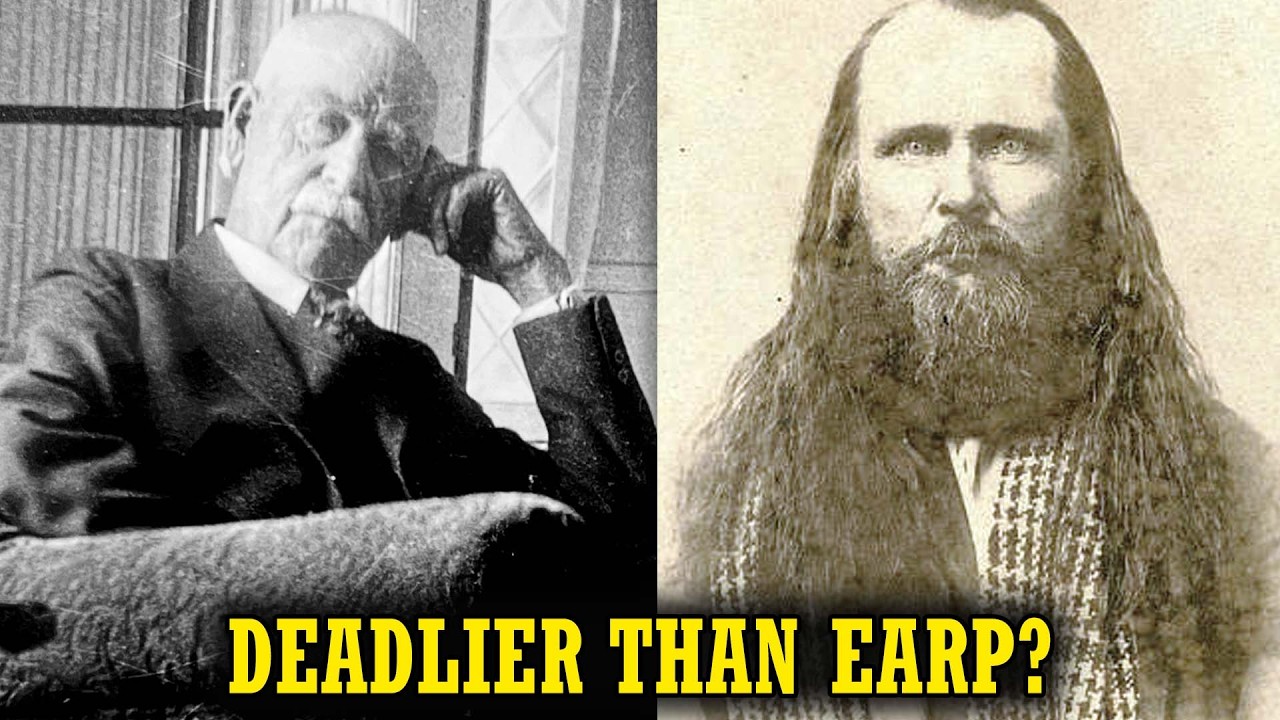
The transformation of Wyatt Earp from a frontier gambler into an American icon began not in the streets of Arizona, but in the print shops of New York and Boston. In 1885, Earp was a familiar but unremarkable figure in towns like Tombstone and Wichita. He was a card player, a part-time saloon owner, a prospector, and occasionally a lawman when it suited him. He was an ordinary, flawed man trying to get by in a harsh world.
The turning point came on October 26, 1881, at the famous confrontation near the O. K. Corral. The gunfight itself lasted roughly thirty seconds and left three men dead, but the aftermath was far from heroic.
A month-long hearing presided over by Judge Wells Spicer revealed a community sharply divided over what had happened. The competing Tombstone Epitaph and Daily Nugget told contradictory versions, with the latter suggesting that some of the men may have been trying to surrender. Earp and Doc Holliday escaped murder charges only through a legal technicality, not through clear proof of innocence. After leaving Arizona, Earp lived a quiet, wandering life.
He outlived most of his contemporaries, watched Wild Bill Hickok die, and saw Bat Masterson reinvent himself as a New York sportswriter. By the 1920s, Earp had settled in Los Angeles, living modestly and socializing with silent film actors like William S. Hart and Tom Mix, hoping his life story would reach the screen. He died in 1929 at the age of eighty, just before talking pictures revolutionized cinema.
He never witnessed the legend that would grow around his name. That transformation was completed by a writer named Stuart Lake, whose 1931 book Wyatt Earp: Frontier Marshal rewrote the complex, morally ambiguous reality of Earp’s life into something closer to myth. Lake presented Earp as a principled visionary who brought order to lawless towns, avoided vice, and used force only when absolutely necessary. Later historians, examining the record closely, found Lake’s account largely fabricated.
Lake himself privately admitted to inventing dialogue and dramatizing events. But during the hardships of the Great Depression, Americans wanted a story about a principled figure who could restore order through courage and determination. Accuracy mattered little. The actual historical record is far more modest than the legend.
Earp was involved in only a relatively small number of violent incidents during his career. Before the O. K. Corral, he had not been involved in any deaths.
The gunfight itself involved several men working together, including his brothers Virgil and Morgan and his friend Doc Holliday. During the so-called Vendetta Ride of 1882, when Earp pursued those responsible for attacks on his brothers, three more deaths were attributed to him. In total, historians credit Earp with between five and six killings over his entire life. By the standards of the era, that was a relatively unremarkable number.
Through Lake’s book and later Hollywood films starring actors like Henry Fonda, Burt Lancaster, and Kurt Russell, Earp came to represent something far larger than historical reality. The real frontier was shaped by countless people who never received biographies or films. Their experiences were forged through survival, not mythmaking, in a world that rarely drew clear lines between legend and lived reality. No one embodied this better than Bass Reeves.
The most dangerous region of the late nineteenth-century West was not Tombstone or Dodge City, but the Indian Territory, a vast expanse of roughly seven million acres of rugged terrain and dense brush that would later become Oklahoma. It was a lawless refuge for fugitives, thieves, and bootleggers. Historians estimate that more than one hundred federal deputy marshals died trying to enforce order there. Carrying a badge in that territory meant carrying a death sentence.
Yet Reeves patrolled those trails for thirty-two years and returned safely every time. Born into slavery in Arkansas in 1838, Reeves escaped to the Indian Territory during the Civil War. He lived among the Cherokee, Creek, and Seminole nations, mastering their languages and becoming highly skilled with firearms and survival techniques. When Judge Isaac Parker took charge of the federal court at Fort Smith in 1875, he sought marshals who could work effectively in this difficult environment.
He appointed Reeves, making him the first Black deputy U. S. marshal to serve west of the Mississippi River. Standing about six feet two inches, Reeves was known for his commanding presence and dignified demeanor.
Although illiterate, he memorized arrest warrants read aloud to him by the court clerk, including names, charges, and even the general appearance of each document. Accounts suggest he never once arrested the wrong person. Reeves made more than three thousand arrests during his career, a number that dwarfs the records of more famous lawmen like Earp or Masterson. He regularly left Fort Smith with a wagon, a cook, and a stack of federal arrest warrants, returning weeks or months later with a group of captured fugitives.
Over three decades of service, he killed fourteen men in the line of duty. In every case, federal judges ruled the actions justified as self-defense. Because he was well known and feared among outlaws, he often disguised himself as a laborer, traveler, or farmer to approach suspects without raising suspicion. One account describes him traveling a long distance on foot, disguised as a weary traveler, to reach the hideout of two wanted brothers.
Their unsuspecting mother welcomed him in, and he arrested the brothers later while they slept. As with many frontier stories passed down orally, some details are difficult to verify independently. Accounts also claim that despite numerous deadly confrontations, Reeves was never shot, though his hat, clothing, and equipment were damaged on various occasions. When Oklahoma became a state in 1907, the federal marshal system in the territory came to an end, and new state laws restricted opportunities for Black law enforcement officers.
Reeves, nearing seventy, joined the Muskogee Police Department and served for another two years. Local accounts from that period suggest his reputation alone was often enough to deter criminal activity. He died in 1910 of Bright’s disease, a kidney ailment. Unlike some of his contemporaries, Reeves was not the subject of popular biographies or dime novels during his lifetime.
Yet his influence on law enforcement in the Indian Territory remains significant and well documented among historians today. The story of Bass Reeves highlights how memory and media shaped which lawmen became legends. During the 1920s and 1930s, when most frontier myths were formed, the publishing and film industries operated within a heavily segregated cultural environment that did not generally support promoting a Black historical figure as a national symbol of heroism. Reeves’s accomplishments received little attention in mainstream media.
Some historians have suggested a connection between Reeves and the fictional Lone Ranger, though this theory remains debated. A similar pattern affected the memory of Orrin Porter Rockwell, a lawman in Utah Territory. His story was closely tied to the Church of Jesus Christ of Latter-day Saints, which mainstream American media of the era often viewed with suspicion. Rather than portraying him as a frontier lawman, outside coverage frequently described him in highly negative terms.
Because Hollywood tended to favor broadly appealing secular narratives, Rockwell’s story remained largely confined to regional archives. There was also a cultural dimension. Early twentieth-century audiences, particularly during the Great Depression, favored simple narratives of individual heroism over the more complex reality of coordinated law enforcement efforts. A single dramatic character suited the prevailing cultural taste better than the procedural reality of frontier policing.
Stuart Lake’s biography of Earp reflected and reinforced this preference, presenting a simplified, idealized narrative that resonated widely with the American public despite differing significantly from the documented historical record. In recent decades, historians working with primary sources, old newspapers, and regional records have reconstructed a more accurate picture of frontier law enforcement. This research shows that the historical West was shaped by a broader and more diverse group of lawmen than popular culture has traditionally acknowledged. While Wyatt Earp remains a prominent figure in American cultural history, his fame reflects the particular media and cultural circumstances of the early twentieth century as much as his historical significance compared with his contemporaries.
Recognizing the contributions of lesser-known figures like Reeves, Rockwell, and others offers an understanding of law enforcement during that period that is both fuller and more grounded in historical fact.