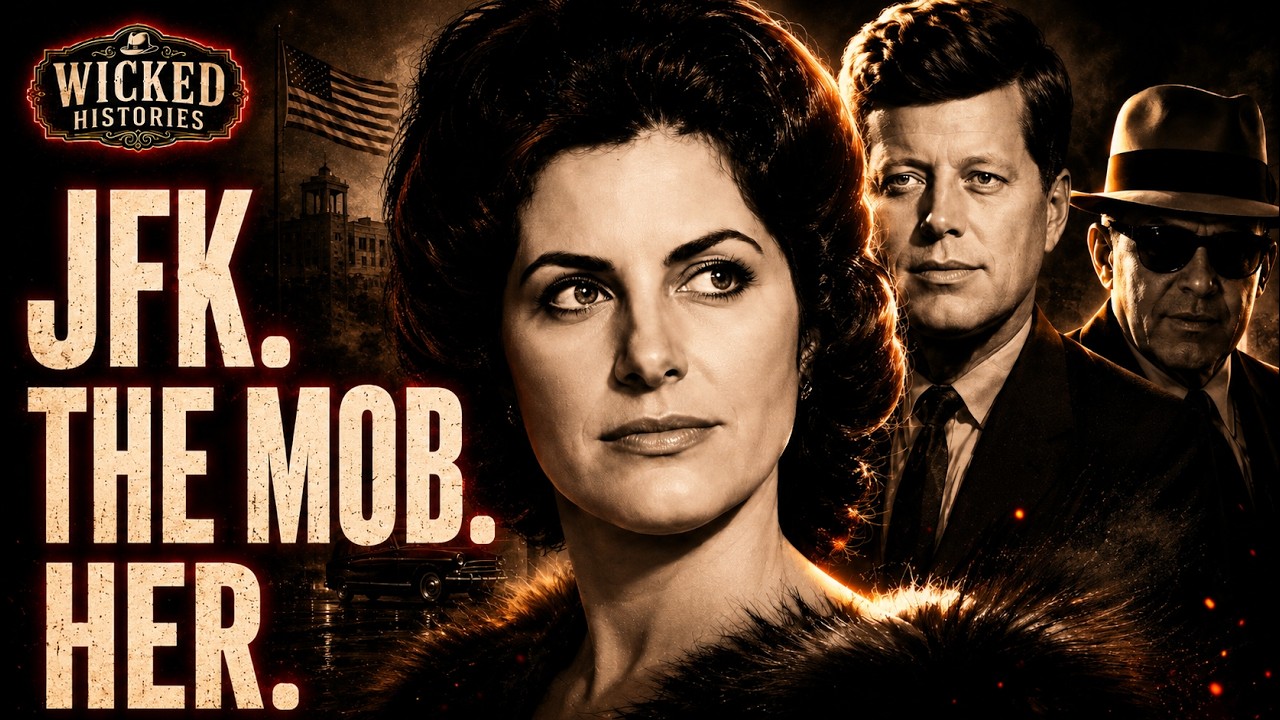
Judith Campbell Exner was never supposed to be the center of the story. She was meant to pass through it quietly—seen, desired, useful, and forgotten. Instead, she became the surviving witness to a hidden line connecting a future president, organized crime, and a series of private deals no one wanted on the record.
She carried that line herself, in the form of envelopes, messages, and meetings between some of the most powerful men in America. When the men at either end were gone, she was the one left to name it.
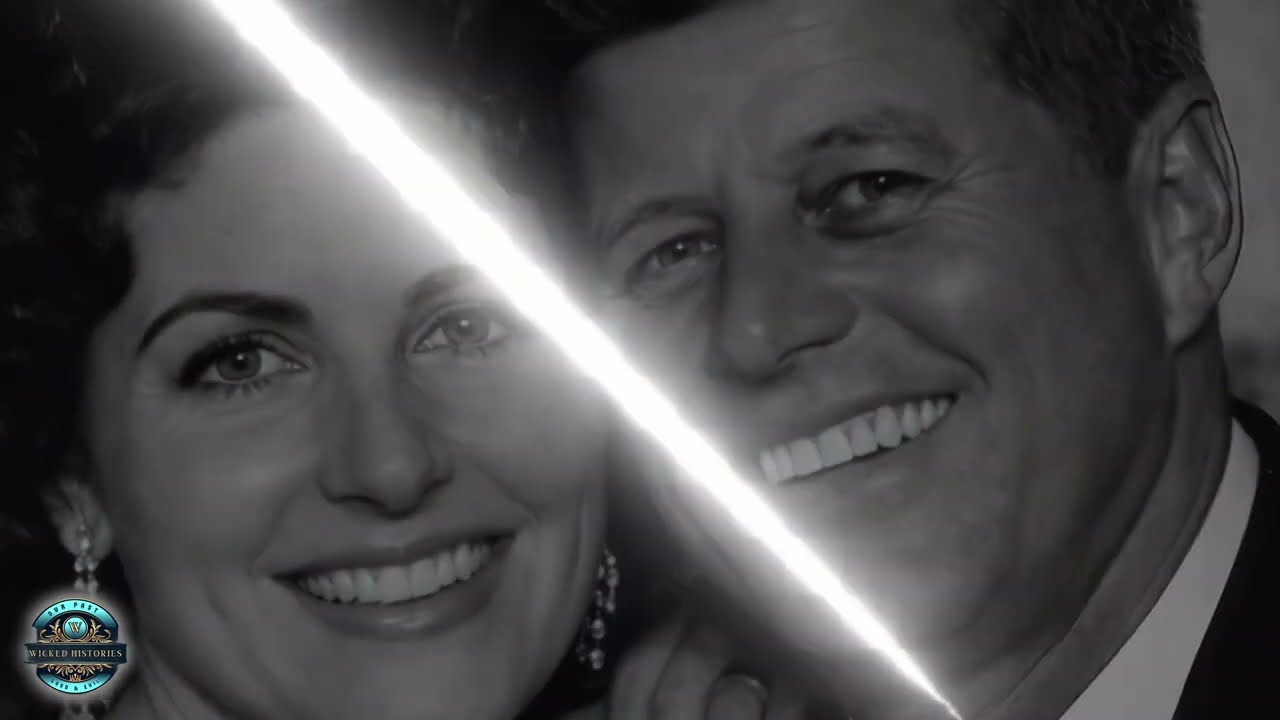
She met John F. Kennedy on the evening of February 7, 1960, at the Sands Hotel in Las Vegas. The Rat Pack was performing, Frank Sinatra was hosting, and the atmosphere carried the easy access of men accustomed to being watched.
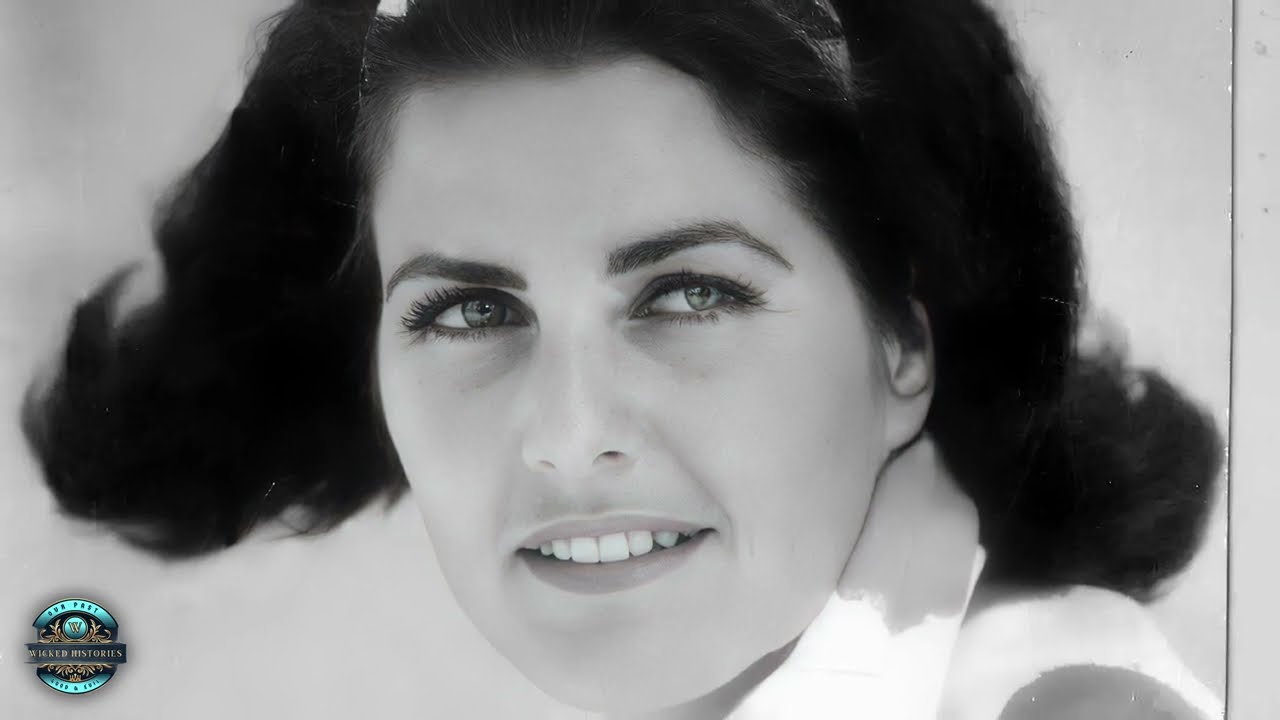
Judith Campbell walked into that room with quiet assurance—dark hair held back, self-contained, stylish. She had grown up around actors and publicists, around people who understood access.
Sinatra introduced them casually. She had never heard of John F. Kennedy.
She did not know he was a senator, did not know he was in the middle of a presidential campaign, did not know he was married. What she saw was a man being deferred to. He was, in her words, gorgeous.
The next morning, he called. He asked her to meet him by the pool. When she arrived, he was surrounded by reporters.
He saw her immediately, broke from the moment to acknowledge her, and told her he would be with her shortly. They had lunch. It lasted longer than expected.
They met again that evening.
He left Las Vegas soon after, but the campaign did not create distance. He called the next day, and the day after that. Soon it was almost every day.
He asked where she was, who she saw, what she did. The attention was sustained and directed. He began asking her to come to him—New York, Chicago, somewhere along the campaign route.
During this period, she learned he was married. The knowledge arrived quietly, without ceremony. "I knew this was something I should stay away from," she said later.
"But my heart started ruling my head."
They became lovers in New York, in her room at the Plaza Hotel, on March 7, 1960, the night before his victory in the New Hampshire primary. After that, the pattern intensified. He called often, late at night.
He wanted details, names, places—small pieces of information that together formed a map of her life. "He had an appetite for it," she would later say. "He loved gossip."
He acknowledged the limits of the relationship openly. "There isn't anything I can do for you," he told her once. "We can't go out.
I can't take you to restaurants." Within those boundaries, however, he offered attention, access, the sense of being included in a life that was otherwise closed.
The shift did not announce itself. It entered quietly, through proximity. In Miami, at another Sinatra gathering at the Fontainebleau Hotel, Sinatra introduced her to a man he called Sam Flood.
The name meant nothing to her. "A woman like you should be wearing real jewels," he said. She replied, "A woman like me often does."
He laughed.
Later, she mentioned the meeting to Kennedy. He corrected her. The name, he told her, was Sam Giancana.
It still meant nothing to her. But for Kennedy, it was not new information. He responded not with surprise, but with recognition.
She continued to see Giancana. "I really thought he was a gentleman," she said. "He was funny.
He was well-spoken. He was very conservative." She knew he was someone of importance, someone with power.
That was as far as her understanding went.
By early April 1960, Judith Campbell was in Washington, seeing Kennedy at the Georgetown house he shared with his wife and daughter. Jacqueline Kennedy, pregnant with their second child, had left for Florida. That evening, another man was present—a large man named Bill, described to her as a railroad lobbyist.
He was in fact Bill Thompson, a close associate of Kennedy's.
As the evening ended, Kennedy asked her to arrange a meeting with Sam Giancana. It was the first time he had directly connected the two men through her. His explanation was simple: Giancana could help the campaign.
Then he asked her to take a satchel to Chicago. Before she left, he showed her what was inside. Cash—a large amount, later estimated at up to a quarter of a million dollars in hundred-dollar bills.
She assumed it was campaign money. She accepted that assumption without pressing further.
She took the overnight train from Washington to Chicago. When she arrived, Giancana was waiting. The exchange was immediate.
He took the satchel without discussion.
This account is not hers alone. Martin Underwood, a political operative working with the Kennedy campaign, later stated that he had been instructed to take the same train and observe her. His presence confirms that her movement was not unmonitored.
The campaign knew where she was.
After the exchange, she remained in Chicago for several days, spending time with Giancana. He conducted business in front of her, often in a language she did not speak. She observed it without context.
Soon, there was a second satchel. This time, Kennedy left the bag with her in New York, where she had taken an apartment during the campaign. Giancana came to collect it himself.
The system had become more efficient, more contained.
Her role expanded naturally from that point. What had begun as a single delivery became a series of smaller, more frequent exchanges—messages, arrangements, confirmations that connected one man to another without requiring direct contact. She began coordinating meetings, passing along information about where and when.
She would later describe it as speaking in a kind of code.
It was around this time that her understanding of Giancana began to change. She came to recognize who he was, what his position meant. Later, she would refer to him directly as the head of the Chicago Mafia.
But even as that awareness took shape, it did not interrupt what she was doing.
After the election, the nature of what she carried changed. Before the inauguration, Kennedy asked her to deliver documents—envelopes that, as he explained, related to removing Fidel Castro from power. Her understanding of that objective was limited.
She accepted it within the same framework she had accepted everything else.
Over the following months, the pattern became fully established. She made multiple trips carrying envelopes between Washington, Chicago, and Las Vegas. Sometimes the documents were left behind.
Other times they were read quickly and returned to her for delivery back.
By early 1962, the structure surrounding Judith Campbell was no longer invisible. The FBI had already identified her as being connected to Sam Giancana and Johnny Rosselli. What they did not initially understand was the extent of her connection to the White House.
That changed when they traced her calls. She had been in repeated contact with the president's office, specifically with his secretary, Evelyn Lincoln.
On February 27, 1962, J. Edgar Hoover sent a formal memorandum to Attorney General Robert Kennedy noting that Judith Campbell, known to be associated with organized crime figures, had placed multiple calls to the White House. The implication was unavoidable.
What made the situation more unstable was that Robert Kennedy already knew who she was. He was aware of her relationship with his brother and, according to later accounts, aware of her role as an intermediary. The problem was no longer discovery.
It was exposure.
Efforts were made quietly to contain it. Instructions were passed that calls from her should not be accepted at the White House. But none of this addressed the underlying problem.
In March 1962, Hoover met with Kennedy at the White House and informed him of what the FBI knew. After the meeting, Kennedy contacted her. He warned her that her phone was not secure.
He told her that Hoover was aware of their relationship and of her connections. She would later describe him as "absolutely livid," framing the encounter as an attempt by Hoover to use information as leverage.
Nothing changed immediately. The calls continued, though more carefully. The meetings continued, though less frequently.
But something had shifted. The relationship now existed under pressure from outside forces neither of them controlled.
For her, that pressure was constant. Agents followed her, questioned people around her, tracked her movements with increasing persistence. Kennedy's response remained consistent.
He told her not to worry. He reassured her that she had done nothing wrong, that she had nothing to fear, and in a statement that would only make sense in retrospect, that "Sam works for us."
At the same time, the relationship itself was changing. The emotional intensity that had defined the early period began to fade. The meetings were shorter.
The atmosphere was different. By late 1961 or early 1962, her involvement in carrying documents had ended. Others had taken over that function.
She was being moved out of the role she had occupied.
In August 1962, while the FBI was maintaining surveillance on her apartment in Los Angeles, agents observed a break-in. Two men entered through a balcony, remained inside long enough to search or install equipment, and then left. The vehicle they used was traced to a man connected to General Dynamics, a defense contractor competing for a massive military contract.
The FBI did not intervene.
Around the same time, General Dynamics, considered the weaker bidder, was awarded the contract for the TFX fighter program, one of the largest military contracts in US history. No direct link was ever established. But the proximity of events raised questions that were never fully answered.
By that point, her involvement with Kennedy was already ending. She described their final phase as strained, shaped by surveillance, distance, and a growing sense that the relationship no longer held the same place in his life. She resisted returning to Washington.
He persuaded her to come back one last time.
It was after that meeting, she would later claim, that she became pregnant. According to her account, they agreed that she could not keep the child. She turned to Giancana for help.
He arranged for the situation to be handled. It was during this period, she said, that her relationship with Giancana became intimate. This claim, like several others she made later in life, has been debated and remains unverified.
What is not in dispute is that by late 1962, her connection to Kennedy had ended. She was no longer part of his personal life. She was no longer part of the system that had operated through her.
What remained was the aftermath. She was still under surveillance. There were discussions of compelling her to testify before a federal grand jury investigating organized crime.
She moved between locations, avoiding service of subpoenas. She described that period as one of fear—not only of the government, but of the people she had been connected to.
"There is no good and bad," she said later. "No black hats, no white hats."
Years later, when her story began to emerge publicly, it did so in fragments. She admitted that she had not told the truth initially about her role, citing fear after Giancana's murder in 1975. She claimed that she had been used as a conduit between the president and organized crime, carrying money, messages, and documents tied to covert operations.
Some elements of her account were supported by independent evidence. Others were not.
In the years that followed, she attempted to step out of the world that had defined her early adulthood. She married Dan Exner, a respected automotive designer known for his work with Chrysler, changed her name, and moved into a more private life.
The men who had defined the structure around her were gone within little more than a decade. John F. Kennedy was killed on November 22, 1963, in Dallas, Texas.
His brother followed five years later, shot on June 5, 1968, in Los Angeles, moments after winning the California primary. Sam Giancana was murdered on June 19, 1975, in his home in Oak Park, Illinois, shot multiple times at close range. He had been scheduled to speak with Senate investigators.
He never did.
They disappeared in sequence—publicly, violently, or before they could testify. Each removal narrowed the possibility of a complete account.
Judith Campbell Exner outlived them all by decades, revising her account, adding details, and insisting that she had moved between worlds that were never meant to meet. When she died on September 24, 1999, after a long battle with breast cancer, she left behind the only narrative that attempted to connect them—supported in part, disputed in part, and never fully resolved.
"They wanted to find out who was the link," she said. "When they found my name in both areas, they assumed that I was the link."
She had made a conscious decision not to tell the truth initially, she said, because she was afraid. "I was petrified," she admitted. "I couldn't make it right.
I had lived with a man who did nothing but cheat on me the whole time. And here, this is what I was doing to another woman."
What made her make that decision? "I just couldn't resist him. I had essentially just lost my heart to him."