In January 1961, John F. Kennedy entered the White House carrying more than policy papers. He brought a promise that greatness could be graceful, that power could be beautiful.
The public saw a war hero with a dazzling smile, a devoted husband, a new kind of American strength that seduced rather than shouted.
The reality was hidden behind locked hotel doors and classified drawers. The president who championed freedom and honor also wandered corridors searching for teenage girls, secretaries, donors' daughters, and interns. He did not ask.
He did not wait. He took, and when finished, he walked away.
The Kennedy legend was not born—it was engineered. Hollywood illuminated it, Harvard polished it, the press protected it, and the government played its part. Behind the velvet rope of Camelot stood a man who believed his charm was permission, and that nothing—law, conscience, or fear—could touch him.
This is not a story about power in the abstract. It is about the young women who never made the history books. Some barely survived.
One was a virgin from Wheaton College, dazzled by the idea of doing good in Washington, who was led into the First Lady's bedroom and told to smile. Another was a 20-year-old Radcliffe student who thought he loved her until she realized she was just a secret. One was found dead with two bullets in her skull, her diary vanishing into the hands of the CIA.
One delivered sealed envelopes between the president and the mob. Another was hired to work for the First Lady and ended up in the president's bed.
They were real. They had names. They had lives.
One by one, they were rewritten, erased, or silenced.
Mimi Beardsley
She was 19 years old, still wearing her innocence from Wheaton College like a second skin. Her hair was neat, her voice quiet, her faith in institutions intact. She came to Washington in 1962 to serve, learn, and observe—as good girls did.
Four days after arriving as a White House intern, she was invited to a pool party. No cameras. No chaperones.
Just the president, a few carefully selected aides, and a fresh rotation of young women whose names were recorded in secret memos passed quietly among staff.
She did not swim. She did not drink. She smiled when spoken to.
Then Dave Powers, the president's fixer, took her gently by the elbow and led her upstairs, past the portraits and the guards, into the First Lady's bedroom. He closed the door.
President Kennedy was waiting. He was 45, married, a war hero, the leader of the free world. In the seconds that followed, he became something else: a man who took what he wanted because he knew no one would stop him.
She did not scream. She did not run. She froze long enough for him to close the distance.
It was her first time. He did not ask.
In the diary she wrote later, she would not use the word rape. But it was not consent either. What followed was not an affair—it was an arrangement.
He summoned her sometimes to the White House, sometimes to hotels, once to the Carlyle. He never kissed her on the mouth. He made crude jokes.
He never asked what she wanted. Once, he gave her pills to see how she would react.
One night in the pool room, with Dave Powers watching, Kennedy suggested she perform a sexual act with his aide's assistance. She was still a teenager. She did it, then cried.
He laughed it off.
There were no promises, no romance—only instructions. She was not a mistress but a task. When she was no longer needed, the calls simply stopped.
Then he died. She married, buried everything, and told no one for 40 years.
In 2011, she released a memoir that finally dragged the Camelot fantasy into the light. The backlash was swift. People said she must have wanted it.
He was the president—what did she expect? Few asked what it does to a girl to be used by a god and then thrown back into the crowd as if she never mattered.
Diana DeVegh
Diana was not a wide-eyed intern sent to fetch coffee. She was a 20-year-old Radcliffe student, bright and serious, full of ideas about justice and change. She grew up admiring leaders and believing in ideals.
When she met John F. Kennedy, she thought she was meeting a man who embodied both.
He was a senator on his way to the presidency. He found her in a crowd at a campaign event. Their eyes met, and her world changed.
An aide approached: the senator wants to see you. The first meeting felt like destiny. He listened, smiled, made her feel chosen.
What followed was four years of shadows. He controlled everything—where they met, when, how. Always on his terms.
Always secret hotels, borrowed apartments, private rooms. She never appeared with him in public. She was never invited to the places where he smiled for cameras.
He wanted her only within reach.
At first, Diana believed it was love. She convinced herself the secrecy was intimacy, that the hiding meant appreciation, that the small pieces of his time meant something real. "At the time I thought I was special," she later said.
"Now I know I was just convenient."
The realization came decades later. When it ended, there was no goodbye, no closure, no explanation—just absence. She was erased, not cruelly but with indifference.
For years she carried the burden alone, without the language to explain what had happened. It took decades and the rise of movements questioning what power does to consent before she found her voice. She wrote finally what history tried to forget: "He had the power.
I had the imagination."
Mary Pinchot Meyer
Mary was not dazzled by power—she was raised inside it. She was a painter, a thinker, the ex-wife of a high-ranking CIA official. In another life, she was a peace activist, an LSD experimenter, a student of Timothy Leary, a woman decades ahead of her time.
She was not naive. But even she did not expect this.
She met Jack Kennedy at a Georgetown dinner. They had known each other since prep school days, but this was different. He was now president of the United States.
She was an ethereal, brave artist—exactly the kind of challenge he craved. He was married. She did not care.
He was reckless. She did not back down.
They began an affair sometime in 1962, a year before his death. But this was no ordinary affair. It was philosophical, political.
Mary brought counterculture ideas into the White House that Kennedy aides hated: anti-war conversations, civil rights discussions, drugs. She gave him marijuana and claimed she gave him LSD. She asked him questions not about sex or secrets but about morality.
Somewhere along the way, Mary began to change. She saw too much. She started writing her diary.
Then John Kennedy was killed. Less than a year later, so was she.
On October 12, 1964, on a bright Washington morning, Mary left her Georgetown home for a walk along the Chesapeake and Ohio Canal towpath. She never returned. Her body was found beside the water with two execution-style shots: one in the head, one in the chest.
No robbery. No assault. No motive.
A Black laborer named Ray Crump was arrested. He had no weapon, no clear connection. He was acquitted.
But that is not the end of the story, and not even the most terrifying part.
Hours after Mary's death, James Jesus Angleton, the CIA's head of counterintelligence and a close friend of her ex-husband Cord Meyer, broke into her home and searched her studio for the diary. He was not alone. Ben Bradlee, editor of the Washington Post and Mary's brother-in-law, later wrote that he and his wife Tonya found Angleton already inside with a skeleton key in his hand.
Bradlee took the diary and later handed it to Angleton. It was never seen again.
Why would the CIA be desperate to seize the private reflections of a dead artist? Close friends believed Mary had become suspicious not only of Kennedy's death but of the machine around him—the military, the intelligence community, the quiet erasure of the idealism John Kennedy once claimed to support. Mary was not just a mistress.
She was a witness. And witnesses in that world did not speak.
Her death was ruled random, meaningless, tragic. But those who knew her said otherwise. She had been talking about writing a book, telling the truth about Jack—his secrets, the darkness that consumed him, the men who surrounded him.
She died alone on a quiet path with a bullet in her brain, and a nation too enchanted to ask why.
Judith Campbell
Judith thought it was just sex at first. Glamour, perhaps. The thrill of danger.
She was 26 when she met John Kennedy, a rising senator with a legendary family name already circling the presidency. She was beautiful, elegant, unafraid—the kind of woman who could keep a secret. But no one told her what she was stepping into.
They met in Las Vegas. The introduction was arranged. Judith was already involved with Sam Giancana, the head of the Chicago Outfit.
She loved powerful men, and they loved her back. But John was different. He sent flowers.
He called from secure lines. He flew her to Washington and smuggled her past guards and press. She stayed at the Hay-Adams Hotel under assumed names.
At first, she thought she mattered. But it was not long before the tone changed. He began asking for favors.
Could she deliver an envelope to Sammy? Just a message, maybe two. Could she travel somewhere on short notice?
Could she be careful if anyone asked?
She did not understand what she had become. She was not just a mistress—she was a courier between the president of the United States and the American mafia. She delivered envelopes she never opened.
She carried messages between the White House and Giancana, sometimes relayed through Johnny Roselli, another gangster involved in CIA attempts to assassinate Fidel Castro. She was the connective tissue in one of the most dangerous triangles in American history: politics, sex, and organized crime.
When the spotlight finally came, she was the only one without protection. In the 1970s, Senate investigators uncovered her name. She was subpoenaed.
The story exploded. She denied the relationship at first, then admitted it, then told journalists she had been pressured to lie. Her story changed not because she was dishonest but because she was terrified.
Everyone had power. She had only the truth, and the truth became a liability. The media hounded her.
Kennedy loyalists discredited her as unstable. Her health collapsed. She was diagnosed with cancer.
She kept writing letters, trying to explain what happened.
"I was in a situation beyond my capabilities," she said in one interview, her voice thin and trembling. "I wasn't a spy. I was a girl, and I was exploited."
History did not thank her for confessing. It dismissed her as marginal, compromised, contradictory, embarrassing. But the evidence held.
The FBI confirmed White House phone calls and flight records matched her claims. The dates she cited corresponded with mob meetings under surveillance. The CIA refused to comment.
She was not lying—she was just inconvenient.
Judith Campbell Exner died in 1999, almost entirely forgotten. No headlines, no retrospectives, no reevaluation. But she was the woman who knew everything, and she lived long enough to realize that knowing everything meant no one would believe you.
Pamela Turnure
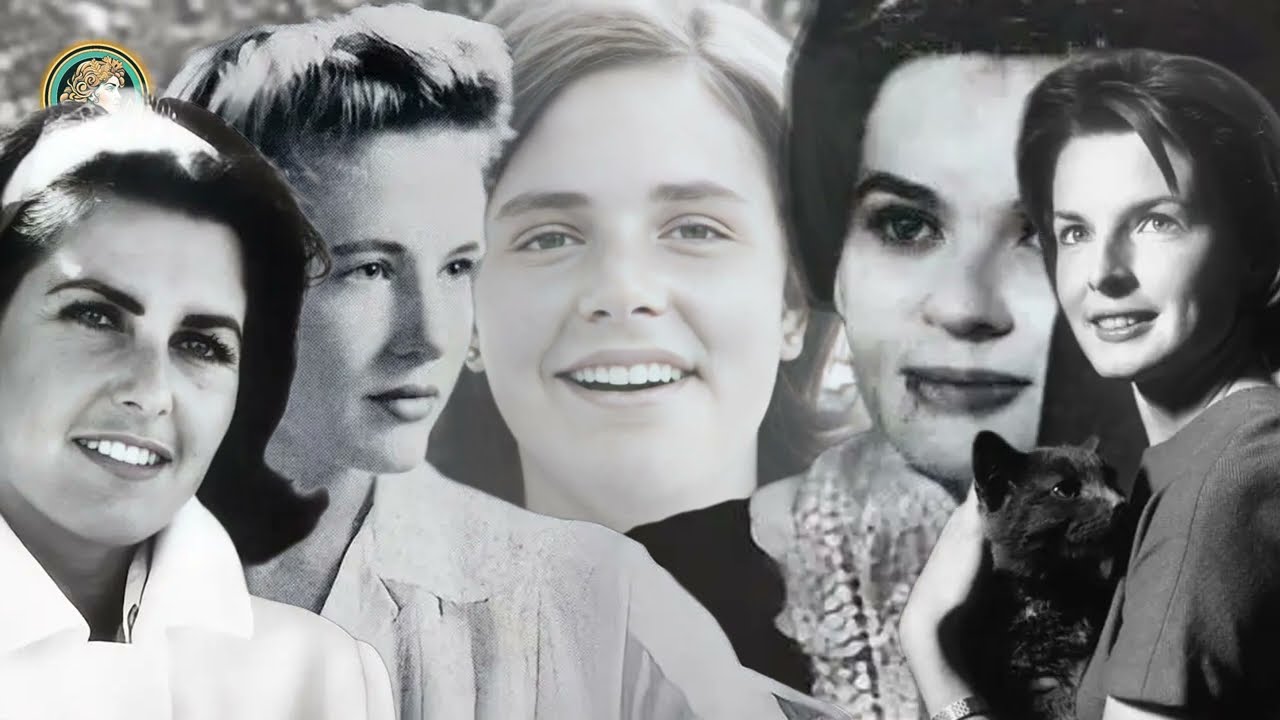
She sat a few feet from the First Lady's office, wearing pearls, taking press calls, and quietly slipping into the president's world after hours. She never wrote a book or gave an interview. But she was always there.
Pamela Turnure was 23, quiet, beautiful, and sharp—the first female press secretary ever appointed to a First Lady. Her office was just outside Jackie Kennedy's suite. She was supposed to handle social calls, schedule garden tours, coordinate interviews.
Instead, she became the president's shadow.
No headlines. No gossip columns. No scandal.
Because Pamela never spoke, and no one dared speak for her. But behind the walls of the White House, everyone knew. According to multiple reports from Secret Service agents, Turnure was seen leaving the president's bedroom late at night.
Staff whispered about closed-door meetings that stretched past midnight, about gifts and privileges and mutual silence traded like currency.
Unlike the other women in John Kennedy's orbit, Pamela worked inside the machine. She did not enter through a hotel elevator or a side door at the Carlyle. She sat at a desk and issued official statements.
And when Kennedy called—when the president of the United States wanted his secretary—she came.
What was she supposed to do? Say no? He was the president, her boss, her protector, her captor.
Some say it began during the campaign, before he took office. Others place it later, after Jackie became distant and the facade of a happy marriage became a political necessity. Either way, she became the right hand, the comfort, the woman who did not speak because she could not—because speaking meant losing everything.
She was replaced in Jackie's office in 1963 without explanation, just months before Kennedy's death. No goodbye, just reassignment. History swept her name aside as it did so many others.
But in the years that followed, her name kept surfacing in Vanity Fair articles, in the whispered footnotes of Kennedy biographies, in briefings from former agents who saw more than they ever said. The conclusion was always the same: she was there, and no one cared.
There were no interviews, no memoirs, no corrections. She remained loyal even when it cost her. Perhaps she thought it was love.
Perhaps it was survival. Perhaps both. But when Kennedy died, no one asked how she felt about losing someone she could never admit she had been with.
Pamela Turnure's silence was not complicity—it was consequence. She learned what every woman around Kennedy eventually learned: your usefulness ends the moment you become visible.
The Family Business
The appetite for young women did not begin with Jack. It was inherited. The practice passed from generation to generation like cufflinks or bottles of liquor or war stories.
John F. Kennedy was not an aberration—he was the heir to a kingdom where power meant possession, and women were the cost of doing business.
His father, Joseph P. Kennedy Sr. , built the empire on the same rules that would govern every Kennedy son after him: charm buys silence, wealth cleans everything, and the rules do not apply to you.
Joe Kennedy was not a gentleman behind the suits and Catholic guilt. He was a man with a predator's instinct and a banker's precision. He had affairs, constantly, and expected his wife to look away.
He treated women like investments—useful for leverage, disposable after attention. In Hollywood, they whispered about him and Gloria Swanson, the legendary actress who became his business partner and then his victim. According to her own memoirs, he took what he wanted and then continued managing her career as if nothing had happened.
Jack learned early. In prep school, he was already sending girls to his dormitory. At Harvard, he was learning how to get what he wanted without leaving fingerprints.
Once he became president, there were no more barriers—just a revolving door of anonymous women and well-paid possibilities.
But he was not alone. His brother Bobby learned too.
Bobby Kennedy always seemed like the good one—the loyal brother, the moral center, the boy who knelt at Mass, who fought for civil rights, who carried the torch after Dallas. But that was public Bobby. Private Bobby was more complicated.
He learned the same lessons Jack did: charm is a weapon, power makes desire a right, and women are part of the machine—useful, silent, disposable.
Marilyn Monroe was not the only woman Bobby used and discarded. She was simply the most visible, the one whose fame made her impossible to hide. Behind her were countless others—less famous, less protected, but no less broken by encounters with power disguised as whispered affection.
Secretaries, socialites, actresses drawn to the quiet intensity of his grief after Jack's death, the magnetic calm of a man who seemed both strong and wounded.
Bobby was the quiet executor of the Kennedy machine's harshest lesson: when a woman threatens the legend, she disappears. He was not as reckless as Jack, but he was not innocent. Above all, Bobby's greatest talent was not seduction—it was erasure.
Then there was Ted.
Chappaquiddick
You cannot talk about the Kennedy name without talking about Chappaquiddick. Mary Jo Kopechne was not supposed to be a headline. She was not supposed to be a martyr.
She was a smart, 28-year-old political staffer—hardworking, idealistic, the kind of woman who believed public service meant something. A daughter of modest means, she earned her place among the powerful through talent, not connections. She was not looking for the spotlight.
She was not looking for scandal.
Then came the night of July 18, 1969. A party on Chappaquiddick Island. Ted Kennedy, drunk, behind the wheel, with Mary Jo in the passenger seat.
A narrow bridge. A sharp turn. The car plunged into dark water.
What happened in that car in the final moments before it sank, no one knows except Ted. And he never told. He escaped.
He swam to shore and walked past houses with lit windows. He passed phones he could have used to call for help. He did not.
He returned to his hotel, changed clothes, and went to bed.
Nine hours passed before authorities were notified. By then it was too late. Mary Jo died, still trapped in the overturned car.
When they found her, she was wedged in a shrinking air pocket—perhaps three inches of breath left between her and the end. She did not die on impact. She waited.
She hoped. She fought. And he left.
The Kennedy machine spun into action. A sympathetic judge. A suspended sentence for leaving the scene of an accident.
No real investigation into what Mary Jo might have endured in those final hours. No deeper inquiry into why a United States senator abandoned a drowning woman to save his own future.
Instead, the press portrayed it as a tragedy, a sad mistake, a burden Ted would carry forever. But it was not just a tragedy. It was a blueprint: protect the name, minimize the woman, move forward.
Mary Jo's life was reduced to one night, one headline, one whispered rumor. Her hopes, her work, her voice—all drowned in that car beside her.
Ted returned to public life, gave speeches, kept his name intact, and continued his career. He was not broken, because in the Kennedy world, the women were never the point. The legend was.
The Pattern Continues
In the years that followed, the family scandals multiplied like shadows. Michael Kennedy, Robert's son, was caught in a years-long sexual relationship with a 14-year-old babysitter. The family smoothed it over.
The press softened it. The case disappeared.
William Kennedy Smith, John's nephew and Jean Kennedy's son, was drinking with his uncle Ted when they met a young woman—polite, local, fascinated by the attention, dazzled by the Kennedy glow. She agreed to join them at the family's oceanfront estate. Perhaps she thought it would be fun.
Perhaps she thought it would be safe.
What happened next would become one of the most publicized trials of the decade. The woman said Smith attacked her, dragged her into the garden, and raped her. Medical evidence supported her claim: trauma consistent with assault, torn clothing, bruises.
But the Kennedy machine began character assassination, legal maneuvering, and silence. He was acquitted.
William Kennedy Smith retreated from the national spotlight and built a new image as a doctor and humanitarian, dedicating his work to helping landmine victims through his nonprofit, the International Rehabilitation Center. But the shadow followed him. In 2004, a woman who worked as his assistant at the center accused him of sexual assault.
The case never went to trial. A judge dismissed it. The Kennedy name held its shield intact.
Every story followed the same script: a young woman, a powerful man, a cover-up, then nothing. No accountability. No apology.
Just another marble bust in another family library, another quote about service and sacrifice carved in stone. But the truth was rotting behind the legacy, and anyone who tried to pull back the curtain was met with denial, contempt, or destruction.
The Press Knew
The Kennedy legend survived because it was designed to survive—by photo ops, protected by publishers, edited in real time by men who believed history belonged to the winners. But behind the speeches, behind the charities, behind the graves and the eternal flame, there was a different legacy: a family business built on the silence of others.
The interns, the babysitters, the secretaries—they were the raw material, the parts no one counted, the parts no one remembered. Meanwhile, the journalists, editors, and writers who published Camelot headlines knew all along. They knew who John F.
Kennedy really was. They knew about the girls, the parties, the bodies moved in and out of hotels like ghost deliveries. They knew and said nothing.
They called it professionalism, decency, respect for the office. But the truth was simpler: it was a deal. Protect the legend, and we protect your career.
The White House in the early 1960s was not just a seat of power—it was a theater, and the media played its role. Carefully placed photographers. Pre-approved questions.
Glowing glimpses of Jackie's fashion and Jack's youthful vitality. No headlines about what was happening behind the scenes. No mention of the interns and secretaries in tears.
Ben Bradlee knew. He was one of the president's closest friends, later the editor of the Washington Post and the gatekeeper of political journalism. He suspected John Kennedy was sleeping with Mary Pinchot Meyer, his wife's best friend.
He wrote about it years later. But at the time, he said nothing.
He was not alone. Time magazine editors, Life magazine editors, reporters who traveled with the president on Air Force One and saw women led to the back entrances of hotels—they all knew. They called it discretion.
But it was cowardice, or worse, collaboration.
Pierre Salinger, the press secretary, ran the show like a producer. He knew which reporters could be trusted not to ask questions, which photographers would not take the wrong picture, which columns needed a boost. Journalists who played along were rewarded with exclusive quotes and behind-the-scenes gossip.
Those who did not were exiled and forgotten.
Hollywood helped too. Studios, public relations, fixers. Marilyn Monroe was passed between the brothers like a state secret, and when she died, reporters backed off.
Everyone knew the names involved. No one published them. There were no investigative features about Mimi Beardsley, no exposés about Judith Campbell's mob connections, no questions about Pamela Turnure, who sat outside Jackie's office by day and entered Jack's room by night.
When cracks began to show, when rumors leaked into private parties and reached editors' ears, the strategy changed. They did not deny. They minimized.
"Oh, that's just Jack being Jack. Who didn't have a mistress? He's under pressure.
Let him enjoy himself." The framing was always the same: women as accessories, distractions, jokes—never as victims, never as human beings.
And so the reporters kept writing speeches, dinner lists, photo opportunities. They turned their backs on the real story and called it objectivity. But history does not forget what headlines erased.
The Women Speak
When the women finally spoke, decades later, they were not met with gratitude. They were accused of being opportunists, unstable, liars. The journalists who once failed to protect them now failed to believe them.
They said the women remembered wrong, that they were bitter, that times were different.
For decades, these women's names were scrubbed from the narrative. They were omitted from the footnotes of history books, deleted from documentaries, never spoken aloud at memorial events. The man who took from them was celebrated as a visionary, a martyr, an American prince.
And they still carried the weight.
Mimi Beardsley stayed silent the longest. She was 19, swept into the White House like a ribbon in the wind. She thought she would learn how government worked.
Instead, she was shown how people break. "I was literally swept off my feet," she said. "I wasn't prepared.
I wasn't prepared at all for the world I was stepping into."
There was no talk of choice, no pause for consent. Just his presence, then hers. No discussion.
No conversation. No sense of "do you want to do this?" He never kissed her on the mouth or made her feel visible.
But she saw him clearly, even then. "He never kissed me on the mouth. Not once."
Diana DeVegh was 20 when it began. She thought she had been chosen. She realized later she had been available.
"At the time I thought I was special," she said. "Now I know I was just convenient." He was 43, married, powerful.
She was idealistic, isolated, flattered into submission. "I didn't realize for a very long time that I was invisible to him all along." There was no breakup, no confrontation—just absence.
"When it ended, there was no conversation. I simply stopped being invited."
Judith Campbell Exner was glamorized and discredited but never protected. She was passed between a president and a mob boss, delivering sealed letters because she was ordered to, because she was in love, because she did not know how dangerous the world around her was. "He told me he trusted me, and that's why he asked me to deliver the envelope," she said.
"He said it was easier that way." When the story broke, she was treated as a liability. "I never lied.
I protected him because I loved him. And he didn't protect me. When everything collapsed, I was the only one left holding the shame.
Because he was gone. Everyone else denied me. I was just there."
Mary Pinchot Meyer could not be quoted. She was silenced before she had the chance. But those who knew her remembered what she said and what she feared.
"Jack is changing," she told friends. "He's opening up. There's more he wants to say, but they won't let him."
Then she died with two bullets, no suspects, and a diary taken by the CIA. Timothy Leary, her informal mentor, claimed she visited him and said she was going to blow the lid off Washington. "She told me the system was corrupt and she had proof," he said.
"But her voice was stolen."
Pamela Turnure never spoke publicly. But a former colleague remembered: "Pam knew her role. She was the one who never made a fuss.
She never made a scene. That's why she lasted." In the only words attributed to her, spoken off the record, she drew the line that still stands: "I will never talk about my time at the White House.
Not then, not now. It's over."
The Reckoning
These women were not looking for justice. It never came. They were not chasing fame—fame had already used them.
All they wanted was a corrected record. Their names remembered. Their pain believed.
Because this was never a story about misconduct. It was about a presidency powered by a system that summoned women, used them, and erased them without consequence.
What does it say about us that we called it Camelot? What does it say about a nation when magic becomes the most reliable excuse for power? And what do we owe the women whose stories were too uncomfortable to include the first time?
This is not about erasing a president. It is about restoring the women history tried to forget. He could have been great—that is what hurts most.
Beneath all the brilliance and promise, he was a man who chose the mask over the truth and left others to pay the price.