On July 2, 1863, General John Bell Hood reached the heights of Gettysburg with his staff just after sunrise. His division was ordered into an open field nearby, where the men stacked their weapons and waited for instructions. In the first hours of that morning, Hood joined Generals Robert E. Lee and A.
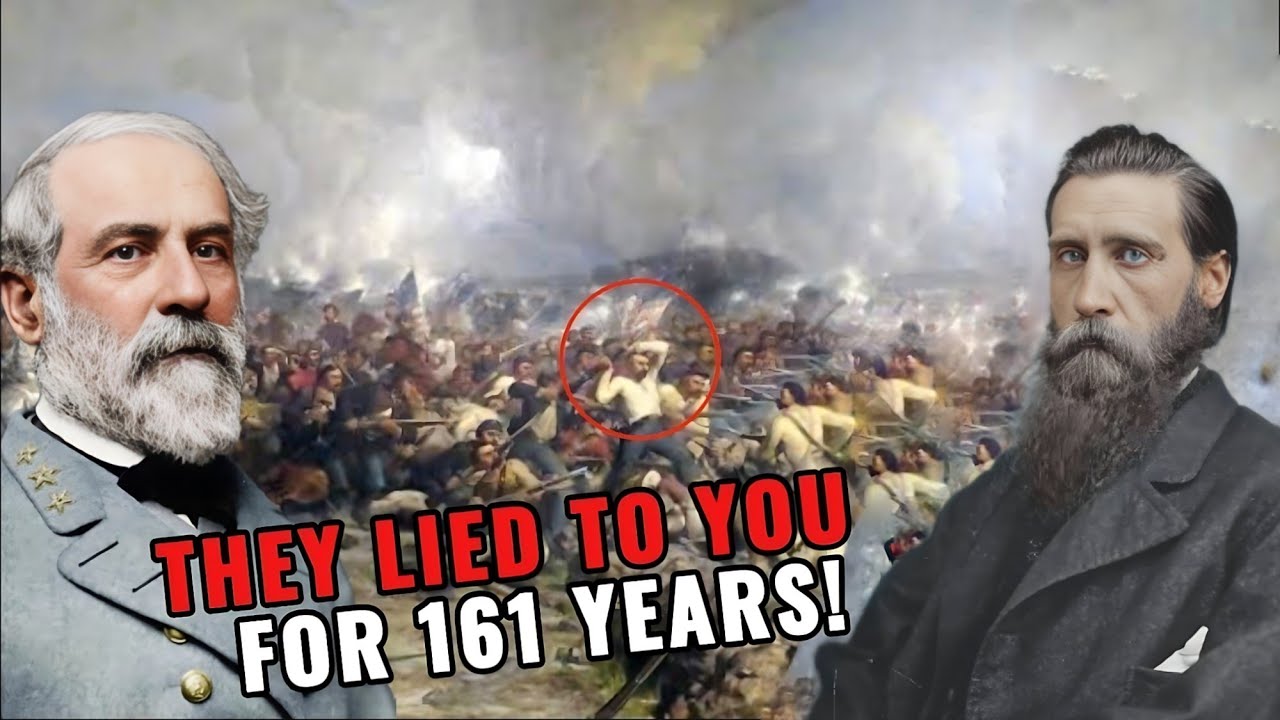
P. Hill in watching the placement of the Federal forces. Lee, in full uniform with his coat fastened to his neck and his sword belt around his waist, paced steadily in the shadow of the trees, pausing now and then to study the enemy through his field glasses. He appeared optimistic, though at times deeply absorbed in reflection.
Nearby, Colonel Fremantle of England sat in the fork of a tree, continuously scanning the high ground occupied by the Federal Army. Lee was eager to begin the attack that morning. He told Hood, “The enemy is here, and if we do not beat him, he will beat us. ” Hood thought it more prudent to wait for the arrival of Pickett’s division, which was still behind them.
Later, as they sat together beside the trunk of a large tree, Longstreet mentioned to Hood that Lee was impatient and wanted him to attack, but Longstreet was reluctant to do so without Pickett. Longstreet said he never wanted to step into battle with one boot missing. The morning passed slowly, heavy with tension, until about three o’clock in the afternoon, when they could wait no longer. They determined to focus on their far right and prepare a charge along the Emmitsburg Road.
McLaws moved forward, and Hood followed directly behind with his own division. Soon he was ordered to hurry his men and pass McLaws. To accomplish this, he sent a pioneer unit to take down fences and clear the path. The commands given to him were clear: position his division along the Emmitsburg Road, form a line of battle, and prepare the charge.
Before reaching the road, Hood sent several of his most reliable Texas scouts to locate the enemy’s farthest left flank. They quickly returned with critical information. The enemy’s flank rested on Round Top Mountain. The terrain was clear, allowing the Confederates to move through a wooded pasture around Round Top and strike the enemy’s side or rear.
The scouts also reported that Federal supply wagons were heavily concentrated behind the enemy lines, making them vulnerable to an attack from that direction. When Hood arrived at the Emmitsburg Road, he acted without delay. He positioned one or two artillery batteries and began firing. The enemy’s artillery quickly answered, revealing their positions.
Their left flank was close to Round Top, their lines bending inward and outward in a concave curve. A significant force was positioned ahead of their main line, between the Emmitsburg Road and Round Top Mountain, arranged in battle formation on a rise next to a peach orchard. Hood realized that to follow orders and advance along the Emmitsburg Road, he would first have to engage and drive back this forward battle line. At the base of the mountain and up its side, enormous boulders were piled closely, creating narrow passages that threatened to disrupt his formation and scatter his men during the rocky climb.
He also recognized that his division would face intense fire from the enemy’s main line, positioned on the crest of the high ground, with Round Tops securing their far left. The curved nature of the enemy’s line meant his men would suffer terrible fire from the front, flank, and rear. Hood considered it almost unachievable to climb the steep rocky mountain under such converging fire while also driving the enemy away. Any victory, he knew, would require a terrible cost from the most courageous men ever to wage war.
These vital understandings arrived so quickly that Hood felt compelled to urgently caution Longstreet that the attack as directed was inadvisable. He begged instead to move around Round Top and assault the enemy’s side and rear. He sent an officer to propose this altered plan, listing his justifications. Longstreet’s answer was immediate: General Lee’s orders are to attack up the Emmitsburg Road.
Hood dispatched another officer to repeat his concerns of defeat and renew his request to flank Round Top. Again, the reply remained the same. Meanwhile, the artillery exchanges continued, and Hood became ever more convinced that the Federal line extended to Round Top. He saw almost no realistic prospect of achieving much through the attack as commanded.
The enemy’s position seemed so naturally strong that he could almost describe it as impregnable. They could easily drive back the assault just by throwing stones down the hillside as the Confederates climbed, apart from their flanking fire. For a third time, Hood sent a staff officer, his adjutant general, Colonel Harry Sellers, selected for his bravery and outstanding ability to fully explain the circumstances and encourage Longstreet to see the situation himself. Colonel Sellers came back carrying the same directive: General Lee’s orders are to attack up the Emmitsburg Road.
Almost right after, Colonel Fairfax from Longstreet’s staff came and repeated those orders. After this urgent objection, the only protest of his entire military life, Hood ordered his line to move forward and start the assault. As his men marched ahead, Longstreet came to him personally. In their short discussion, Hood again expressed his worries and disappointment over being refused the opportunity to flank Round Top.
Longstreet emphasized that they must follow General Lee’s orders. Hood then advanced his line under severe fire. Approximately twenty minutes after arriving at the peach orchard, he received a serious arm injury and was taken from the field, ending his part in the battle. As he lay on the stretcher being carried away, he felt deep sorrow, fearing for his courageous soldiers who composed one of the most excellent divisions in that renowned army.
He strongly felt that had he been allowed to maneuver around Round Top Mountain, they would have taken that ground and overwhelmed the enemy. More than a decade later, in 1875, General James Longstreet, who had grown somewhat isolated from many old Confederates because of his shift in political views, contacted Hood. He wanted to understand Hood’s perspective on the events at Gettysburg. Hood wrote a letter in reply, describing his experiences throughout the battle in detail.
That letter is the source of this account. Hood’s charge at Gettysburg remains one of the war’s most well-known incidents. Devil’s Den and Little Round Top remain two of the most legendary locations of the battle, famous for the fierce and bloody fighting that occurred there. The attacks at these sites rank among the Civil War’s most vicious contests, characterized by furious fighting and immense losses.
Hood’s personal account provides a rare view into the battle from a Confederate general struggling with battlefield confusion and the responsibilities of command. It is crucial to remember that Hood’s testimony was written more than a decade after the war ended. This gap raises questions about the accuracy of his memories. Human recollection is naturally fallible, with details often changing or disappearing with time.
Hood never wrote down his thoughts immediately after the battle, which throws further doubt on his story. Still, his letter to Longstreet remains a captivating look into his experiences during one of the war’s decisive moments. John Bell Hood died in New Orleans just four years after composing this powerful letter. His life and military legacy continue to intrigue historians and Civil War experts.
His letter provides a rare individual look into a battle still enveloped in secrecy and controversy. The question of whether his caution, if heeded, could have changed the path of Gettysburg remains a matter of enduring historical debate.