By 1944, Nazi Germany controlled vast stretches of Europe, but its armies were bleeding. After more than four years of war, the regime needed ever more soldiers to hold the front lines, police occupied territories, and crush resistance movements. In the Balkans, one such unit was formed largely from Albanian recruits from Kosovo, presented by Nazi propaganda as a powerful new mountain division. In reality, most of its soldiers would desert, and the formation would collapse in just six months.
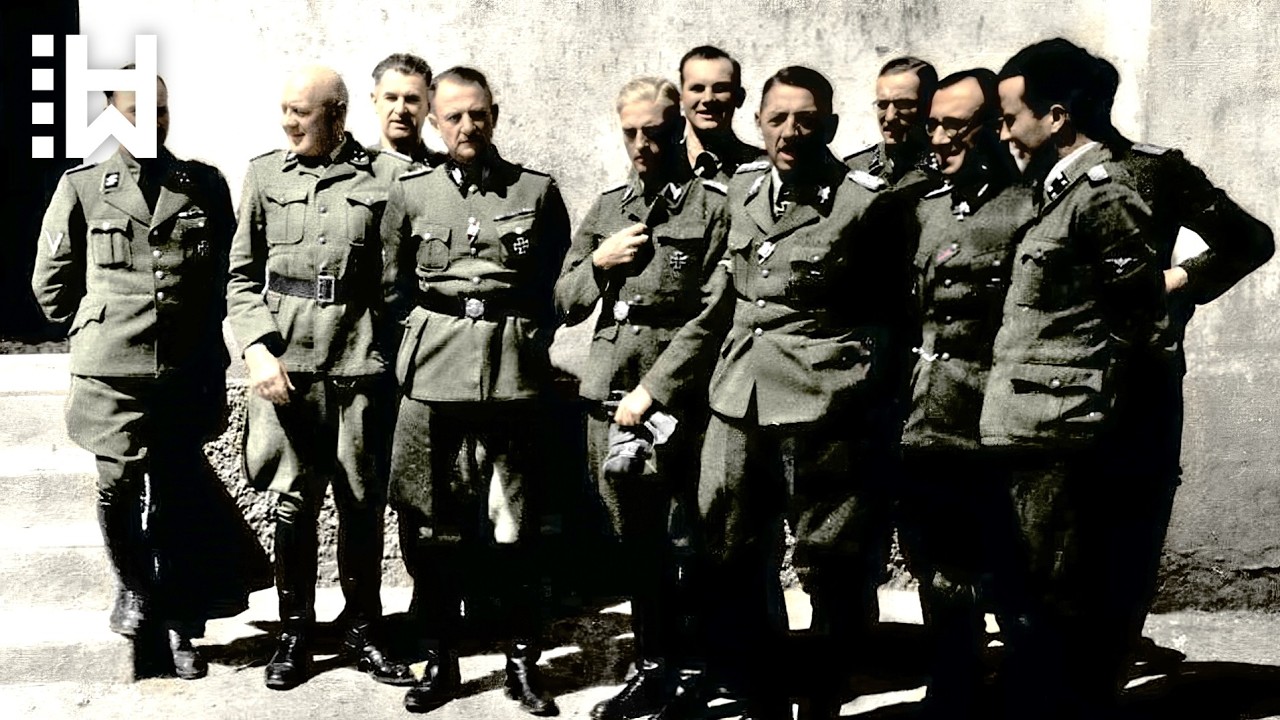
But before it vanished, its members helped deport Jews, murdered prisoners, and killed unarmed civilians. This is the story of the 21st Waffen Mountain Division of the SS Skanderbeg, the crimes committed by its men, and the deadly consequences that followed. The conditions that made the division possible emerged before the war even began. On April 7, 1939, fascist Italy invaded Albania and brought the country under its control.
The war reached the western Balkans in April 1941, when Germany and its allies attacked the Kingdom of Yugoslavia and forced its surrender in under two weeks. After the defeat, most of Kosovo, a former Yugoslav region, was annexed to Italian-occupied Albania. Together with several neighboring provinces, it formed a “Greater Albania,” an expanded territory meant to unite areas with large Albanian populations. Many Albanians from Kosovo wanted the region to stay unified and feared it would once again fall under Yugoslav rule after the war.
Italian and later German authorities exploited these hopes and fears to gain local support and recruit men into their forces. Armed groups were raised to fight the Chetniks, royalist Serbian fighters, and the Yugoslav Partisans, the communist-led resistance movement under Josip Broz Tito. The occupation also deepened old conflicts between communities. Some Albanian collaborators drove their Serbian neighbors from their homes, seized their property, and killed civilians suspected of supporting the resistance, often without evidence of any involvement in combat.
Italy surrendered to the Allies on September 8, 1943, ending Italian rule over Albania and most of Kosovo, but that did not end foreign control. German forces moved quickly to replace the Italians and occupy their former territories. Germany presented Albania as an independent state, although its government depended on German support and the presence of German troops. The new occupiers wanted to turn local support for the idea of a “Greater Albania” into soldiers who would fight their war.
In September, Albanian nationalists founded the Second League of Prizren, an organization that supported cooperation with the German occupiers. One of its prominent figures was Xhafer Deva, a politician from the city of Mitrovica in northern Kosovo. In November 1943, he became minister of the interior in the German-backed Albanian government. Deva used his position to help recruit Albanians from Kosovo for the fight against the Partisans.
He provided local support and found recruits, while the Germans organized, trained, and commanded them. This suited the plans of Heinrich Himmler, head of the Nazi paramilitary SS, which enforced racial policy and ran the concentration camp system. Its military branch, the Waffen-SS, formed divisions that fought alongside the Wehrmacht. A battalion of hundreds of Albanian soldiers was already serving in the 13th Waffen Mountain Division of the SS Handschar, a German-led formation composed largely of Bosnian Muslims.
In February 1944, Adolf Hitler approved Himmler’s proposal to create a separate Albanian division. It was established on May 1, 1944, as the 21st Waffen Mountain Division of the SS Skanderbeg. It was named after Albania’s greatest national hero, Gjergj Kastrioti Skanderbeg, a fifteenth-century Albanian leader famous for fighting the Ottoman Empire, which ruled most of the Balkans at the time. Nazi propaganda used his image and Albania’s double-headed eagle alongside SS symbols to attract recruits.
Most of the soldiers were Muslim Albanians from Kosovo, although there were also smaller numbers of Catholics. The Muslim recruits reportedly took an oath on the Quran, pledging to wage a jihad presented as a holy war against infidels. The Germans provided most of the officers and technical specialists, drawing personnel from Germany and from German-speaking communities in Southeast Europe. The commander was August Schmidthuber, an experienced officer who had served in the Prinz Eugen Division, a Waffen-SS formation largely recruited from ethnic Germans living in Yugoslavia.
Despite its name, Skanderbeg never reached the planned size of a full division. At its peak strength, it numbered about 6,500 men, many of whom received only six weeks of training before being sent to fight. The division became involved in crimes against civilians less than two weeks after its formation. On May 14, 1944, its soldiers raided the homes of Jewish families in Pristina, today the capital of Kosovo.
They arrested 281 Jews, including local residents and refugees who had fled to Kosovo from other occupied territories. The prisoners were handed over to German security authorities. Most of the detainees were later transported to the Bergen-Belsen concentration camp in northwestern Germany, where many died from starvation, disease, overcrowding, and lack of medical care. By helping carry out the arrests, the Skanderbeg division took a direct role in the Holocaust, the Nazi campaign to persecute and murder the Jews of Europe.
The roundup of Jews was not the division’s only crime. Across Kosovo, its soldiers killed Orthodox Christian Serb civilians and looted and burned their homes. Skanderbeg soldiers increasingly earned the contempt of their German officers for their lack of discipline and widespread plundering. Schmidthuber himself complained about the men under his command, saying of the Albanian soldier: “During an attack he only advances as long as he finds something to steal or plunder.
For him the war ends when he seizes a goat, a plowshare, or a sewing machine wheel. ” His criticism focused on the damage such behavior did to military discipline and combat effectiveness, not on the suffering of the civilians who were robbed or attacked. This lack of discipline and violence accompanied the division into its first major battles. In the summer of 1944, German commanders sent Skanderbeg to northeastern Montenegro as part of an attempt to prevent the Partisans from advancing toward Serbia.
The poorly trained division struggled against experienced opponents and suffered losses as the operation quickly began to collapse. German-led forces then turned against villages they accused of supporting the resistance. On July 28, soldiers from Skanderbeg entered the settlement of Velika together with the 14th Regiment of the Prinz Eugen Division and local auxiliary units. Most of the local men had already left the village or were hiding in the surrounding forests.
Those who remained were mostly women, children, and the elderly. This did not stop the men of Skanderbeg. The attackers moved through Velika, killing civilians in their homes, gardens, and fields. Some victims were shot where they were found, while others were thrown into burning buildings.
One survivor, Devna Vutić, later recalled how a member of the division killed her son and tried to kill her as well. She said: “He fired immediately, hitting my son Borislav who was in my arms, and hitting me in my right arm. ” The soldier who shot me entered the house, remained there briefly, and then left. When he left the house, he re-loaded his rifle, approached within two steps of me, and looked directly into my eyes.
I turned away so I would not see him fire, but I could not escape. He fired several shots. I remember that it was only the fifth bullet that brought me down. Then I lost consciousness.
Within about two hours, at least 428 people were killed, including around 120 children, although some estimates put the number of victims as high as 550. Even while members of Skanderbeg took part in the massacre at Velika, the division was already falling apart as a military force. The failed battles in Montenegro left it weakened, with more than 400 men fleeing or disappearing before the operation ended. During the second half of August, the remaining forces fought around Debar, a town in the western part of what is now North Macedonia, but again failed to defeat the Partisans.
German commanders concluded that the unit was fit only for basic guard duties. Some members were assigned to guard chromium mines near Kosovo, where reports said one Skanderbeg regiment lost its men in clashes with Partisans, while desertions continued to reduce the division’s strength. On September 1, 1944, the division’s collapse turned into open mutiny. Soldiers stationed in Tetovo and Gostivar, two towns in the western part of what is now North Macedonia, revolted, killed German officers and men, and escaped with their weapons and uniforms.
Germany was by that time losing the war. The Red Army was approaching the Balkans, while Romania and Bulgaria abandoned their alliance with Germany. By early October 1944, the division’s strength had fallen to about 4,900 men, fewer than 1,500 of whom were fit for combat. Himmler tried to fill the gaps with German sailors withdrawn from Greece, but these reinforcements could not turn the remnant of Skanderbeg into an effective division.
In October, the remaining troops fought around the town of Gjakova in western Kosovo and covered the withdrawal of German forces from the region. Its collapse as a military formation did not stop its crimes against prisoners and civilians. Schmidthuber ordered his men to burn more villages and kill more people. In the autumn of 1944, members of the division shot or hanged 131 resistance fighters.
On October 24, General Alexander Löhr, commander of Army Group E, the German command responsible for military operations in Greece and the southern Balkans, ordered all Albanian soldiers still serving in the division to be disarmed and sent home. On November 1, exactly six months after its creation, Skanderbeg was officially dissolved. Its German officers, specialists, and sailors were reorganized into Battle Group Skanderbeg under the command of Alfred Graf. They withdrew from Kosovo in mid-November and were later placed under the Prinz Eugen Division as the German retreat through the Balkans continued.
Although the new unit retained the name Skanderbeg, the Albanian division that Himmler had hoped would become the core of a much larger Waffen-SS force in the Balkans had ceased to exist. The men responsible for its crimes would face consequences later. After Germany surrendered, Himmler, who had supported Skanderbeg’s creation, was captured by British forces. He avoided trial by committing suicide with poison on May 23, 1945.
Both Schmidthuber and Löhr fell into Yugoslav hands. From February 5 to February 16, 1947, they stood trial with five other German commanders before a Yugoslav military court in Belgrade, the capital of Yugoslavia. Schmidthuber was convicted of involvement in massacres, deportations, and other crimes against civilians. Löhr was convicted of war crimes committed by forces under his command, including the killing of hostages and the burning of villages.
Both men were sentenced to death. Schmidthuber was hanged, while Löhr was executed by firing squad. Skanderbeg lasted only six months and failed as a fighting formation. Most of its recruits deserted, while those who remained proved ineffective in combat and suffered losses against experienced Partisan forces.
Yet its military weakness did not make it harmless. Its members helped deport the Jews of Pristina, killed prisoners, ambushed civilians, looted and burned villages, and took part in the massacre at Velika. The division is remembered not for victories on the battlefield, but for its service to the Nazi occupation, its contribution to the Holocaust, and its violence against people who could not defend themselves.