On the evening of June 4, 1941, a woman collapsed at a staff dinner in the White House. Marguerite LeHand, known to everyone as Missy, was forty-four years old. Within about two weeks, she suffered a major stroke. Partial paralysis followed.
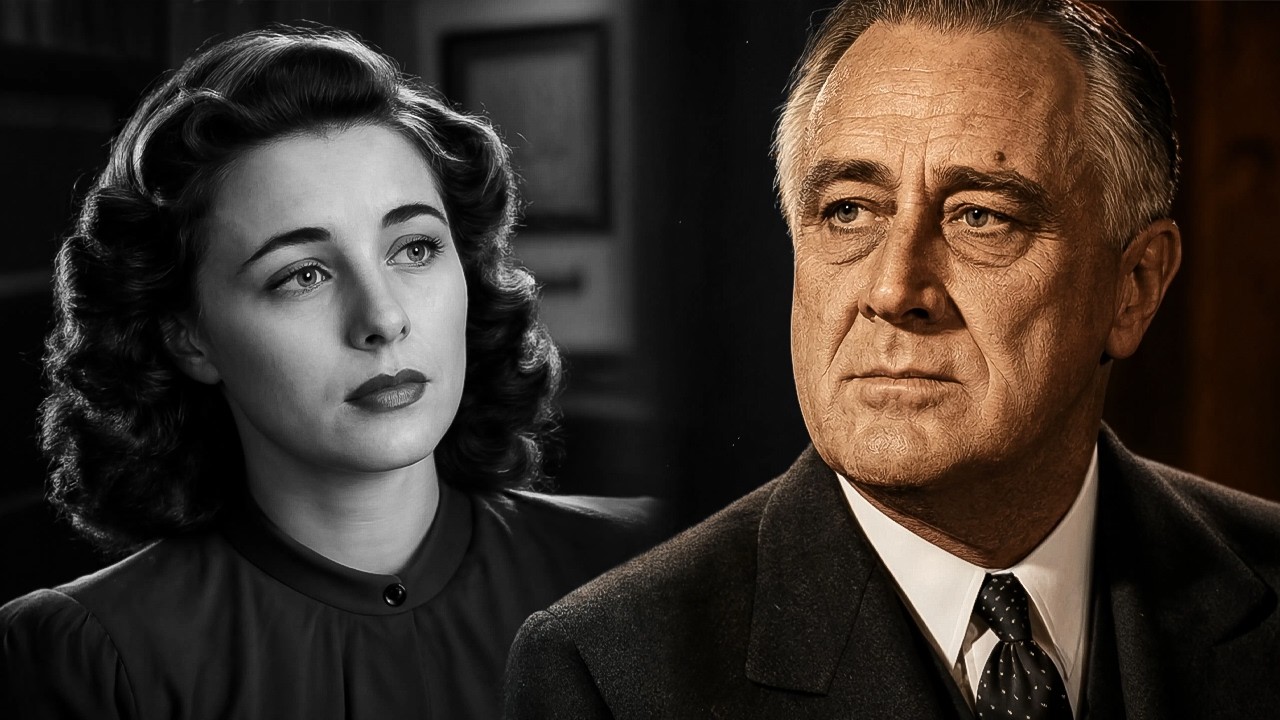
Her speech was severely impaired. She never worked another day in the West Wing. The Roosevelt White House made a calculation about what would happen next. Missy LeHand had served the president for twenty-one years.
She had held his power of attorney, signed his personal checks, controlled access to the residence, and occupied the only office in the West Wing with a door that opened directly into the Oval Office. The institution assumed she would receive full support and recover. She would return. Franklin Roosevelt’s own will made a different calculation.
He had revised his estate documents to split the income from his estate evenly between two beneficiaries: his wife, Eleanor, and Missy LeHand. Equal shares. The legal document acknowledged what the institutional record had always avoided naming directly. Missy LeHand destroyed her letters.
She died on July 31, 1944, eight months and twelve days before Franklin Roosevelt. She never collected a cent of the inheritance. Her working files, preserved under another woman’s name in a private collection that nearly went to auction before Congress intervened, were not fully available to historians until 2010. The institution she helped build dedicated its library twenty-six days after her stroke, while she was still in a hospital bed.
She was not there. Marguerite Alice LeHand was born on September 13, 1896, in Potsdam, New York. She was the youngest child of Irish immigrant parents who moved to Somerville, Massachusetts, a working-class suburb of Boston, when she was young. At fifteen, rheumatic fever struck her.
It permanently damaged her heart, causing episodes of atrial fibrillation that followed her for the rest of her life and contributed to her death at forty-seven. She studied secretarial science at Somerville High School, then worked a series of clerical jobs in Washington, D. C. In 1920, she was hired as secretary for Franklin Roosevelt’s vice presidential campaign, running alongside James Cox.
The Democrats lost. Eleanor Roosevelt invited her to Hyde Park to clean up campaign correspondence. Franklin Roosevelt hired her permanently. Seven months later, polio struck Franklin Roosevelt at Campobello Island.
Partial paralysis came overnight, without warning. Missy LeHand was twenty-four years old. What she became over the following years was not a secretary in any conventional sense. She accompanied Roosevelt through the recovery years, including extended periods aboard his houseboat Larooco, where she served as hostess in Eleanor’s absences.
She learned to play poker the way he played and adopted his expressions. She traveled with him to Warm Springs, Georgia, and worked alongside him to establish the Georgia Warm Springs Foundation in 1927, the first polio rehabilitation center in the country. When Roosevelt ran for governor of New York in 1928, she moved into the governor’s mansion in Albany with him. When he became president in 1933, she moved into the White House.
She lived on the third floor in a private suite no other non-family member was permitted to occupy. Her office in the West Wing had a door that opened directly into the Oval Office. She held power of attorney over Roosevelt’s personal finances. She decided which phone calls reached the president’s residence at night.
Roosevelt biographer Jean Edward Smith recorded the phrase Roosevelt used for her: his conscience. Biographer Kathryn Smith, in her 2016 biography The Gatekeeper, described her function precisely. She served as what we would today call chief of staff, the first woman in American history to occupy that role in the White House under a title that did not yet exist. Her official title was secretary to the president.
Her function was something the institution had no vocabulary for. She once asked a close friend, “How could anyone ever come up to FDR? ” She never married. She was also separately involved with William Bullitt, United States ambassador first to the Soviet Union, then France, from approximately 1933 to 1940.
That relationship never progressed to marriage. Historians who have examined this period note that her devotion to the Roosevelt household was the most likely impediment to any other life. The nature of her relationship with Roosevelt is disputed in the historical record. Biographers are divided on whether the emotional intimacy of twenty-one years included a physical dimension.
What is not disputed is the will itself. Whatever the private archive did not preserve, the legal document said what it said. On the evening of June 4, 1941, Missy LeHand collapsed at a White House staff dinner. A major stroke followed approximately two weeks later.
Partial paralysis. Severely impaired speech. She never worked another day in the West Wing. Twenty-six days after she collapsed, on June 30, 1941, the Franklin D.
Roosevelt Presidential Library was dedicated at Hyde Park, New York. She had been part of the inner circle that shaped its organization, its collections, and its purpose as a repository of Roosevelt’s legacy. She was in a hospital bed. Grace Tully, Missy’s own assistant, the woman she had trained and supervised, was promoted to take her position as personal secretary to the president.
The transition was clean, efficient, and immediate. Missy was transferred from the hospital to a convalescent facility, then to her sister’s home in Somerville, Massachusetts, back to the working-class suburb she had left in her early twenties to work on a presidential campaign. After twenty-one years at the center of American power, after nine years living three floors above the Oval Office, after holding the power of attorney of a man leading the country through World War, she went home to her sister’s house. Roosevelt did not visit her regularly.
The documented record shows minimal presidential contact after her transfer. Biographers who have traced this period note the absence, not the presence, of sustained contact from the man who had called her his conscience. She destroyed her letters. Whatever she wrote during the months in Somerville, whatever she recorded of what she felt about the removal, the silence, the replacement, does not exist.
The deliberate destruction of her correspondence means the primary record of her inner life from 1920 to 1944 is gone. What survived was institutional. Working documents, administrative files, papers that passed through her hands as she ran the West Wing. When Roosevelt died in April 1945, Grace Tully took the Roosevelt papers, including most of Missy’s working files, with her when she left the White House.
Tully kept them in private possession from 1945 until her own death in 1984. After that, the collection passed through private hands, nearly went to auction, and was rescued through an act of Congress in 2010. The National Archives documented the collection clearly upon acquisition. Most of the papers in what became known as the Grace Tully archive were originally Missy LeHand’s working files.
They were preserved under another woman’s name. When Missy LeHand died on July 31, 1944, Roosevelt issued a public statement. He called her utterly selfless in her devotion to duty. He described her as a genius at getting things done.
He did not describe the power of attorney. He did not describe the equal inheritance share. He described an efficient employee. A second stroke ended her life.
She was forty-seven years old. The rheumatic fever that had damaged her heart at fifteen never released her. She died in Chelsea, Massachusetts, and was buried at Mount Auburn Cemetery in Cambridge. She died eight months and twelve days before Roosevelt.
The will he had written, splitting his estate income equally between Eleanor and Missy, paid out its provisions after his death on April 12, 1945. Missy LeHand was not alive to receive it. Eleanor Roosevelt, who had known Missy since 1920 and had invited her to Hyde Park in the first place, wrote of her with a phrase historians have been examining ever since. She called her “My friend, Marguerite A.
LeHand. ” My friend. Two words for twenty-one years. The Roosevelt Presidential Library at Hyde Park holds her working files, cataloged under the Grace Tully archive.
The library she helped plan was dedicated twenty-six days after her stroke, while she lay in a hospital bed. Her letters are gone. She destroyed them. What survives is the administrative record of twenty-one years running a presidency.
Scholars who examined the Tully archive after the 2010 acquisition noted that most of the collection was Missy’s work, not Grace Tully’s, not Roosevelt’s. Housed under the name of the woman who replaced her. Roosevelt called her his conscience. He described her in her public obituary as an efficient woman who got things done.
He revised his will to leave her half his estate. He did not visit her regularly after the stroke. She went home to Somerville. She destroyed the record that would have explained what she understood about all of it.
She died eight months before she could collect what the will said she was worth. Missy LeHand entered Roosevelt’s world at twenty-four and never left it. The world left her.