The road into Cold Water Hollow was little more than a cracked vein of dirt winding through Appalachian forest, and every mile deeper meant another signal lost, another sound swallowed. A regional historian named Daniel Harker had come chasing a rumor he had found in a county archive: a letter signed only with the name Ren, scribbled on death certificates that never listed fathers and marriage records that read like closed circles. The town itself looked like it was holding its breath. Porches sagged under years of rain, windows were boarded from the inside, and faces vanished behind curtains as his car passed.
At the diner, the air smelled like damp wood and fear. No one would meet his eyes when he asked about the Rens. One old man finally leaned in and muttered, “Best not to stir them bones, son. ” The historian laughed nervously, but the old man did not.
That night, following a dirt trail locals said led nowhere, he found the remains of a house swallowed by ivy and time. In the center of the floor, carved into rotting wood, was a name scratched over and over again: Elias Ren. When the wind rose, it carried a sound, a woman’s hum, soft and mournful, drifting through the hollow. For the first time, the historian understood why Cold Water had no children playing in its streets.
Cold Water Hollow sat hidden in the folds of the Appalachian Mountains, far from the reach of maps or memory. The few who knew of it spoke softly, as though the name itself might summon what slept within its borders. The town was not just forgotten by time; it had been deliberately erased. Those who left never spoke of it again, and those who stayed carried secrets that twisted faces and darkened hearts.
The people had faces that mirrored the land: weathered, pale, and watchful. The bloodlines were closed circles, bound by old names and older sins. Births were whispered events, deaths were quiet disappearances, and the line between family and fate had long since blurred. The legend of the Ren family took root deep within this forgotten valley.
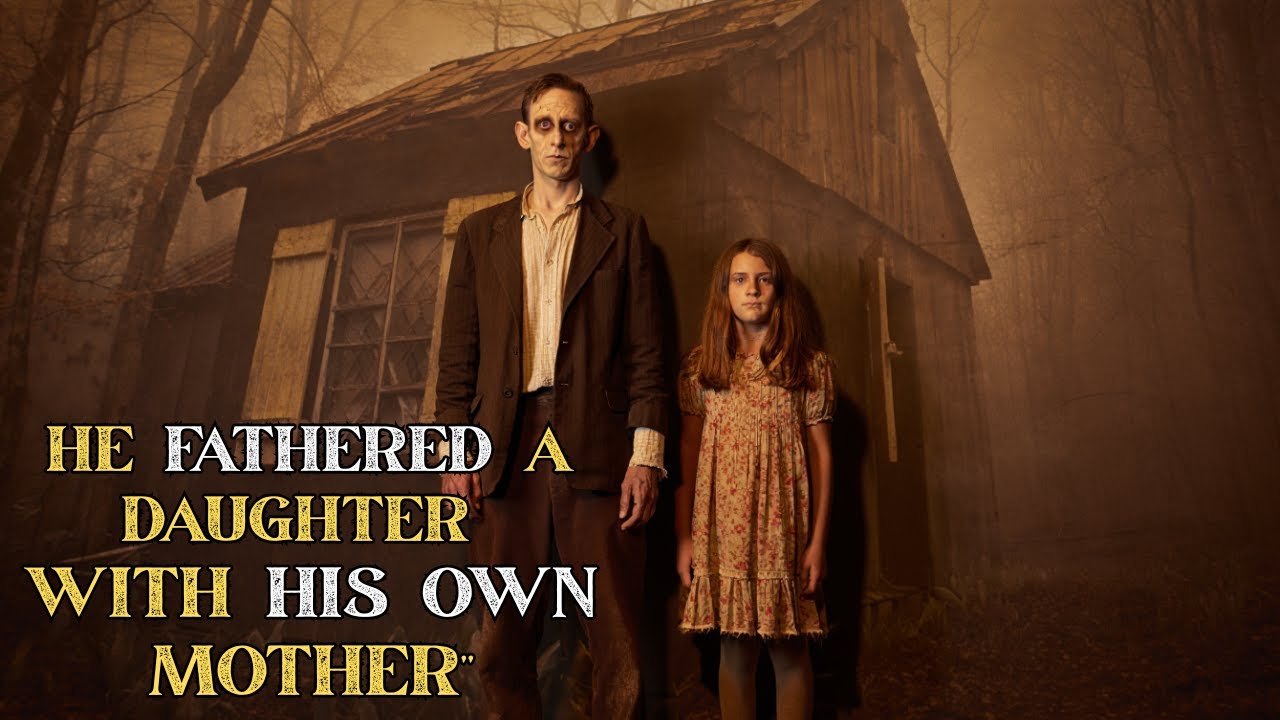
Elias Ren was a name spoken with the same unease one reserved for curses. No one could quite agree on when he lived or when he died, but everyone agreed he had never left his mother’s side. The stories painted him as a pale, quiet figure, always seen walking the edge of the forest with his head bowed. Children were warned not to follow him, for those who did were said never to return.
Locals said the Ren house stood miles from the town’s edge, half sunk into the earth. At night, strange lights flickered in its windows, soft and rhythmic, like the pulse of something alive. Some believed it was Elias keeping vigil for his dead mother. Others whispered she was not dead at all.
The truth of Elias Ren’s life was tangled in rumor, but the one detail that persisted was that he was born of his mother’s shame. His father was never named, his birth never recorded. His mother, Sarah Ren, kept him hidden from the world. He grew up without friends, without school, without the intrusion of time.
Their names became warnings spoken by candlelight, lessons in what happens when a family’s roots grow too deep into itself. Daniel Harker had spent years tracing the hidden bloodlines and forgotten tragedies of the Appalachian backwoods. Old court ledgers, half-burned church records, and the fading scrolls of family bibles were his treasures. When he came across the name Ren attached to death records with no fathers and no explanations, it was like finding a thread dangling from a sealed history.
The documents mentioned a settlement called Cold Water Hollow, a place that had not appeared on modern maps for decades. There were references to unlawful kinship, to unnamed heirs, and one phrase that unsettled him most: the blood remains unbroken. By the time he reached the first rusted mailbox bearing the name Ren, he could feel eyes on him. He stopped at the only building that looked alive, a diner whose flickering sign read Mabel’s Eery.
When Daniel mentioned the name Elias Ren, the chatter stopped. An old man in the corner spoke, his voice brittle with age. “You’re not the first to come asking,” he said. “But you’ll be the last to stay if you find what you’re looking for.
”
The abandoned cabin stood at the edge of the forest, where the trees grew so dense that daylight seemed afraid to enter. Daniel found it after two days of searching. Inside, the air was stale and heavy. The floorboards groaned beneath his boots.
Broken dishes, a child’s rusted toy, a single chair turned toward the empty fireplace. But what caught his attention was a small wooden chest half buried under debris. He pried it open, revealing a stack of journals bound in cracked leather. On the first one, a name was etched faintly across the cover: Sarah Ren.
The entries began innocently enough, mentions of farming, weather, and loneliness. But as the years passed, the tone shifted. The later pages spoke of purity, of God’s design through the blood, and of a son who was chosen to preserve what was untainted. The words grew erratic, desperate.
She described her son Elias not as a child, but as a vessel of divine purpose. One passage repeated the same sentence again and again: The blood must stay whole. A small photograph fell from between the pages, a young man and an older woman standing side by side, their faces eerily similar, almost identical. Sarah’s writings grew feverish.
She wrote that the world beyond the hollow had been poisoned by sin, that outsiders carried corruption in their blood, and that her family alone had been chosen to remain pure. Each child was to be born not of strangers, but of their own kind. In her mind, it was not an abomination, but a preservation of divine order. The final pages described a ritual under a moonless sky and the conception of a child Sarah called both her daughter and her granddaughter.
Elias had fathered a child with his own mother. Between her ramblings, Daniel found traces of guilt, where Sarah admitted to hearing voices that were not divine at all. Her final entry ended abruptly, the ink smudged by what looked like tears. The morning after discovering the journals, Daniel followed strange markings carved into the trees, deep grooves that spiraled and crossed in unsettling patterns.
The path wound deeper into the woods until the trees gave way to an open field blanketed with mist. There, half hidden by tall grass, he saw a cluster of weathered stones: gravestones, unmarked and crudely carved. Many had no dates, only a single name chiseled into the surface: Ren. Some stones were so close together they might as well have marked the same burial.
Beside one stone, a wooden cross bore fresh carvings of the same spiral symbol. Someone had been here recently. Cold Water Hollow was nearly deserted, yet someone was still tending to this place. When Daniel returned to town, the people seemed to sense what he had seen before he even spoke.
The old man who had warned him sat at his usual table. “You shouldn’t have gone there,” he muttered. “That land don’t belong to the living anymore. ” Finally, one of the town elders, a woman with eyes that had not known sleep in years, spoke up.
She told him the Rens had once been powerful landowners who kept to themselves. Strange rumors had spread, that children were being born with deformities, that the family refused doctors, that the same faces appeared generation after generation. The Rens had believed they were chosen to keep their blood pure, a belief that twisted into madness. When children started dying young, the townsfolk tried to intervene, but it was too late.
The Ren homestead burned under mysterious circumstances, and the few survivors fled into the forest. The town sealed itself off afterward. As Daniel left, the old man called after him: “Son, if you keep looking for ghosts in these woods, you might end up joining them. ”
The next morning, a woman approached him at the edge of town.
She introduced herself only as Laya. She said she knew why he had come and could show him what he was really looking for. Inside her small weather-beaten house, the same features repeated in nearly every photograph: pale eyes, high cheekbones, an eerie sameness. Laya explained that her grandmother had been Elias Ren’s daughter, the child born from the bond between him and his mother.
The stories of deformities were not exaggerations. “Our faces,” she whispered, “are the memories of their sins. ” She revealed that she had recently given birth, and her baby was showing the same unmistakable traits. “It’s starting again,” she said, her eyes glistening with fear.
She had been dreaming of the old cabin, of her ancestors calling her back. “They want the child to finish what they began. ”
That night, a storm tore through Cold Water Hollow with a fury that felt almost intentional. When dawn broke, Daniel returned to the old Ren property one last time.
The storm had ripped through the forest, tearing away the last layers of soil. Partially buried in the mud were human bones, two skeletons intertwined, their arms still locked around one another. From their size and placement, Daniel knew without question who they were: Elias and Sarah Ren. Time had fused them together, bone against bone, mother against son.
Near the remains, a stone slab bore the same spiral symbol, surrounded by words scratched in trembling letters: The blood must sleep beneath itself. Smaller bones lay scattered nearby, perhaps the remains of the child born from that union. The wind carried the faint sound of a woman’s hum, the same eerie tune he had heard the first night. He understood then that the Rens had not only buried their sins here; they had bound them to the land itself.
Daniel left the clearing shaken. The paths looked different now, as if the woods were shifting around him. When he reached the town, Cold Water looked even more deserted. The diner was empty, chairs overturned.
On the wall behind the register, he saw a fresh spiral carving etched into the wood. Beneath it, written in dark ink, were the words: “It wakes when remembered. ” Daniel realized with growing dread that by uncovering the Rens’ story, by speaking their names and tracing their symbols, he might have done exactly what the town had spent generations trying to prevent. The silence had not been fear alone.
It had been containment. Outside, a faint sound echoed through the fog, like laughter mixed with weeping. Near the treeline, he saw a small figure standing perfectly still, watching him, pale and childlike, its face obscured by shadows. He blinked and it was gone.
As he stood there, notebook trembling in his hand, Daniel understood that the story was not over. The Ren bloodline had never ended. It had only been waiting for someone to call it back.