The first time America heard his name, he was twenty-six years old. Montgomery, Alabama, December 1955—a city where bus seats were divided by law and habit. When Rosa Parks refused to give up her seat, the young pastor of Dexter Avenue Baptist Church was asked to speak for the protest. Martin Luther King Jr.
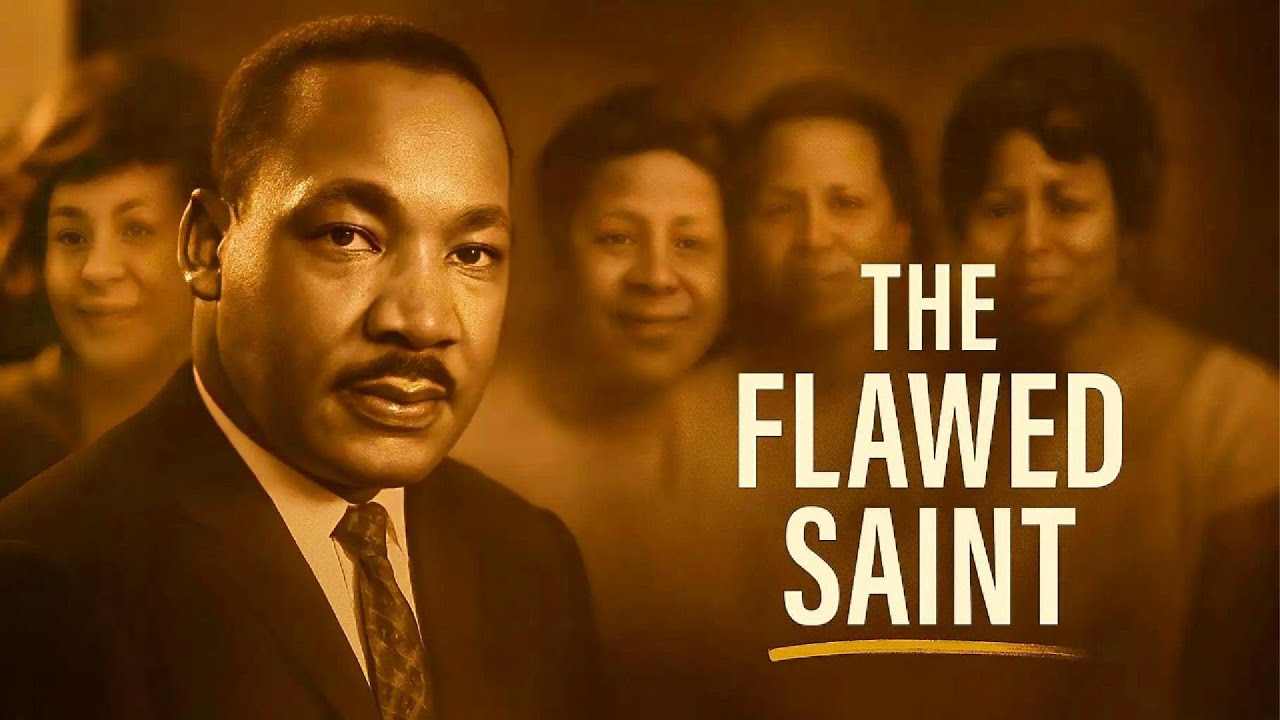
had not planned to become a symbol. He simply wanted to steady a community in crisis. But when he calmly mounted the pulpit, the crowd felt something electric. By the end of that evening, he was no longer just a preacher.
He was the movement’s voice. Fame arrived like weather—fast, relentless, unpredictable. Reporters knocked at the door. The phone rang past midnight.
Threats filled the mailbox. Coretta tried to guard the house. In 1956, a bomb tore through their porch. The baby was inside.
When King reached the house and saw the shattered glass, he prayed instead of screaming. That restraint turned him into a legend. But legends do not rest. He began traveling constantly—mass meetings in Montgomery, conferences in Nashville, fundraisers in Atlanta.
He stayed wherever churches could host him: spare bedrooms, borrowed parsonages, modest hotels in segregated districts. Supporters saw only calm. Inside, exhaustion hollowed him out. His letters from those years spoke of “the fatigue that consumes the spirit faster than the body.
” Coretta had married a preacher, not a national icon, and she practiced her music in quiet rooms while her husband was driven further into public life. Their rare meals together ended in phone calls or strategy sessions. She never doubted his commitment to the cause, but she already felt the personal cost. By 1958, Hoover’s FBI had begun filing routine reports on King, then classified as an “emerging Black leader.
” The surveillance was political, aimed at tracing any communist ties through his advisor Stanley Levison. Yet the tone of the memos hinted at curiosity beyond ideology. “Subject exhibits strong personal magnetism among female congregants,” noted one field report from Montgomery—bureaucratic phrasing that would later grow into obsession. That autumn, King traveled to New York to promote his first book, Stride Toward Freedom.
At Blumstein’s department store in Harlem, a mentally ill woman stabbed him with a letter opener. The blade lodged near his heart. Doctors said a sneeze could have killed him. Recovery changed him.
Visitors described him as serene but distant, as if he were already half-translated toward heaven. He told Coretta that surviving the attack meant his life no longer entirely belonged to him. In 1959, he toured India to study Gandhi’s methods. Crowds there greeted him like a returning prophet.
Journalists followed every step. The reverence felt alien. It also fed the distance between husband and wife. Coretta noted in her diary that he prayed longer, slept less, and carried loneliness within him.
When they returned to Atlanta and moved into a larger home, privacy disappeared. Meetings filled every hour; letters arrived by the thousands. In 1961, King lived inside the echo. He had become a moral brand, summoned from state to state to baptize every new protest with legitimacy.
Crowds waited at airports. News crews followed his car. Churchwomen reached for his hand as if it could absolve them of fear. He responded with grace, but even his closest friends noticed the strain.
He slept less than four hours a night, missed meals, and carried the hollow fatigue of a soldier who never leaves the front. Coretta kept the home. Their letters that year read like correspondence between diplomats, not lovers—itineraries, flight times, requests for clean shirts. She raised two small children alone, read headlines about her husband’s arrests and threats, while congregants whispered about his destiny.
She believed in his mission, but she felt history had quietly replaced the marriage as his first covenant. The FBI’s vigilance deepened as the Kennedys entered the White House. Robert Kennedy, under pressure from Hoover, authorized limited wiretaps on King’s associates in October 1961—officially to monitor communist influence, unofficially to watch King himself. The first listening posts were in New York and Atlanta.
Agents reported long nights of phone calls, laughter, and what they termed unstructured social interaction. There was nothing incriminating, but the moral tone of the reports changed. That year, King’s organization expanded rapidly. Workshops, strategy sessions, town-to-town travel—it all depended on a small circle of staff who followed him everywhere.
Among them was Dorothy Cotton, thirty, educated, charismatic, newly appointed director of the Citizenship Education Program based at the Dorchester center near Savannah. She trained activists to read, to vote, and to stand firm under arrest. King admired her intellect. She admired his endurance.
Their paths crossed constantly—one week Birmingham, the next Atlanta, then Savannah for training sessions that ran past midnight. Cotton later said, “We lived out of suitcases and moved from crisis to crisis. ” Within that rhythm, friendship blurred into something closer. They shared late-night conversations in borrowed church offices after rallies, surrounded by half-empty coffee cups and crumpled leaflets.
Witnesses later remembered how his voice softened around her, how laughter replaced the cadence of sermons. One assistant said he sounded like himself again when he talked to Dorothy. FBI analysts noted her name appeared on every itinerary. Internal memos marked her as a constant female companion.
The Bureau could not prove intimacy, but repetition was enough. In the summer of 1963, as the March on Washington took shape, the FBI’s focus shifted from ideology to morality. Hoover called King “the most dangerous Negro in America. ” For Hoover, charisma itself was subversion.
Destroying King’s moral authority became personal. Agents began cataloguing every woman who appeared at his events more than once. Names, hotel logs, photographs from banquets. They did not know who these women were or what they meant to him, but each was filed as potential leverage.
What began as surveillance of a movement had become surveillance of a man. That August, King stood on the steps of the Lincoln Memorial and spoke of dreams that lifted the world. The roar of two hundred thousand voices made him seem untouchable. Yet when the crowd dispersed and the microphones went quiet, he returned to his hotel room and stared across the Potomac until dawn.
He carried a nation’s hope, but as one assistant put it, he felt utterly alone. By early 1964, King’s fame had reached heights no Black preacher in America had ever known. He was thirty-five, nominated for the Nobel Peace Prize, his image printed on postage stamps in African capitals. Yet at the same moment the world began sanctifying him, the FBI began dismantling him.
Hoover told subordinates that King was morally degenerate and must be exposed before the nation. William Sullivan, his brilliant but ruthless deputy, treated it as a challenge. “We must mark him now,” Sullivan wrote, “if we are to prevent him from deceiving the country. ”
Every field office King visited—Atlanta, New York, Washington, Los Angeles, Miami—received authorization for technical coverage.
In plain words: wiretaps and hidden microphones. By February, agents were listening from the walls of the Willard Hotel in Washington, the Americana in New York, and the Dinkler Plaza in Atlanta. In these rooms, King thought he was finally out of sight. He was not.
Bureau microphones caught laughter, chatter, fragments of hymns, long silences, pieces of records spinning on portable turntables. For most ears, it was background noise. For Hoover, it was treasure. He ordered analysts to isolate female voices, transcribe phrases, interpret context.
When agents heard King say “she’s tired,” the report read “female companion resting. ” If a woman’s voice rose in the distance, it became “unidentified female, possibly intimate. ”
That year his orbit broadened beyond Dorothy Cotton. She remained constant, but his travels exposed him to new circles—politicians in Washington, activists in New York, donors in Los Angeles.
Among them was Georgia Davis Powers, a Kentucky politician and civil rights organizer. They met early in 1964 at a rally in Louisville, both already legends in their own right. Powers was the first Black woman elected to the Kentucky State Senate—sharp, confident, impossible to intimidate. King admired her courage.
She admired his steadfastness. Their friendship deepened through months of campaign work, long phone calls, and shared train rides to conferences. Powers would later write that intimacy between them grew from fatigue and trust, not glamour. She said, “He wasn’t the man on the podium then.
He was the man who doubted, who needed someone to talk to. ” Their connection, confirmed decades later in her own memoirs, became one of the few affairs historians can verify with confidence. The FBI, however, did not wait for confirmation. By mid-1964, they had Powers’s name in the file.
At the same time, the Bureau began receiving intelligence from an informant in Los Angeles who reported that King was spending increasing time with Dolores Evans, the wife of a respected dentist. According to the informant, she and King had first met at a Beverly Hills fundraiser two years earlier, and their correspondence resumed during his frequent visits to California. The informant claimed Evans had given birth to a daughter whose paternity her husband privately questioned. It was never verified.
Yet Hoover marked it in red pencil: “If true, destructive. ”
That summer, Bureau memos stopped pretending to be about national security. They were psychological profiles disguised as reports. Sullivan wrote, “King’s sexual aberrations are a national weakness.
He is not fit to lead the Negro people. Exposure must occur before he receives further honors. ” The honor he meant was the Nobel Peace Prize. In October, when King was officially named laureate, Hoover erupted.
He told the press that King was “the most notorious liar in the country. ” Newspapers condemned the outburst, but inside the Bureau, the insult was celebrated as permission to escalate. The Bureau’s new plan was direct: destroy King’s morale before he left for Oslo. They compiled a dossier titled “Personal Activities: King, Martin L.
” Hotel logs, summaries of tape recordings, and a typed transcript of what they claimed were “compromising sounds. ” Then came the letter. It was unsigned, typed on plain white paper, mailed from Miami to Atlanta in late November 1964. Inside the envelope was a reel-to-reel tape and a note that read in part: “King, look into your heart.
You know you are a complete fraud and a great liability to all of us Negroes. There is only one thing left for you to do. You have only 34 days to do it. You are finished.
There is only one way out for you. You better take it before your filthy, abnormal, fraudulent self is exposed to the nation. ”
Coretta received it first. She opened the envelope, played the tape—fragments of laughter, hotel noise, distorted voices pieced together—and waited for her husband to come home.
When he did, she handed it to him without a word. King played it once, recognized the editing, and knew immediately who had sent it. “This is Hoover,” he said quietly. The FBI had moved from surveillance to psychological warfare.
That winter, as King accepted the Nobel Prize in Oslo, agents still summarized his every move. Their notes mentioned champagne toasts, photographs, the Nobel lecture, and—chillingly—the subject’s calm, unaware of countermeasures. He was aware. He simply refused to let them see him flinch.
The new year began with microphones already waiting for him. By January 1965, the Bureau had installed hidden devices in every hotel King regularly visited: Atlanta’s Dinkler Plaza, New York’s Americana, Washington’s Willard, Los Angeles’ Statler. Field reports arrived weekly in Sullivan’s office, marked urgent even when they contained nothing but static. What mattered was not what they heard.
It was the excitement of hearing. King grew accustomed to the background hum of danger. Threat calls were routine. Anonymous letters came almost weekly.
But the knowledge that his private life was being mined for weakness produced a new kind of exhaustion. He confided to Abernathy, “They’ve decided I can’t be human. ”
In March 1965, he led marches from Selma to Montgomery. By April, he was again in Los Angeles, the city that blurred admiration and desire more than any other.
For King, Los Angeles offered something he found nowhere else—normalcy disguised as glamour. He could sit in a living room without strategy talk, hear jazz instead of speeches, watch children play in a neat garden. Back east, Georgia Davis Powers remained part of his trusted circle. Their closeness was open enough that even rivals within the SCLC noticed.
“Georgia had his ear,” Andrew Young later said, “and sometimes his heart. ”
Late in 1965 came the most notorious entry of all: the Willard Hotel allegation. Washington was heavy with rain that winter when King arrived for a ministers’ conference and strategy session. He checked into the Willard, the grand old hotel a few blocks from the White House, unaware the walls already had wires.
The FBI had installed microphones in his suite weeks earlier under the pretext of national security monitoring. Technicians had moved through the room at night, threading thin cords behind baseboards, planting transmitters in vents. They logged the operation as “Room 409, Subject King. ”
For several nights, the tapes caught nothing unusual: sermons practiced aloud, the scrape of a chair, laughter, fragments of prayer, the sound of running water.
Then, on one reel dated March 8, an agent listening from an adjoining room, identified only as T2, filed a handwritten note that would haunt the record for decades. It read: “At approximately 11:45 pm, Reverend Logan Kearse had sexual activity with an unidentified Black woman in the presence of King. Subject King watched, laughed, and made remarks of a sexual nature encouraging the activity. ” A single paragraph.
No transcript. No confirmation. Just a marginal scrawl that became federal gospel. The tape itself was nearly inaudible, drowned in static and the hum of street traffic below.
Two other technicians who reviewed the same reel later wrote that they could discern nothing but voices and laughter. But the nuance died the moment the memo reached J. Edgar Hoover’s desk. He underlined the words “laughed and made remarks of a sexual nature,” then stamped the file “Sexual Behavior, Extreme”—a label normally reserved for blackmail cases involving foreign diplomats.
Within twenty-four hours, the wording hardened. Where the original note said “watched,” a summary circulated saying “observed and encouraged. ” In the next retelling, “encouraged” became “participated. ” No woman was ever identified.
No transcript exists. No contemporaries confirmed the scene. Yet the Willard note became the cornerstone of Hoover’s private crusade. By 1966, the air around King felt heavier than ever.
The marches were bigger, the threats louder, and the faces of his followers looked older each week. He had led others toward freedom for nearly a decade while quietly losing pieces of himself. The unseen microphones were only part of the pressure. The real weight came from within—the growing sense that every triumph in public exposed another failure in private.
He began speaking more often of death and redemption, less of victory. Privately, he told Dorothy Cotton, “I’ve seen too much of man’s cruelty to believe in simple goodness anymore. ” She reminded him that faith was meant for the dark. He smiled, but it did not reach his eyes.
In Washington, Hoover was already preparing the next phase: controlled leaks to southern newspapers, moral briefings to friendly congressmen, quiet dossiers for allies within the Johnson administration. What began as surveillance was now open character warfare. King kept going. He still marched, still preached, still carried the hope of millions.
But the man who once moved mountains was now buried under paper—field reports, rumor sheets, whispered sins. By early 1967, King’s world had become a hall of mirrors. The movement’s victories no longer felt like redemption but like deferred debt. Cities that once welcomed him now greeted him with suspicion.
Northern liberals called him divisive; southern officials still called him dangerous. Bureau memos grew bolder. Field offices were instructed to cultivate informants not just near King but inside the SCLC itself. Secretaries, managers, and volunteers were quietly approached with promises of safety or money.
The instructions were explicit: document all female associations, frequency, duration, intimacy. Agents in Chicago, Los Angeles, and Washington filed weekly reports that read less like intelligence and more like tabloid columns. One even included a list of first names without context, as if rumor itself could replace evidence. Against this, King turned his focus outward—toward poverty, toward war, toward the great injustices beyond his own struggle.
He launched the Poor People’s Campaign, a plan to bring thousands of impoverished Americans to Washington for mass nonviolent occupation. It was his most ambitious and most desperate vision yet. The FBI called it proof of his radicalization. Inside him, exhaustion settled like a permanent ache.
He began talking privately about death as if rehearsing it. To Ralph Abernathy: “I don’t think I’ll see forty. ” To Dorothy Cotton: “They’ll kill me, but they won’t kill the movement. ” To Coretta: “If they take me, promise me you’ll make them see I was still a man.
” To a friend in March 1968, he said quietly, “I’m not afraid to die. I’m afraid to leave this work unfinished. ”
That same month, the sanitation workers of Memphis went on strike after two Black men were crushed to death in a garbage truck. King saw in their struggle everything his movement was built for: dignity, labor, justice.
He went to Memphis against his doctor’s advice, against Coretta’s pleas, against the weight of every warning. The FBI followed immediately, assigning new observers to the Lorraine Motel. They documented his arrival, the visitors to room 306, the phone calls, the meetings. On the night of April 3, 1968, King stood in the Mason Temple and delivered what would be his last sermon.
“I’ve been to the mountaintop,” he said, thunder rolling through his exhaustion. “I’ve seen the promised land. I may not get there with you. ”
The next evening, at 6:01 p.
m. , he stepped onto the balcony of the Lorraine Motel, chatting with Jesse Jackson below. A rifle cracked from a window across the street. A single bullet entered his right cheek, tore through his jaw, and lodged in his spine.
He fell instantly. Ralph Abernathy ran out and held him, blood spreading across the balcony. Andrew Young screamed for help. Within hours, the news had spread around the world.
Martin Luther King Jr. was dead at thirty-nine. In Washington, Hoover was notified within minutes. His only recorded words that evening were to an assistant: “This will quiet things down.
” The next morning, he ordered King’s entire personal file sealed under restricted access, with the most incriminating pages removed to a private vault. The phrase “personal behavior” disappeared from the summaries. What had been voyeurism was renamed “counterintelligence. ” Officially, the Bureau mourned.
Unofficially, it exhaled. James Earl Ray, the assassin, fled the country under an alias but was captured two months later in London with multiple passports and ten thousand dollars in cash. He pleaded guilty in 1969, then recanted, claiming he had been manipulated by a man named Raoul. The story of conspiracy would follow for decades, but the government never seriously reopened the case.
For the FBI, the threat was already gone. The microphones stopped humming. The agents stopped writing. The man they had tried to destroy through humiliation was now untouchable in death.
Yet the files survived—hundreds of boxes sealed under court order, locked in the National Archives until 2027. Coretta Scott King moved through the days after the murder like someone walking underwater. Cameras followed her as she led the march her husband had promised to complete. She wore black gloves and carried his conviction like a relic.
But beneath the public grace was calculation. She knew Hoover might use the scandal files one last time to blacken his memory, to cheapen his sacrifice. Within weeks, she began the work of sealing his legacy before the Bureau could reopen its campaign. She founded the Martin Luther King Jr.
Center for Nonviolent Social Change and insisted his name remain synonymous with peace, not scandal. In death, the image of sainthood hardened. The man who struggled with sin was turned to marble. In 1977, under public pressure and the scrutiny of the Church Committee, a federal judge ordered King’s surveillance archive sealed for fifty years.
Every tape, every transcript, every rumor that fueled Hoover’s obsession was locked in the National Archives, forbidden until 2027. Coretta’s silence became armor. When asked on television about the Bureau’s allegations, she said simply, “My husband believed in redemption. ” She refused to defend or explain.
In 1999, a civil jury in Memphis, in a case brought by the King family itself, found that Ray was part of a larger conspiracy involving government agencies and others. The verdict received little coverage. The Department of Justice quietly dismissed it. But the doubt never died.
And always there were the tapes—thousands of hours of recordings, wiretaps, hotel microphones, informant calls, preserved but hidden. When the Church Committee tried to subpoena those tapes in the 1970s, the FBI refused, citing national security. Even senators were denied access. One staffer later recalled being told privately, “If you hear what’s on those tapes, you’ll lose all confidence in government.
”
What will 2027 bring? The truth, when it comes, will not rewrite King. It will reveal the price of sainthood in a world that cannot forgive humanity. Somewhere in a locked room, under fluorescent light and cold steel, the reels still wait—unlabeled, unplayed, humming faintly with the sound of a man caught between holiness and hunger, destiny and desire.
In the end, the real question was perhaps never about his sins or their tapes. It was about us—a nation that needed its heroes perfect even when perfection was impossible. A nation that worshipped them only after it had broken them.