The sentence was written in a small study above a courtyard in Buckingham Palace, and it was written by a man whose name almost nobody knew. Sir Alan Frederick Lascelles, called Tommy by everyone who ever met him, was not a politician, not a general, not a newspaper proprietor. He was a courtier, tall, stooped, soft-voiced, with a first-class mind and a private diary in which he recorded precisely what everybody else was too polite to say aloud. And the sentence he wrote would eventually cost the heir to the throne his crown, while costing Lascelles himself nothing at all, because outside three or four households, no one ever learned he had written it.
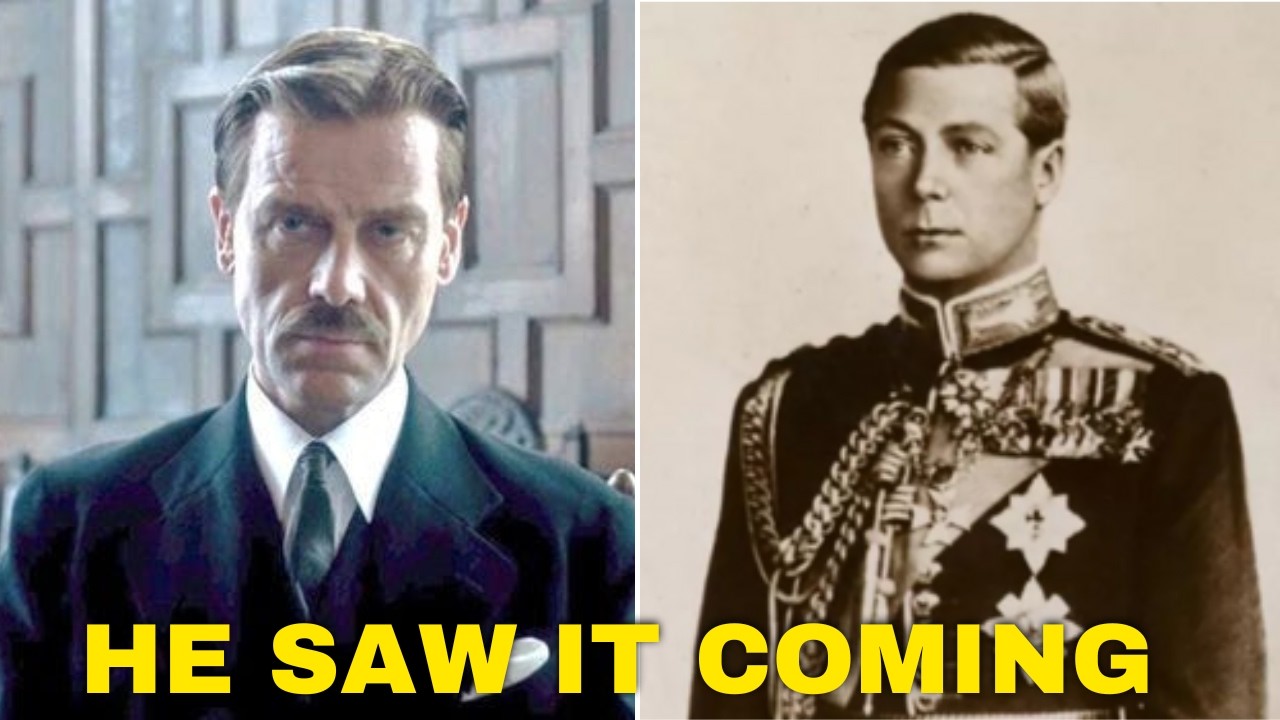
Britain in the 1930s believed its monarchy was the safest institution in the world, wrapped in pageantry and permanently insured by public affection. That belief was wrong. And the man who knew it was wrong had watched the danger coming for sixteen years. Lascelles was born on the 11th of April 1887 in the village of Sutton Waldron in Dorset, into a family that was neither rich nor obscure.
The Lascelles were an old Yorkshire family, long connected to the great houses of England, but his father was a younger son of a younger son. That meant inheriting a name, a set of manners, and very little else. There would be no estate, no seat in the House of Lords, only the expectation that one should behave as though there were. The household took its tone from his mother, who came from the Gore family.
The tone was brisk, reserved, and deeply dutiful. Children were loved but seldom praised, and the highest compliment a parent could pay a son was to remark briefly that he had behaved properly. Alan Lascelles would carry that vocabulary for the rest of his life and would use it with devastating effect upon princes of the blood. Somewhere in the nursery he acquired the name Tommy, and it stuck.
It followed him to Marlborough, to Cambridge, to the trenches, and to Buckingham Palace, giving him in every room he entered a slightly misleading air of harmlessness. He was educated at Marlborough College, arriving in 1901, the year Queen Victoria died, and then went up to Trinity College, Cambridge. He was not an outstanding scholar, taking a modest degree, but he left with something more useful: a way of arranging facts so that an argument appeared, and a conviction that most political problems are problems of order rather than of substance. He came down from Cambridge in 1909 with no obvious plan and spent the following years in the dim world of commerce in the City of London, finding the work tedious.
What he actually possessed in abundance was a certain kind of competence for which English has no satisfactory name, and which is therefore usually called character: the ability to hold a great deal of information without confusing it, to keep a confidence indefinitely, to judge a man’s reliability after a single conversation, and to write a letter so clear that it could be acted upon without further discussion. Such talents are invisible until a crisis arrives, and then they are priceless. Before the war, he joined the Bedfordshire Yeomanry, the territorial cavalry regiment, and by the summer of 1914 he was a competent though entirely untested cavalry officer. Then the war arrived, and it gave him, as it gave so many men of his generation, the terrible gift of a purpose.
The regiment landed in France in 1915 and within weeks whatever romantic notions it had shipped across the Channel were dismantled. The front was a landscape of mud and wire and shattered trees. In 1917 the regiment was converted into a machine gun unit, and Lascelles found himself commanding men whose weapon required the technical understanding of an engineer and the nerve of a sniper. It was the perfect preparation for his later life: a posting in which one man’s judgment, exercised quietly under enormous pressure, made the difference between order and chaos.
He saw men die of wounds that could not be treated, of gas that turned the lungs to liquid, of drowning in the mud of Passchendaele. For his service he was awarded the Military Cross and mentioned in dispatches. What the war did to him was not to destroy his faith in institutions but to deepen it in a particular and severe way. He had watched a country survive the greatest calamity in its history, and he had watched it survive not because anyone was clever, but because a great many people did their duty without asking whether it was personally satisfying.
He came out of the war with a moral architecture, and the remainder of his life was largely a matter of applying it. He also came out with a profound loathing for what he regarded as self-indulgence, and with the settled conviction that the men who had sheltered at home had given far less than the men who had signed up and been forgotten. That judgment shaped everything he ever thought about a certain kind of privileged, glamorous, restless man who had been given every advantage and had risked comparatively little. By the end of the war, he was a captain with no clear future.
In 1920 he married Joan, a woman of his own class and temperament, and in the same year he was appointed assistant private secretary to Edward, Prince of Wales, the twenty-six-year-old heir to the throne, the most photographed man in the British Empire. It was a brilliant appointment, and it began a relationship that Lascelles would come to regard as the central moral problem of his career. In 1920 Britain believed the Prince of Wales to be the golden boy of the empire. He was charming, forward-looking, adored by crowds everywhere he went.
The fact that he was restless, easily bored, easily led by clever companions, and entirely uninterested in the tedious machinery of constitutional government was regarded as a charming eccentricity rather than a structural fault in the state. Lascelles was paid to watch, and he saw the temper behind the smile, the decision taken at four in the morning, the friend who had been allowed too near. He saw the prince cancel appointments because he had been up late, leave official papers unread in their boxes for a week, choose his companions for their amusement value, and then complain when those companions behaved badly. He watched the heir to the throne of the greatest empire in history treat his own future as an inconvenience to be managed around his dinner plans.
Lascelles came to believe that the crown’s only real protection lay in its restraint. The king reigned and did not rule. The king’s opinions were his own but must never be visible. The corollary of that belief was terrifying: if the crown’s protection was restraint, then a king who could not restrain himself was not merely an embarrassment but a constitutional danger.
And there in the anteroom, arranging the appointments and carrying the files, stood a young man who had been raised with no restraint whatsoever, whose entire education had consisted of being adored. By the spring of 1929, after nine years in the prince’s service, Lascelles composed a document so thorough, so dispassionate, and so damaging that the men who read it must have felt the temperature of the room fall. He described a man of considerable charm and considerable irresolution, whose judgment was easily influenced by whoever had last had his ear, whose attitude towards his future responsibilities was fundamentally frivolous, and who was unlikely to grow into the kind of man the Constitution required. The language was clinical.
For this man, he wrote, the fundamental ideas of duty, dignity, and self-sacrifice had no meaning. It is the first draft of the case that would be made against Edward VIII in 1936, and it was written by his own assistant private secretary, in cold blood, seven years early. Nothing Lascelles said in 1929 was refuted by events. Everything was confirmed and then amplified into something far worse than even he had predicted.
He resigned, and the resignation was accepted. The Prince of Wales, who was not a vengeful man, was courteous about the whole business, because he genuinely liked Lascelles and could never quite understand why the man disapproved of him. The prince’s reply contained no argument, no rebuttal, only puzzlement and a kind of hurt affection. He had been loved by the world for twenty years and had mistaken that love for absolution.
Lascelles left royal service in 1929 at the age of forty-two, went to Canada, and was appointed secretary to the governor general in Ottawa. For the next four years he served Lord Bessborough, a decent, conscientious English peer given a job of enormous ceremonial importance and very little actual power. Ottawa in the early 1930s was the capital of a country in the depths of the Depression, with unemployment approaching thirty percent and wheat prices fallen by more than half. It was a world, Lascelles understood, with very little patience for the private happiness of millionaires.
He also read and absorbed the Statute of Westminster of 1931, which transformed the dominions into sovereign states and left the crown as the sole formal link between them. He understood before almost anyone in London that a royal scandal could divide the Commonwealth in a way no single parliament could control. The summons came in the summer of 1935. He was recalled to England and appointed assistant private secretary to King George V, the old sailor king.
What Lascelles found at the palace was a small court and a rigid hierarchy, controlled by Sir Alexander Hardinge, with Lascelles as his deputy. The two men watched the old king decline through the winter. On Christmas Day 1935, George V broadcast to the empire from Sandringham, his voice halting. On the night of the 16th of January 1936, he died.
The new king arrived the next morning, and the reign of Edward VIII lasted 326 days, the shortest in the history of the English crown. From the moment he came to the throne, Edward seemed determined to test every constitutional proposition to destruction. He kept Fort Belvedere, his private house in Windsor Great Park, as his real home, and the court and government were obliged to negotiate with him for access. He dined away, moving between the houses of wealthy friends.
He kept his own circle of companions, many of them unsuitable, and granted them a familiarity that courtiers found grotesque. And he did all of it with an insouciance that his staff had learned to read as a warning. The crisis that destroyed Edward VIII was not created in 1936. It had been building since 1918, and Lascelles, more than any other man alive, had seen it coming, had said so in writing, and had been ignored.
By the time the abdication came that autumn, he was in the room, or just beyond the door, on nearly every decisive night. He carried the boxes, drafted the letters, briefed the ministers, and kept the secret. And when the dust had settled, he returned to his desk and wrote it all down while the ink was still wet inside his head. The crown survived the crisis, but it survived because of the restraint Lascelles had always believed was its only protection.
He had spent his career enforcing a standard the Prince of Wales had never been given, and the standard held.