In May 2014, a young woman named Reshma Qureshi was attacked at a railway station in her hometown of Malhima, about 36 kilometers from Allahabad in Uttar Pradesh, India. She had come there to take her tenth-grade exams. The attack was not random. It was an ambush, set by her brother-in-law and his cousins, and it would change the course of her life forever.
Reshma’s sister had been having serious domestic problems with her husband. He regularly yelled at and abused her, so the family decided to bring her back home. Reshma’s sister brought her young son with her, and the family enrolled him in a local school. But the husband and his relatives took the child back, forcing the family to file a lawsuit to regain custody.
On the day of a scheduled hearing, the brother-in-law and his cousins lay in wait at the railway station. Reshma was with her sister when they were confronted. Her brother-in-law and his cousins grabbed her sister by the arm. The sister screamed for help and told Reshma to run.
Reshma tried, but they caught her by the hair, threw her to the ground, and splashed corrosive liquid on her face. She screamed for help, but the crowd that gathered only watched. No one stepped forward. Lying on the ground, Reshma cried and waited for someone to come to her aid.
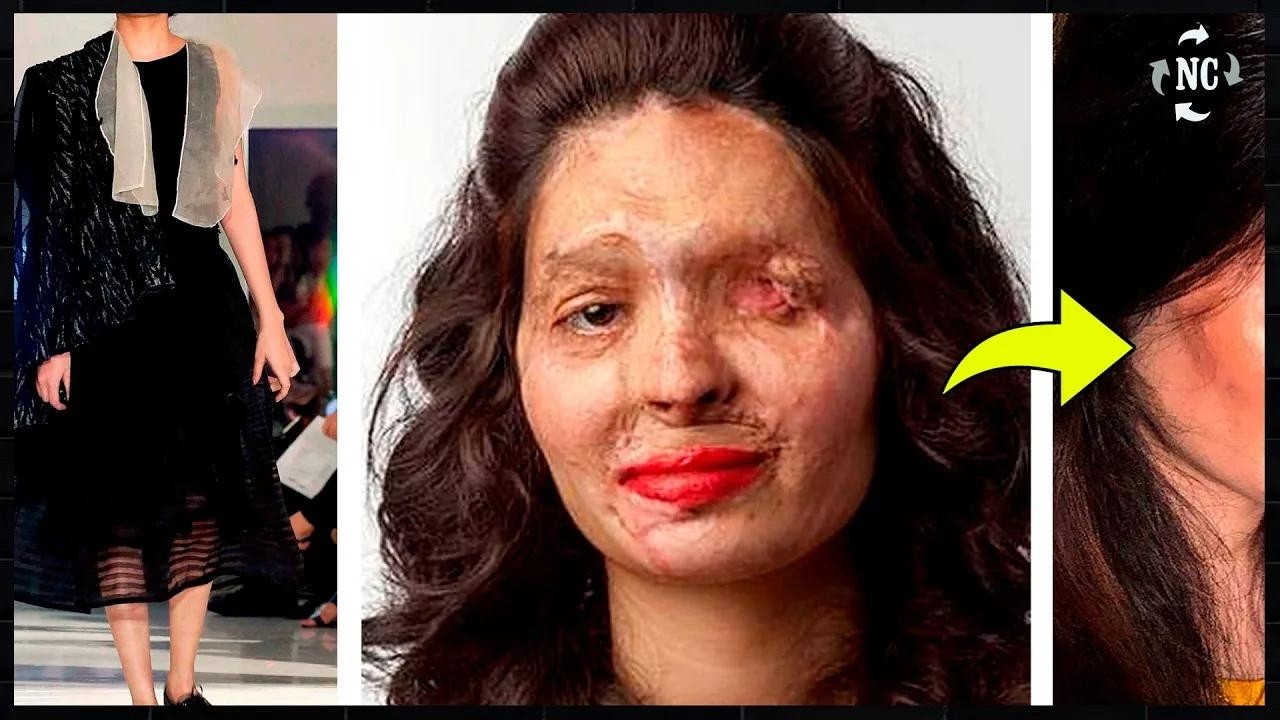
The attackers later claimed they had mistaken Reshma for her elder sister, since both women were wearing burkas. Whatever the intention, the damage was done. Reshma was left disfigured and would eventually lose her left eye. After the attack, Reshma’s mother saw her for the first time and fainted.
Reshma was taken to a small nearby hospital, but the hospital refused to admit her, demanding a police report first. For the next five or six hours, she sat at the police station in terrible pain. No hospital was willing to take her in. Finally, after seven hours, an ambulance transported her to a public hospital.
By that point, she could no longer see anything. Her face was swollen, and she feared she had lost her sight entirely. Her father, a Mumbai taxi driver, later admitted her to a private hospital, where she stayed for four months. During that time, she could see with both eyes, but then she lost sight in her left eye.
The doctors, she believed, had not acted quickly enough, and the delay had damaged her vision permanently. Her father sold his taxi to pay for her medical bills. Reshma was eventually taken to Mumbai and underwent surgery in a public hospital. She was admitted at night, and the operation was performed the next morning, with doctors rushing to save whatever sight they could.
She was discharged after fifteen days. People often expressed sympathy for what Reshma had endured, noting that her sister had been the real target. Reshma rejected this distinction. Even if the attack had happened to her sister, she said, her sister would have gone through the same ordeal, so the difference changed nothing.
The scars were physical, but they were emotional too. When Reshma first saw her face in the mirror after the attack, she fell into a deep depression. She believed her brother-in-law had deliberately ruined her life, but her parents stood by her. Two months after the incident, help arrived from an unexpected source.
The NGO Make Love Not Scars, founded by Ria Sharma, came to her aid. A meeting with Sharma transformed Reshma’s life. Sharma helped her overcome her depression, launched a crowdfunding campaign to cover her hospital and legal expenses, and built a strong emotional bond with her. It was through that support that Reshma found the courage to stop covering her face in public.
Reshma refused to be called a victim of an acid attack. She insisted on being called a survivor. She began working with Make Love Not Scars, an organization dedicated to helping survivors rebuild their lives through recovery, rehabilitation, and reintegration. She started creating videos under the title Beauty Tips by Reshma and became the official face of the End Acid Sale campaign, which appealed to India’s prime minister to ban the open sale of corrosive liquids in the country.
In one of her beauty tutorials, she made a simple but devastating point: it takes two minutes to apply blush, but only three seconds to leave a scar on your face forever. She also noted that finding the right shade of lipstick was harder than buying corrosive liquid at the market. The campaign’s posters and videos were wildly successful. In 2016, they won two international Cannes Lions creativity awards in France.
Reshma’s story reached beyond India. Rashael Powell, a California-based artist known for his hand-stamp artwork, created a black-and-white painting of her. Reshma was moved to tears when she saw it. Her advocacy also helped bring about legal change.
The campaign grew from an international petition into a case taken before the Supreme Court of India, which ordered states to enforce a ban on the sale of acid and corrosive chemicals. Despite these milestones, justice remained out of reach. After years of legal battles, only one of the three men involved in the ambush had been arrested. During the court proceedings, Reshma was required to appear as a witness.
Even though her father pleaded on her behalf, the court insisted she be present, threatening that otherwise the culprit would be released. Reshma called the situation deeply unfair. She moved to Delhi, where she lived with other women survivors at the Make Love Not Scars shelter. The organization provided support and vocational training, and Reshma’s beauty tips videos became enormously popular, drawing attention to the problem of violence against women.
She had always loved makeup, but she had stopped after the attack. Seeing other women wear makeup, she wished she could do the same, then asked herself why she could not. She reflected that in this world, the face is considered the most important part of a person’s identity. The man who disfigured her knew that ruining her face would ruin her life.
Two years after the ambush, in September 2016, Reshma made her runway debut at New York Fashion Week, walking in two shows. In 2018, in partnership with her friend and the CEO of Make Love Not Scars, she released a book. Her own words capture her purpose: many people had supported her, and she wanted to return the favor by supporting the many survivors out there. Reshma Qureshi, the daughter of a Mumbai taxi driver, was disfigured by men who claimed they mistook her for someone else.
She lost an eye and nearly lost her sight altogether. But she did not give up on life. She turned her attack into a cause, her scars into a public face for a movement, and her pain into a campaign that reached international audiences and helped push India toward a nationwide ban on the open sale of the chemical that had so profoundly changed her life.