On 8 May 1945, the Third Reich surrendered and the war in Europe ended. But for millions of German soldiers, the ordeal was just beginning. From Soviet labor camps in Siberia to interrogation centers in France, from ruined German cities to distant prison camps, these men faced a post-war struggle that would last years, sometimes decades. In the final days of April 1945, the Wehrmacht was disintegrating.
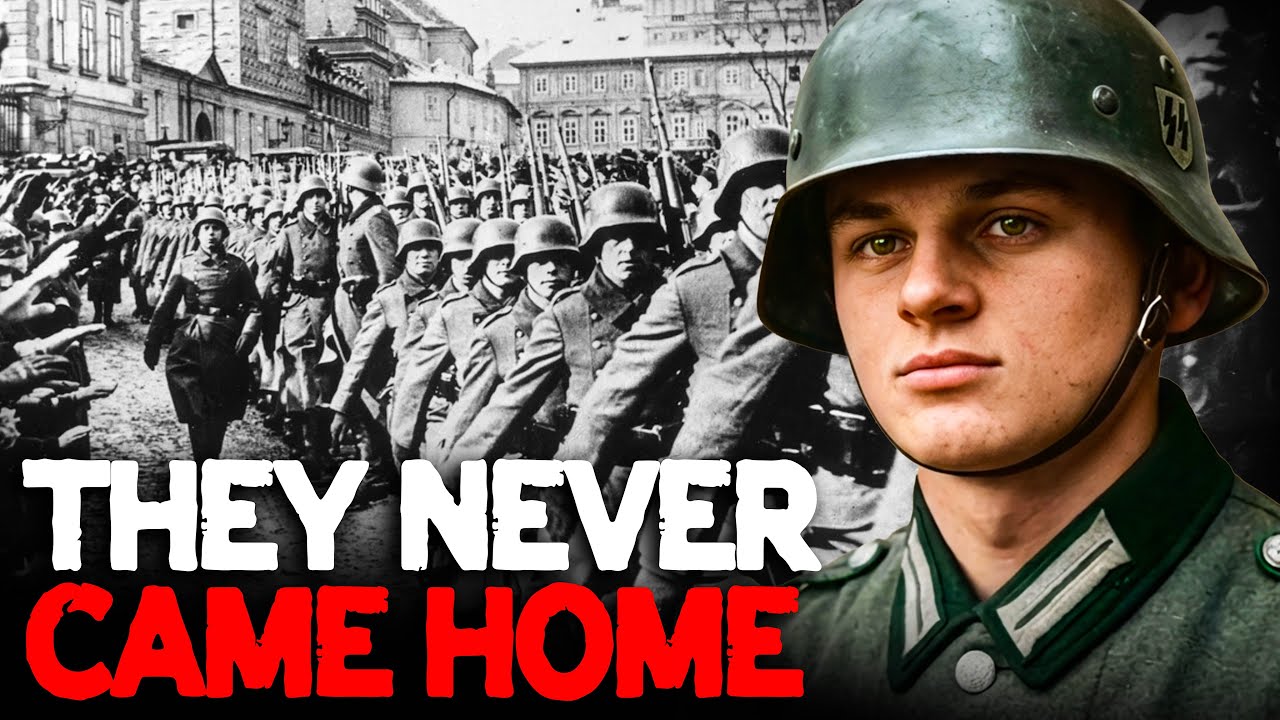
Soviet armies had entered Berlin, while American and British forces raced across Germany from the west. Trapped between two advancing enemies, millions of German soldiers faced an impossible choice: surrender to the Soviets or flee west toward the Americans and British. The difference would determine whether a soldier lived or died. Wehrmacht commanders knew what awaited their men in Soviet captivity.
Stalin had not forgotten the roughly 27 million Soviet citizens killed during the German invasion, and Red Army soldiers had seen the destruction across their homeland. Mercy was rarely extended when German soldiers fell into Soviet hands. On 2 May 1945, Berlin fell. That same day, tens of thousands of German soldiers tried to break through Soviet lines to reach the Elbe River, where American forces waited on the western bank.
Some succeeded; most did not. The Soviets captured approximately 3 million German soldiers in the final weeks of the war, and another 2 million in the months that followed as Red Army units swept through Eastern Europe, rounding up stragglers, deserters, and men trying to blend into civilian populations. Those captured by the Western Allies faced a different fate. Between May and June 1945, American forces alone took custody of over 4 million German soldiers, with British and French forces detaining millions more.
The sheer scale overwhelmed Allied infrastructure. Massive prison camps known as Rheinwiesenlager were established along the Rhine River. These were not traditional camps with barracks but open fields surrounded by barbed wire, holding hundreds of thousands of men with minimal shelter, insufficient food, and inadequate sanitation. Men slept on bare ground, often without tents or blankets.
Rations were meager, sometimes only a few hundred calories per day. Dysentery and typhus spread rapidly. Estimates of deaths in these camps vary widely, with some historians suggesting tens of thousands perished during the spring and summer of 1945. By late 1945, the Western Allies began releasing prisoners in stages.
Those classified as lower risk, men who had served in non-combat roles or had no affiliation with Nazi Party organizations, were released first. Others remained in custody longer, particularly those suspected of war crimes or SS membership. The process was chaotic. Denazification tribunals reviewed individual cases, but the volume of prisoners meant that many spent months or even years waiting for a hearing.
For those captured by the Soviets, the experience was far harsher and far longer. The Soviet Union did not view German prisoners as mere military detainees but as tools for reconstruction. Stalin ordered that German POWs be put to work rebuilding the cities, factories, and infrastructure the Wehrmacht had destroyed. Hundreds of thousands were transported deep into the Soviet Union to labor camps in Siberia, the Urals, and Central Asia.
The journey alone killed thousands, with men packed into unheated freight cars during the winter months and traveling for weeks across frozen landscapes. Upon arrival, they were assigned to construction brigades, mining operations, and timber camps. Temperatures in Siberian camps regularly dropped below minus 40 degrees Celsius, and rations were tied to productivity. Those who met quotas received slightly more food; those who fell short faced starvation.
Soviet records indicate that approximately 381,000 German POWs died in captivity, though some historians believe the true number was higher. Disease, malnutrition, exposure, and industrial accidents claimed lives at an alarming rate. Survivors later recalled that the first winter was the deadliest. Men who had survived the Eastern Front, the siege of Stalingrad, or the retreat from Moscow, died in camps far from any battlefield.
Releases from Soviet captivity came slowly. The first group of POWs returned to Germany in 1947, but these were primarily men deemed unfit for labor due to illness or injury. The majority remained in the camps. It was not until 1949, four years after the war’s end, that the Soviets began releasing prisoners in larger numbers.
Even then, tens of thousands remained in captivity. The final group of German POWs did not return from the Soviet Union until 1956, more than a decade after the war had ended. When they arrived in Germany, many found that their families had presumed them dead. Back in Germany, released soldiers faced a country that barely resembled the one they had left.
Cities lay in ruins. Berlin, Hamburg, Dresden, and Cologne were fields of rubble. The economy had collapsed, millions were homeless, and food was scarce. For returning soldiers, reintegration was not straightforward.
Many came home to find their houses destroyed, their families displaced, or their spouses remarried. Veterans carried physical and psychological scars, including amputations, blindness, and trauma that was not yet widely recognized or treated. But beyond personal trauma, returning soldiers faced a society grappling with guilt, shame, and denial. The full scope of Nazi atrocities was becoming public knowledge.
The Nuremberg trials, which began in November 1945, exposed the systematic nature of the Holocaust and other war crimes. Newsreels showed footage from liberated concentration camps. For ordinary soldiers, the question became unavoidable: What had they known? What had they done?
The answers varied. Some had served on the Western Front and claimed ignorance of the extermination camps in the East. Others had witnessed or participated in reprisals against civilians. A collective silence emerged.
Families did not ask, and veterans did not volunteer information. It would take decades before Germany began confronting this period openly. The Allied occupation authorities implemented denazification programs intended to remove former Nazis from positions of influence and re-educate the German population. Every adult German was required to fill out a questionnaire detailing their activities during the Nazi era.
Those who had been members of the Nazi Party, the SS, or other organizations faced tribunals. For soldiers, the process was uneven. Membership in the Wehrmacht alone was not considered criminal, as the Allies distinguished between the regular army and organizations like the SS. However, soldiers who had held SS ranks or who were suspected of war crimes faced harsher scrutiny.
Thousands were prosecuted in Allied courts. Some were executed; others received prison sentences ranging from a few years to life. The denazification program was inconsistent. The Western Allies initially pursued it aggressively but soon shifted focus as Cold War tensions rose.
By 1947, rebuilding West Germany as a bulwark against Soviet expansion took priority over punishing former Nazis. Many former soldiers, even those with questionable wartime records, found themselves quietly integrated into the new West German government, police forces, and intelligence agencies. In East Germany, the Communist government portrayed itself as the anti-fascist state and claimed former Nazis had fled to the West, though in reality it also employed former Wehrmacht officers and officials, particularly in technical and administrative roles. The economic recovery of West Germany, known as the Wirtschaftswunder, or economic miracle, began in the late 1940s and accelerated through the 1950s.
The Marshall Plan provided crucial aid, and currency reform in 1948 stabilized the economy. Jobs became available, and for many returning soldiers, the focus shifted from the past to survival and rebuilding. Veterans organizations formed to provide support and advocate for benefits. The most controversial was HIAG, a mutual aid organization for former Waffen-SS members.
HIAG claimed to be a welfare organization but also worked to rehabilitate the image of the Waffen-SS, arguing that its members had been soldiers like any others and should not be collectively blamed for war crimes. Critics accused HIAG of whitewashing history. By the 1950s, West Germany passed laws providing pensions for war veterans, including those who had served in the Wehrmacht. These pensions became contentious as victims of the Nazi regime questioned why men who had fought for Hitler were receiving state benefits while compensation for Holocaust survivors and forced laborers lagged behind.
For decades, German veterans maintained a version of history that emphasized their own suffering while downplaying the broader context of the war. Memoirs published in the 1950s and 1960s often portrayed the Wehrmacht as a professional, honorable military force manipulated by Nazi leadership. This narrative, known as the clean Wehrmacht myth, suggested that ordinary soldiers had no involvement in atrocities and had simply been doing their duty. The myth persisted for decades despite mounting evidence to the contrary.
Historians later demonstrated that Wehrmacht units had participated extensively in war crimes, including mass executions of civilians, the murder of Soviet POWs, and logistical support for the Holocaust. The myth began to crumble in the 1990s when a traveling exhibition on Wehrmacht crimes presented photographs and documents showing Wehrmacht involvement in atrocities. The exhibition sparked fierce debate in Germany, with veterans groups protesting while younger generations demanded a more honest reckoning with the past. As the decades passed, the generation that had fought began to age and die.
In the 1980s and 1990s, some veterans broke their silence and spoke openly about what they had seen and done. Others took their stories to the grave. Interviews revealed a spectrum of responses. Some expressed remorse.
Others defended their actions or claimed they had no choice. A few remained unrepentant, insisting they had fought for Germany, not for Nazism. The question of guilt and responsibility extended to broader questions about collective memory. Historians now agree that both can be true: conscription was widespread and many young men had little choice but to serve, yet service in the Wehrmacht did not absolve individuals of responsibility for their actions.
The line between victim and perpetrator was often blurred. The fate of German soldiers also depended heavily on where they were captured and what role they had played. Those captured by Western forces in the final weeks of the war were generally released within a few years. Those taken by the Soviets faced a decade or more of forced labor.
Soldiers who had served in combat units on the Eastern Front experienced unimaginable brutality, both inflicted and endured. Those who had served in rear areas or administrative roles often returned to normal lives relatively quickly. Tens of thousands of German POWs were held in the United States, Canada, and the United Kingdom, where they worked on farms, in factories, and on infrastructure projects. After the war, they were gradually repatriated.
Some, however, chose not to return, having formed relationships, started families, or simply seeing no future in a devastated Germany. French captivity was notoriously harsh in the immediate aftermath of the war. German POWs were used as forced labor to clear mines, rebuild infrastructure, and work in agriculture, and many men died before France began releasing prisoners in 1948 and 1949. German soldiers held by the British generally fared better, though conditions were far from comfortable, with some remaining until 1948 working on farms and reconstruction projects.
The experience of soldiers captured at Stalingrad illustrated the extremes of the POW experience. Of the approximately 110,000 German soldiers who surrendered when the battle ended in February 1943, only about 6,000 would ever see Germany again. The survivors were marched through the frozen steppe, often without adequate clothing or food, and many collapsed and died on these marches. Those who survived Stalingrad captivity did not return until the mid-1950s, arriving as skeletal, broken men who had lost more than a decade of their lives.
As the last survivors of World War II pass away, the story of what happened to German soldiers transitions from living memory to history. The debates over their guilt, their suffering, and their legacy will continue, but without the voices of those who lived it. For the millions who survived the war, the postwar years were defined by a struggle to rebuild lives in a country that had been destroyed physically, morally, and politically. Some succeeded, finding work, raising families, and integrating into the new Germany.
Others never recovered, haunted by what they had witnessed or done. All lived with the knowledge that they had served a regime responsible for unprecedented atrocities. Their story is not one of simple victimhood or villainy but of ordinary men caught in extraordinary circumstances, some of whom committed terrible acts, others who witnessed them, and still others who claimed ignorance. It is a story of survival, guilt, denial, and in rare cases, genuine remorse.
For German soldiers, the end of the war did not bring peace. It brought interrogation, imprisonment, forced labor, and a return to a country that no longer existed as they had known it. It brought the slow, painful realization of what had been done in their name, and the equally painful question of what they themselves had done.
Their children and grandchildren inherited this burden, and the shadow of the Second World War continues to shape German identity, politics, and memory.